Key Takeaways
- AI is ushering in an era of hyper-personalized treatment plans in Indian healthcare, moving beyond one-size-fits-all approaches.
- Diagnostic accuracy is significantly improving, with AI algorithms detecting diseases like cancer and diabetic retinopathy earlier and more precisely than ever before.
- The integration of AI is optimizing hospital operations, reducing wait times, and improving resource allocation across major Indian cities.
- While challenges like data privacy and infrastructure remain, the future of Indian healthcare is undeniably AI-driven, promising greater accessibility and better patient outcomes.
The Dawn of Precision Medicine: Tailored Treatments for Every Indian
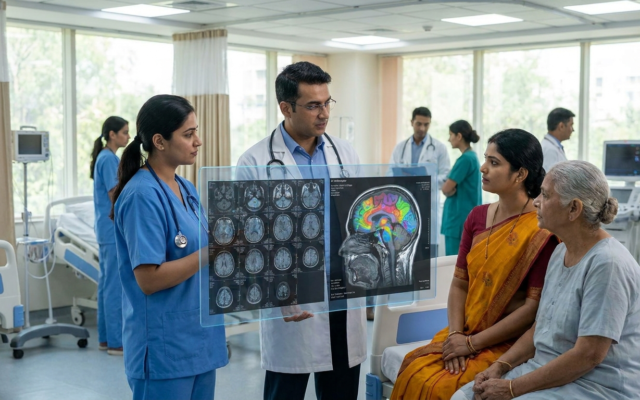
The landscape of healthcare in India is undergoing a profound transformation, driven by the relentless march of Artificial Intelligence (AI). Gone are the days when a generic treatment plan was the norm for a given ailment. Today, AI is empowering clinicians with the tools to craft hyper-personalized treatment regimens, tailored to the unique genetic makeup, lifestyle, and even the specific cellular behaviour of each patient. Imagine a scenario where your predisposition to a certain disease is identified years in advance, and a preventative strategy is implemented based on your individual risk profile. This is no longer science fiction; it’s the emerging reality in leading Indian hospitals and research institutions.
AI algorithms are meticulously analysing vast datasets, including genomic sequences, electronic health records (EHRs), and even real-time wearable device data. This allows for an unprecedented level of detail in understanding disease progression and treatment efficacy. For conditions like diabetes, AI can predict the likelihood of complications based on a patient’s blood glucose patterns, dietary habits, and exercise routines, enabling proactive interventions. This shift from reactive to proactive care is a monumental leap, promising to significantly reduce the burden of chronic diseases across the nation. The focus is shifting from treating the illness to nurturing the individual’s long-term well-being.
AI as a Super-Powered Diagnostic Ally: Catching Diseases Sooner
One of the most immediate and impactful applications of AI in Indian healthcare lies in its ability to revolutionize diagnostics. The human eye, while remarkable, has its limitations, especially when faced with the subtle nuances of early-stage diseases. AI-powered diagnostic tools are proving to be invaluable allies to radiologists, pathologists, and ophthalmologists, often detecting anomalies that might otherwise be missed. This is particularly critical in a country like India, where access to specialist expertise can be unevenly distributed.
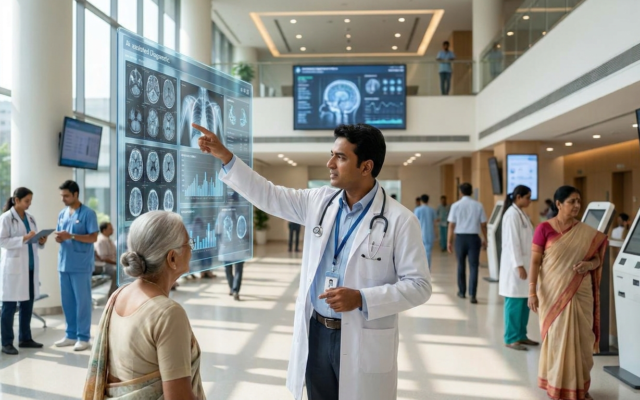
Consider the field of medical imaging. AI algorithms are now capable of analysing X-rays, CT scans, and MRIs with incredible speed and accuracy. They can flag suspicious lesions in mammograms, identify early signs of lung cancer in chest X-rays, and detect minute changes in retinal scans that indicate diabetic retinopathy. In fact, studies conducted at institutions like the All India Institute of Medical Sciences (AIIMS) in Delhi have shown AI models achieving detection rates for certain cancers that rival or even surpass those of experienced human specialists, particularly in the initial screening phases. This early detection translates directly into better prognoses and higher survival rates for patients.
Optimizing Hospital Operations: Streamlining Care Delivery
Beyond direct patient care, AI is also playing a crucial role in optimizing the operational efficiency of hospitals and healthcare facilities across India. The complexities of managing patient flow, scheduling appointments, allocating resources, and predicting demand can be overwhelming. AI-driven systems are stepping in to bring order to this chaos, leading to smoother operations and improved patient experiences. Think about the frustration of long wait times at outpatient departments or the anxiety of not knowing when a vital medical resource will become available. AI is helping to mitigate these issues.
For instance, AI algorithms are being used to predict patient admission rates based on historical data, seasonal trends, and even local weather patterns. This allows hospitals in cities like Mumbai and Chennai to better manage bed allocation, staff rostering, and the stocking of essential medical supplies. Furthermore, AI-powered scheduling systems are optimizing operating room utilization, ensuring that surgical teams and equipment are used to their maximum potential, thereby reducing delays for scheduled procedures. This not only improves patient satisfaction but also leads to significant cost savings for healthcare providers.
Democratizing Healthcare: AI-Powered Telemedicine and Accessibility
The vastness of India presents unique challenges in providing equitable healthcare access to its citizens. AI is emerging as a powerful tool to bridge this gap, particularly through enhanced telemedicine platforms. For individuals living in remote villages or underserved Tier 2 and Tier 3 cities, reaching a specialist doctor can be a costly and time-consuming ordeal. AI is making expert medical advice more accessible than ever before.
AI-powered chatbots are now capable of conducting initial patient consultations, gathering symptoms, and even providing basic health advice, freeing up doctors to focus on more complex cases. These intelligent assistants can operate 24/7, offering support and guidance when human medical staff might not be readily available. Moreover, AI is enhancing the accuracy of remote diagnostics. For example, AI algorithms can analyse images of skin conditions or ear infections sent by patients via their smartphones, providing preliminary assessments that can guide follow-up care. This democratizes access to medical expertise, bringing it directly to people’s homes and villages.
Surprising Fact: AI in Rural Diagnostics
Did you know that AI is being piloted in remote areas of Rajasthan to detect cervical cancer using simple smartphone images? Local health workers capture images, and AI algorithms analyse them for precancerous changes, significantly reducing the need for women to travel long distances for screening. This initiative, a collaboration between local NGOs and tech firms, highlights AI’s potential to empower frontline healthcare workers and extend the reach of diagnostics far beyond traditional urban centres.
Navigating the Challenges: Data, Ethics, and Infrastructure
While the potential of AI in Indian healthcare is immense, its widespread adoption is not without its hurdles. Data privacy and security are paramount concerns. The sensitive nature of health information necessitates robust safeguards to prevent breaches and misuse. Ensuring that patient data is anonymized, encrypted, and handled ethically is a critical undertaking for both technology providers and healthcare institutions. Building public trust in AI-driven healthcare hinges on demonstrating a commitment to these principles.
Another significant challenge is infrastructure. While major metropolitan hospitals are rapidly adopting AI technologies, many smaller clinics and rural health centres lack the necessary computing power, high-speed internet connectivity, and skilled personnel to implement and maintain these sophisticated systems. Bridging this digital divide requires substantial investment in technological infrastructure and comprehensive training programs for healthcare professionals across the country. The government’s Digital India initiative is a crucial step in this direction, but sustained effort is required to ensure that AI’s benefits reach all corners of the nation.
The Road Ahead: A Future of AI-Augmented Human Care
The future of healthcare in India will not be one where AI replaces human doctors, but rather one where AI augments and empowers them. The goal is to create a synergistic relationship, where AI handles the data-intensive, repetitive tasks, freeing up clinicians to focus on the empathetic, intuitive, and uniquely human aspects of patient care. This means doctors can dedicate more time to building rapport with patients, understanding their emotional needs, and providing compassionate guidance.
Imagine a scenario in the near future where your doctor, armed with AI-generated insights into your genetic predispositions, lifestyle, and real-time health monitoring, can engage in a more informed and personalized discussion about your well-being. This collaborative approach promises to elevate the standard of care, making it more proactive, precise, and patient-centric. The integration of AI into medical education will also be crucial, ensuring that the next generation of healthcare professionals are well-versed in leveraging these powerful tools. The journey is ongoing, but the destination is clear: a healthier, more equitable future for all Indians, powered by intelligent technology and human compassion.
Frequently Asked Questions
Will AI replace doctors in India?
No, AI is unlikely to replace doctors entirely. Instead, it will serve as a powerful tool to augment their capabilities, assisting with diagnostics, treatment planning, and administrative tasks. This allows doctors to focus more on patient interaction and complex decision-making.
How can AI improve access to healthcare in rural India?
AI can improve access through telemedicine platforms, AI-powered chatbots for initial consultations, and remote diagnostic tools. These technologies can bring expert medical advice and preliminary diagnoses to individuals in remote areas, reducing the need for long travel.
What are the biggest challenges to AI adoption in Indian healthcare?
The primary challenges include ensuring data privacy and security, the need for robust digital infrastructure, and the cost of implementation. Overcoming these requires significant investment, clear ethical guidelines, and comprehensive training programs.
Are there specific AI applications showing promise for common Indian health issues?
Yes, AI is showing significant promise in areas like early detection of diabetic retinopathy, analysis of medical images for cancer screening, and personalized management of chronic diseases like hypertension and diabetes, which are prevalent in India.