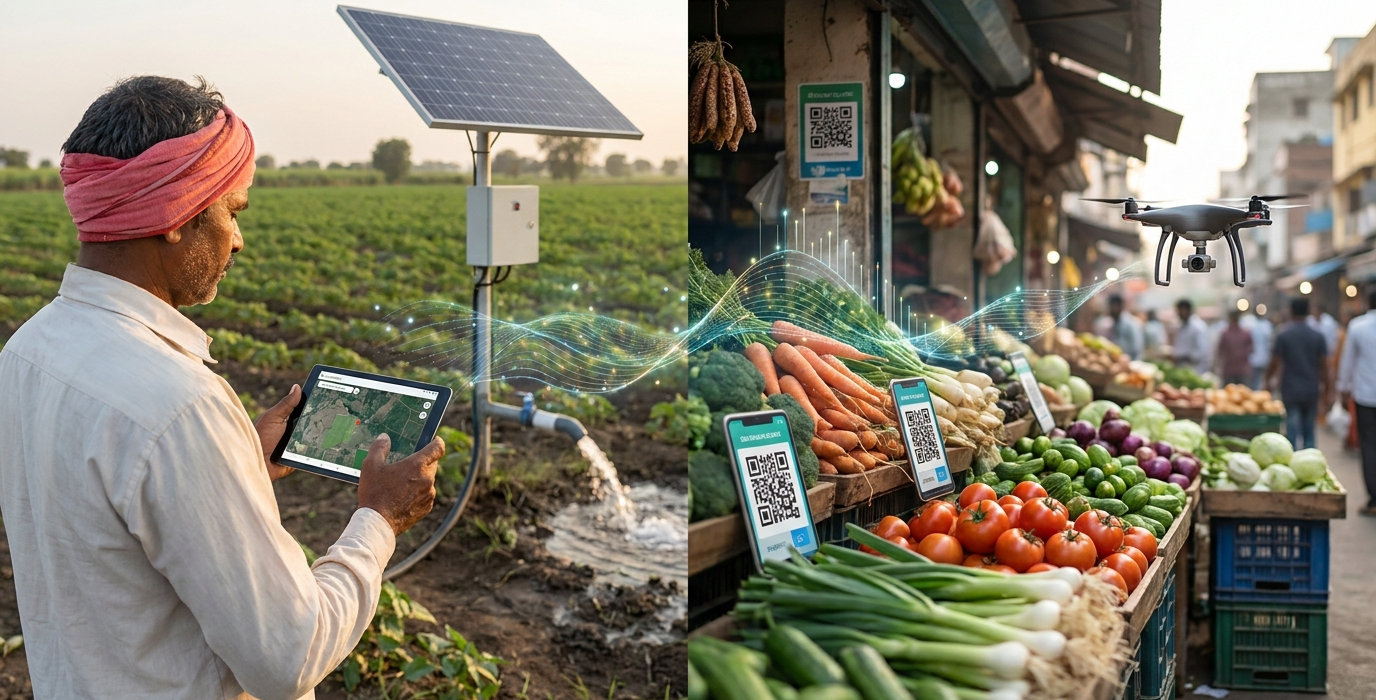
Key Takeaways
- AI is transforming India’s agricultural sector, improving crop yields and reducing waste from farm to fork.
- Precision farming techniques, powered by AI, allow for targeted irrigation and fertilization, optimising resource use.
- AI-driven insights are helping farmers make better decisions regarding planting, pest control, and market access.
- Supply chain logistics are becoming more efficient, with AI predicting demand and streamlining distribution to reduce spoilage.
The Seeds of Change: AI Cultivating Smarter Farms
The aroma of monsoon rains hitting parched earth is a familiar scent across India, but the way farmers are responding to these ancient rhythms is rapidly changing. In 2026, Artificial Intelligence isn’t just a buzzword in our tech hubs; it’s actively being sown into the very soil of our agricultural heartlands. We’re witnessing a profound shift, where data analytics and machine learning are becoming as essential as the plough and the seed. This isn’t about replacing the farmer; it’s about empowering them with unprecedented insights.
Think about the challenges our farmers face: unpredictable weather, volatile market prices, and the ever-present threat of pests and diseases. For generations, these have been combated with experience and intuition. Now, AI offers a sophisticated layer of support, augmenting that invaluable human knowledge. From satellite imagery analysed to detect early signs of crop stress to drone-based spraying of targeted pesticides, the farm of today is a far cry from that of even a decade ago. We’re talking about a future where every drop of water and every gram of fertilizer is used with maximum efficiency.
This revolution is already visible in states like Punjab and Haryana, the breadbaskets of India, where early adopters are seeing tangible results. They are moving beyond traditional farming practices towards a more data-driven approach. This allows for micro-management of fields, something previously unimaginable. The goal is clear: to boost productivity, enhance sustainability, and ultimately, ensure food security for a growing nation.
Precision Farming: The AI Prescription for Healthier Crops
Precision agriculture, powered by AI, is revolutionising how crops are nurtured. Gone are the days of blanket applications of water and nutrients. Instead, AI systems analyse data from sensors embedded in the soil, drones equipped with multispectral cameras, and even local weather forecasts to provide hyper-localised recommendations. This means each part of a field receives exactly what it needs, when it needs it.
Imagine a farmer in Maharashtra, using an AI-powered app. This app, fed with real-time data, might suggest watering a specific section of their sugarcane field by 15% more due to detected dryness, while advising another section to receive a targeted micronutrient boost. This level of granularity is a game-changer, leading to healthier plants, higher yields, and significantly reduced wastage of precious resources like water and fertilisers.
One surprising fact we’ve uncovered is the increasing use of AI for predictive soil health monitoring. Instead of waiting for visible signs of deficiency, AI algorithms can analyse subtle changes in soil composition and moisture levels, predicting potential issues weeks in advance. This allows for proactive interventions, preventing costly problems before they even manifest. This shift from reactive to proactive farming is a testament to the power of AI in creating a more resilient agricultural ecosystem.
Smarter Decisions, Bigger Harvests: AI as the Farmer’s Advisor
The complexities of farming extend far beyond just tending to the crops themselves. Deciding when to plant, which varieties to choose, when to harvest, and where to sell are critical decisions that can make or break a farmer’s livelihood. This is where AI is stepping in as an indispensable advisor, offering insights that were previously only accessible to large corporations with extensive research teams.
AI-powered platforms are now analysing vast datasets, including historical yield data, market trends, weather patterns, and even global commodity prices. This allows them to provide farmers with tailored recommendations. For example, a farmer in Rajasthan might receive advice on the optimal time to plant mustard based on predicted rainfall patterns and anticipated market demand for edible oils. This isn’t just guesswork; it’s data-driven forecasting.
Furthermore, AI is proving invaluable in pest and disease management. Instead of relying on broad-spectrum pesticides, AI can identify specific threats through image recognition of affected plants and recommend targeted, eco-friendly solutions. This not only protects the crop but also minimises environmental impact and reduces the financial burden on farmers. The ability to make informed decisions, backed by sophisticated analytics, is empowering Indian farmers like never before.
From Field to Fridge: Optimising India’s Agri-Supply Chain
The journey of food from the farm gate to our plates is often fraught with inefficiencies, leading to significant spoilage and increased costs. AI is now being deployed to streamline this entire supply chain, ensuring that fresh produce reaches consumers faster and with less waste. This is particularly crucial for a country like India, with its vast geography and diverse consumer base.
AI algorithms can predict consumer demand with remarkable accuracy, allowing for better planning of harvesting and transportation. This means that farmers are less likely to have excess produce that goes to waste, and retailers are better stocked to meet customer needs. Companies are using AI to optimise routes for their delivery fleets, factoring in traffic patterns, weather conditions, and even the shelf-life of perishable goods. This leads to quicker deliveries and a reduction in the carbon footprint associated with transportation.
A fascinating application we’ve observed is AI’s role in cold chain management. By monitoring temperature and humidity levels in real-time throughout the transit of sensitive produce, AI systems can alert stakeholders to any deviations, preventing spoilage before it occurs. This proactive approach is vital for maintaining the quality and safety of food products, especially for items like dairy, fruits, and vegetables. This integration of AI is creating a more robust and responsive food system for all of India.
Bridging the Gap: AI for Market Access and Farmer Livelihoods
Beyond the farm and the supply chain, AI is also playing a crucial role in connecting farmers directly with markets and improving their overall economic well-being. Historically, many smallholder farmers have been at the mercy of intermediaries, receiving only a fraction of the final price for their produce. AI-powered platforms are helping to break down these barriers.
Digital marketplaces, enhanced by AI, are allowing farmers to list their produce, receive real-time price information from various buyers, and negotiate fairer deals. These platforms can even provide insights into consumer preferences in different regions, guiding farmers on what to cultivate for maximum profitability. This direct access empowers farmers to bypass traditional middlemen and retain a larger share of their earnings.
Consider a farmer in Kerala selling their premium spices. An AI algorithm can analyse demand trends in major cities like Mumbai and Delhi, identify potential bulk buyers, and even suggest optimal packaging and delivery timelines. This not only ensures a better price for the farmer but also reduces the risk of unsold inventory. By democratising market information and access, AI is fostering a more equitable and prosperous agricultural sector.
The Future is Here: AI’s Long-Term Impact on Indian Agriculture
As we look ahead, the integration of AI into Indian agriculture is set to deepen, promising even more transformative changes. The initial successes we are seeing in 2026 are just the beginning of a long and exciting journey towards a more sustainable, efficient, and prosperous food system. From autonomous farming equipment that can perform tasks with unparalleled precision to advanced AI models that can predict crop diseases years in advance, the possibilities are vast.
We are also seeing AI being used to develop climate-resilient crop varieties. By analysing genetic data and environmental factors, AI can help breeders identify traits that make crops more resistant to drought, heat, and new pests. This is a critical development for India, which is increasingly vulnerable to the impacts of climate change. The ability to adapt our agriculture to a changing planet will be paramount for future food security.
The ethical considerations and the need for digital literacy among farmers are paramount. As AI becomes more integrated, ensuring that its benefits are accessible to all farmers, irrespective of their technological proficiency or landholding size, will be key. Initiatives focused on training and awareness are crucial to harness the full potential of this technological revolution. The future of Indian agriculture is undeniably intertwined with the intelligent application of AI.
“AI is not just about technology; it’s about empowering the backbone of our nation. It’s about ensuring that the hands that feed us are also the smartest hands in the room.”
Frequently Asked Questions
What are the main benefits of AI in Indian agriculture?
AI helps in increasing crop yields through precision farming, optimising resource usage (water, fertilisers), improving pest and disease management, and streamlining the supply chain to reduce waste.
How is AI helping smallholder farmers in India?
AI-powered platforms provide smallholder farmers with better market access, real-time price information, demand forecasting, and personalised advice, helping them negotiate fairer prices and reduce risks.
Are AI technologies affordable for Indian farmers?
While initial investments can be significant, many AI solutions are becoming more accessible through government subsidies, farmer cooperatives, and pay-as-you-go models. The long-term savings and increased yields often offset the costs.
What are the potential challenges in adopting AI in Indian agriculture?
Challenges include the need for digital literacy and training among farmers, access to reliable internet connectivity in rural areas, data privacy concerns, and the initial cost of technology adoption. Ensuring equitable access is a key focus.
How is AI contributing to sustainable farming practices in India?
AI enables precise application of water and fertilisers, reducing overuse and environmental pollution. It also aids in early detection of diseases, minimising the need for broad-spectrum pesticides, and optimising transportation to reduce carbon emissions.