Key Takeaways
- AI is transforming Indian healthcare by enabling faster, more accurate diagnoses, particularly in areas like radiology and pathology.
- Wearable devices, powered by AI, are shifting healthcare from reactive to proactive, allowing for early detection of critical conditions.
- AI-driven virtual assistants and chatbots are enhancing patient engagement and streamlining access to medical information and services.
- The integration of AI in drug discovery and development promises to accelerate the creation of new, more effective treatments.
- Challenges in AI adoption include data privacy concerns, the need for skilled professionals, and ensuring equitable access across diverse Indian populations.
AI-Powered Diagnostics: Seeing What the Human Eye Might Miss
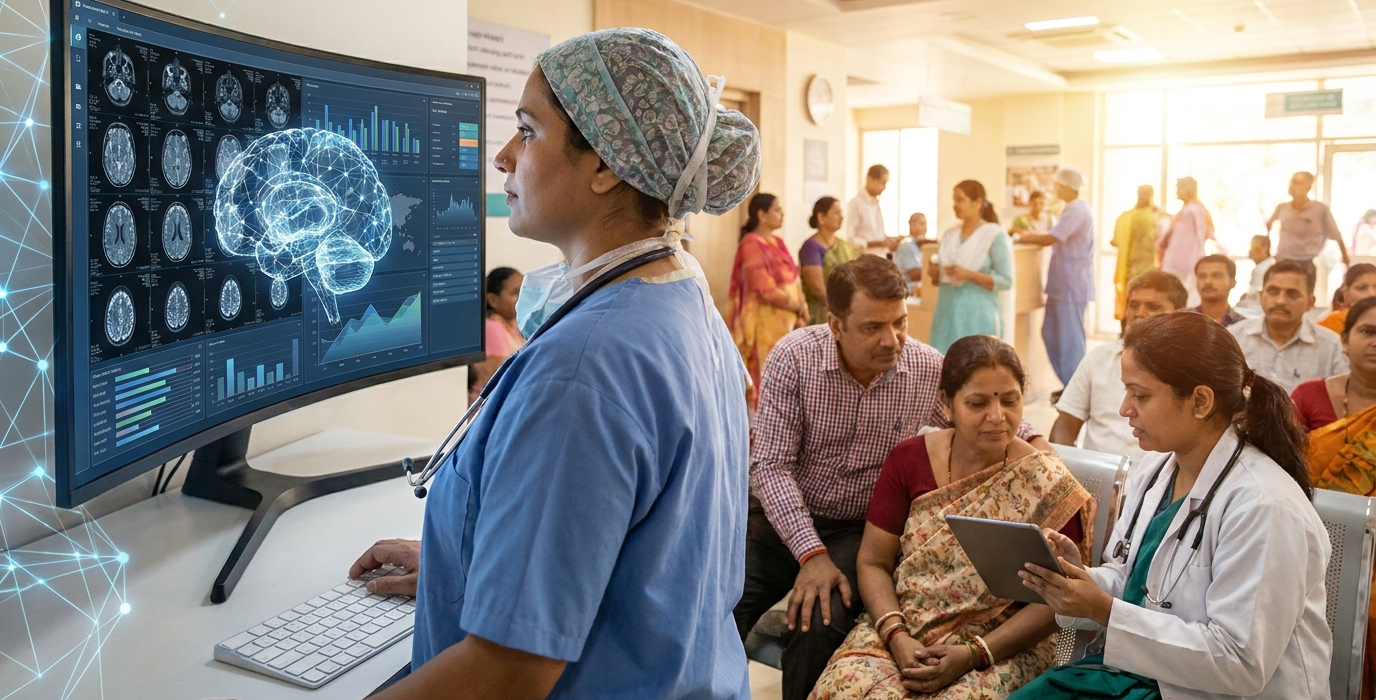
The landscape of medical diagnosis in India is undergoing a profound transformation, thanks to the rapid integration of Artificial Intelligence. For decades, doctors have relied on their expertise, aided by imaging technologies, to identify ailments. Now, AI algorithms are augmenting these capabilities, offering a level of precision and speed previously unimaginable. Imagine a radiologist reviewing hundreds of X-rays or CT scans; AI can sift through these images in a fraction of the time, flagging potential anomalies with remarkable accuracy. This is not about replacing human doctors, but empowering them with advanced tools.
In major metropolitan hospitals like the All India Institute of Medical Sciences (AIIMS) in Delhi and the Apollo Hospitals group across the country, AI-powered diagnostic systems are becoming increasingly common. These systems are trained on vast datasets of medical images, learning to recognize subtle patterns indicative of diseases like cancer, diabetic retinopathy, and tuberculosis. For instance, an AI model might detect early signs of lung nodules on a chest X-ray that could be easily overlooked by the human eye, especially in high-volume screening scenarios. This early detection is crucial for improving patient outcomes and survival rates.
Beyond radiology, AI is making significant inroads into pathology. Analyzing tissue samples under a microscope is a meticulous process. AI can now assist pathologists by automatically segmenting cells, identifying cancerous regions, and even quantifying the grade of a tumor. This not only speeds up the reporting process but also reduces inter-observer variability, ensuring more consistent diagnoses. The goal is to make these advanced diagnostic capabilities accessible to more Indians, bridging the gap between urban and rural healthcare.
Early Detection and Prevention: The Rise of Proactive Health Monitoring
The traditional healthcare model often waits for a patient to fall ill before intervening. However, AI, particularly when coupled with wearable technology, is ushering in an era of proactive health monitoring and early disease detection. Devices like smartwatches and fitness trackers, once seen as mere lifestyle gadgets, are now evolving into powerful health surveillance tools. These devices can continuously monitor vital signs such as heart rate, blood oxygen levels, sleep patterns, and even detect irregular heart rhythms like atrial fibrillation.
Consider the impact this can have in India, a country with a high burden of non-communicable diseases like cardiovascular ailments and diabetes. An AI algorithm analyzing the data from a patient’s smartwatch can identify subtle deviations from their baseline health metrics. For example, a consistent increase in resting heart rate or a sudden drop in sleep quality might be flagged as potential indicators of an impending cardiac event or infection. The system can then alert the user and, with their consent, inform their healthcare provider.
This proactive approach is particularly valuable for managing chronic conditions. For individuals with diabetes, AI can analyze glucose readings from continuous glucose monitors, predict potential hypoglycemic or hyperglycemic episodes, and offer timely advice. Similarly, for patients with respiratory illnesses, AI-powered wearables can track breathing patterns and alert them to worsening symptoms before they become critical. The sheer volume of data collected by these devices allows AI to identify trends and risks that might otherwise go unnoticed. This shift towards preventative care promises to reduce the strain on hospitals and improve the overall well-being of the population.
Virtual Health Assistants and Chatbots: Enhancing Patient Engagement
Access to reliable medical information and timely healthcare advice can be a challenge, especially in remote areas of India. AI-powered virtual health assistants and chatbots are emerging as crucial solutions, democratizing access to healthcare support and enhancing patient engagement. These intelligent conversational agents can provide instant responses to common health queries, guide patients through symptom checkers, and even help them book appointments with doctors. This frees up valuable time for healthcare professionals to focus on more complex cases.
Many Indian healthcare providers, from large hospital chains to smaller clinics, are integrating these AI tools into their patient communication strategies. Imagine a patient experiencing mild symptoms at night. Instead of waiting until morning to call a doctor, they can interact with an AI chatbot. The chatbot can ask a series of questions to understand the severity of the symptoms, offer general advice, and if necessary, recommend seeking immediate medical attention or scheduling a virtual consultation. This immediate support can alleviate anxiety and guide patients to the appropriate level of care.
Furthermore, these AI assistants can play a significant role in patient education and adherence to treatment plans. They can send reminders for medication, provide information about specific conditions, and offer support for lifestyle modifications. For chronic disease management, this continuous engagement is invaluable. For example, an AI chatbot might gently nudge a patient to track their blood pressure daily or remind them about their physiotherapy exercises. The ability of these systems to understand and respond in multiple Indian languages, including Hindi, Bengali, and Tamil, further enhances their accessibility and impact across the diverse linguistic landscape of India.
AI in Drug Discovery and Development: Accelerating Medical Breakthroughs
The process of discovering and developing new drugs is notoriously long, expensive, and fraught with uncertainty. Traditionally, it could take over a decade and billions of dollars to bring a new medication to market. Artificial Intelligence is now revolutionizing this field, significantly accelerating the pace of innovation and promising to deliver life-saving therapies faster than ever before. AI algorithms can analyze vast biological and chemical datasets, identify potential drug targets, and predict the efficacy and safety of candidate molecules with remarkable speed.
Pharmaceutical companies and research institutions in India are increasingly leveraging AI to streamline their drug discovery pipelines. Instead of conducting countless physical experiments, AI can perform virtual screening of millions of compounds, identifying those most likely to be effective against a specific disease. This dramatically reduces the number of candidates that need to be synthesized and tested in the lab. The AI can also predict how a drug might interact with the human body, helping to identify potential side effects early in the development process.
Moreover, AI is proving invaluable in understanding complex diseases at a molecular level. By analyzing genomic data, protein structures, and patient outcomes, AI can uncover new insights into disease mechanisms and identify novel therapeutic pathways. This is particularly relevant for tackling complex diseases like cancer and neurodegenerative disorders. The ability of AI to process and learn from massive, multi-modal datasets allows for a deeper understanding of biological systems, paving the way for the development of highly targeted and personalized medicines. This acceleration in drug development could mean that new treatments for conditions currently considered incurable become a reality sooner for patients in India and worldwide.
Bridging the Gap: AI’s Role in Rural and Underserved Healthcare
One of the most significant challenges in India’s healthcare system is the disparity in access between urban centers and rural or underserved regions. AI holds immense potential to bridge this gap, extending the reach of quality medical expertise to populations that have historically been deprived. Telemedicine platforms, enhanced by AI, can connect patients in remote villages with specialists located in distant cities, enabling remote consultations and diagnostics.
For example, AI-powered diagnostic tools can be deployed on portable devices, allowing healthcare workers in remote primary health centers to perform initial assessments. An AI algorithm can analyze images from a portable ultrasound machine or interpret an ECG taken on a basic device, providing a preliminary diagnosis or flagging cases that require urgent specialist attention. This significantly reduces the need for patients to travel long distances, saving them time, money, and the hardship of extensive journeys.
Furthermore, AI can help optimize resource allocation in areas with limited medical infrastructure. By analyzing demographic data, disease prevalence, and available resources, AI can predict healthcare needs and help authorities deploy medical personnel and supplies more effectively. This intelligent planning can ensure that essential medicines and diagnostic services reach those who need them most. The vision is for AI to act as a force multiplier, amplifying the impact of limited healthcare resources and ensuring that every Indian, regardless of their location, has access to timely and effective medical care.
Navigating the Future: Challenges and Opportunities in AI Adoption
While the promise of AI in healthcare is immense, its widespread adoption in India faces several critical challenges that need careful consideration and proactive solutions. Data privacy and security are paramount. Healthcare data is highly sensitive, and robust frameworks are needed to ensure that patient information collected by AI systems is protected from breaches and misuse, adhering to India’s evolving digital privacy laws. Building public trust in AI systems also hinges on transparency about how data is used.
Another significant hurdle is the need for a skilled workforce. Developing, implementing, and maintaining AI systems requires professionals with expertise in both healthcare and artificial intelligence. India needs to invest in training programs and educational curricula to cultivate this talent pool. Without adequate skilled professionals, the potential of AI will remain largely untapped.
Furthermore, ensuring equitable access to AI-driven healthcare solutions is crucial. As these technologies advance, there’s a risk of creating a two-tiered system where only the affluent benefit. Initiatives must be designed to make AI accessible and affordable for all segments of society, including those in rural areas and low-income groups. This might involve government subsidies, public-private partnerships, and the development of cost-effective AI solutions. The regulatory landscape also needs to keep pace with technological advancements, providing clear guidelines for the ethical development and deployment of AI in medicine. The journey of AI in Indian healthcare is one of immense opportunity, but it requires a concerted effort to navigate these complexities responsibly.
Frequently Asked Questions
What are the main benefits of AI in Indian healthcare?
AI offers faster and more accurate diagnoses, enables proactive health monitoring through wearables, improves patient engagement via virtual assistants, and accelerates drug discovery. It has the potential to significantly enhance the quality and accessibility of healthcare services across India.
How is AI helping with early disease detection in India?
AI algorithms can analyze medical images (like X-rays and CT scans) to spot subtle signs of diseases such as cancer or diabetic retinopathy much earlier than might be visible to the human eye. Wearable devices integrated with AI can also detect early physiological changes indicative of serious conditions like heart problems.
Will AI replace doctors in India?
No, the current vision for AI in healthcare is to augment, not replace, human doctors. AI tools act as sophisticated assistants, helping doctors make more informed decisions, improving efficiency, and allowing them to focus on complex patient care and human interaction.
What are the biggest challenges to AI adoption in Indian healthcare?
Key challenges include ensuring data privacy and security, the shortage of skilled AI professionals in the medical field, the need for robust regulatory frameworks, and making these advanced technologies accessible and affordable to all segments of the Indian population, especially in rural areas.
Can AI-powered healthcare tools be used in regional Indian languages?
Yes, many AI-driven virtual assistants and chatbots are being developed to support multiple Indian languages, including Hindi, Bengali, Tamil, and others. This is crucial for ensuring that AI healthcare solutions are accessible and understandable to a wider population across India.