Key Takeaways
- AI is transforming Indian agriculture, from precise irrigation to early disease detection, boosting crop yields and resource efficiency.
- Farmers in states like Maharashtra and Gujarat are adopting AI-powered drones and sensor networks to monitor crop health and soil conditions.
- AI is crucial for climate change adaptation, helping predict weather patterns and suggesting resilient crop varieties.
- The adoption of AI is creating new opportunities for agritech startups and skilled labour in rural India.
Precision Farming Takes Root: How AI is Revolutionizing Crop Management
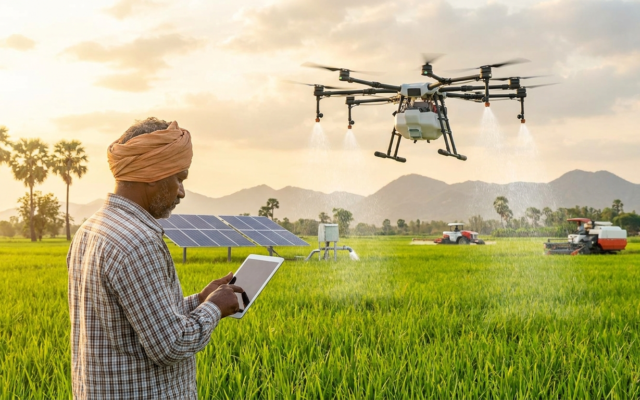
The hum of a drone over a vast expanse of mustard fields near Dausa, Rajasthan, is no longer a novelty; it’s a sign of agriculture’s intelligent future. For centuries, Indian farmers have relied on intuition, experience, and weather forecasts to guide their planting and harvesting. Today, however, artificial intelligence (AI) is adding a layer of data-driven precision that promises to dramatically improve crop yields, conserve precious resources, and build resilience against climate change. This isn’t science fiction; it’s the tangible reality unfolding across India’s diverse agricultural landscape.
Imagine a farmer receiving an alert on their phone, not about a general rain prediction, but a pinpointed recommendation for when and how much to irrigate a specific plot of land, factoring in real-time soil moisture levels and the predicted evapotranspiration rate. This level of granular control, powered by AI algorithms analysing data from sensors and satellite imagery, is becoming increasingly accessible. It moves farming away from broad strokes towards micro-management, ensuring each plant receives exactly what it needs, when it needs it. This precision minimizes water wastage, a critical concern in water-stressed regions like Bundelkhand, and optimises nutrient application, reducing fertiliser runoff that pollutes waterways.
The benefits extend beyond mere efficiency. AI-driven systems can predict optimal planting windows based on historical data and projected weather patterns, helping farmers mitigate risks associated with unseasonal rains or prolonged dry spells. Furthermore, AI is instrumental in early disease and pest detection. By analysing leaf images captured by drones or smartphones, AI models can identify subtle signs of infestation or disease far earlier than the human eye, allowing for targeted interventions before an outbreak can decimate a crop. This proactive approach not only saves crops but also reduces the reliance on broad-spectrum pesticides, contributing to healthier soil and a more sustainable ecosystem.
From Field to Fork: Enhancing Yields and Reducing Losses with AI Insights
The journey of a crop from seed to plate is fraught with potential losses, many of which AI is now helping to prevent. In states like Punjab, where wheat and rice production are paramount, AI-powered analytics are being used to optimise fertiliser application and irrigation schedules. This isn’t just about using less; it’s about using the right amount at the right time for maximum growth and nutrient uptake. For instance, AI systems can analyse soil nutrient maps, generated from sensor data, and recommend precise NPK (Nitrogen, Phosphorus, Potassium) ratios for different zones within a field.
Beyond the growth phase, AI plays a significant role in post-harvest management. Predictive analytics can forecast optimal harvest times to minimise spoilage and ensure produce reaches markets at peak quality. This is particularly valuable for perishable goods like fruits and vegetables, which often suffer significant losses during transit and storage. AI algorithms can also be used to optimise supply chain logistics, predicting demand and routing produce efficiently, thereby reducing waste and ensuring farmers receive fair prices. Companies are developing AI-powered platforms that connect farmers directly with buyers, using data to ensure transparency and streamline transactions.
The impact on yields is substantial. By providing farmers with actionable insights, AI helps them make informed decisions that lead to healthier, more robust crops. This translates directly into higher yields per hectare, a critical factor in ensuring food security for India’s burgeoning population. Consider the case of a farmer in Haryana struggling with stunted growth in a particular section of their paddy field. An AI analysis might reveal a subtle micronutrient deficiency or an underlying soil pH imbalance, allowing for a targeted corrective measure rather than a generalised, and potentially ineffective, treatment. This data-driven approach empowers farmers with knowledge, transforming traditional practices into scientifically optimised operations.
Climate Change Adaptation: AI as a Shield for Indian Agriculture
The spectre of climate change looms large over Indian agriculture, threatening traditional farming practices with unpredictable weather patterns, increased frequency of extreme events, and shifting growing seasons. AI is emerging as a powerful ally, offering farmers tools to adapt and build resilience. Advanced AI models are now capable of providing highly localised and accurate weather forecasts, going beyond general regional predictions. These insights allow farmers to plan planting, irrigation, and harvesting more effectively, mitigating the impact of unexpected droughts or floods.
One of the most promising applications is in crop selection and diversification. AI algorithms can analyse vast datasets, including historical climate data, soil types, and market demand, to recommend crop varieties best suited for specific microclimates and future climatic conditions. This is particularly important for regions vulnerable to rising temperatures or erratic monsoons. For example, in the arid regions of Gujarat, AI might suggest drought-resistant millets or specific heat-tolerant varieties of pulses, rather than water-intensive crops that are no longer viable. This proactive approach helps prevent crop failures and sustains rural livelihoods.
Beyond prediction and recommendation, AI is also being used to develop climate-resilient agricultural practices. For instance, AI-powered simulations can help design optimal water management systems that maximise water retention during monsoon seasons and efficiently utilise stored water during dry spells. Furthermore, AI can monitor the health of soil and suggest regenerative farming techniques, such as cover cropping or reduced tillage, which enhance soil carbon sequestration and improve its ability to withstand extreme weather. By integrating these AI-driven insights, Indian farmers can move towards a more sustainable and climate-resilient agricultural future, safeguarding their livelihoods and contributing to national food security in the face of a changing climate.
Democratizing Agri-Tech: AI Tools for Smallholder Farmers
Historically, advanced agricultural technologies have often been out of reach for smallholder farmers, who constitute the backbone of Indian agriculture. However, the advent of AI is beginning to democratize access to sophisticated insights and tools. Mobile applications, powered by AI, are becoming a primary channel for delivering crucial information directly to farmers. These apps can analyze images of crops uploaded by farmers to diagnose diseases, identify nutrient deficiencies, and even estimate yield potential. This eliminates the need for expensive soil testing or expert consultations for many common issues.
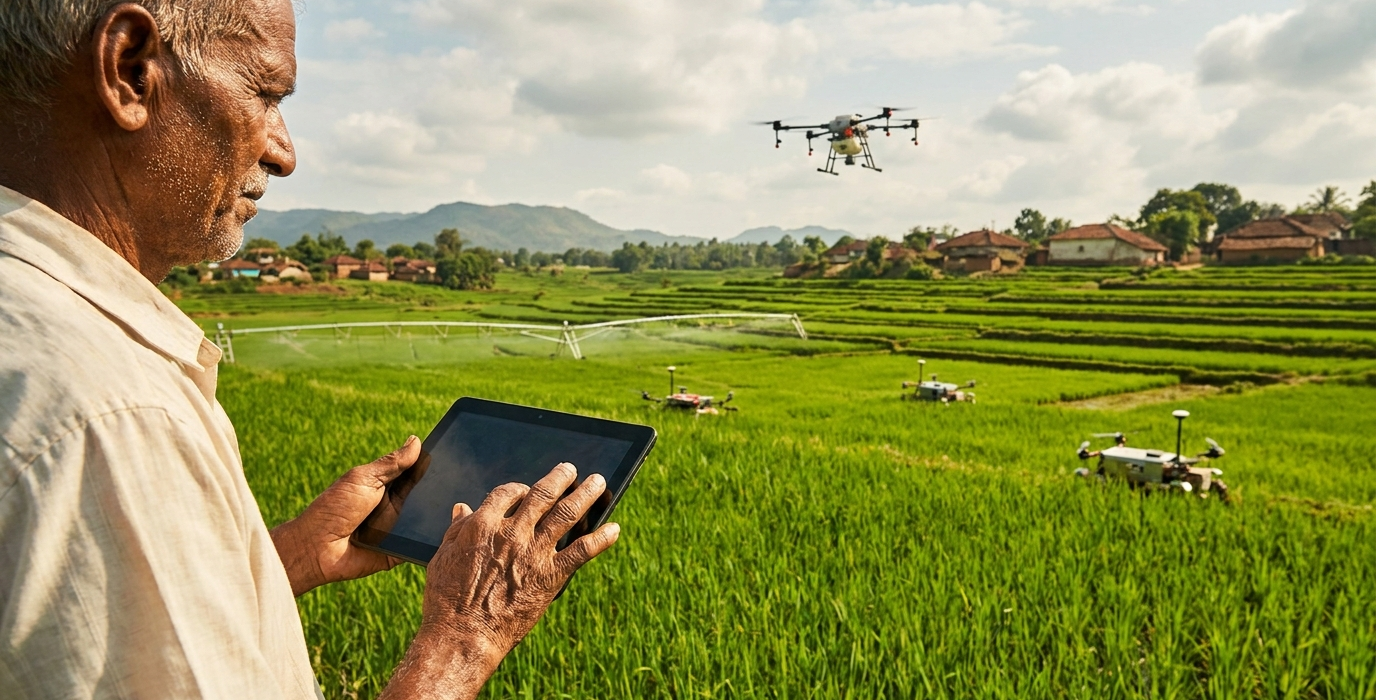
Consider a farmer in a remote village in Tamil Nadu who notices unusual spots on their mango leaves. Instead of waiting for an agricultural extension officer to visit, they can take a photo, upload it to an AI-powered app, and receive an immediate diagnosis and recommendations for treatment. This rapid feedback loop is transformative, preventing minor issues from escalating into significant crop losses. The algorithms behind these apps are continuously learning from the vast number of images and data points submitted by farmers across the country, making them increasingly accurate and effective.
Furthermore, AI is helping to bridge the information gap by providing market intelligence. Farmers can use AI-driven platforms to get real-time information on market prices for their produce in different mandis (markets). This empowers them to make informed decisions about where and when to sell, negotiate better prices, and avoid exploitation by middlemen. The rise of farmer producer organizations (FPOs) is also being bolstered by AI, as these organizations can leverage AI tools to manage collective resources, plan crop rotations, and access aggregated market data more effectively. This shift towards data-informed decision-making at the grassroots level is crucial for the long-term prosperity and sustainability of Indian agriculture.
The Rise of Agri-Tech Startups and New Opportunities
The integration of AI into Indian agriculture has spurred a vibrant ecosystem of agritech startups, injecting innovation and creating new avenues for growth. These companies are developing and deploying a range of AI-powered solutions, from precision irrigation systems and automated pest detection to drone-based crop monitoring and AI-driven farm management platforms. For example, startups in Bengaluru are developing AI algorithms that analyse satellite imagery to monitor the health of vast agricultural lands, providing early warnings of potential problems like pest infestations or water stress to farmers and government agencies alike.
These startups are not just technological innovators; they are also crucial in bridging the gap between advanced AI capabilities and the practical needs of farmers. They focus on developing user-friendly interfaces, often integrated into mobile apps, that are accessible to farmers with varying levels of digital literacy. Many are also adopting innovative business models, such as “farming as a service,” where farmers pay for the use of AI-powered equipment and expertise rather than outright purchase, making these advanced technologies more affordable. This approach is particularly impactful in regions like Maharashtra, where large numbers of small and marginal farmers can benefit from shared access to cutting-edge technology.
The growth of this sector is also creating new employment opportunities, particularly in rural areas. There is a rising demand for skilled professionals who can operate and maintain AI-powered agricultural equipment, manage data analytics platforms, and provide technical support to farmers. This includes roles for drone pilots, data scientists specialising in agricultural data, and AI implementation specialists. The emergence of these new job profiles signifies a modernization of the agricultural workforce, moving beyond traditional roles and embracing the digital transformation. This infusion of technology and new talent is vital for the future of farming in India.
Challenges and the Road Ahead: Ensuring Inclusive AI Adoption
Despite the immense potential, the widespread adoption of AI in Indian agriculture is not without its challenges. One of the primary hurdles is the digital divide and ensuring equitable access to technology and internet connectivity, especially in remote rural areas. While mobile penetration is high, consistent and affordable internet access remains an issue for many smallholder farmers. Without reliable connectivity, the benefits of AI-powered applications and real-time data analysis cannot be fully realised. Bridging this gap through government initiatives and private sector partnerships is crucial.
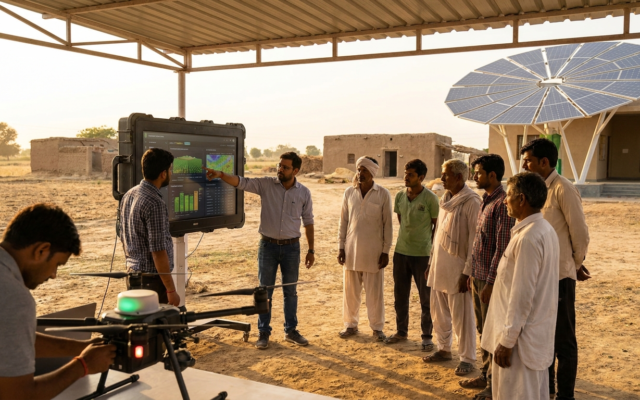
Another significant challenge is the need for effective training and capacity building for farmers. AI tools, however user-friendly, require a certain level of digital literacy and understanding. Farmers need to be educated on how to use these technologies, interpret the data they provide, and integrate these insights into their farming practices. This requires tailored training programs, often delivered in local languages, and accessible support systems. The success of AI in agriculture hinges on empowering farmers, not replacing their traditional knowledge, but augmenting it with data-driven intelligence.
Furthermore, concerns around data privacy and ownership need to be addressed. As AI systems collect vast amounts of data from farms, clear policies are required to ensure that farmers’ data is protected, used ethically, and that they retain ownership and control over it. Building trust is paramount for sustained adoption. Looking ahead, continued investment in research and development, coupled with supportive government policies, will be vital. This includes promoting public-private partnerships, incentivizing the development of affordable and context-specific AI solutions, and fostering an environment where innovation can flourish. The journey towards an AI-powered agricultural future in India is underway, and its success will depend on a collective effort to make it inclusive and beneficial for all.
Frequently Asked Questions
What are the main benefits of AI in Indian agriculture?
AI helps increase crop yields through precise resource management (water, fertilisers), enables early detection of diseases and pests, and provides insights for climate change adaptation and better market access. This leads to more efficient, sustainable, and profitable farming.
Are AI tools affordable for small farmers in India?
While some advanced AI systems can be expensive, many agritech startups are developing affordable mobile-based AI solutions. Additionally, ‘farming as a service’ models and farmer producer organizations (FPOs) are making AI technologies more accessible to smallholder farmers.
How is AI helping Indian farmers deal with climate change?
AI provides localized weather forecasts, helps farmers select climate-resilient crop varieties, optimises water management, and promotes soil health through data-driven insights, thereby enhancing the farm’s ability to withstand droughts, floods, and temperature fluctuations.
What kind of jobs are being created by AI in Indian agriculture?
AI is creating new roles such as drone operators, data analysts specializing in agricultural data, AI implementation specialists, and technical support personnel. These roles require a blend of agricultural knowledge and digital skills, modernizing the rural workforce.
Is data privacy a concern with AI in agriculture?
Yes, data privacy is a significant consideration. It’s crucial to have clear policies ensuring that farmers’ data is protected, used ethically, and that they retain ownership and control over the information collected from their farms.