Key Takeaways
- India’s electric vehicle market is experiencing an unprecedented boom, with 2026 sales figures smashing previous records.
- Government incentives, expanding charging infrastructure, and a wider range of affordable models are driving this surge in green mobility.
- Two-wheeler EVs continue to dominate, but four-wheeler adoption is rapidly gaining momentum, offering exciting prospects for consumers.
- Challenges remain, including grid capacity and battery recycling, but the trajectory is undeniably positive for India’s sustainable transportation future.
The Electric Tide: India’s EV Market Surges Past All Expectations in 2026
The hum of electric motors is becoming the new soundtrack to India’s urban landscapes. As of the third quarter of 2026, electric vehicle sales have not just met but dramatically surpassed all projections, marking a watershed moment for green mobility in the nation. We’re witnessing a genuine revolution, moving beyond niche early adopters to mainstream acceptance across diverse demographics.
This isn’t just about meeting environmental targets; it’s about a fundamental shift in consumer preference. Factors like rising fuel prices, increased environmental consciousness, and a growing desire for advanced technology are converging to propel EVs into the forefront of the automotive market. The year 2026 will undoubtedly be etched in history as the year India truly embraced its electric future.
Two-Wheelers Lead the Charge, But Four-Wheelers Gain Traction
The electric two-wheeler segment continues its reign, a familiar story from previous years. Companies like Ola Electric, Ather Energy, and TVS Motor Company have consistently rolled out innovative scooters and motorcycles that are not only eco-friendly but also offer superior performance and lower running costs. These vehicles are proving to be an attractive proposition for daily commutes in bustling cities like Bengaluru, Delhi, and Chennai.
However, the most significant development this year is the accelerating adoption of electric four-wheelers. Tata Motors, with its Nexon EV and Tiago EV, has paved the way, but new entrants and existing players are now offering a wider variety of electric cars. From compact hatchbacks to more premium SUVs, consumers now have more choices than ever before, making the transition from internal combustion engine vehicles a more viable and appealing option for families and businesses alike.
Government Push and Consumer Confidence: A Powerful Duo
The Indian government has been a crucial catalyst in this EV surge. Schemes like the Faster Adoption and Manufacturing of Electric Vehicles (FAME) India scheme, along with production-linked incentives (PLI) for battery manufacturing and vehicle production, have significantly lowered the upfront cost of EVs. These incentives make EVs competitive with their petrol and diesel counterparts, a critical factor for price-sensitive Indian consumers.
Beyond financial incentives, the government’s commitment to developing charging infrastructure has instilled greater confidence among potential buyers. While challenges persist, the visible increase in charging stations, both public and private, across major cities and highways is easing range anxiety. This dual approach – making EVs more affordable and addressing practical concerns – has created a fertile ground for market growth.
The Charging Network: Expanding to Meet Demand
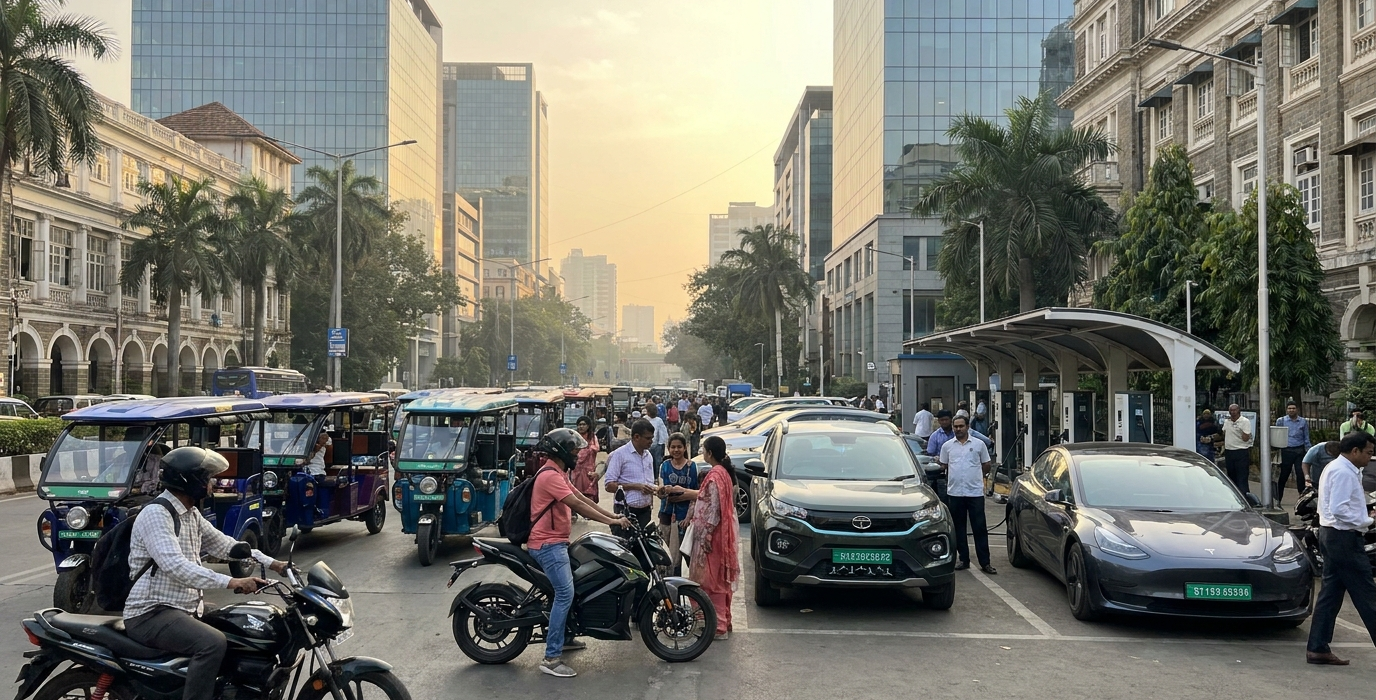
One of the biggest hurdles for EV adoption has historically been the availability of charging infrastructure. In 2026, we are finally seeing a substantial leap forward in this critical area. The once sparse charging points are now becoming more common, particularly in Tier-1 and Tier-2 cities. Major players, including energy companies, startups, and even automotive manufacturers, are investing heavily in building out this network.
You can now find charging stations at malls, office complexes, residential societies, and along major highways. Companies like ChargeZone, Statiq, and Magenta are rapidly expanding their footprint, offering both slow and fast charging options. This expansion is not just about quantity; it’s also about improving the quality and accessibility of charging, with many apps providing real-time availability and booking facilities. We’re moving towards a future where charging your EV is as convenient as refuelling a conventional car.
From Metro Cities to Emerging Hubs: A Spreading Network
While the initial focus was understandably on metropolitan areas like Mumbai, Pune, and Hyderabad, the charging network’s expansion is now reaching further. Smaller cities and towns are also beginning to see the installation of public charging points, driven by local government initiatives and increasing EV ownership in these regions. This decentralisation is key to ensuring that the EV revolution isn’t confined to just a few urban pockets.
Furthermore, innovative solutions are emerging to tackle charging in diverse living situations. For instance, solutions for apartment complexes are becoming more sophisticated, allowing residents to install dedicated charging points without major infrastructural overhauls. This addresses a significant concern for urban dwellers living in multi-unit buildings. The push is on to ensure that no matter where you live in India, charging your EV is a hassle-free experience.
Surprising Fact: India’s Homegrown Charging Solutions are Leading the Way
While international players are present, it’s the Indian startups and domestic companies that are truly innovating in the charging space. They are developing solutions tailored to India’s unique power grid challenges and diverse climate conditions. One such innovation you might not be aware of is the development of smart charging solutions that can intelligently manage power load during peak hours, preventing strain on the local grid. This is crucial as EV adoption scales up significantly.
Affordability and Choice: EVs for Every Pocket
The perception that EVs are prohibitively expensive is rapidly becoming a relic of the past. In 2026, the automotive market is witnessing an unprecedented increase in the number of EV models available at various price points. This surge in affordability is a direct result of advancements in battery technology, economies of scale in manufacturing, and of course, government support.
We are seeing more manufacturers entering the sub-₹10 lakh segment for electric cars, making them accessible to a broader spectrum of Indian consumers. This includes compact SUVs and sedans that offer a compelling package of features, performance, and crucially, lower running costs compared to their ICE counterparts. The total cost of ownership over several years is now demonstrably lower for EVs, a fact that is increasingly resonating with buyers.
The Rise of Budget-Friendly EVs
The success of models like the Tata Tiago EV and MG Comet EV has spurred other manufacturers to develop their own budget-friendly electric offerings. Expect to see more options emerge from companies like Maruti Suzuki and Hyundai in the coming months, further intensifying competition and driving down prices. The focus is on delivering practical, efficient, and stylish EVs that don’t break the bank.
For two-wheelers, the market has been dynamic for a while, with numerous brands offering scooters and motorcycles well within the reach of the average Indian household. Many of these offer impressive range and features at competitive prices, making them a smart choice for daily commuting. You can find reliable electric scooters for under ₹70,000 today, a far cry from what was available just a few years ago.
The Long-Term Savings Equation
Beyond the initial purchase price, the operational savings are a major draw. Electricity costs per kilometre are significantly lower than petrol or diesel, especially with rising fuel prices. Maintenance is also generally lower, with fewer moving parts in an EV powertrain. This holistic view of cost makes the long-term financial proposition of owning an EV highly attractive for Indian households and fleet operators.
“The year 2026 marks a pivotal moment where the economic advantages of EVs, coupled with environmental awareness, are creating an unstoppable momentum for green mobility in India.”
Technological Advancements: Beyond the Battery
While battery technology and cost reduction remain central to the EV narrative, 2026 is also seeing significant advancements in other areas that enhance the EV ownership experience. Connectivity, smart features, and driver-assistance systems are becoming increasingly sophisticated, turning EVs into more than just modes of transport; they are becoming integrated digital platforms.
Manufacturers are investing heavily in software development, offering over-the-air (OTA) updates that can improve vehicle performance, add new features, and enhance safety over time. This means your EV can get better even after you’ve driven it off the lot. This continuous improvement cycle is a key differentiator from traditional vehicles.
Intelligent Features and User Experience
Expect to see more advanced infotainment systems, integrated navigation with real-time charging station information, and voice command capabilities that are more intuitive and responsive. Many EVs now come equipped with advanced driver-assistance systems (ADAS) features, such as adaptive cruise control, lane-keeping assist, and automatic emergency braking, further enhancing safety and convenience.
The user interface for managing charging, monitoring battery health, and accessing vehicle diagnostics is also becoming more streamlined and user-friendly. Mobile apps are now indispensable tools, allowing owners to pre-condition their cabin temperature, schedule charging, and even locate their vehicle remotely. This focus on a seamless digital experience is crucial for attracting tech-savvy Indian consumers.
Surprising Fact: India is a Hub for EV Software Innovation
While the world looks to India for manufacturing prowess, the country is also emerging as a significant hub for EV software development. Many global automotive companies are setting up R&D centres in India to leverage the vast pool of skilled software engineers. This is leading to unique software solutions being developed right here, catering to diverse market needs. You’ll find advanced battery management systems and intelligent charging algorithms originating from Indian engineering teams.
Challenges and the Road Ahead: What’s Next for Indian EVs?
Despite the exhilarating growth, the EV revolution in India is not without its challenges. As sales volumes increase, so does the demand on the electrical grid. Ensuring sufficient power generation capacity and modernising the grid infrastructure to handle the increased load from EV charging is a significant undertaking that requires continuous investment and strategic planning.
Furthermore, battery disposal and recycling are becoming increasingly important issues. As more EVs reach the end of their lifespan, developing robust and environmentally sound battery recycling processes is crucial to avoid creating a new environmental problem. The industry and government are actively working on frameworks and technologies to address this, but it’s a complex challenge requiring long-term commitment.
Grid Capacity and Battery Recycling
The Indian government and energy providers are actively exploring solutions, including smart grid technologies and the integration of renewable energy sources to power EV charging. The goal is to ensure that the electricity used to charge EVs is as clean as possible. For battery recycling, initiatives are underway to establish collection centres and processing facilities, aiming for a circular economy model.
We are also seeing a growing emphasis on indigenous battery manufacturing, which is vital for reducing dependence on imports and further lowering costs. This includes research and development into new battery chemistries that are more efficient, safer, and sustainable. The aim is to create a complete domestic EV ecosystem, from raw materials to end-of-life management.
The Future Outlook: Continued Growth and Innovation
Looking ahead, the trajectory for India’s EV market remains exceptionally positive. Analysts predict continued strong growth in both two-wheeler and four-wheeler segments. As more charging infrastructure is deployed, battery costs continue to fall, and new, exciting models are launched, the appeal of electric mobility will only broaden.
The next few years will likely see further diversification of EV offerings, including electric buses for public transport, electric commercial vehicles for logistics, and perhaps even early iterations of electric personal air mobility solutions. India is not just adopting EVs; it’s innovating and shaping the future of electric mobility for the world.
Frequently Asked Questions
What is the average range of an electric car in India in 2026?
In 2026, the average range for electric cars in India typically varies from 300 km to 450 km on a single charge, with many premium models offering even more. For electric scooters, you can expect ranges from 100 km to 150 km, sufficient for most daily commutes.
Are electric vehicles becoming more affordable in India?
Yes, electric vehicles are becoming significantly more affordable in India. Government incentives, increased manufacturing scale, and intense competition among manufacturers have led to lower upfront costs, especially in the two-wheeler and compact car segments.
What are the main government incentives for buying an EV in India?
The primary government incentive is the FAME (Faster Adoption and Manufacturing of Electric Vehicles) India scheme, which provides subsidies on the purchase of EVs. Additionally, many states offer road tax and registration fee exemptions, and there are production-linked incentives for manufacturers.
Where can I find charging stations in India?
You can find charging stations at malls, petrol stations, office complexes, residential societies, and along major highways. Several mobile apps, such as PlugShare, ChargeZone, and Statiq, allow you to locate nearby charging stations, check their availability, and even book a slot.
Is it worth switching to an electric vehicle in India right now?
For many, the switch is already proving worthwhile. The lower running costs, reduced maintenance, environmental benefits, and increasing convenience of charging make EVs a compelling option. The total cost of ownership often works out to be lower than for traditional petrol or diesel vehicles over their lifespan.