Key Takeaways
- AI is revolutionizing Indian agriculture by boosting crop yields, optimizing resource use, and improving farmer income through precision farming and predictive analytics.
- Smart irrigation systems powered by AI are significantly reducing water consumption, a critical challenge in many Indian agrarian regions.
- AI-driven pest and disease detection is enabling early intervention, minimizing crop loss and the need for broad-spectrum pesticides.
- Blockchain integrated with AI is enhancing supply chain transparency and traceability from farm to fork, benefiting both consumers and farmers.
Precision Farming: The AI-Powered Plough Revolution
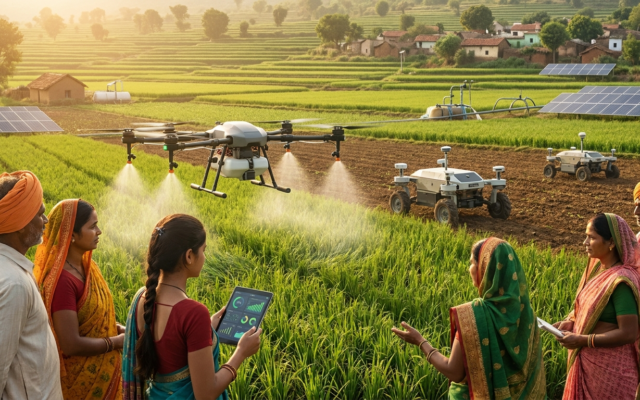
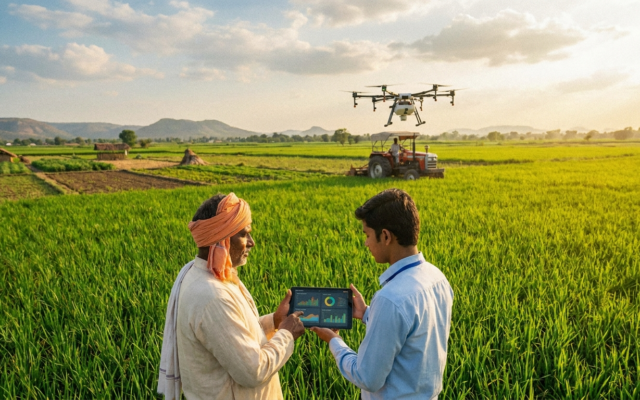
The Indian agricultural landscape, a mosaic of vibrant fields and age-old traditions, is undergoing a profound transformation. For centuries, farmers have relied on the rhythm of the monsoons and generations of inherited wisdom. Today, this deep-rooted knowledge is being amplified by the intelligent algorithms of Artificial Intelligence. We’re witnessing the dawn of precision farming, where AI acts as the farmer’s most astute advisor, guiding every decision from seed to harvest. This isn’t about replacing human expertise, but about augmenting it with data-driven insights that were previously unattainable. Imagine a farmer in Punjab receiving real-time alerts on their smartphone, detailing precise nutrient requirements for a specific patch of wheat, or a farmer in Tamil Nadu adjusting irrigation based on hyper-local weather forecasts and soil moisture readings. This is the power of AI, making agriculture more efficient, sustainable, and ultimately, more profitable for the backbone of India’s economy.
The core of this revolution lies in the ability of AI to process vast amounts of data collected from various sources. Sensors embedded in the soil, drones equipped with advanced imaging technology, and satellite data all feed into sophisticated AI models. These models can then predict crop health, identify nutrient deficiencies, and even forecast potential disease outbreaks with remarkable accuracy. This granular level of understanding allows farmers to apply resources—water, fertilizers, pesticides—only where and when they are needed. This targeted approach not only maximizes crop yields but also significantly reduces waste and minimizes environmental impact. It’s a paradigm shift from generalized practices to hyper-personalized crop management, ensuring that every plant receives the optimal conditions for growth.
Smart Irrigation: Conserving Every Precious Drop
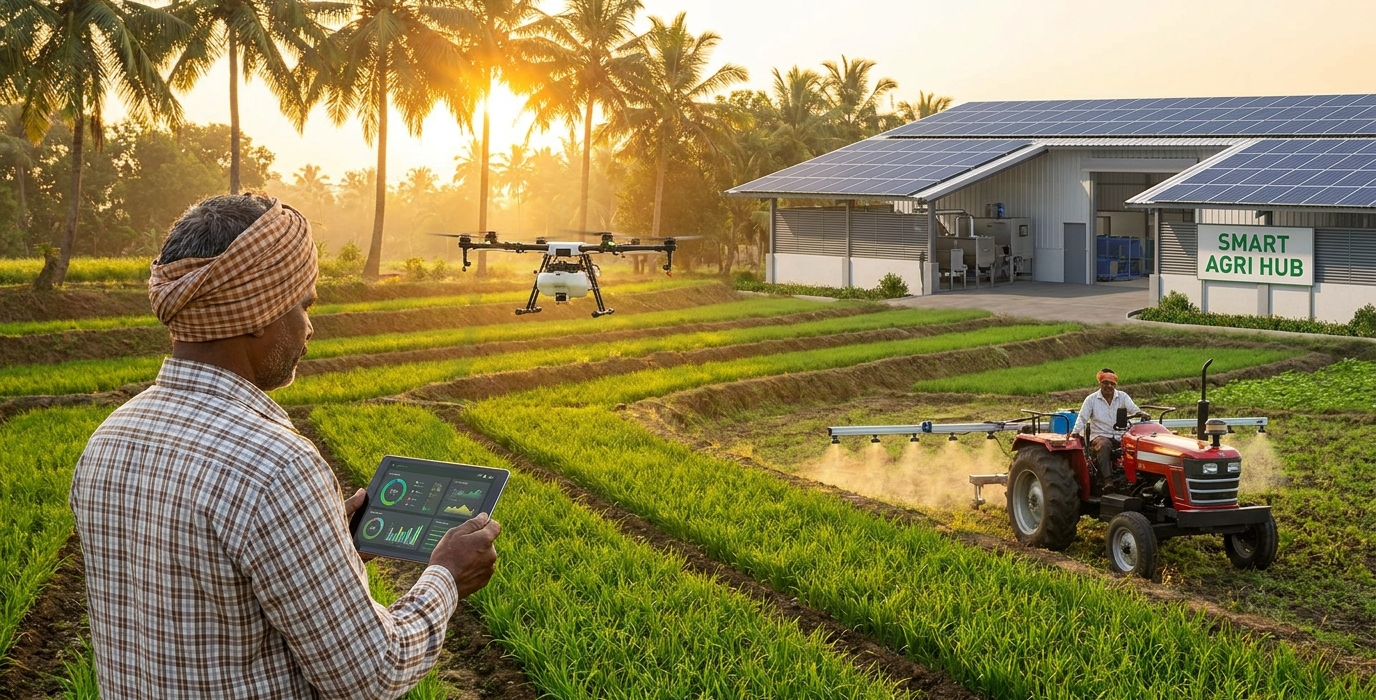
Water scarcity is an ever-growing concern, particularly in the parched regions of Rajasthan and parts of Maharashtra. Traditional irrigation methods, often inefficient, can lead to significant water wastage. AI-powered smart irrigation systems are changing this narrative. These systems analyze real-time data from soil moisture sensors, weather forecasts, and evapotranspiration rates to determine the exact amount of water a crop needs. This data is then used to automatically adjust irrigation schedules and water delivery, ensuring that water is applied precisely at the root zone, minimizing evaporation and runoff.
One remarkable example is the deployment of AI-driven irrigation in the sugarcane fields of Uttar Pradesh. Farmers have reported a reduction in water usage by as much as 30-40% while simultaneously observing an increase in cane yield. These systems learn over time, adapting to the specific microclimates of individual fields and the changing needs of the crops throughout their growth cycle. This intelligent automation frees up farmers’ time, allowing them to focus on other critical aspects of farm management, while ensuring that this most precious resource is conserved for future generations.
Predictive Analytics: Forecasting the Future of Yields
The unpredictability of weather has always been a farmer’s greatest adversary. A sudden hailstorm, an unseasonal drought, or excessive rainfall can devastate a season’s hard work. AI is now offering a powerful antidote through predictive analytics. By analyzing historical weather patterns, current meteorological data, and crop growth models, AI algorithms can forecast potential yield variations and alert farmers to impending risks. This proactive approach allows for timely interventions, such as adjusting planting schedules, reinforcing fields against extreme weather, or diversifying crops to mitigate risks.
Consider the rice paddies of West Bengal. AI models are now crunching data to predict the optimal time for sowing and harvesting, taking into account factors like monsoon intensity, temperature fluctuations, and pest prevalence. Farmers receive recommendations on which rice varieties are most likely to thrive under predicted conditions, and when to apply specific nutrients or pest control measures. This foresight significantly reduces the guesswork involved in agriculture, leading to more stable and predictable income for farming communities. It’s like having a crystal ball for your crops, allowing you to prepare for what’s coming and make informed decisions to protect your harvest.
Disease and Pest Detection: Early Warning Systems
The silent threat of pests and diseases can decimate crops overnight, leading to substantial economic losses. Traditionally, farmers rely on visual inspection, which can be time-consuming and often too late for effective intervention. AI is revolutionizing this by providing early detection capabilities. Drones equipped with multispectral and hyperspectral cameras can fly over fields and capture images that reveal subtle changes in plant health invisible to the human eye. AI algorithms analyze these images to identify early signs of stress, nutrient deficiencies, or the presence of specific pests and diseases.
In the fruit orchards of Himachal Pradesh, AI-powered image analysis is being used to detect fungal infections on apple trees long before they become visible. This allows for targeted spraying of fungicides, reducing the overall volume of chemicals used and preventing widespread outbreaks. Similarly, AI models trained on images of insect infestations can identify specific pest species and their density, enabling farmers to deploy the most effective and least harmful control methods. This precision in pest and disease management not only saves crops but also contributes to healthier produce and a more sustainable agricultural ecosystem, reducing reliance on broad-spectrum pesticides that can harm beneficial insects and soil health.
AI in the Supply Chain: From Farm to Fork Transparency
The journey of agricultural produce from the farm to our plates is often complex and opaque. This lack of transparency can lead to inefficiencies, food wastage, and unfair pricing for farmers. AI, often in conjunction with blockchain technology, is injecting a new level of accountability and traceability into the agricultural supply chain. By integrating AI with IoT devices on farms and in transit, we can create a digital footprint for every batch of produce. This allows for real-time tracking of produce, monitoring of temperature and humidity during storage and transportation, and verification of origin and quality.
For example, in the spice markets of Kerala, AI is helping to verify the authenticity and quality of turmeric and cardamom. Blockchain records, updated by AI-powered sensors at various points in the supply chain, provide an immutable ledger of the product’s journey. Consumers can scan a QR code on the packaging to see exactly where their spices were grown, when they were harvested, and under what conditions they were transported. This not only builds consumer trust but also empowers farmers by ensuring they receive fair prices for their premium products, as the provenance and quality are undeniable. This level of transparency is a game-changer, fostering a more equitable and efficient food system for everyone involved.
Optimizing Logistics and Reducing Food Waste
Beyond traceability, AI is also optimizing the logistical aspects of the food supply chain. Predictive analytics can forecast demand more accurately, helping to reduce overproduction and subsequent food wastage. AI algorithms can also optimize transportation routes, ensuring that perishable goods reach markets faster and in better condition. This is particularly crucial for fresh produce, where spoilage during transit can lead to significant losses. By minimizing transit times and ensuring optimal storage conditions, AI is helping to put more fresh, nutritious food on our tables and less in the landfill.
A surprising fact is that India’s agricultural sector, despite its vastness, faces significant post-harvest losses. Estimates often hover around 15-20% for various produce. AI-driven logistics are directly addressing this by streamlining the movement of goods from farm to distribution centers and then to retailers. This intelligent routing and temperature-controlled transport, guided by AI, ensures that produce remains fresh and appealing, reducing the likelihood of it being discarded due to spoilage. This not only benefits the economy by reducing waste but also contributes to food security.
Enhancing Farmer Livelihoods: The Economic Impact of AI
The ultimate goal of integrating AI into agriculture is to improve the livelihoods of the millions of farmers who form the backbone of India. By increasing yields, reducing input costs, and minimizing risks, AI directly contributes to higher profitability. Furthermore, AI-powered platforms are providing farmers with better access to market information, enabling them to make more informed selling decisions and secure better prices for their produce. This democratization of information and technology is empowering smallholder farmers, who often operate with limited resources.
One particularly innovative application we’re seeing emerge in the cotton fields of Gujarat is AI-driven crop insurance. By using satellite imagery and historical yield data, AI models can assess crop health and predict potential losses due to adverse weather events. This allows for more accurate and efficient insurance assessments, ensuring that farmers receive timely compensation when disaster strikes. This not only provides a financial safety net but also encourages farmers to invest in better farming practices, knowing that their efforts are protected.
The integration of AI in Indian agriculture isn’t just about technology; it’s about empowering the farmer with knowledge and tools to navigate an increasingly complex and unpredictable environment, ensuring a more sustainable and prosperous future for all.
A surprising fact that highlights the rapid adoption is that several Indian agritech startups, leveraging AI, have secured significant venture capital funding in 2026, indicating strong investor confidence in the sector’s potential to drive economic growth and social impact. These startups are developing everything from AI-powered soil testing kits to intelligent pest management drones, making advanced agricultural technologies accessible to a wider range of farmers. This ecosystem of innovation is crucial for the sustained growth of AI in Indian farming.
The Road Ahead: Challenges and Opportunities in 2026 and Beyond
While the potential of AI in Indian agriculture is immense, we must also acknowledge the challenges that lie ahead. The digital divide remains a significant hurdle, with many farmers, especially in remote areas, lacking access to smartphones, reliable internet connectivity, or the digital literacy required to utilize these advanced tools. The initial cost of implementing some AI technologies can also be prohibitive for smallholder farmers. Addressing these issues requires concerted efforts from the government, private sector, and research institutions.
However, the opportunities far outweigh the challenges. The Indian government’s push for digitalization and smart agriculture, coupled with the decreasing cost of AI technologies, is creating a fertile ground for widespread adoption. We are also seeing a growing number of AI-powered agricultural services being offered on a pay-as-you-go basis, making them more accessible. The focus is shifting towards developing user-friendly interfaces and providing comprehensive training and support to farmers, ensuring that the benefits of AI reach every corner of the country. The future of Indian agriculture is undeniably intelligent, and the journey has only just begun.
Frequently Asked Questions
What is AI in agriculture?
AI in agriculture refers to the use of artificial intelligence technologies, such as machine learning and computer vision, to improve farming practices. This includes applications like precision farming, predictive analytics for crop yields, pest and disease detection, and optimizing supply chains.
How can AI help smallholder farmers in India?
AI can help smallholder farmers by providing them with affordable access to data-driven insights that were previously only available to large corporations. This can lead to increased yields, reduced costs, better risk management, and improved market access, ultimately enhancing their income and livelihoods.
What are the main challenges to AI adoption in Indian farming?
Key challenges include the digital divide (lack of internet and smartphone access), high initial costs of technology, the need for digital literacy and training among farmers, and ensuring the scalability and affordability of AI solutions for diverse farming needs across India.
Will AI replace human farmers in India?
No, AI is designed to augment, not replace, human farmers. It provides them with tools and insights to make better decisions, increasing efficiency and sustainability. The human element of farming, including local knowledge and experience, remains invaluable.
How is AI contributing to sustainable farming practices in India?
AI contributes to sustainability by enabling precision application of resources like water and fertilizers, reducing the need for chemical pesticides through early detection and targeted treatment, and optimizing logistics to minimize food waste.