Key Takeaways
- Indian AI startups are leading in hyper-localised solutions, from AI-powered agricultural advisories in rural Maharashtra to personalised healthcare diagnostics in Tier-2 cities.
- The nation’s focus on data privacy and ethical AI development is creating a unique regulatory landscape, attracting global investment and fostering trust.
- Emerging AI hubs beyond Bengaluru, such as Pune, Hyderabad, and Chennai, are becoming crucibles for innovation, driven by skilled talent and supportive government initiatives.
- The integration of AI into traditional sectors like manufacturing and logistics is achieving unprecedented efficiency gains, positioning India as a global manufacturing powerhouse.
AI’s Deep Roots in India’s Innovation Soil
The year is 2026, and Artificial Intelligence is no longer a futuristic concept whispered in Silicon Valley boardrooms; it’s a tangible force reshaping India from its bustling metropolises to its serene villages. We’re witnessing an unprecedented surge in AI innovation, not just in imitation of global trends, but in genuinely novel applications tailored to India’s unique challenges and opportunities. The narrative of India as a mere consumer of technology is rapidly evolving into one of a creator and innovator.
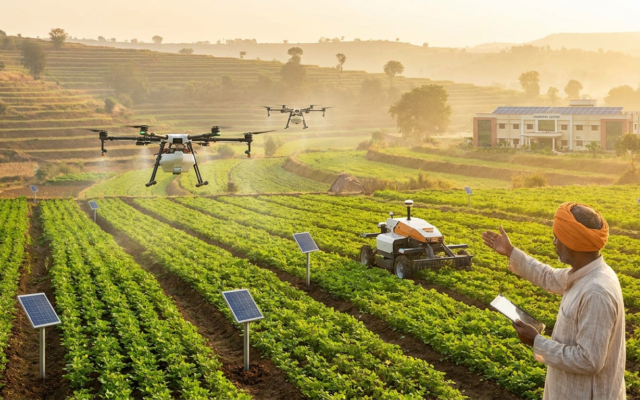
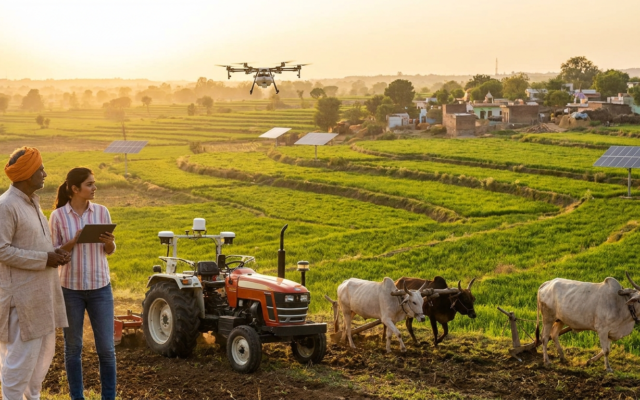
Indian startups are no longer content with replicating existing AI models. Instead, they are building AI from the ground up, leveraging the nation’s vast and diverse datasets to create solutions that are both globally competitive and deeply contextual. This is particularly evident in areas where AI can address pressing societal needs. Think of AI-driven platforms that are revolutionising agricultural practices in states like Punjab, predicting crop yields with remarkable accuracy and optimising resource allocation for farmers.
This ground-up approach is fundamentally different. It’s about understanding the intricate nuances of local languages, cultural practices, and economic realities. For instance, AI-powered telemedicine platforms are now extending critical healthcare services to remote areas in Uttarakhand, using natural language processing to overcome language barriers and provide initial diagnoses. This deep dive into local needs is not just innovative; it’s creating a more equitable and accessible future for millions.
The Rise of Hyper-Localised AI Solutions
One of the most exciting trends we’re observing in India’s AI startup ecosystem in 2026 is the relentless focus on hyper-localised solutions. Forget one-size-fits-all approaches; Indian startups are building AI that understands and caters to the specific needs of a particular region, community, or even a micro-market. This level of granularity was unthinkable just a few years ago, but advances in data processing and algorithm development have made it a reality.
Consider the agricultural sector, which remains the backbone of India’s economy. Startups are developing AI tools that analyse soil conditions, weather patterns, and pest infestations specific to small landholdings in Kerala, offering tailored advice on irrigation and fertiliser use. This is a far cry from generic agricultural advisories. The impact is tangible: increased yields, reduced waste, and improved livelihoods for farmers who might otherwise lack access to such sophisticated insights.
Similarly, in the urban landscape, AI is being deployed for hyper-localised traffic management in cities like Mumbai, predicting congestion hotspots based on real-time data and suggesting alternative routes to commuters. This goes beyond general traffic prediction; it’s about optimising flow at a granular level, factoring in local events, road closures, and even the timing of local markets. This precision is what sets these Indian AI solutions apart on the global stage.
Beyond agriculture and urban planning, this hyper-localised ethos extends to education and healthcare. AI-powered tutoring platforms are adapting to regional curricula and teaching styles in Tamil Nadu, while diagnostic AI tools are being trained on diverse Indian patient demographics to improve accuracy in detecting diseases prevalent in specific states. This deep understanding of local context is not just a competitive advantage; it’s a testament to India’s growing AI maturity.
Navigating the Ethical AI Landscape
As India’s AI prowess grows, so does its commitment to ethical AI development and robust data privacy. This is a crucial differentiator that is not only building trust among users but also attracting significant global investment. The regulatory framework, while evolving, is being shaped with a clear understanding of the potential pitfalls of AI, ensuring that innovation proceeds responsibly.
The Digital Personal Data Protection Act of 2023, and its subsequent amendments and implementations in 2025 and 2026, has set a strong precedent. Indian startups are proactively integrating privacy-by-design principles into their AI systems. This means that data collection is minimised, consent mechanisms are transparent, and data usage is strictly governed. For consumers in India and beyond, this commitment to privacy is a significant reassurance.
Moreover, the conversation around AI bias is being tackled head-on. Startups are investing in diverse datasets and bias detection tools to ensure their AI models are fair and equitable across different demographic groups. This is especially important in a country as diverse as India, where AI applications can have profound social implications. We’re seeing innovative approaches to mitigating bias in areas like credit scoring and recruitment AI.
The government’s National AI Strategy, continually updated to reflect the rapid pace of technological change, also emphasizes responsible AI deployment. This proactive stance has created a fertile ground for AI companies that prioritise trust and ethical considerations. This focus is not just about compliance; it’s about building sustainable AI solutions that benefit society as a whole, positioning India as a leader in trustworthy AI.
Emerging AI Hubs Beyond Bengaluru
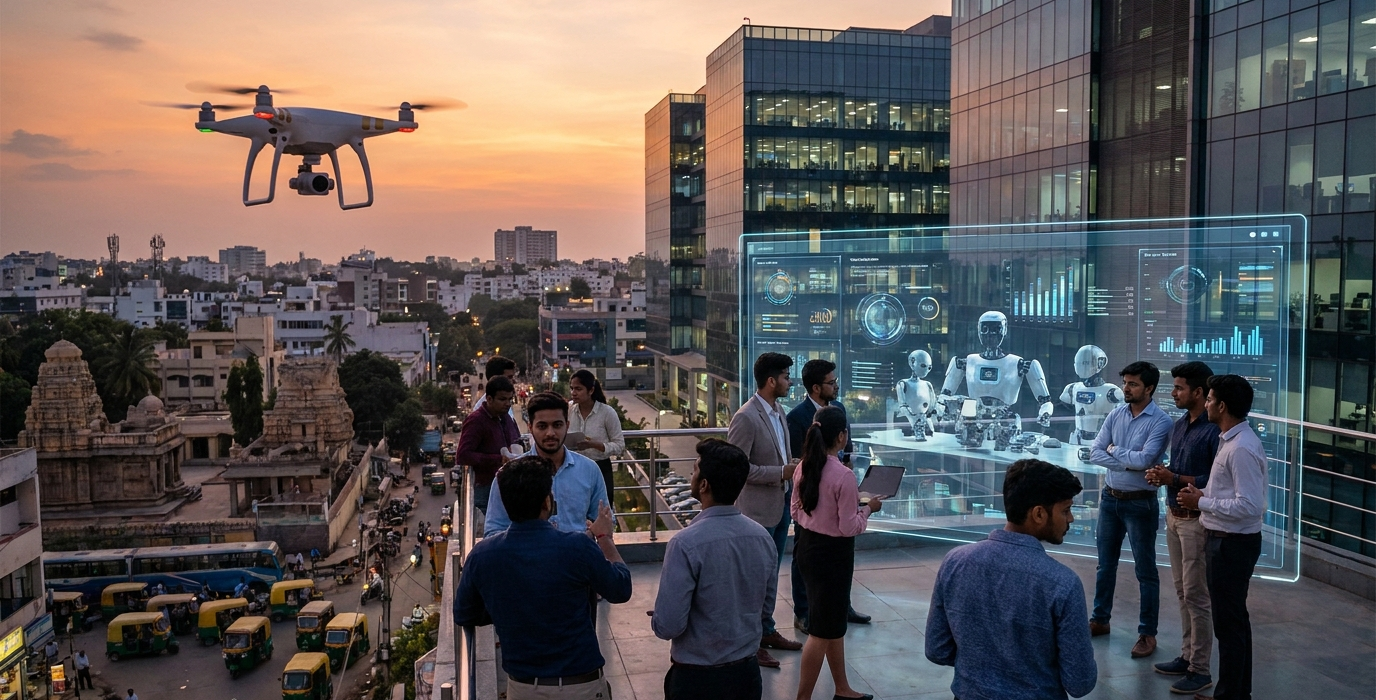
While Bengaluru continues to be a formidable force in India’s AI landscape, new AI hubs are rapidly emerging and carving out their own unique identities. Cities like Pune, Hyderabad, and Chennai are no longer just IT service centres; they are becoming crucibles of AI innovation, attracting talent, investment, and fostering vibrant startup ecosystems. This decentralisation of AI development is a positive sign for the nation’s technological future.
Pune, for instance, is leveraging its strong academic institutions and manufacturing base to become a leader in AI for industrial automation and robotics. Startups there are developing AI-powered solutions for predictive maintenance in factories, optimising supply chains, and even creating intelligent robots for complex assembly tasks. The proximity to established manufacturing giants provides a unique testing ground and collaborative environment.
Hyderabad, with its established life sciences and pharmaceutical sectors, is seeing a surge in AI startups focused on drug discovery, genomics, and personalised medicine. AI is accelerating research cycles, identifying potential drug candidates, and personalising treatment plans for patients. The city’s robust healthcare infrastructure provides an ideal ecosystem for these innovations to flourish.
Chennai, historically a hub for automotive and manufacturing, is now blending its industrial prowess with AI to create smart factories and advanced logistics solutions. We’re seeing AI integrated into everything from autonomous vehicle development to optimising port operations. The city’s deep pool of engineering talent is a key driver of this evolution. This diversification ensures that AI innovation is spread across the country, fostering regional growth and creating more opportunities.
AI Revolutionising Traditional Industries
The transformative power of AI is nowhere more evident than in its disruption and enhancement of India’s traditional industries. In 2026, we’re seeing AI move beyond niche applications to fundamentally re-engineer sectors like manufacturing, logistics, and even retail, driving unprecedented efficiency and productivity gains. This is not about replacing human workers but augmenting their capabilities and optimising processes.
In manufacturing, AI-powered computer vision systems are being deployed on assembly lines to perform quality control checks with superhuman speed and accuracy. This reduces defects, minimises waste, and ensures consistent product quality, a critical factor as India aims to become a global manufacturing hub. Imagine an AI system inspecting intricate electronic components or automotive parts in real-time, identifying microscopic flaws that the human eye might miss.
Logistics and supply chain management are also undergoing a radical transformation. AI algorithms are optimising delivery routes in real-time, factoring in traffic, weather, and delivery windows to reduce transit times and fuel consumption. This has a direct impact on cost savings and environmental sustainability. Startups are developing AI platforms that provide end-to-end visibility of the supply chain, predicting potential disruptions and enabling proactive management.
Even the retail sector is benefiting. AI is being used to personalise customer experiences, from recommending products based on browsing history and past purchases to optimising inventory management in physical stores. This data-driven approach allows businesses to understand their customers better and offer tailored solutions, boosting sales and customer loyalty. This integration is making Indian businesses more competitive on a global scale.
The Global Impact of Indian AI Innovation
It’s increasingly clear that India’s AI startup surge in 2026 is not just a domestic phenomenon; it’s having a significant and growing global impact. Indian AI solutions, born out of necessity and tailored to unique challenges, are proving to be remarkably adaptable and scalable for international markets. We’re seeing a paradigm shift where India is not just a recipient of global tech trends but a source of cutting-edge AI innovation.
One surprising fact is that many Indian AI startups are finding significant traction in markets with similar demographic or infrastructural challenges. For instance, AI platforms designed to improve agricultural yields in drought-prone regions of Rajasthan are now being adopted in parts of Africa. The underlying algorithms and approaches to data scarcity are proving universally applicable. This demonstrates the ingenuity of Indian developers.
Another key area of global influence is in AI for financial inclusion. Startups in India have pioneered AI-driven credit scoring models that assess risk for individuals with limited traditional credit histories. These models, which often incorporate alternative data sources like mobile phone usage patterns, are now being licensed and adapted by financial institutions in Southeast Asia and Latin America. This is helping to unlock economic opportunities for millions worldwide.
Furthermore, the emphasis on ethical AI and data privacy in India is resonating globally. As more countries grapple with the implications of AI, the Indian model of building trust through transparency and responsible practices is becoming a blueprint. This positions Indian AI companies not just as technology providers, but as trusted partners in the global digital economy. The world is watching, and learning, from India’s AI journey.
Frequently Asked Questions
What are the key sectors driving AI innovation in India in 2026?
The key sectors driving AI innovation include agriculture, healthcare, financial services, manufacturing, and logistics. Startups are developing hyper-localised solutions, addressing specific regional needs and challenges within these industries.
How is India ensuring ethical AI development?
India is ensuring ethical AI development through a combination of robust data privacy laws, such as the Digital Personal Data Protection Act, and a proactive government strategy that emphasizes transparency, bias mitigation, and responsible deployment. Startups are integrating privacy-by-design principles and investing in diverse datasets.
Are there significant AI investment opportunities in India for 2026?
Yes, the Indian AI startup ecosystem is attracting significant domestic and international investment in 2026. The growing number of successful AI solutions, coupled with a favourable regulatory environment and a large talent pool, makes it an attractive market for investors.
What is surprising about Indian AI startups’ global reach?
A surprising aspect is the adaptability of Indian AI solutions to markets with similar demographic or infrastructural challenges. For example, AI for agriculture in arid Indian regions is being adopted in Africa, and AI for financial inclusion is finding use in Southeast Asia and Latin America.