Key Takeaways
- AI-powered analytics are helping Indian farmers make data-driven decisions, from pest detection to optimal planting times, boosting yields by up to 20%.
- Precision irrigation and drone technology are conserving water and reducing chemical usage, leading to more sustainable and cost-effective farming.
- AI is democratizing agricultural knowledge, providing smallholder farmers with access to expert advice previously unavailable to them.
- The integration of AI is enhancing market access and price transparency, empowering farmers with better negotiation power and reducing post-harvest losses.
The Dawn of Data-Driven Fields: AI’s Impact on Indian Harvests
The sun rises over the fertile plains of Punjab, casting a golden hue on fields of wheat. But this isn’t just any harvest; it’s a harvest increasingly shaped by algorithms and artificial intelligence. In 2026, Indian agriculture is at a pivotal moment, embracing AI not as a distant dream, but as a practical, on-the-ground tool transforming how we grow our food. From the rolling hills of the Nilgiris to the vast expanses of the Thar Desert, AI is sowing the seeds of a more efficient, sustainable, and profitable future for millions of farmers across the nation.
You might imagine AI as complex robots tending to crops, but the reality is far more nuanced and accessible. It’s about smart sensors gathering data, predictive models forecasting weather patterns, and digital platforms connecting farmers directly to markets. This technological leap is crucial, especially as India navigates the challenges of a growing population, climate change, and the need for food security. We are witnessing a fundamental shift from traditional, often intuition-based farming to a scientific, data-informed approach that promises to redefine agricultural productivity and resilience.
Precision Agriculture: Smarter Planting, Healthier Crops
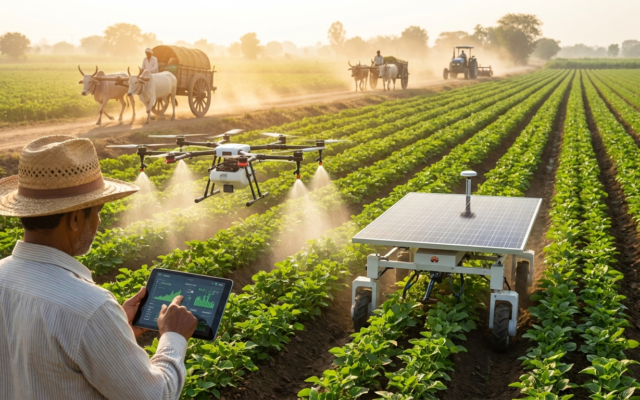
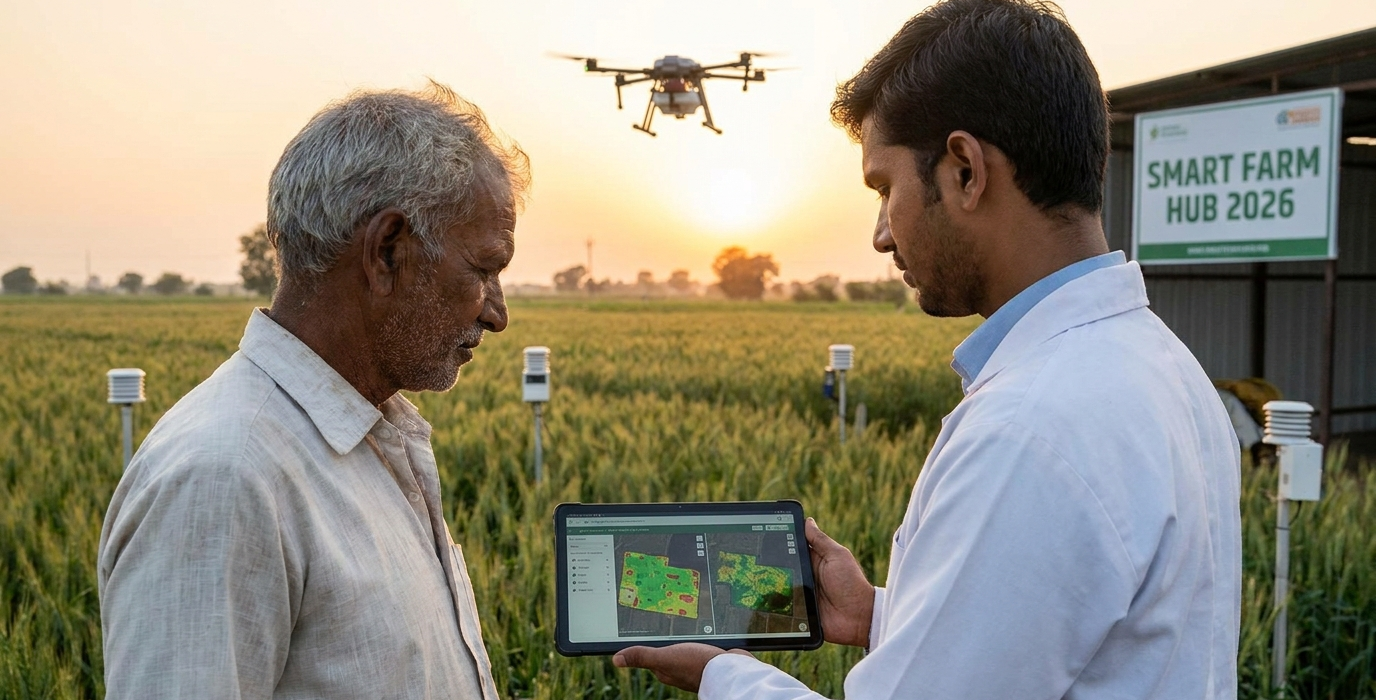
Imagine knowing exactly how much water and fertilizer your crops need, down to the individual plant. This is the promise of precision agriculture, powered by AI, and it’s rapidly becoming a reality for Indian farmers. Satellites and drones equipped with hyperspectral cameras can monitor crop health, identify nutrient deficiencies, and detect early signs of disease or pest infestation with remarkable accuracy. This allows for targeted interventions, rather than blanket applications, saving resources and minimizing environmental impact.
Consider the issue of water scarcity. AI-driven irrigation systems, like those being piloted in Rajasthan’s arid regions, analyze soil moisture levels, weather forecasts, and crop water requirements to deliver water precisely when and where it’s needed. This can reduce water consumption by as much as 30-40%, a critical advantage in a country facing increasing water stress. Furthermore, AI algorithms can analyze vast datasets of soil composition, historical yields, and local climate patterns to recommend the optimal planting times, crop varieties, and even seed placement strategies for maximum yield and resilience.
One surprising fact is that AI is proving exceptionally adept at identifying specific types of pests and diseases. Instead of broad-spectrum pesticides, AI can pinpoint the exact threat, allowing for the application of highly targeted, often organic, control methods. This not only saves money but also protects beneficial insects and improves the overall health of the farm ecosystem. We are seeing a significant reduction in chemical runoff, contributing to cleaner water bodies and healthier soil.
AI as a Farmer’s Personal Agronomist: Knowledge at Your Fingertips
For decades, access to expert agricultural advice has been a privilege, often out of reach for smallholder farmers operating with limited resources. AI is democratizing this knowledge, acting as a personal agronomist available 24/7. Mobile apps, integrated with AI-powered diagnostic tools, can analyze images of diseased plants uploaded by farmers and provide instant, actionable recommendations. This bypasses the need for physical visits from extension officers, which can be time-consuming and costly.
These AI systems learn from a vast repository of agricultural data, including best practices, scientific research, and the experiences of countless other farmers. They can advise on everything from choosing the right seeds for a particular microclimate to managing crop rotation for soil health. For a farmer in a remote village in Bihar, this means having access to the same cutting-edge advice that a large commercial farm might receive, leveling the playing field and empowering them to make better decisions.
The use of AI-powered chatbots and voice assistants is also making these tools accessible even to farmers with limited literacy or digital skills. By simply speaking their queries, they can receive clear, understandable guidance in their local dialects. This is a game-changer for inclusivity, ensuring that the benefits of agricultural innovation reach every corner of rural India. We are moving towards an era where every farmer, regardless of their background, can leverage the power of advanced analytics.
Optimizing Supply Chains: Reducing Waste, Maximizing Returns
The journey from farm to fork in India is often fraught with inefficiencies, leading to significant post-harvest losses. AI is stepping in to streamline these complex supply chains, ensuring that more of the produce reaches consumers and more of the profit reaches farmers. Predictive analytics can forecast demand more accurately, helping to reduce overproduction and waste. This means farmers can plan their harvests better, aligning their output with market needs.
AI is also revolutionizing logistics. Smart routing algorithms can optimize transportation, reducing fuel consumption and delivery times. Blockchain technology, often integrated with AI, can provide end-to-end traceability of produce, enhancing food safety and building consumer trust. For farmers, this transparency can lead to better pricing, as buyers are more willing to pay a premium for goods with a verified origin and quality.
Furthermore, AI-powered platforms are creating more direct links between farmers and consumers or businesses. This disintermediation cuts out layers of middlemen, allowing farmers to capture a larger share of the value. Imagine a farmer in West Bengal selling their premium mangoes directly to hotels in Kolkata through an AI-managed marketplace, receiving real-time price updates and payment confirmations. This direct access is a powerful tool for economic empowerment, and it’s increasingly powered by intelligent systems that understand market dynamics.
Crop Monitoring and Forecasting: Predicting the Unpredictable
Weather is the lifeblood of agriculture, but it’s also its greatest unpredictability. AI is significantly enhancing our ability to forecast weather patterns and their impact on crops, offering a crucial buffer against climate volatility. By analyzing historical weather data, satellite imagery, and real-time sensor feeds, AI models can predict rainfall, temperature fluctuations, and the likelihood of extreme weather events with greater precision.
This predictive power extends to crop yields. AI algorithms can integrate data on soil conditions, pest prevalence, water availability, and weather forecasts to generate realistic yield predictions. This information is invaluable for farmers in planning their sales, securing financing, and making informed decisions about resource allocation. For larger agricultural businesses and government agencies, these forecasts are critical for national food security planning and market stabilization.
A truly remarkable aspect is AI’s role in early warning systems for natural disasters like droughts or floods. By monitoring subtle environmental indicators, AI can provide advance notice, allowing farmers to take protective measures, such as moving livestock or harvesting crops early. This proactive approach, guided by intelligent analysis, is saving livelihoods and preventing widespread crop failure. The speed at which AI can process and interpret complex environmental data is unprecedented.
The Future of Farming: AI and the Next Generation of Indian Cultivators
The integration of AI into Indian agriculture is not just about technology; it’s about nurturing a new generation of digitally savvy farmers. Young entrepreneurs are increasingly drawn to agri-tech, seeing the potential for innovation and improved livelihoods. AI tools are making farming more data-intensive and less physically demanding, appealing to a younger demographic that might have previously sought opportunities in urban centers.
This shift is crucial for the long-term sustainability of Indian agriculture. As older generations of farmers retire, a new cohort equipped with the skills to manage AI-driven operations will be essential. Educational initiatives, often supported by government programs and private sector partnerships, are focusing on training farmers in using these new technologies. We are seeing a rise in agricultural technology hubs and incubation centers across India, fostering innovation and entrepreneurship in the agri-tech space.
Ultimately, AI is not replacing the farmer; it’s empowering them. It’s providing them with the tools to make more informed decisions, increase their productivity, and improve their profitability. The vision is of a future where every Indian farm, from the smallest plot in Kerala to the largest estate in Gujarat, benefits from the insights of artificial intelligence, ensuring food security and prosperity for generations to come. The journey is ongoing, but the direction is clear: a smarter, more sustainable agricultural landscape.
“AI is not just a tool for large corporations; it’s a powerful equalizer that is bringing advanced agricultural insights directly into the hands of the smallholder farmer, fundamentally altering the economics of rural India.”
Frequently Asked Questions
What are the biggest challenges in adopting AI in Indian agriculture?
The primary challenges include the need for significant investment in digital infrastructure, widespread digital literacy among farmers, and ensuring the affordability and accessibility of AI solutions for smallholdings. Data privacy and security are also growing concerns that need robust frameworks.
How does AI help in managing crop diseases?
AI-powered image recognition systems can detect early signs of diseases from photos of crops, often before they are visible to the human eye. These systems then provide farmers with precise diagnoses and recommend targeted treatments, reducing the need for broad pesticide use.
Can AI help small farmers in India compete with larger agricultural operations?
Yes, AI can level the playing field by providing small farmers with access to sophisticated data analytics, market insights, and expert advice that were previously only available to large enterprises. This empowers them to optimize their yields and negotiate better prices.
What kind of data is used by AI systems in agriculture?
AI systems utilize a wide range of data, including satellite and drone imagery, soil sensor readings, weather patterns, historical crop performance data, market prices, and even local pest and disease outbreak information.