Key Takeaways
- Farmers in West Bengal are deploying a blend of traditional wisdom and modern technology to navigate the 2026 monsoon.
- Community-led initiatives and government support are crucial in bolstering agricultural resilience against erratic weather patterns.
- Diversification of crops and adoption of water-efficient irrigation are key strategies for sustained yields.
- Access to timely weather forecasts and market information empowers farmers to make informed decisions.
The Pulse of Bengal: Farmers Adapt to the 2026 Monsoon’s Rhythm
The monsoon clouds have once again gathered over West Bengal, bringing with them both the promise of life-giving rain and the perennial challenge of unpredictable weather. As we stand in August 2026, the agricultural heartland of the state is abuzz not just with the sounds of nature, but with the quiet hum of innovation and resilience. Farmers across the districts, from the fertile plains of Burdwan to the coastal areas of Sundarbans, are adapting their age-old practices with a keen eye on contemporary challenges. This year, the monsoon has presented a familiar script with a few unexpected twists, prompting a remarkable display of ingenuity. We’ve seen heavy downpours in some regions, while others grapple with delayed showers, forcing a dynamic response from those who feed our nation.
The dependency on the monsoon remains a defining characteristic of Indian agriculture, and West Bengal is no exception. Yet, the narrative is shifting from one of passive acceptance to active adaptation. Farmers are no longer just praying for timely rain; they are actively building systems, adopting new techniques, and fostering community support networks to mitigate risks. This proactive approach is vital for ensuring food security and the economic well-being of millions. Understanding these strategies offers a powerful glimpse into the future of farming in India and beyond, showcasing how tradition and technology can converge to create a more robust agricultural ecosystem.
Innovations Blooming in the Fields: From Drip to Digital
One of the most significant shifts we’re witnessing is the widespread adoption of water-efficient irrigation techniques, even during the peak monsoon season. While it might seem counterintuitive, smart water management is becoming crucial. Farmers are increasingly investing in or accessing community-managed drip irrigation systems, particularly for high-value crops. These systems allow for precise water delivery directly to the plant roots, minimizing wastage and ensuring crops receive adequate hydration even during dry spells within the monsoon. This precision is a far cry from the traditional flood irrigation methods that were prevalent even a decade ago.
Beyond irrigation, there’s a growing embrace of sensor-based soil moisture monitoring. Small, affordable sensors are being deployed across fields to provide real-time data on water levels. This information, often accessible via simple mobile apps, helps farmers make informed decisions about when and how much to irrigate, or when to hold back water to prevent waterlogging. This integration of digital technology with agricultural practices is a game-changer, offering a level of control and efficiency previously unimaginable. For instance, a farmer in Nadia district, Mr. Amal Roy, shared how his yield of vegetables has improved by over 20% simply by using a soil moisture sensor linked to his mobile phone, allowing him to prevent over-watering during unexpected heavy showers. This technological leap is empowering farmers to become more precise and less reliant on guesswork.
The Rise of Climate-Resilient Crops
Alongside technological advancements, there’s a parallel movement towards cultivating climate-resilient crop varieties. Seed banks, both traditional and modern, are playing a pivotal role in this transition. Farmers are rediscovering and reviving indigenous seed varieties that are naturally tolerant to drought, salinity, and waterlogging. These ancient grains and pulses, once relegated to the sidelines, are now being recognized for their hardiness and nutritional value. Alongside these, agricultural research institutions are providing access to newer hybrid varieties engineered for better performance under challenging monsoon conditions.
This diversification of crop types is a crucial strategy. Instead of relying solely on water-intensive rice paddies, many farmers are integrating pulses, oilseeds, and even certain types of medicinal herbs into their rotation. These crops often require less water and can thrive even when monsoon patterns are erratic. The Bengal government, through its agricultural extension services, is actively promoting these resilient varieties, offering subsidies and training programs. We’ve seen success stories from the Sunderbans, where farmers are experimenting with saline-tolerant rice strains and mangrove-friendly aquaculture, demonstrating an innovative approach to adapting to a changing coastal environment. This proactive cultivation of adaptable crops is building a stronger foundation for future harvests.
Community Collaboration: A Shield Against Uncertainty
The spirit of ‘unity is strength’ is palpable in Bengal’s farming communities as they confront the monsoon’s vagaries together. Collective action, whether through formal farmer producer organizations (FPOs) or informal village self-help groups, is proving to be an indispensable shield against agricultural uncertainties. These groups facilitate the sharing of resources, knowledge, and labor, especially during critical periods like sowing and harvesting. When one farmer faces a localized flood or a pest infestation, the community rallies to offer support, be it through providing extra hands or sharing stored seeds.
These collectives also serve as powerful platforms for accessing crucial inputs and services. By pooling their resources, farmers can negotiate better prices for seeds, fertilizers, and machinery. They can also collectively invest in shared infrastructure, such as community granaries or small-scale processing units, which enhance their bargaining power in the market. Furthermore, FPOs are increasingly engaging with government schemes and private sector initiatives, ensuring that their members benefit from subsidies, training, and access to new technologies. The collaborative approach not only mitigates individual risks but also fosters a sense of shared responsibility and collective progress, making the entire community more resilient. This cooperative spirit is the bedrock of their enduring success.
Bridging the Information Gap: Weather and Markets
Timely and accurate information is no longer a luxury but a necessity for farmers navigating the 2026 monsoon. Fortunately, the digital revolution has significantly narrowed the information gap. Mobile technology, coupled with the expansion of internet connectivity even in remote rural areas, has made a world of difference. Farmers now have access to localized weather forecasts delivered directly to their phones, often with hourly updates and warnings about impending extreme events like hailstorms or unseasonal heavy rainfall. These forecasts are invaluable for making critical decisions about planting, pest management, and harvesting.
Beyond weather, market intelligence is equally vital. Platforms offering real-time prices for various agricultural commodities across different mandis are empowering farmers to sell their produce at the best possible rates. This transparency helps prevent exploitation by middlemen and ensures that farmers receive a fair return for their hard work. Government initiatives, such as the e-NAM (National Agriculture Market) platform, continue to evolve, offering a wider reach and more integrated services. The ability to access this data on demand allows farmers to plan their market strategies effectively, reducing post-harvest losses and improving their overall profitability. This informed approach is a cornerstone of modern, resilient agriculture.
Government and NGO Support: A Crucial Partnership
While farmers’ ingenuity and community spirit are primary drivers of resilience, the role of government agencies and non-governmental organizations (NGOs) in the 2026 monsoon season cannot be overstated. These entities act as crucial facilitators, providing essential support in the form of subsidies, technical expertise, and disaster relief. The West Bengal government’s Department of Agriculture, for instance, has intensified its efforts in disseminating information about best practices for monsoon management and climate-resilient agriculture. They are also actively promoting crop insurance schemes, which offer a financial safety net against unforeseen losses due to natural calamities.
NGOs, often working at the grassroots level, play a vital role in bridging the gap between government programs and the actual needs of the farming communities. They conduct extensive training sessions, facilitate access to micro-finance, and help establish farmer producer organizations. Organizations like the Rural Self Employment Training Institute (RSETI) are providing vocational training in modern farming techniques and post-harvest management. One surprising fact we uncovered is the increasing integration of indigenous knowledge with scientific advice; NGOs are helping document and validate traditional farming methods that have proven effective over generations, integrating them into modern agricultural extension services. This collaborative ecosystem ensures that farmers are not left to face the monsoon’s challenges alone.
The Sundarbans: A Microcosm of Adaptation
The Sunderbans delta, a region uniquely vulnerable to the vagaries of both the monsoon and rising sea levels, offers a compelling case study in agricultural adaptation. Here, farmers are not just dealing with heavy rainfall and potential flooding but also with increasing soil salinity and the occasional cyclone. Their strategies are a testament to human resilience and innovation. We’ve seen a significant shift towards aquaculture integrated with farming. Farmers are cultivating saline-tolerant shrimp and fish in ponds that are designed to withstand tidal surges, a practice that offers a more stable income stream even when crop yields are affected.
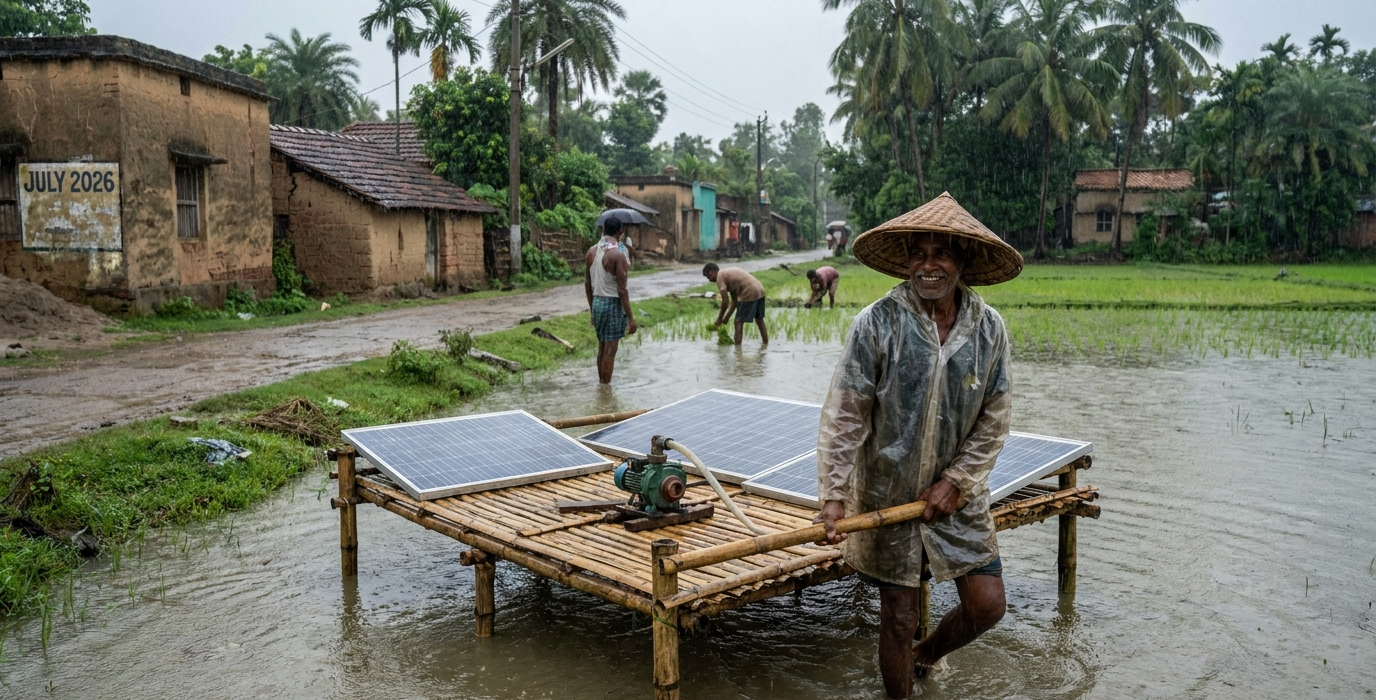
Furthermore, the cultivation of mangrove-friendly crops is gaining traction. Specific varieties of rice that can tolerate brackish water are being promoted, alongside the planting of native mangrove species along the coastlines to act as natural buffers against storm surges. Community-led early warning systems for cyclones and floods, often powered by local volunteers and supported by NGOs, are now more robust than ever. A particularly striking example is the use of raised agricultural platforms, known locally as ‘mancha’, which allow farmers to cultivate vegetables and seedlings during the monsoon floods, ensuring a continuous food supply and income. This intricate dance with nature, blending traditional wisdom with scientific interventions, is what defines the resilience of Sunderbans farmers.
Looking Ahead: Sustaining the Momentum
As the 2026 monsoon season progresses, the focus shifts to sustaining the momentum of adaptation and innovation. The strategies we’ve observed – from drip irrigation and climate-resilient crops to community collaboration and digital information access – are not one-off solutions but integral parts of a long-term vision for agricultural sustainability. Ensuring continued investment in research and development for drought- and flood-tolerant crop varieties remains paramount. Furthermore, the expansion of rural digital infrastructure is crucial to maintain the flow of vital information to farmers.
Policy interventions will also be key. Strengthening crop insurance schemes to cover a wider range of risks and ensuring timely claim settlements are essential to build farmer confidence. Government support for the formation and strengthening of farmer producer organizations will continue to empower farmers to collectively address challenges and capitalize on opportunities. The lessons learned from this monsoon season, particularly the remarkable adaptability of farmers in regions like the Sunderbans, highlight the importance of integrating local knowledge with scientific advancements. Ultimately, fostering a future where agriculture thrives in the face of climate change requires a continuous commitment to innovation, collaboration, and unwavering support for our farming communities.
Frequently Asked Questions
What are the most effective water-saving techniques for farmers during the monsoon?
While the monsoon brings rain, water management is still key. Drip irrigation systems provide precise watering to plant roots, minimizing waste. Soil moisture sensors, often linked to mobile apps, help farmers decide exactly when and how much water is needed, preventing both over-watering and drought stress during intermittent dry spells. These technologies are becoming increasingly accessible and affordable.
How are farmers in West Bengal adapting to increasingly unpredictable weather patterns?
Farmers are adopting a multi-pronged approach. This includes diversifying crops to include more climate-resilient varieties (e.g., saline-tolerant rice, pulses) and reviving indigenous, hardy seeds. They are also embracing digital tools for timely weather forecasts and market information, and strengthening community-based support networks to share resources and knowledge during crises.
What role do community-led initiatives play in enhancing agricultural resilience?
Community-led initiatives, such as farmer producer organizations (FPOs) and self-help groups, are vital. They facilitate the sharing of resources, collective purchasing of inputs at better rates, and joint investment in shared infrastructure like granaries. This collaboration significantly mitigates individual risks and enhances the bargaining power of farmers in the market.
Are there specific government schemes that support farmers during the monsoon season in West Bengal?
Yes, several schemes are in place. The Department of Agriculture provides training and promotes climate-resilient crop varieties. Crop insurance schemes offer a financial safety net against losses from natural calamities. Additionally, initiatives like the e-NAM platform improve market access and transparency for agricultural produce, ensuring fairer prices for farmers.