Key Takeaways
- The 2026 Indian wedding season embraces a fusion of tradition and cutting-edge technology, from AI-powered guest experiences to sustainable decor.
- Personalisation is paramount, with couples opting for bespoke vows, curated culinary journeys, and unique pre-wedding celebrations across diverse Indian locales.
- Fashion is a canvas for heritage revival and modern expression, featuring custom embroidery, sustainable fabrics, and a bold resurgence of regional craft.
- The ‘experiential wedding’ is the new benchmark, moving beyond mere ceremony to immersive celebrations designed to create lasting memories for guests.
- Micro-weddings and intimate gatherings are gaining traction, often amplified by sophisticated virtual participation for global attendees.
The Ethereal Embrace: Venues and Vows Reimagined
The 2026 Indian wedding season is witnessing a profound shift towards experiential venues and deeply personalised ceremonies. Gone are the days of cookie-cutter banquet halls for many; couples are seeking spaces that tell a story, reflecting their unique journeys. We’re seeing a surge in demand for heritage properties in Rajasthan, like the opulent Umaid Bhawan Palace in Jodhpur, and charming boutique hotels nestled in the serene backwaters of Kerala, such as those near Alleppey. These locations offer not just a backdrop, but an immersive cultural experience for guests.
Furthermore, the concept of the wedding venue is expanding to include unconventional settings. Think vineyard weddings in Nashik, glamping experiences in the Himalayas near Rishikesh, or even a tranquil ceremony amidst the tea estates of Darjeeling. The focus is on creating an intimate and memorable atmosphere that goes beyond the grand scale. This trend is fuelled by a desire for authenticity and a yearning to connect with nature or rich cultural heritage.
Even within traditional venues, the emphasis is on customisation. Couples are working with decorators to create themed zones within larger spaces, from a ‘Sufi Garden’ for pre-wedding sangeets to a ‘Modern Art Gallery’ for the reception. This allows for a dynamic flow and caters to diverse guest preferences. The goal is to transform a wedding into a multi-day festival of love, with each event offering a distinct flavour and aesthetic.
A Tapestry of Threads: Fashion’s Fusion of Heritage and Future
Indian wedding fashion in 2026 is a vibrant tapestry weaving together rich heritage crafts with contemporary silhouettes and innovative materials. While traditional silks and velvets remain popular, we’re observing a significant move towards sustainable and ethically sourced fabrics. Think organic cottons, handwoven khadi, and even recycled materials incorporated into lehengas and sherwanis. This reflects a growing global consciousness about environmental impact, even within the celebratory sphere.
The art of embroidery is experiencing a renaissance, but with a twist. Designers are collaborating with artisans from lesser-known craft clusters, bringing forgotten techniques back into the spotlight. We’re seeing intricate ‘Kashida’ work from Kashmir finding its way onto modern lehengas, or the vibrant ‘Gota Patti’ from Rajasthan being reimagined in unexpected colour palettes. This isn’t just about embellishment; it’s about preserving cultural legacies and empowering local craft communities.
Beyond embroidery, the silhouette is also evolving. While the classic lehenga and sherwani are timeless, designers are experimenting with fusion wear. Expect to see anarkalis with structured shoulders, lehengas paired with contemporary blouses, and sherwanis with asymmetrical cuts. The colour palette is also expanding, moving beyond traditional reds and golds to include earthy tones, jewel hues, and even pastels, often with innovative colour-blocking techniques. The surprising fact here is the resurgence of ‘Bandhani’ (tie-dye) techniques being elevated to high fashion, with complex, artistic patterns being created for designer wedding ensembles, moving far beyond its everyday perception.
The Gastronomic Grandeur: Culinary Journeys and Sustainable Feasts
The 2026 wedding season is redefining the concept of the wedding feast, transforming it into a curated culinary journey. Couples are moving beyond standard buffet fare to offer bespoke menus that tell their personal stories. This could mean incorporating dishes from their childhood homes, showcasing regional specialties from across India, or even creating fusion dishes that blend international flavours with Indian spices. Interactive food stations are also a massive trend, offering everything from live pasta making to personalised chaat counters.
Sustainability is no longer an afterthought but a core tenet of wedding catering. We’re seeing a significant increase in the use of locally sourced, seasonal produce, reducing the carbon footprint of the event. Many couples are opting for plant-based menus or incorporating a substantial number of vegetarian and vegan options, catering to a wider range of dietary preferences and promoting healthier choices. This trend aligns perfectly with the growing awareness of ethical consumption.
The presentation of food is also being elevated to an art form. Forget simple platters; think edible centrepieces, molecular gastronomy-inspired desserts, and cocktail pairings designed to complement each course. Many weddings are now featuring a dedicated ‘Dessert Bar’ with an array of artisanal sweets, including regional Indian delights presented in modern ways. A truly surprising culinary trend we’re observing is the integration of ‘Fermented Foods’ into wedding menus, not just as a novelty, but as a sophisticated offering – think artisanal kimchi stations or fermented fruit infusions for cocktails, reflecting a global interest in gut health and complex flavours.
Digital Dreams: Tech-Infused Celebrations and Virtual Vistas
Technology is seamlessly integrating into the 2026 Indian wedding landscape, enhancing both the physical and virtual aspects of the celebration. Couples are leveraging AI to streamline wedding planning, from AI-powered guest list management and RSVP tracking to personalised wedding websites that offer interactive maps, event schedules, and even virtual reality previews of the venue. This not only adds efficiency but also creates a more engaging experience for guests.
The concept of the ‘virtual wedding guest’ has evolved significantly. Beyond simple live streaming, couples are opting for high-definition, multi-camera setups with professional AV teams to ensure an immersive experience for those who cannot attend in person. Many are also incorporating interactive elements for their virtual attendees, such as live polls, Q&A sessions with the couple, and even virtual photo booths where remote guests can participate in the fun. This ensures that no one feels left out, regardless of their geographical location.
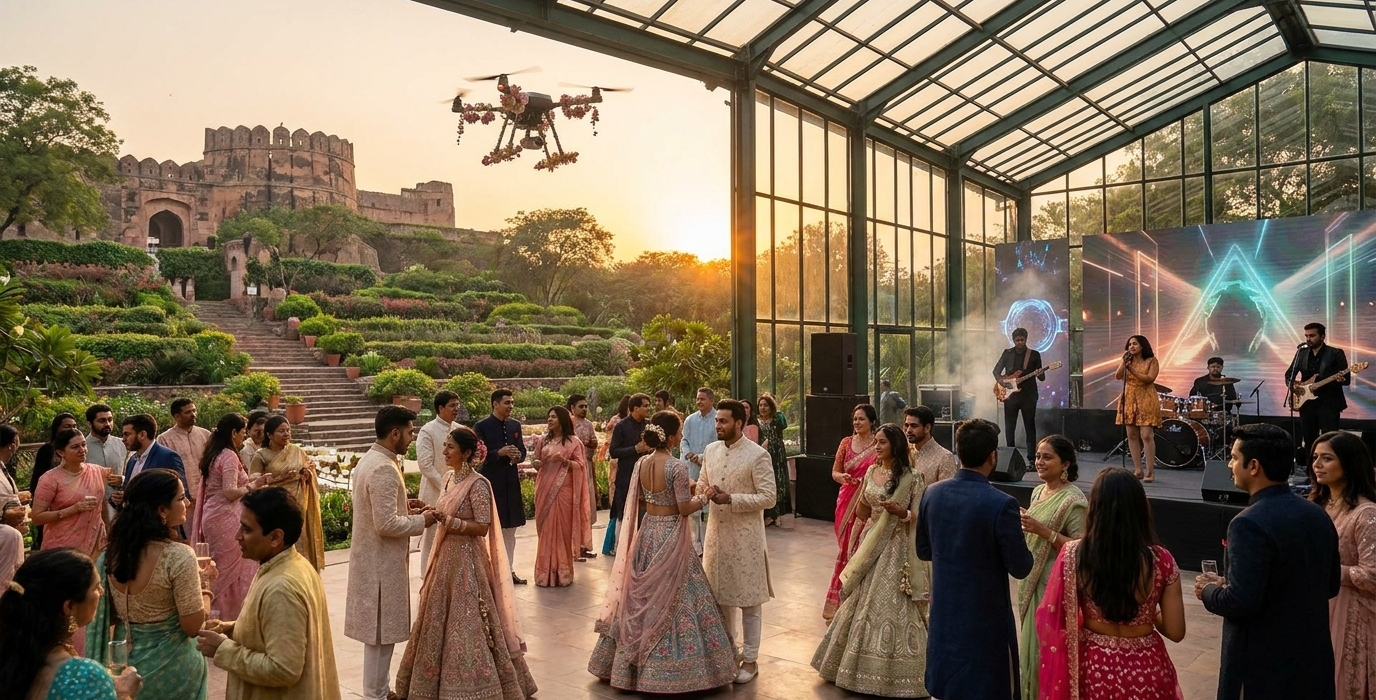
Beyond communication, technology is also being used to enhance the on-site guest experience. Think interactive digital signage directing guests, augmented reality filters for social media sharing, and even drone photography and videography capturing breathtaking aerial shots of the ceremonies and venues. Some innovative couples are even exploring NFTs for wedding invitations or as unique digital keepsakes for guests, blending traditional symbolism with cutting-edge digital art. This digital integration is not about replacing human connection, but about augmenting it and making celebrations more accessible and memorable for everyone involved.
The Intimate Imperative: Micro-Weddings and Personalised Experiences
While grand celebrations are still a hallmark of Indian weddings, 2026 is seeing a significant rise in the popularity of micro-weddings and intimate gatherings. This trend is driven by a desire for deeper, more meaningful connections with loved ones, focusing on quality over quantity. Couples are choosing to celebrate with their closest family and friends, often in smaller, more personal venues like boutique hotels, private villas, or even their ancestral homes.
These intimate weddings allow for unprecedented levels of personalisation. Every detail, from the handwritten vows to the carefully curated playlist, can reflect the couple’s personality and relationship. The focus shifts from grand spectacle to shared experiences, fostering a sense of community and genuine celebration. This allows for more attention to be paid to individual guest comfort and engagement.
The rise of micro-weddings doesn’t mean a compromise on style or celebration. In fact, it often allows for a higher budget allocation per guest, leading to more luxurious and bespoke experiences. This could mean gourmet catering, premium return gifts, or exclusive entertainment. It’s about creating a highly curated and intimate affair that feels truly special and reflective of the couple’s unique bond. A surprising aspect is how these smaller events are often more elaborate in terms of unique activities – think private cooking classes for guests, guided heritage walks, or personalized spa treatments.
Beyond the Baarat: Pre-Wedding Festivities and Unconventional Celebrations
The wedding celebrations in 2026 extend far beyond the main ceremony, with pre-wedding festivities taking centre stage and becoming elaborate events in themselves. We’re seeing a significant shift towards themed pre-wedding parties and unique engagement ceremonies that are as memorable as the wedding day itself. These events are designed to be immersive experiences, allowing couples to express different facets of their personalities and relationships.
Think destination bachelorette parties in Goa with curated beachside events, or sangeet ceremonies held in historic forts in Rajasthan, complete with traditional folk performances and immersive storytelling. Even the Haldi ceremony is being reimagined, moving beyond the backyard to styled outdoor venues with organic themes and artisanal beauty products. The goal is to create a series of unforgettable moments that build anticipation for the main event.
Couples are also exploring unconventional pre-wedding shoots that go beyond the typical picturesque locations. These might include adventurous activities like hot air ballooning over Jaipur, participating in a local festival in North East India, or even a styled photoshoot in a bustling market in Old Delhi, capturing the raw energy and vibrant culture. This trend is about creating content that is not just beautiful, but also authentic and reflective of their shared passions and experiences. The surprising element here is the emerging trend of ‘Wellness Retreats’ as pre-wedding events, where couples and their closest friends engage in yoga, meditation, and spa treatments, focusing on self-care and positive energy before the big day.
Frequently Asked Questions
What are the top trending wedding venues for 2026?
For 2026, the top trending wedding venues include heritage properties in Rajasthan, boutique hotels in Kerala’s backwaters, vineyard resorts in Nashik, and eco-friendly glamping sites in the Himalayas. The emphasis is on unique experiences and cultural immersion.
How is technology being used in Indian weddings in 2026?
Technology is being used for AI-powered wedding planning, high-definition virtual guest experiences, interactive digital signage, drone videography, and even NFT wedding invitations. It aims to enhance efficiency and guest engagement.
Are micro-weddings becoming more popular in India?
Yes, micro-weddings and intimate gatherings are significantly gaining traction in 2026. Couples are prioritising deeper connections with loved ones and more personalised celebrations over large-scale events.
What are the emerging trends in Indian wedding fashion for 2026?
Wedding fashion in 2026 is marked by a fusion of heritage crafts with modern silhouettes, a strong emphasis on sustainable fabrics, and the revival of traditional embroidery techniques. Expect a broader colour palette and experimental designs.
How is the catering scene evolving for Indian weddings in 2026?
Catering is evolving into curated culinary journeys, featuring bespoke menus, locally sourced ingredients, and plant-based options. Interactive food stations and artisanal dessert bars are also highly popular.