Key Takeaways
- Discover how everyday Indians are demonstrating remarkable resilience and innovation in 2026, turning challenges into opportunities.
- Learn about the inspiring journeys of individuals and communities from diverse backgrounds, showcasing the vibrant spirit of India.
- Gain practical insights into problem-solving and perseverance through real-world examples that resonate deeply.
- Understand the cultural nuances and collective strength that empower these remarkable achievements across the nation.
The Unyielding Spirit of a Mumbai Artisan
In the bustling heart of Mumbai, amidst the relentless pace of 2026, the story of Anil Sharma unfolds. Anil, a skilled artisan specializing in intricate sandalwood carvings, faced a devastating blow when a major fire swept through his workshop in Dharavi, destroying years of his life’s work. The scent of sandalwood, once a comforting aroma, was replaced by the acrid smell of smoke and despair. Yet, Anil’s spirit, much like the resilient banyan trees that dot the Indian landscape, refused to be uprooted.
He lost not only his tools and materials but also the precious samples that showcased his unique artistic vision. The financial strain was immense, and many would have succumbed to the overwhelming circumstances. However, Anil found an unexpected source of strength in his community. Neighbours, fellow artisans, and even patrons who had admired his work rallied around him, offering financial aid, moral support, and a temporary space to restart his craft. This collective effort, a testament to the strong social fabric of India, allowed Anil to begin anew.
His first carvings after the fire were imbued with a newfound depth, reflecting the trials he had overcome. He began incorporating elements of resilience and hope into his designs, transforming traditional motifs into powerful symbols of survival. This shift in his artistic expression resonated deeply with customers, both domestically and internationally, leading to a surge in demand. Anil’s story isn’t just about rebuilding a workshop; it’s about the indelible human spirit that finds beauty and purpose even in the ashes of devastation. He has since started a small training program, passing on his skills and the lessons of perseverance to a new generation of artisans, ensuring that the legacy of resilience continues to flourish.
From Chennai’s Coast to Global Tech: The AI Dream
Chennai, a city renowned for its vibrant culture and burgeoning IT sector, is home to Priya, a young woman who dared to dream big in the age of advanced artificial intelligence in 2026. Growing up in a modest household near the Marina Beach, Priya displayed an exceptional aptitude for mathematics and logic from a young age. While many of her peers pursued conventional career paths, Priya was captivated by the potential of AI to solve complex societal problems, from traffic congestion in her beloved city to optimizing agricultural yields for farmers in Tamil Nadu.
Her journey was fraught with challenges. Limited access to cutting-edge technology and formal AI education in her early years meant she had to rely on self-study, online forums, and the occasional mentorship from industry professionals she connected with serendipitously. She spent countless nights poring over research papers and coding exercises, fueled by a burning desire to contribute meaningfully to the AI revolution. The breakthrough came when she developed a novel algorithm for predictive traffic management, which significantly improved commute times during peak hours in Chennai’s notoriously busy streets.
This innovation caught the attention of a leading global tech firm, which offered her a coveted position and the resources to further develop her research. Today, Priya leads a team working on AI-driven solutions for sustainable urban development. Her success story serves as a beacon for countless young Indians, particularly women, in Tier-2 and Tier-3 cities, proving that with determination and access to opportunities, geographical limitations are no barrier to achieving extraordinary feats in the most advanced fields. She often emphasizes that the true power of AI lies not just in its algorithms, but in its ability to uplift and empower communities.
The Resurgence of Traditional Crafts in Rural Rajasthan
In the arid landscapes of Rajasthan, a quiet revolution is underway in 2026, breathing new life into ancient artisanal traditions. For decades, the exquisite craftsmanship of Rajasthani textiles, pottery, and miniature paintings faced an existential threat from mass-produced goods and a lack of market access for rural artisans. Young generations, seeking more lucrative urban employment, often abandoned these ancestral skills, leading to a gradual erosion of cultural heritage.
However, a concerted effort, driven by local cooperatives and supported by forward-thinking NGOs, has begun to reverse this trend. In villages like Bagru, famous for its block printing, and Molela, known for its terracotta art, artisans are rediscovering the value of their heritage. New marketing strategies, leveraging e-commerce platforms and direct-to-consumer models, are connecting these craftspeople with a global audience that increasingly appreciates authenticity and ethical production. This has not only provided a sustainable livelihood but has also instilled a sense of pride and cultural preservation.
One remarkable initiative involves integrating modern design sensibilities with traditional techniques. For instance, a collective of women weavers in a village near Udaipur has started producing contemporary home decor items using age-old weaving patterns, attracting a younger demographic. Furthermore, workshops are being organized to teach younger artisans about digital marketing, inventory management, and quality control, empowering them to become entrepreneurs in their own right. The resurgence isn’t just about economics; it’s about safeguarding a rich cultural legacy for future generations, ensuring that the vibrant hues and intricate patterns of Rajasthan continue to tell their stories for centuries to come.
Eco-Warriors of the Western Ghats: A Sustainable Future
The lush, biodiverse expanse of the Western Ghats, a UNESCO World Heritage site, is facing unprecedented environmental pressures in 2026. Deforestation, unsustainable tourism, and the impacts of climate change threaten the delicate ecosystem. Yet, amidst these challenges, a new generation of eco-warriors is emerging, driven by a profound commitment to conservation and sustainable living.
In a remote village nestled within the Sahyadri mountain range, a collective of young individuals, led by environmental scientist Dr. Aarti Desai, has launched an ambitious project focused on restoring degraded forest land and promoting community-based eco-tourism. They are employing innovative techniques such as drone-assisted afforestation and the use of indigenous plant species known for their resilience and ecological benefits. Their work goes beyond mere reforestation; it encompasses educating local communities about sustainable agricultural practices, waste management, and the importance of preserving biodiversity.
This initiative has not only helped in rejuvenating the local environment but has also created new economic opportunities. By developing eco-friendly homestays and guided nature tours, they are generating income for villagers while simultaneously fostering a deep respect for the natural world. A surprising success has been the revival of a local variety of wild turmeric, whose medicinal properties are now being explored by pharmaceutical companies, providing an additional revenue stream for the community and further incentivizing conservation efforts. Their vision is to create a model for sustainable development that can be replicated across other ecologically sensitive regions in India, proving that economic prosperity and environmental stewardship can indeed go hand in hand.
The Power of the Pavilion: Innovation in Rural Healthcare
Access to quality healthcare remains a significant challenge in many rural parts of India, even in 2026. Long distances to clinics, a shortage of medical professionals, and limited infrastructure often mean that preventable illnesses escalate into serious health crises. However, innovative solutions are emerging from the ground up, transforming healthcare delivery in these underserved areas.
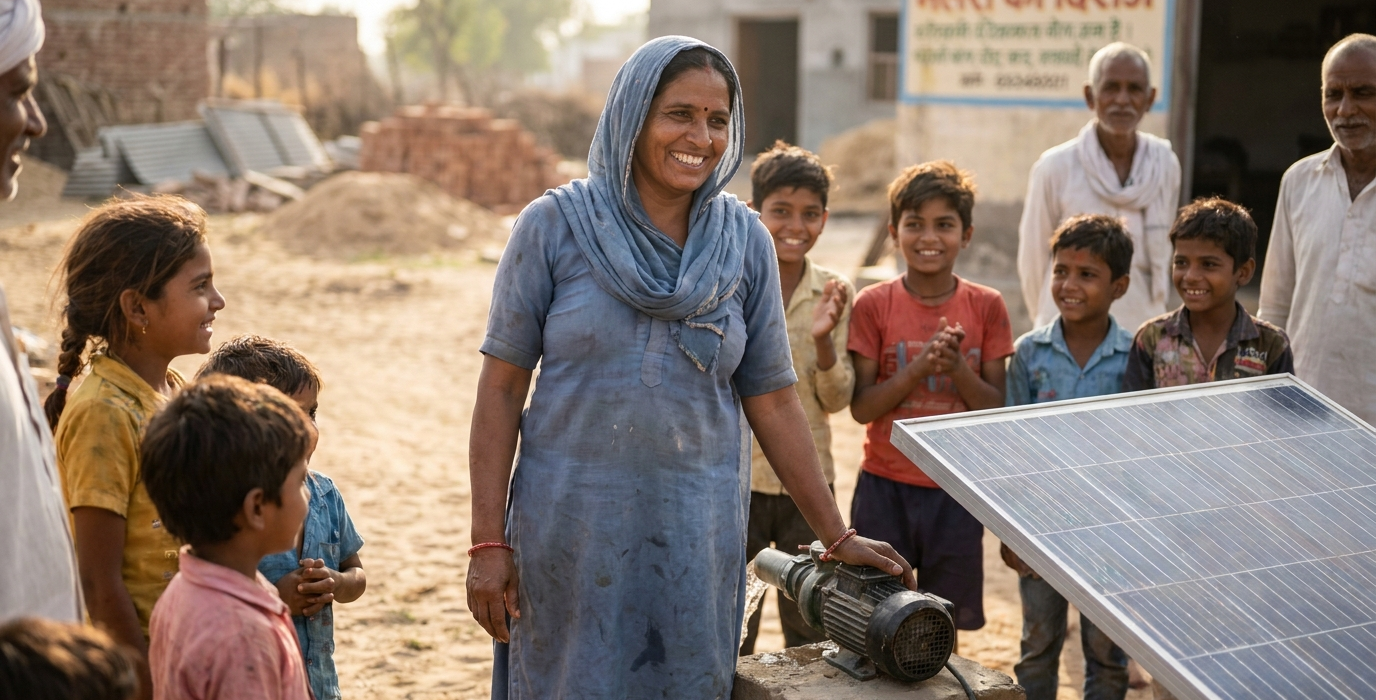
In a district of Uttar Pradesh, a pioneering initiative has seen the development of ‘Health Pavilions’ – modular, solar-powered medical units equipped with telemedicine facilities and basic diagnostic tools. These pavilions are strategically located in remote villages, bringing essential healthcare services directly to the doorstep of those who need them most. A trained community health worker staffs each pavilion, supported by remote consultations with doctors via video conferencing, effectively bridging the urban-rural healthcare divide.
The impact has been profound. Early detection rates for common ailments like diabetes, hypertension, and certain types of cancer have seen a significant increase. Furthermore, maternal and child health outcomes have improved dramatically due to regular check-ups and access to prenatal and postnatal advice. A particularly encouraging development is the integration of AI-powered diagnostic tools within the pavilions, which can assist health workers in identifying potential health risks with greater accuracy, even in the absence of a physician on-site. This system has drastically reduced the need for patients to travel to distant towns, saving them precious time and money. The success of these Health Pavilions is a testament to how thoughtful application of technology and community engagement can revolutionize healthcare access.
Bridging Divides: The Digital Literacy Revolution in Kashmir
In the picturesque yet often challenging region of Kashmir, the year 2026 marks a significant stride towards digital inclusion. For years, the region has grappled with connectivity issues and a lack of widespread digital literacy, hindering educational and economic opportunities for its youth. Recognizing this gap, several grassroots organizations and government initiatives have joined forces to empower the local population with essential digital skills.
The ‘Kashmir Connect’ program, for instance, has been instrumental in establishing community digital centers in remote villages. These centers are equipped with internet access, computers, and trained instructors who provide free training in basic computer operations, internet navigation, online safety, and the use of essential digital tools. The curriculum is tailored to the local context, incorporating modules on digital agriculture, online marketplaces for local crafts, and accessing government e-services.
The program’s success is evident in the stories of young individuals who have been able to pursue online education, small business owners who have expanded their reach through e-commerce, and farmers who now access weather forecasts and market prices digitally. A surprising outcome has been the rise of local content creators who are using digital platforms to share Kashmiri culture, music, and art with a global audience, fostering cultural exchange and understanding. This digital literacy revolution is not just about acquiring technical skills; it’s about fostering a sense of agency, unlocking potential, and ensuring that no community is left behind in India’s digital future. The initiative has also seen a significant uptake in digital financial literacy, empowering individuals to manage their finances securely online.
“The true measure of progress in 2026 isn’t just in technological advancements, but in how we empower every individual, regardless of their background or location, to participate in and benefit from the opportunities that lie ahead.”
Frequently Asked Questions
What makes these stories inspiring for 2026?
These stories are inspiring because they highlight ordinary Indians demonstrating extraordinary resilience, innovation, and community spirit in the face of modern-day challenges. They showcase practical problem-solving and a deep connection to cultural heritage, resonating with readers seeking relatable triumphs.
How are technology and tradition being integrated in these narratives?
Technology is often used to bridge gaps and enhance traditional practices. This includes using AI for healthcare and traffic management, e-commerce for rural crafts, and digital tools for education and communication, proving that technology can coexist with and elevate traditional skills and knowledge.
What role does community play in these success stories?
Community plays a pivotal role. Whether it’s collective support for an artisan rebuilding after a disaster or collaborative efforts in eco-conservation and education, these stories emphasize the strength found in unity and shared purpose, reflecting the strong social fabric of India.
Are there common themes across these diverse stories?
Yes, common themes include overcoming adversity through perseverance, the power of innovation (both technological and social), the importance of preserving cultural identity, and the collective strength of communities. These narratives underscore the adaptability and indomitable spirit of the Indian people in 2026.