Key Takeaways
- Meet Rohan, a young entrepreneur from a small village in Rajasthan who defied odds to build a thriving agritech startup.
- Rohan’s innovative solution for drought-prone farming uses AI-powered sensors and a community-driven app, significantly boosting crop yields.
- He secured crucial seed funding by participating in a national innovation challenge in 2026, showcasing his prototype to investors.
- His story highlights the untapped potential in rural India and the power of technology to solve local challenges.
The Seed of an Idea in a Dusty Village
Rohan Sharma’s story isn’t just about technology; it’s about resilience, born under the relentless sun of Bhilwara, Rajasthan. Growing up, he witnessed firsthand the devastating impact of erratic monsoons and prolonged droughts on his community. Farmers, his own family included, struggled to make ends meet, their livelihoods precariously balanced on the whims of nature. The traditional methods, while steeped in generations of wisdom, were proving insufficient against the changing climate patterns he began to observe even in his youth. He saw the worry etched on his father’s face each year as the monsoon clouds played hide-and-seek.
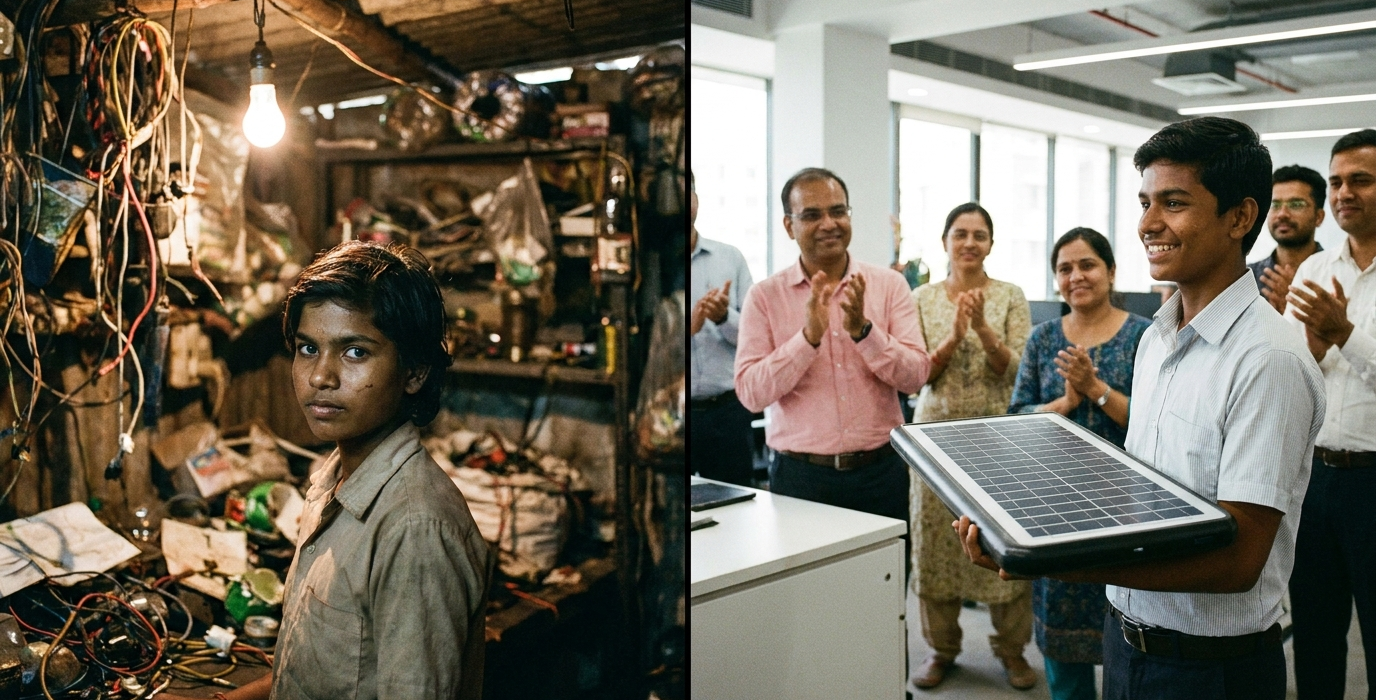
This environment, far from dampening his spirit, ignited a fierce determination in young Rohan. He devoured any book he could find on agriculture and technology, often borrowing them from the district library in the nearest town. His early experiments involved rudimentary soil moisture testers fashioned from discarded electronics and simple observation techniques. He spent countless hours in the fields, not just helping with the harvest, but intently studying the subtle indicators of a plant’s well-being and the soil’s condition. This hands-on, deeply personal connection to the problem formed the bedrock of his future innovation.
From Prototype to Prosperity: The Birth of ‘KrishiNet’
Rohan’s vision was ambitious: to empower farmers with accessible, affordable technology that could predict and mitigate the effects of water scarcity. He envisioned a system that wouldn’t just tell farmers *when* to water, but *how much*, and crucially, *when not to*. This led him to develop the core of what would eventually become his startup, ‘KrishiNet’. His initial prototype, built in a makeshift lab in his family’s modest home, combined low-cost, AI-powered soil sensors with a simple, user-friendly mobile application. The sensors transmitted real-time data on moisture levels, nutrient content, and even early signs of pest infestation.
The app then translated this complex data into actionable advice, delivered in local dialects, understandable even to those with limited literacy. It wasn’t just about individual farms; Rohan designed KrishiNet with a community focus. Farmers could share anonymized data, creating a broader, more accurate regional weather and soil map. This collective intelligence allowed for more informed decisions across the entire farming community, fostering a spirit of shared problem-solving. He famously presented his first working model, powered by salvaged solar panels and a refurbished tablet, at a local agricultural fair in early 2026, drawing a crowd of curious, hopeful farmers.
Navigating the Labyrinth: Funding and the Innovation Challenge
Securing funding for a rural-focused agritech startup in India is notoriously challenging, especially for a young innovator without a strong network or established track record. Rohan faced numerous rejections from traditional investors who often dismissed his vision as too niche or too reliant on adoption by a demographic they perceived as technologically hesitant. Many saw the inherent risks in agriculture, amplified by climate change, as too great. He recalls one particularly disheartening meeting where an investor asked if he’d considered selling his sensors as garden ornaments instead.
However, Rohan’s persistence paid off when he learned about the ‘India Innovates 2026’ challenge, a nationwide competition aimed at fostering groundbreaking solutions for India’s most pressing issues. He spent months refining his pitch and perfecting his demonstration, showcasing how KrishiNet could increase crop yields by up to 30% and reduce water consumption by 40% in drought-prone regions. His presentation, delivered with passion and backed by compelling data from pilot tests in his village, captivated the judges. Winning a significant seed grant and mentorship from leading industry figures at the grand finale in Delhi was a turning point, validating his hard work and opening doors to further investment and strategic partnerships.
Building a Community, One Farmer at a Time
Rohan understood that technology alone was not enough. For KrishiNet to truly succeed, it needed to be embraced and understood by the farmers it was designed to serve. This meant going beyond just selling a product; it involved building trust and fostering education. He established ‘Krishi Samvad’ (Agriculture Dialogue) centers in villages across Rajasthan and neighbouring states. These centers served as hubs where farmers could not only learn how to use the KrishiNet app and sensors but also share their experiences and traditional knowledge.
These centers were staffed by local youth, trained by Rohan and his growing team, who acted as digital literacy guides and agricultural advisors. They organized workshops, conducted on-field demonstrations, and facilitated peer-to-peer learning sessions. This grassroots approach proved incredibly effective. Farmers who were initially skeptical found confidence through the support of their neighbours and the tangible results they began to see in their fields. Rohan’s commitment to making technology accessible and relevant to the rural Indian context is one of KrishiNet’s greatest strengths.
Surprising Insights: The Power of Local Dialects and Data Pooling
One of the most surprising and impactful aspects of KrishiNet’s success lies in its linguistic and collaborative approach. Rohan insisted that all app interfaces and advisories be available in not just Hindi, but also in regional dialects like Marwari, Mewari, and Haryanvi. This seemingly small detail dramatically increased user adoption. Farmers felt respected and understood when the technology spoke their language, literally.
Furthermore, the community data pooling feature revealed unexpected correlations. By aggregating anonymized data from thousands of farms, KrishiNet’s algorithms began to identify micro-climate patterns and soil health trends that were invisible at an individual farm level. For instance, they discovered that specific combinations of traditional crop rotations, when managed with precise irrigation data from KrishiNet, were far more resilient to heatwaves than monoculture farming, even with advanced irrigation. This discovery, made possible by the collective data, is now being integrated into national agricultural policy recommendations for 2027.
The Future is Green and Connected
Rohan Sharma’s journey from a struggling village in Rajasthan to a recognized innovator is a powerful testament to the spirit of Indian entrepreneurship and the transformative potential of technology when applied with empathy and understanding. KrishiNet is no longer just a startup; it’s a movement empowering a new generation of farmers to face the challenges of climate change head-on. The company is now expanding its offerings, exploring solar-powered irrigation pumps integrated with the KrishiNet system and developing predictive models for pest outbreaks.
Rohan is also a vocal advocate for greater investment in rural innovation and digital infrastructure. He believes that the next wave of India’s economic growth will be driven by solutions emerging from its heartland. His vision extends beyond profit; it’s about building a sustainable, prosperous future for the millions who depend on the land. As Rohan often says, “The soil remembers every drop of water, and now, with technology, we can help it thrive, not just survive.” His story is a beacon of hope, proving that with innovation and dedication, even the dustiest fields can bloom.
Frequently Asked Questions
What is KrishiNet?
KrishiNet is an Indian agritech startup founded by Rohan Sharma. It offers an AI-powered system using soil sensors and a mobile app to provide farmers with real-time data and actionable advice for optimizing irrigation, improving crop yields, and conserving water, particularly in drought-prone areas.
How did Rohan Sharma fund his startup?
Rohan Sharma secured initial seed funding by winning the ‘India Innovates 2026’ national innovation challenge. This provided him with a grant, mentorship, and significant exposure to investors, which helped him attract further capital.
What are the key benefits of using KrishiNet?
Users can expect significantly improved crop yields (up to 30% increase observed in pilot studies), reduced water consumption (up to 40% reduction), and early detection of potential crop issues like pests or nutrient deficiencies. The community data pooling also offers broader insights into regional agricultural conditions.
Is KrishiNet only for large-scale farms?
No, KrishiNet is designed for accessibility. Its low-cost sensors and user-friendly app, available in local dialects, make it suitable for small and marginal farmers. The community centers also provide essential training and support for adoption.