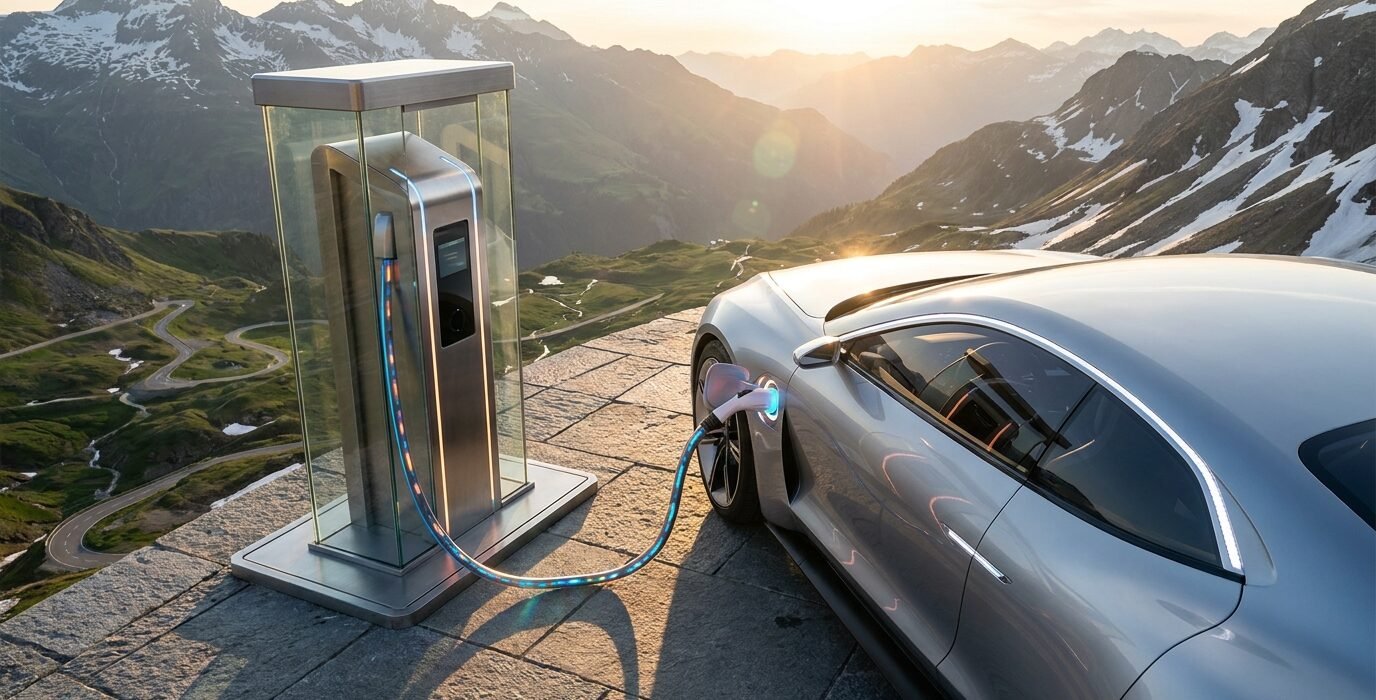
Switzerland, a nation synonymous with precision engineering and breathtaking landscapes, is quietly undergoing a revolution on its roads. Electric vehicles, once a niche interest, are rapidly becoming a common sight. But the real story isn’t just the cars themselves; it’s the invisible network powering them – the charging infrastructure. We’re talking about innovations that are not just convenient, but genuinely transformative, promising to banish range anxiety and make EV ownership a seamless part of Swiss life.
Key Takeaways:
- Switzerland is at the forefront of developing innovative EV charging solutions beyond simple plug-and-play.
- New technologies like ultra-fast charging, wireless charging, and integrated smart grid solutions are poised to reshape how we power our electric vehicles.
- Government policies and private sector investment are crucial drivers of this e-mobility evolution.
- The focus is on convenience, speed, and making EV charging as effortless as filling up a traditional car.
- Expect a future where charging is not an inconvenience, but an integrated, intelligent part of your daily routine.
The Surge of Electrons: Switzerland’s E-Mobility Ambition
Imagine driving through the picturesque Swiss Alps, your electric car smoothly climbing the winding roads, powered not by fossil fuels, but by the clean energy of Switzerland itself. This isn’t a distant dream; it’s the unfolding reality. It’s fueled by a determined national commitment to e-mobility.
Switzerland has set ambitious targets for reducing carbon emissions. Electrifying its transportation sector is a cornerstone of this strategy. From the bustling streets of Zurich to the serene shores of Lake Geneva, electric vehicles are no longer an oddity.
But for this transition to truly succeed, the supporting infrastructure must be robust, accessible, and, most importantly, innovative. This is where Switzerland truly shines, pushing the boundaries of what’s possible in EV charging. It’s about more than just putting up charging stations; it’s about creating an intelligent ecosystem that anticipates our needs. The sheer pace of adoption is astounding.
In 2023, the market share for new electric cars in Switzerland surpassed 20%, a significant leap from just a few years prior. This growth, while exciting, places immense pressure on the existing charging network. We’re talking about ensuring that a spontaneous weekend trip to the Bernese Oberland doesn’t turn into a desperate search for a charger.
This imperative is driving a wave of creativity. Engineers and urban planners are thinking beyond current limitations. They envision a charging future that is both futuristic and deeply practical for everyday Swiss drivers. The country’s compact size and high population density actually make it an ideal testing ground for these new technologies. This allows for rapid deployment and feedback loops.
Beyond the Plug: Ultra-Fast Charging Takes Hold
One of the most significant hurdles for EV adoption has always been “range anxiety,” the fear of running out of power far from a charging point. While battery technology continues to improve, the speed of charging remains a critical factor. This is precisely where innovation is making a monumental impact.
We’re seeing the rollout of ultra-fast charging (UFC) stations across Switzerland. These can add hundreds of kilometers of range in mere minutes. Think about it: stopping for a coffee and leaving with your battery nearly full. This is becoming a reality, thanks to advancements in power electronics and battery management systems.
Companies like ABB, a Swiss multinational, are at the forefront of developing these high-power charging solutions. Their Terra 360 charger, for instance, can deliver up to 360 kW of power. This is capable of charging an EV from 10% to 80% in under 15 minutes. This speed rivals the time it takes to refuel a conventional gasoline car.
It effectively removes a major psychological barrier for potential EV buyers. I recently spoke with a colleague, who drives a Tesla Model 3 from Lausanne to Geneva for business meetings. He described how the new UFC station at a rest stop along the A1 motorway reduced his charging time from his usual 40 minutes to a mere 12 minutes. He called it a “game-changer,” allowing him to complete his journey without the usual stress.
This isn’t just about faster charging; it’s about integrating charging into our lives so seamlessly that it barely registers as an interruption. The challenge for network operators is not just installing the hardware, but also ensuring the grid can handle the massive power demands of multiple UFC stations operating simultaneously. This requires sophisticated energy management systems and often substantial upgrades to local power grids, a complex but essential undertaking. The investment in these advanced charging solutions signals a clear intention: Switzerland is serious about making EVs not just a viable option, but the superior option for personal transportation.
The Invisible Current: Wireless Charging Innovations
While ultra-fast charging addresses the speed issue, another exciting frontier in EV infrastructure is wireless charging. Imagine simply parking your electric car over a designated pad and having it charge automatically, no cables, no fumbling in the dark. This concept, once relegated to science fiction, is rapidly moving towards practical implementation in Switzerland.
Companies are developing inductive charging technology. This can be integrated into parking spots, garages, and even roadways. This could revolutionize how we think about charging. Instead of dedicated charging stops, your car could potentially charge while you shop, dine, or even while you’re driving on specially equipped roads.
This is particularly appealing for public transport and fleet vehicles, where downtime for charging needs to be minimized. The benefits extend beyond mere convenience. Eliminating physical connectors can also reduce maintenance costs and the risk of damage. Furthermore, it opens up possibilities for dynamic charging, where vehicles could charge continuously while in motion.
While widespread dynamic charging on public roads is still some way off due to the immense infrastructure investment required, pilot projects are already underway. For instance, a residential complex in Bern is testing wireless charging pads for its residents, offering a glimpse into a future where charging is as simple as parking your car. The technology relies on electromagnetic induction, similar to how wireless phone chargers work, but scaled up significantly to handle the higher power requirements of electric vehicles. While still more expensive to implement than traditional wired charging, the long-term benefits in terms of user experience and operational efficiency are substantial. The key challenge remains increasing the charging speed and efficiency to match wired solutions, as well as ensuring robust safety standards for widespread public use. However, the potential for a truly seamless charging experience is a powerful driver for continued research and development.
Smart Grids and the Future of Energy
The rise of electric vehicles presents a unique challenge and opportunity for Switzerland’s sophisticated power grid. As millions of EVs plug in, demand for electricity will surge, particularly during peak hours. This is where the concept of a smart grid becomes not just beneficial, but absolutely essential.
A smart grid uses digital technology to monitor, control, and optimize the generation, distribution, and consumption of electricity. For EV charging, this means intelligently managing when and how vehicles are charged. Instead of all cars plugging in at 6 PM when people get home from work, a smart grid can communicate with EVs and charging stations to schedule charging during off-peak hours. This is when electricity is cheaper and less strain is placed on the grid.
This is known as vehicle-to-grid (V2G) technology. V2G allows EVs to not only draw power from the grid but also to send power back. This means your car battery could act as a mobile energy storage unit. It helps stabilize the grid by supplying power during times of high demand or even feeding renewable energy back into the system when solar or wind generation is abundant.
Imagine an EV owner in Lucerne being compensated for allowing their car’s battery to support the local grid during a hot summer afternoon when air conditioning demand peaks. This bidirectional flow of energy creates a more resilient and efficient energy system. It also opens up new revenue streams for EV owners. Companies like Alpiq, a major Swiss energy provider, are actively exploring V2G pilot programs. They are working with municipalities and fleet operators to test the feasibility and economic benefits of this technology. The integration of smart grids and V2G is a crucial step in ensuring that the transition to e-mobility is sustainable. It prevents the inadvertent overloading of our existing power infrastructure. It transforms EVs from simple consumers of electricity into active participants in managing our energy future.
Government Initiatives and Private Sector Partnerships
The ambitious vision for e-mobility in Switzerland is not being realized by chance; it’s the result of a concerted effort involving strong government policies and strategic private sector investment. The Swiss federal government, through agencies like the Federal Office of Energy, has set clear targets and provided incentives to encourage EV adoption and the development of charging infrastructure.
These include subsidies for charging station installation, tax benefits for EV purchases, and significant investment in public charging networks. For example, the canton of Vaud has been particularly proactive. It has implemented a comprehensive strategy to promote electric mobility, including the expansion of public charging facilities and educational campaigns for its citizens.
Beyond government action, the private sector is playing an indispensable role. Utility companies, car manufacturers, charging infrastructure providers, and even energy startups are collaborating and competing to build out a comprehensive and user-friendly charging ecosystem. Swiss energy companies are investing heavily in expanding their charging networks. They often partner with retail chains and service station operators to offer charging at convenient locations. Automakers are not only selling EVs but also investing in charging solutions to support their customers. Startups are emerging with innovative ideas, from mobile charging services to AI-powered charging management platforms.
A prime example of this collaboration is the partnership between charging network operator GOFAST and various Swiss service station chains. This has created a widespread network of high-speed chargers that are easily accessible to drivers across the country. This interplay between public policy and private enterprise creates a dynamic environment where innovation thrives. It ensures that the necessary capital is available for large-scale infrastructure projects. It keeps the focus on developing practical, user-centric solutions that meet the evolving needs of Swiss drivers. This synergistic approach is vital for accelerating the transition to a fully electrified transportation system.
The Road Ahead: A Connected and Sustainable Future
Looking ahead, the future of e-mobility in Switzerland is inextricably linked to the continued evolution of its charging infrastructure. We’re moving beyond the era of simply finding a plug. The next generation of charging will be connected, intelligent, and seamlessly integrated into our daily lives.
Think about charging stations that can communicate with your navigation system. They could automatically reserve a spot for you when you’re running low on battery. Consider public spaces like train stations and shopping centers where charging is as ubiquitous as Wi-Fi, available on demand without special planning. The focus is shifting from a reactive approach – charging when needed – to a proactive one. Charging becomes an embedded, almost subconscious part of our mobility experience.
Furthermore, the integration with renewable energy sources will become even more pronounced. As Switzerland continues to expand its solar and wind power capacity, EV charging will become a critical tool for balancing the grid. It will absorb surplus energy and support the transition to a fully decarbonized energy system. The data generated by these smart charging networks will also provide invaluable insights for urban planning, traffic management, and energy distribution. This further optimizes our cities and infrastructure.
While challenges remain, such as ensuring equitable access to charging for all residents, regardless of their living situation, and managing the lifecycle of batteries, the trajectory is clear. Switzerland is not just adopting e-mobility; it’s pioneering its future. It’s demonstrating how thoughtful innovation and strategic collaboration can create a cleaner, more efficient, and more sustainable way to travel. The quiet hum of electric motors is becoming the soundtrack to a smarter, greener Switzerland.
The journey towards a fully electrified future for Switzerland is well underway, and its charging infrastructure is the engine driving this transformation. From the speed of ultra-fast chargers to the invisible convenience of wireless technology and the intelligence of smart grids, innovation is reshaping how we power our vehicles and, by extension, our lives. This isn’t just about adopting new gadgets; it’s about building a more sustainable, efficient, and connected society for generations to come. The next charge is coming, and it promises to be smarter, faster, and more integrated than ever before.