The AI Tsunami is Here: India’s Quiet Revolution
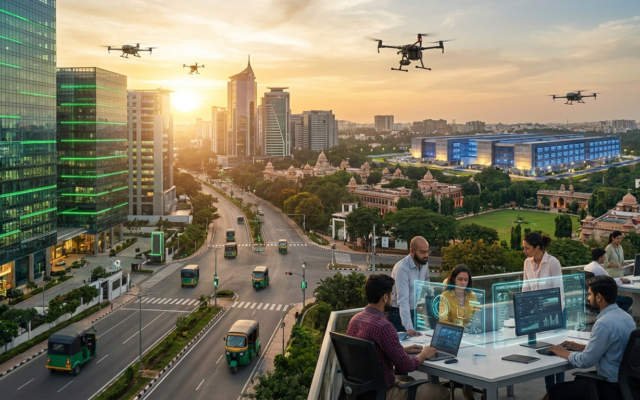
The buzz around Artificial Intelligence (AI) often conjures images of futuristic chatbots and talking robots. While these are part of the picture, the reality for India is far more profound, and frankly, more grounded. We are witnessing an AI revolution, not a gradual evolution, that is quietly reshaping industries, empowering communities, and promising a future where technology serves us in ways we’re only beginning to comprehend. From the bustling tech hubs of Bengaluru to the agricultural fields of Punjab, AI is no longer a distant concept; it’s an active participant in India’s growth story.
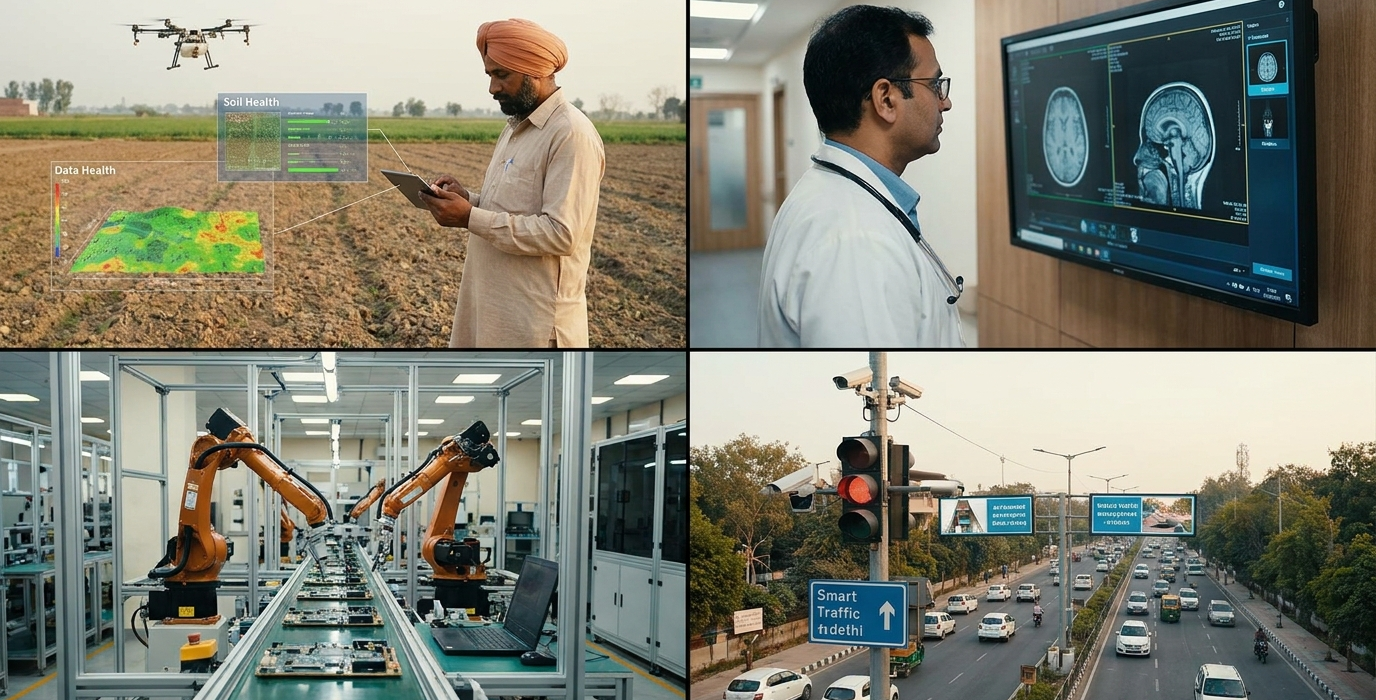
Think about the sheer scale of our nation. The challenges are immense, but so are the opportunities. AI offers a powerful toolkit to tackle these, enhancing efficiency, improving decision-making, and democratizing access to services. We’re talking about solutions that can help a farmer in a remote village understand crop diseases, assist a doctor in diagnosing a rare illness, or even guide a city planner in optimizing traffic flow. This isn’t about replacing human ingenuity; it’s about augmenting it, making us smarter, faster, and more effective.
The pace of adoption is accelerating. While global tech giants have been investing heavily, Indian startups and established companies are not just consumers of AI but creators and innovators. They are developing bespoke solutions tailored to India’s unique needs and cultural nuances. This homegrown innovation is critical, ensuring that AI serves our specific context and contributes to our national progress in a meaningful and sustainable way.
Agriculture: From Seed to Supper, AI is Cultivating Change
India’s agrarian heartland is experiencing a quiet revolution, powered by AI. For generations, farmers have relied on tradition, intuition, and the vagaries of weather. Now, technology is stepping in to provide precision, prediction, and proactive management. This is transforming how we grow our food, making farming more efficient, profitable, and sustainable.
Imagine a farmer in Gujarat receiving a personalized advisory on their mobile phone, detailing the exact amount of water and fertilizer needed for their specific plot of land, based on real-time soil data and weather forecasts. This is no longer science fiction. AI-powered platforms analyze satellite imagery, drone footage, and sensor data to provide hyper-local insights. They can detect early signs of pest infestations or nutrient deficiencies long before they become visible to the human eye, allowing for timely intervention and preventing crop loss.
One surprising application we’ve seen is the use of AI for predicting crop yields with remarkable accuracy. Companies are developing models that factor in everything from historical data and weather patterns to the genetic makeup of seeds. This helps farmers plan better, secure fairer prices, and reduces wastage across the supply chain. Furthermore, AI is helping to optimize supply chains, connecting farmers directly to consumers and reducing the role of intermediaries, thus ensuring a better share of the profits reaches the farmer. This is a critical step towards ensuring food security and bolstering the rural economy.
Healthcare: Diagnosing Tomorrow, Today, with Intelligent Machines
The healthcare sector in India, while vast and diverse, often grapples with issues of accessibility, affordability, and the sheer volume of patients. AI is stepping in as a powerful ally, not to replace our dedicated doctors and nurses, but to augment their capabilities and extend the reach of quality medical care. We’re seeing AI make a tangible difference in diagnostics, drug discovery, and patient management.
Consider the challenge of early disease detection. AI algorithms can analyze medical images, such as X-rays and MRIs, with incredible speed and accuracy, often identifying subtle anomalies that might be missed by the human eye, especially in high-volume screening scenarios. This is particularly impactful in rural areas where access to specialist radiologists might be limited. Platforms developed by Indian researchers can help screen for diabetic retinopathy, a leading cause of blindness, from retinal scans, empowering primary healthcare centers.
Another area where AI is making significant inroads is in drug discovery and development. The process is traditionally lengthy and expensive. AI can sift through vast amounts of biological data to identify potential drug candidates and predict their efficacy, dramatically accelerating the early stages of research. This holds immense promise for developing treatments for diseases prevalent in India, from tuberculosis to specific types of cancer. The potential to bring life-saving medicines to market faster and at a lower cost is truly transformative. We’ve also seen AI-powered chatbots providing initial symptom assessment and directing patients to appropriate care, easing the burden on frontline health workers.
Manufacturing & Logistics: Smarter Factories, Smoother Journeys
India’s manufacturing sector is a cornerstone of its economy, and AI is the engine driving its modernization. From the assembly lines of automotive giants in Chennai to the intricate production of textiles in Surat, AI is enhancing efficiency, improving quality control, and optimizing complex logistical networks. This makes Indian products more competitive on the global stage and streamlines the movement of goods within our vast country.
At the factory floor, AI-powered robots are not just performing repetitive tasks but are becoming more intelligent, capable of adapting to changing production needs. Predictive maintenance is another game-changer. Instead of waiting for a machine to break down, AI algorithms analyze sensor data to predict potential failures before they occur. This minimizes downtime, reduces repair costs, and ensures uninterrupted production. We are seeing this implemented in everything from heavy machinery in steel plants to precision equipment in electronics manufacturing.
The logistics sector, crucial for a country of India’s size, is also being revolutionized. AI is optimizing delivery routes, factoring in real-time traffic conditions, weather, and delivery priorities. This reduces fuel consumption, cuts down delivery times, and lowers operational costs for companies. For consumers, this means faster and more reliable delivery of everything from groceries to e-commerce purchases. One surprising fact is the use of AI-powered computer vision to automatically sort packages at distribution centers, drastically improving efficiency and accuracy compared to manual sorting. This translates to a smoother flow of goods across the nation.
Finance & E-commerce: Personalizing Every Transaction
The digital revolution in India has been rapid, and AI is the key ingredient that’s making our financial and e-commerce experiences smarter, safer, and more personalized. From the way you manage your money to the way you shop online, AI is working behind the scenes to enhance your convenience and security.
In the financial sector, AI is crucial for fraud detection. Algorithms analyze transaction patterns in real-time, flagging suspicious activities and protecting both individuals and institutions from financial crime. This is vital in a rapidly growing digital payments landscape. AI is also personalizing financial advice. Robo-advisors are becoming more sophisticated, offering investment recommendations tailored to individual risk appetites and financial goals, making wealth management accessible to a wider population.
For e-commerce giants and even smaller online retailers, AI is the backbone of personalized customer experiences. Recommendation engines, powered by AI, analyze your browsing history, past purchases, and even what similar users are buying to suggest products you’re likely to be interested in. This not only enhances your shopping experience but also drives sales for businesses. We’ve also seen AI used to optimize pricing strategies, manage inventory, and even power customer service chatbots that can handle a wide range of queries, often resolving issues instantly. This allows human agents to focus on more complex problems.
Education: Bridging Gaps and Empowering Learners
The dream of quality education for every Indian child is a national imperative, and AI is emerging as a powerful tool to help us achieve it. From personalized learning paths to intelligent tutoring systems, AI is making education more accessible, engaging, and effective, especially in bridging the gaps that have long persisted.
Imagine a student in a government school in a rural district having access to an AI-powered tutor that can explain complex mathematical concepts in a way they understand, adapting to their pace and learning style. This is precisely what is being developed and deployed. Adaptive learning platforms use AI to assess a student’s strengths and weaknesses, then tailor the curriculum and exercises accordingly. This ensures that no student is left behind, and those who are excelling are challenged further.
AI is also helping educators. It can automate administrative tasks like grading objective tests, freeing up valuable time for teachers to focus on instruction and student interaction. Furthermore, AI-powered analytics can provide insights into student performance trends, helping educators identify areas where students might be struggling collectively and adjust their teaching methods. A surprising application we’ve observed is the use of AI to analyze student engagement in online learning environments, flagging students who might be disengaging and prompting educators to intervene. This proactive approach can prevent students from falling through the cracks. The goal is not to replace teachers but to empower them with tools that enhance their ability to educate and inspire.
The Road Ahead: Navigating Challenges and Embracing Opportunities
As we stand on the cusp of this AI-driven transformation, it’s crucial to acknowledge that the journey is not without its challenges. Ethical considerations, data privacy, and the need for a skilled workforce are paramount. However, the potential benefits for India and indeed the world are too significant to ignore. We must approach this revolution with a blend of innovation, responsibility, and a deep understanding of our unique context.
The ethical deployment of AI is a constant conversation. We need robust frameworks to ensure fairness, transparency, and accountability in AI systems. This includes addressing potential biases in algorithms and safeguarding sensitive personal data. The government, industry, and academia are all playing a role in developing these guidelines.
Furthermore, the demand for AI expertise is skyrocketing. Investing in education and training programs to equip our youth with the skills needed for the AI era is not just an option, but a necessity. We need to foster a culture of lifelong learning and adaptability. Initiatives focusing on data science, machine learning, and AI ethics are crucial.
Ultimately, India’s AI revolution is a testament to our nation’s ingenuity and our commitment to leveraging technology for the betterment of our society. By embracing these advancements responsibly and strategically, we can unlock unprecedented opportunities, solve pressing challenges, and build a future that is smarter, more equitable, and more prosperous for all. The tsunami is here, and we are learning to surf its powerful waves.