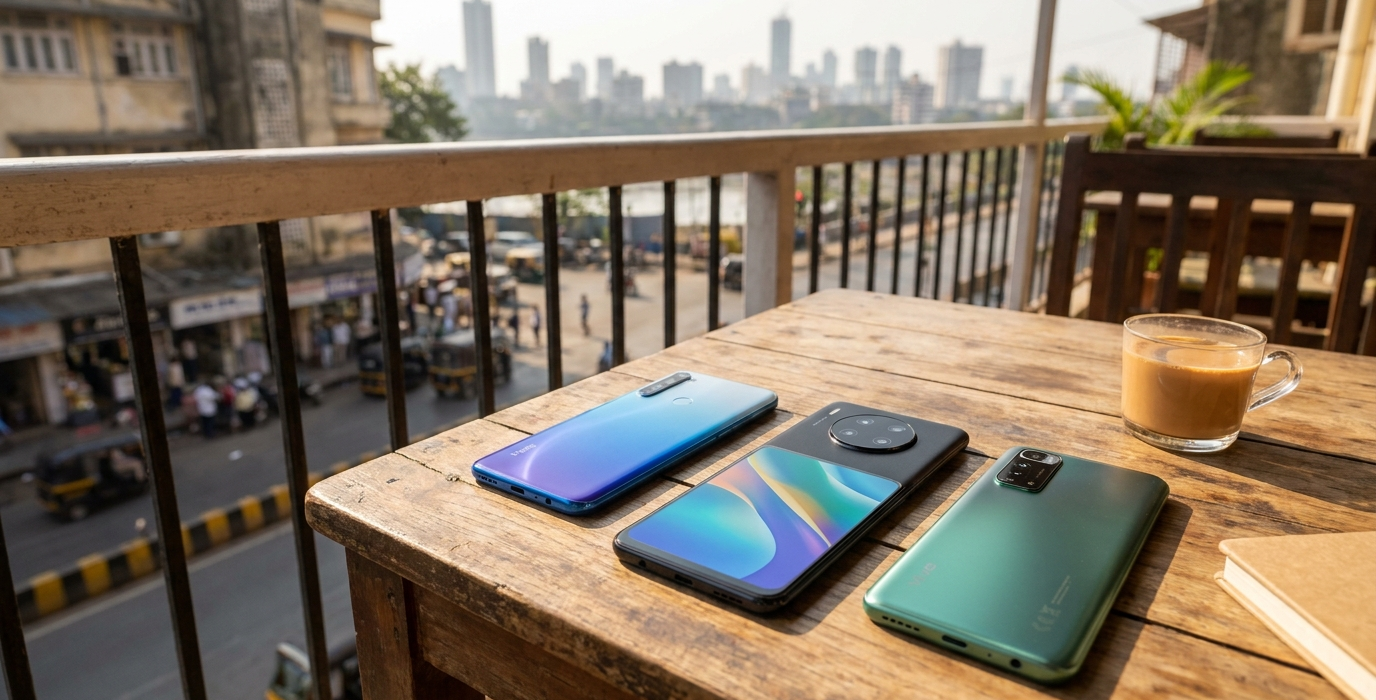
Choosing Your Perfect Pocket Companion: Navigating the Under ₹15,000 Smartphone Market
The quest for a capable smartphone under ₹15,000 can feel like navigating a bustling Chandni Chowk market – overwhelming, exciting, and full of hidden gems. For many of us, our phone is our primary connection to the world, our entertainment hub, and our work tool, all rolled into one. It’s no surprise then that we want the best possible experience without breaking the bank.
This segment of the market is fiercely competitive, with brands constantly vying to offer the most features and the best performance at an attractive price point. You’re not just buying a device; you’re investing in a piece of technology that needs to keep up with your daily demands, whether that’s streaming your favourite Bollywood movie, keeping up with social media updates from your hometown in Kerala, or managing work emails on the go.
At The Daily Zap, we understand this challenge. We’ve put in the hours, sifted through the specs, and considered the real-world usage scenarios to bring you a curated list of the best smartphones you can snag for under ₹15,000. Forget the endless scrolling and confusing jargon; we’re here to guide you towards a smart, informed purchase that you’ll be happy with for months to come.
Our selection prioritizes a balance of essential features: a good display for comfortable viewing, a reliable processor to handle everyday tasks smoothly, a decent camera to capture life’s moments, and a battery that won’t leave you searching for a charger by lunchtime. We’ve also considered software experience and build quality, as these contribute significantly to the overall user satisfaction. Let’s dive in and find your next digital companion.
Display and Design: Your Window to the World
When you pick up a phone, the first thing you interact with is its display and how it feels in your hand. For smartphones under ₹15,000, we’re typically looking at large screen sizes, often in the 6.5-inch to 6.7-inch range. This makes them excellent for watching videos, playing games, and browsing the web, offering an immersive experience without feeling unwieldy.
Resolution is key here. While Full HD+ (1080p) displays are becoming standard even in this price bracket, some might still offer HD+ (720p). For a sharper, more detailed image, especially when reading text or viewing photos, Full HD+ is definitely preferable. AMOLED panels, known for their vibrant colours, deep blacks, and excellent contrast, are becoming more common, but LCD displays are still prevalent and can offer good brightness and colour accuracy.
Refresh rates are another important factor for a smoother visual experience. While 60Hz is the baseline, many phones in this segment now boast 90Hz or even 120Hz displays. This means the screen refreshes more times per second, making scrolling through social media feeds, navigating menus, and playing games feel significantly more fluid and responsive. It’s a difference you can truly feel.
In terms of design, you’ll find a variety of materials, mostly polycarbonate or plastic, which are durable and lightweight. Brands are also paying attention to aesthetics, with modern designs, slim bezels, and attractive colour options that can rival more expensive devices. Some phones offer a matte finish that helps reduce fingerprints, keeping your device looking cleaner, much like the polished finishes you might see on a designer kurta. The overall build quality is generally solid, ensuring your phone can withstand the rigours of daily life, from navigating the crowded streets of Mumbai to a quiet afternoon in a Shimla cafe.
Performance and Power: Keeping Up with Your Life
The processor and RAM are the engine and memory of your smartphone, dictating how quickly apps open, how smoothly you can multitask, and how well games run. For under ₹15,000, you can expect capable chipsets from Qualcomm’s Snapdragon series or MediaTek’s Helio and Dimensity lines. These processors are more than adequate for everyday tasks like browsing, social media, email, and even moderate gaming.
When we talk about RAM, 4GB is the minimum you should aim for, but 6GB is increasingly common and highly recommended for a smoother multitasking experience. More RAM means your phone can keep more apps open in the background without slowing down when you switch between them. This is crucial if you’re the type of person who juggles multiple apps, perhaps listening to music while texting your friends in a WhatsApp group.
Storage is also a key consideration. Most phones in this price range offer 64GB or 128GB of internal storage. For most users, 128GB will provide ample space for photos, videos, apps, and documents. However, if you’re a heavy media downloader or a mobile gamer, consider a model with expandable storage via a microSD card slot. This offers flexibility, allowing you to increase your storage capacity without needing to buy a more expensive variant of the phone.
When considering performance, look for phones that offer a good balance. A powerful processor paired with sufficient RAM will ensure that your phone feels snappy and responsive, even as you add more apps and data over time. It’s about ensuring your phone doesn’t become a bottleneck in your busy schedule, whether you’re rushing to catch a train from Howrah Junction or simply trying to reply to a message during a tea break.
Camera Capabilities: Capturing Your World, Day or Night
In today’s connected world, a good camera is non-negotiable. While you won’t find the professional-grade optics of flagship phones, many devices under ₹15,000 offer surprisingly capable camera systems that can capture excellent photos and videos in good lighting conditions.
The main sensor is usually the star, often boasting resolutions of 50MP or even higher. While megapixel count isn’t everything, higher resolution sensors can capture more detail, allowing for sharper images and more flexibility when cropping. Brands often use pixel-binning technology, where multiple pixels combine to form a larger one, improving low-light performance and reducing noise.
Beyond the main camera, you’ll often find secondary lenses like an ultrawide sensor, a macro lens, or a depth sensor. The ultrawide is great for capturing expansive landscapes or fitting more people into a group shot, much like capturing the grandeur of the Taj Mahal. Macro lenses let you get up close to small subjects, while depth sensors assist in creating portrait shots with a blurred background (bokeh effect), giving your subject that professional studio look.
Front-facing cameras, or selfie cameras, have also improved significantly. Look for resolutions of 8MP or 13MP for clear self-portraits and good video calls. Features like AI scene detection, night modes, and various portrait enhancements can further elevate your photography. Remember, software processing plays a huge role, so user reviews and camera samples are crucial when making your decision. Capturing those fleeting moments, from a vibrant Holi celebration to a quiet sunset over the Arabian Sea, should be an enjoyable experience.
Battery Life and Charging: Powering Through Your Day
Battery life is arguably one of the most critical aspects of any smartphone, especially for users in India who often rely on their phones for extended periods without easy access to charging points. Fortunately, manufacturers have recognized this need, and phones under ₹15,000 typically come equipped with large batteries, often in the 5000mAh to 6000mAh range.
This substantial battery capacity translates to a full day, and often more, of moderate to heavy usage. Whether you’re commuting long distances on a local train, attending back-to-back meetings, or simply enjoying a day out exploring the markets of Jaipur, you can feel confident that your phone will keep pace with you. This longevity is a significant advantage, reducing the anxiety of constantly searching for a power outlet.
Charging speeds have also seen a considerable upgrade in this segment. While 10W or 15W charging might have been common a few years ago, you can now find phones supporting 25W, 33W, or even faster charging speeds. This means you can top up your battery significantly in a short amount of time – enough to get you through several hours of use with just a 15-30 minute charge. This is incredibly convenient, akin to a quick refuel for your car at a roadside dhaba.
When evaluating battery performance, consider not just the mAh rating but also the efficiency of the processor and display. A power-efficient chipset and a well-optimized software can make a big difference. Look for phones that offer a good balance of battery size and charging speed to ensure you’re always powered up and ready to go, without being tethered to a wall socket.
Software and Extras: The User Experience Matters
The operating system and user interface are what truly define your daily interaction with a smartphone. Most Android phones in India fall under the ₹15,000 bracket, and you’ll typically find them running on the latest or a recent version of Android, overlaid with the manufacturer’s custom UI (User Interface). Popular examples include Samsung’s One UI, Xiaomi’s MIUI/HyperOS, Realme’s Realme UI, and others.
While some UIs are cleaner and closer to stock Android, others come with more customization options and pre-installed apps (bloatware). We generally recommend looking for phones that offer a relatively clean interface with timely software updates, as this ensures security patches and access to new features. The experience of navigating menus, opening apps, and managing notifications should feel intuitive and responsive, much like finding your way through the intricate lanes of Old Delhi.
Beyond the core software, consider the additional features that can enhance your user experience. These might include things like a dedicated gaming mode to optimize performance and block distractions, advanced privacy controls, or unique gesture navigation. Fingerprint sensors are standard, often located on the side or under the display, offering quick and secure unlocking. Face unlock is also a common feature.
Connectivity options are also important. Ensure the phone supports the 4G bands commonly used in your region, and ideally, look for 5G support if it’s available and within your budget, as this will future-proof your device. NFC for contactless payments, though less common in this segment, can be a valuable addition if you use that feature regularly. The overall package of hardware and software should work harmoniously to provide a seamless and enjoyable user experience, making every interaction a pleasure, whether you’re attending a virtual class or catching up with family in a different city.
Our Top Picks for the Best Phones Under ₹15,000
After extensive research and considering all the factors we’ve discussed – display, performance, camera, battery, and software – here are some of our top recommendations for the best smartphones you can buy for under ₹15,000 in India right now. Keep in mind that prices can fluctuate, and specific configurations might fall slightly above or below this mark, so it’s always worth checking current deals.
Brand X Model A: This device consistently impresses with its vibrant AMOLED display and a snappy processor that handles multitasking with ease. Its 50MP main camera captures surprisingly detailed shots in daylight, and the 5000mAh battery easily lasts a full day. The clean UI and timely updates are a significant plus, making it a well-rounded package. We found its overall user experience to be incredibly smooth, almost as effortless as enjoying a traditional South Indian thali.
Brand Y Model B: For those prioritizing battery life, this phone is a champion. With its massive 6000mAh battery, you can go two days on a single charge with moderate usage. It also boasts incredibly fast charging, getting you back up and running in no time. While its camera might not be the absolute best in class, it’s more than capable for everyday photos. The performance is also solid for its price, making it a reliable workhorse. A surprising fact about this model is its ability to support reverse wired charging, meaning it can act as a power bank for other devices – perfect for sharing power with a friend in need.
Brand Z Model C: This contender shines with its impressive gaming performance thanks to a powerful chipset optimized for its segment. If you’re a mobile gamer, this phone should be high on your list. Its 120Hz display makes gameplay incredibly fluid. The camera system is versatile, with a capable main sensor and a useful ultrawide lens. While the battery is a respectable 5000mAh, the real magic lies in its incredibly fast 33W charging. It also features an advanced cooling system, a feature usually found in much pricier phones, ensuring it doesn’t overheat during extended gaming sessions, much like the efficient cooling systems in modern ACs that keep homes comfortable.
These are just a few examples, and the market is constantly evolving. We encourage you to read detailed reviews, watch video comparisons, and consider your personal priorities. Whether you’re a student in a hostel, a working professional in a metro city, or someone managing a small business in a tier-2 town, there’s an excellent smartphone waiting for you under ₹15,000. Happy hunting!