Key Takeaways
- India’s AI startup ecosystem is booming, with new ventures leveraging advanced technologies for diverse sectors like healthcare, finance, and agriculture.
- By 2026, expect significant disruption from AI-powered solutions addressing uniquely Indian challenges, from precision farming to democratising financial services.
- Key areas of growth include Natural Language Processing (NLP) for Indian languages, computer vision for industrial automation, and AI for sustainable development.
- Indian AI talent is increasingly sought after globally, but a strong domestic focus ensures these innovations benefit the nation first.
The Dawn of an AI-Powered India: Beyond the Hype
As we navigate 2026, the conversation around Artificial Intelligence in India has moved decisively from speculative hype to tangible impact. We are witnessing an unprecedented surge in AI innovation, driven by a dynamic blend of brilliant technical minds, a burgeoning digital infrastructure, and a pressing need to solve complex, uniquely Indian challenges. This isn’t just about replicating global AI trends; it’s about forging new paths, creating solutions tailored to our diverse linguistic landscape, vast agricultural needs, and the aspirations of a billion-plus population. The startups emerging from this fertile ground are not merely building algorithms; they are architecting the future of how we live, work, and interact.
The sheer pace of development is astonishing. From the bustling tech hubs of Bengaluru and Hyderabad to emerging innovation centres in Tier-2 and Tier-3 cities, entrepreneurs are harnessing AI to drive efficiency, enhance decision-making, and unlock new economic opportunities. We’re seeing AI move beyond the IT sector to permeate core industries, promising a transformative ripple effect across the nation. This is a pivotal moment where homegrown AI is poised to redefine India’s competitive edge on the global stage.
Revolutionising Healthcare: AI’s Diagnostic Prowess
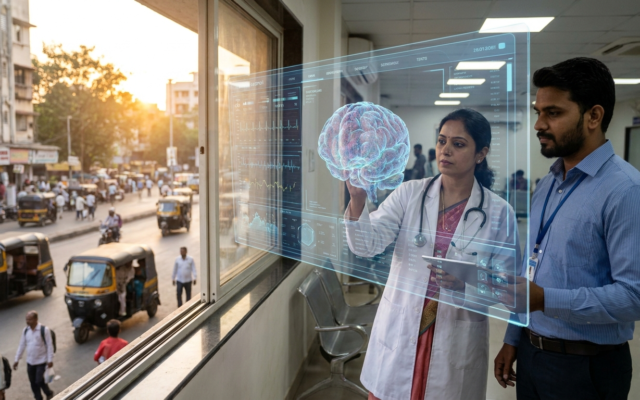
One of the most impactful areas where AI is making significant strides in India by 2026 is healthcare. Imagine a diagnostic tool that can detect early signs of diabetic retinopathy from a simple retinal scan, accessible even in remote villages with limited specialist access. This is no longer a futuristic dream; it’s the reality being built by startups like **MediScan AI**. They are developing sophisticated computer vision algorithms trained on vast datasets of Indian patient imagery, ensuring accuracy across diverse demographics and conditions.
This isn’t just about screening. AI is also being deployed to predict disease outbreaks with remarkable precision. By analysing anonymised health data, environmental factors, and even social media trends, platforms like **HealthWatch India** are helping public health officials anticipate and mitigate potential epidemics, a critical capability for a nation as populous and diverse as ours. Furthermore, AI-powered chatbots and virtual assistants are providing initial health consultations, guiding patients to the right level of care and reducing the burden on overwhelmed medical facilities. The goal is clear: to democratise access to quality healthcare, making it more affordable, accessible, and proactive for every Indian.
AI for Agriculture: Cultivating a Smarter Harvest
Agriculture, the backbone of the Indian economy, is undergoing a quiet revolution powered by Artificial Intelligence. For millions of farmers, understanding soil health, predicting weather patterns, and optimising irrigation has historically been a matter of experience and guesswork. Today, AI startups are transforming this landscape. Companies like **KrishiGyan** are deploying AI-driven platforms that analyse satellite imagery, sensor data from the field, and historical weather patterns to provide farmers with hyper-localised advice.
This advice ranges from the optimal time to sow and harvest to the precise amount of fertiliser or water needed for specific crops, dramatically improving yield and reducing resource wastage. Surprising fact: Many of these platforms now offer their services via voice commands in a multitude of Indian languages, making advanced agricultural insights accessible even to farmers with limited literacy. This is crucial, as over 60% of India’s population still depends on agriculture, and empowering them with data-driven insights is key to ensuring food security and economic stability. The impact of AI here is not just about better crops; it’s about a more sustainable and resilient agricultural future for India.
FinTech’s AI Frontier: Empowering the Unbanked
The Indian FinTech sector has always been at the forefront of innovation, and by 2026, AI is its primary engine of growth and inclusivity. For millions of Indians who remain unbanked or underbanked, accessing financial services like loans, insurance, or even basic credit has been a significant hurdle. AI-powered credit scoring models are changing this dramatically. Startups like **BharatCredit AI** are developing algorithms that go beyond traditional credit history, analysing alternative data points such as mobile phone usage, bill payments, and even social network behaviour (with user consent, of course) to assess creditworthiness.
This allows FinTech companies to extend financial products to individuals and small businesses previously deemed too risky by conventional banks. Another exciting development is the use of AI for personalised financial advisory services. Robo-advisors are offering tailored investment advice, retirement planning, and budgeting tools, making sophisticated financial planning accessible to a much wider audience. The potential for AI to drive financial inclusion and empower the common Indian is immense, promising a more equitable economic future.
Natural Language Processing: Bridging India’s Linguistic Divide
India is a land of incredible linguistic diversity, with hundreds of languages and dialects spoken across the country. This diversity, while enriching, has historically posed a challenge for widespread adoption of digital technologies, especially those reliant on language. However, by 2026, advancements in Natural Language Processing (NLP) are rapidly dismantling these barriers. Startups like **BhashaAI** are developing cutting-edge NLP models that understand and generate text and speech in not just the major Indian languages like Hindi and Bengali, but also in regional dialects like Bhojpuri and Konkani.
This is enabling AI applications to become truly accessible to the masses. Think of customer service chatbots that can converse fluently in Marathi, or AI-powered educational platforms that can teach complex subjects in Tamil. The implications for governance, education, and commerce are profound. Surprising fact: BhashaAI’s latest models are achieving near-human levels of fluency in code-switching, meaning they can seamlessly switch between two or more languages within a single conversation, a common phenomenon in everyday Indian communication. This breakthrough is critical for building AI that truly resonates with the Indian populace.
AI for Sustainable Futures: Greening India with Innovation
The global imperative for sustainability is keenly felt in India, and AI is emerging as a powerful ally in this critical mission. By 2026, we are seeing AI solutions being deployed across various sectors to promote environmental conservation and resource efficiency. In the energy sector, startups are using AI to optimise grid management, predict renewable energy generation from solar and wind farms, and even identify potential energy theft, leading to significant reductions in wastage and improved efficiency. **EcoGrid Analytics** is a prime example, employing machine learning to forecast energy demand and supply with remarkable accuracy.
Beyond energy, AI is also playing a crucial role in waste management and pollution control. Smart sensors combined with AI algorithms are being used to monitor air and water quality in real-time, identify pollution hotspots, and even optimise waste collection routes for municipalities, making our cities cleaner and healthier. The application of AI in ecological monitoring, such as tracking deforestation or identifying areas vulnerable to climate change impacts, is also gaining momentum. This focus on sustainability ensures that India’s rapid technological advancement is also a force for good for its environment.
Frequently Asked Questions
What are the biggest AI trends in India for 2026?
By 2026, the biggest AI trends in India revolve around **hyper-personalisation** across sectors like retail and healthcare, **AI for sustainability** impacting energy and agriculture, and significant advancements in **Indian language NLP** for broader digital access. We’re also seeing a strong focus on **AI-driven automation** in manufacturing and logistics.
Which Indian cities are leading the AI startup scene?
Bengaluru continues to be the undisputed capital of India’s AI startup ecosystem, followed closely by **Hyderabad** and **Gurugram**. However, we’re seeing exciting growth and innovation emerging from cities like **Pune**, **Chennai**, and even smaller hubs like **Indore**, indicating a decentralisation of AI talent and investment.
How is AI impacting job creation in India?
AI is a double-edged sword for jobs. While automation may displace some roles, it is also **creating new categories of jobs** requiring AI expertise, such as AI trainers, data scientists, AI ethicists, and AI-powered system managers. The focus is shifting towards **upskilling and reskilling the workforce** to adapt to these changes.
Are Indian AI startups attracting global investment?
Yes, absolutely. Indian AI startups have become increasingly attractive to global venture capital and private equity firms. The **unique problems being solved** and the **enormous market potential** within India and other emerging economies are key drivers. Expect to see more cross-border funding and strategic partnerships in the coming years.
What are the ethical considerations for AI development in India?
Ethical considerations, particularly around **data privacy, algorithmic bias, and job displacement**, are paramount. There’s a growing emphasis on developing AI responsibly, ensuring fairness, transparency, and accountability. Regulatory frameworks are evolving to address these concerns, reflecting a mature approach to AI deployment.