Key Takeaways
- India’s culinary tourism is booming, driven by a desire for authentic, regional experiences beyond traditional tourist trails.
- From learning to cook authentic Goan vindaloo to exploring the street food of Old Delhi, immersive experiences are key.
- The new “Spice Route Revival” initiative aims to connect travellers with lesser-known culinary traditions and local producers across the country.
- Expect to see more focus on sustainable food practices, farm-to-table dining, and heritage recipes gaining prominence in 2026.
The Palate Awakens: India’s Culinary Renaissance in 2026
India, a land where every region sings its own culinary song, is experiencing a profound gastronomic awakening. In 2026, this isn’t just about tasting new dishes; it’s about diving headfirst into the stories, traditions, and people behind them. The concept of “food tourism” has transcended mere dining out, evolving into a quest for authentic, immersive experiences that connect travellers deeply with the soul of India.
Forget the generic tourist menus. Today’s discerning traveller, both from abroad and within India, seeks the real deal. They want to understand the nuances of a Kashmiri wazwan, learn the secrets of a Bengali fish curry from a local gharer lok (home cook), or trace the origins of a Maharashtrian thali. This shift is fuelling a vibrant growth in culinary tourism, making it one of the most exciting sectors in India’s travel landscape today.
The government’s new “Spice Route Revival” initiative, launched earlier this year, is a testament to this burgeoning trend. It aims to systematically promote India’s diverse culinary heritage, focusing on regional specialties, indigenous ingredients, and the cultural significance of food. This is not just about attracting tourists; it’s about preserving and celebrating India’s rich gastronomic legacy for generations to come.
Beyond Butter Chicken: Unearthing Regional Flavours
The days of Butter Chicken and Paneer Tikka Masala being the sole ambassadors of Indian cuisine to the world are rapidly fading. While these dishes hold their own charm, the true magic of Indian food lies in its incredible regional diversity. From the fiery curries of Andhra Pradesh to the delicate flavours of Kerala’s sadhya, each state offers a unique culinary narrative waiting to be explored.
Travellers are now actively seeking out these distinct regional experiences. Imagine yourself in Amritsar, not just visiting the Golden Temple, but participating in a langar and understanding the community kitchen’s ethos. Or perhaps you’re in the Konkan coast of Maharashtra, learning to prepare fresh seafood curries using locally grown kokum and coconut. These are the experiences that leave a lasting impression.
This trend is particularly strong among younger travellers and millennials, who are keen on understanding the cultural context of food. They are looking for hands-on cooking classes, market tours that highlight local produce, and homestays where they can share meals with families. The “Spice Route Revival” initiative is specifically designed to support these smaller, authentic culinary experiences, often overlooked by larger tour operators.
One surprising fact emerging from recent culinary tourism surveys is the growing interest in lesser-known tribal cuisines. Communities in states like Jharkhand and Odisha are seeing an influx of curious food enthusiasts eager to sample dishes made with ingredients like wild mushrooms, millets, and forest vegetables, often prepared using ancient cooking techniques. This highlights a deeper appreciation for India’s indigenous food cultures.
The Spice Route Revival: A New Chapter for Gourmet Travel
The “Spice Route Revival” initiative, championed by the Ministry of Tourism and Culture, is more than just a marketing campaign; it’s a strategic push to reposition India as a premier global destination for authentic food experiences. Launched in early 2026, it aims to systematically map, promote, and develop culinary tourism circuits across the nation, with a special focus on uncovering and preserving forgotten recipes and indigenous ingredients.
This initiative recognizes that food is a powerful gateway to understanding a culture. It is working with local communities, chefs, historians, and tourism stakeholders to create curated itineraries that go beyond the usual tourist hotspots. The goal is to connect travellers directly with the source of their food – the farmers, the fishermen, the spice growers, and the home cooks who are the custodians of India’s culinary heritage.
For instance, a proposed circuit in Kerala might involve visiting spice plantations in Munnar, learning traditional toddy shop cooking techniques in a village near Kochi, and experiencing a multi-course sadhya prepared in a traditional tharavadu (ancestral home). In Gujarat, a circuit could focus on the unique vegetarian cuisine of Saurashtra, including street food tours in Bhavnagar and a visit to a traditional community kitchen preparing Gujarati farsan.
The initiative also emphasizes sustainability, encouraging eco-friendly practices and supporting local economies. This means promoting farm-to-table dining, encouraging the use of organic and locally sourced ingredients, and showcasing traditional, low-impact cooking methods. It’s about celebrating food that is not only delicious but also ethical and responsible.
Hands-On Gastronomy: Immersive Culinary Adventures
The most sought-after experiences in India’s culinary tourism scene in 2026 are undeniably the immersive ones. Travellers are no longer content with simply observing; they want to participate. This is where hands-on cooking classes, market explorations, and authentic home dining experiences truly shine.
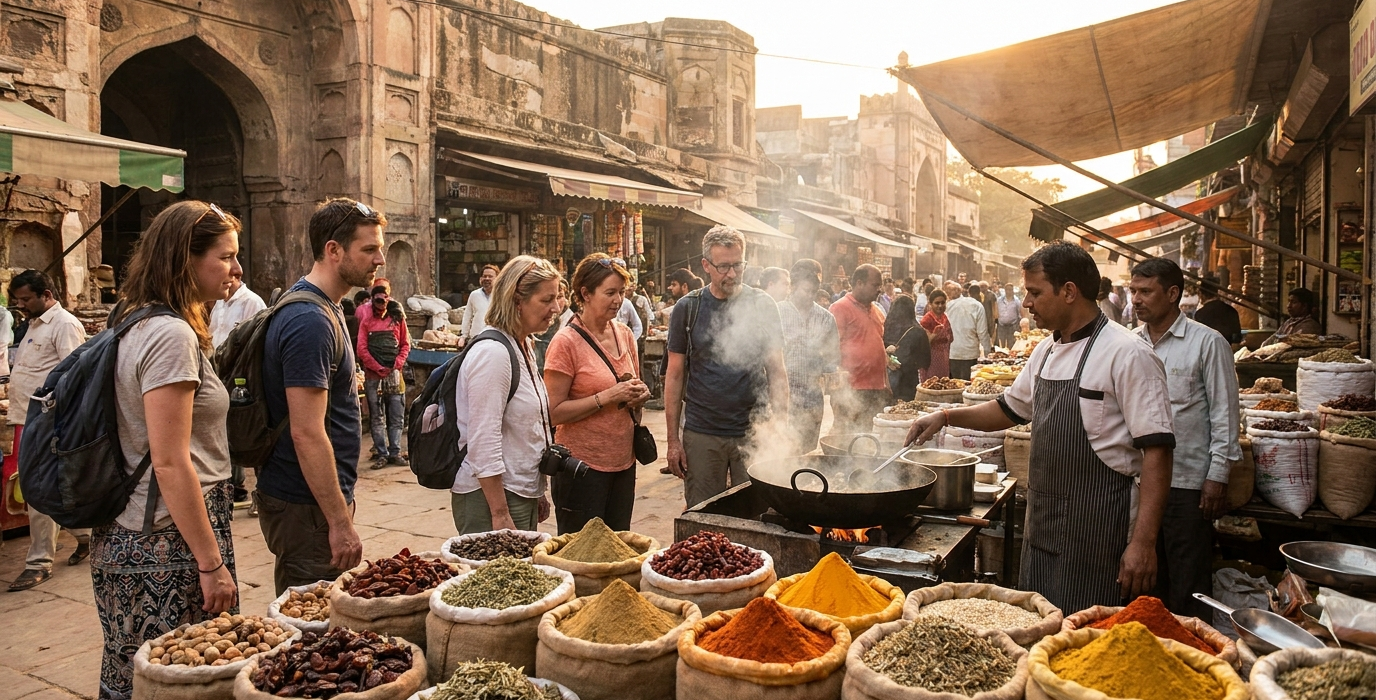
Imagine a session in Old Delhi, guided by a local expert, navigating the labyrinthine lanes of Chandni Chowk to discover hidden culinary gems. You’ll not only taste legendary parathas and kulfis but also learn about their history and the families who have perfected these recipes over generations. The goal is to demystify the complexity of Indian street food and provide a safe, informative, and utterly delicious experience.
Further south, in Goa, you can enrol in a workshop to master the art of Goan vindaloo or xacuti. These classes often start with a visit to a local market to select fresh ingredients, followed by a step-by-step preparation guided by a Goan family, culminating in a shared meal of your own creation. The emphasis is on traditional techniques passed down through generations.
These immersive programmes offer a deeper connection to the culture. You’re not just a spectator; you’re a participant in a living culinary tradition. Many such programs now also incorporate visits to local producers, such as spice farms in Kerala or artisanal cheese makers in the Himalayas, providing a holistic understanding of the food ecosystem.
“Authentic food experiences are the new luxury. Travellers today seek genuine connections, and the kitchen is the most vibrant place to forge them.”
A particularly unique offering emerging from Rajasthan involves learning to cook traditional Rajasthani dishes in a desert camp, using local ingredients and techniques like slow-cooking in sand. This offers a glimpse into the resourcefulness and distinct flavours shaped by the arid landscape.
From Farm to Fork: The Rise of Sustainable and Heritage Dining
A significant shift in India’s culinary tourism landscape for 2026 is the growing emphasis on sustainability and the revival of heritage recipes. Diners are increasingly aware of their environmental impact and are actively seeking out establishments and experiences that prioritize ethical sourcing, waste reduction, and the preservation of traditional culinary knowledge.
Farm-to-table restaurants are no longer a niche concept. Many establishments across India are now partnering directly with local farmers, ensuring that their ingredients are fresh, seasonal, and grown using sustainable practices. This not only guarantees superior quality produce but also supports rural economies and reduces the carbon footprint associated with food transportation.
Beyond sourcing, there’s a profound interest in rediscovering forgotten recipes. Chefs and home cooks are delving into old family cookbooks and historical texts to unearth traditional dishes that have been overshadowed by more contemporary fare. These heritage recipes often highlight indigenous ingredients and cooking methods that are both flavourful and deeply rooted in regional identity.
Consider the resurgence of millets (bajra, jowar, ragi) in mainstream Indian cuisine. Once considered staple grains of the poor, they are now being celebrated for their nutritional value and versatility. Restaurants and food festivals are showcasing innovative millet-based dishes, from savoury pancakes to elaborate desserts, often paired with traditional accompaniments. This movement is a powerful example of how culinary tourism can drive the revival of ancient food traditions.
Another surprising trend is the renewed appreciation for traditional fermentation techniques. From the ubiquitous idli and dosa batters to regional specialties like bamboo shoot pickles and fermented fish preparations in Northeast India, these time-tested methods are being explored for their unique flavours and health benefits. Culinary tourism providers are now offering workshops on these ancient preservation arts.
Navigating the New Culinary Trails: Practical Tips for 2026
As you plan your culinary adventures in India for 2026, remember that preparation is key to unlocking the most authentic and rewarding experiences. The “Spice Route Revival” initiative has made it easier to find legitimate culinary trails, but a bit of insider knowledge can go a long way.
Do your research. Before you book any tour or class, read reviews from fellow travellers. Look for mentions of authenticity, the quality of instruction, and the cultural sensitivity of the guides. Websites dedicated to culinary tourism and food blogs often provide invaluable insights.
Embrace the local. Step away from the familiar. While it’s tempting to stick to what you know, India’s true culinary magic lies in its regional diversity. Be adventurous and try dishes you’ve never heard of. Asking locals for recommendations is often the best way to discover hidden gems.
Prioritize immersive experiences. Cooking classes, market tours, and home-cooked meals offer a much richer understanding of Indian cuisine than simply dining in restaurants. Look for opportunities to interact with local cooks and learn about their traditions firsthand.
Consider the “Spice Route Revival” trails. The government-backed initiative is developing structured culinary circuits. These often provide a well-rounded experience, highlighting regional specialties and connecting you with local producers and heritage sites. You can find information on their official tourism portal.
Be mindful of dietary needs. India is incredibly accommodating to vegetarians, but if you have specific allergies or dietary restrictions, communicate them clearly and in advance. Many establishments and home cooks are happy to adapt, but it’s always best to be prepared.
Frequently Asked Questions
What are the most popular culinary destinations in India for 2026?
While major cities like Delhi, Mumbai, and Kolkata offer diverse options, the focus in 2026 is shifting towards regional hubs. Expect strong interest in Amritsar (Punjabi cuisine), Lucknow (Awadhi cuisine), Goa (Coastal and Portuguese-influenced dishes), Kerala (South Indian specialties), and Rajasthan (Thali and regional Rajasthani fare). The “Spice Route Revival” initiative is also highlighting emerging destinations in states like Gujarat and Himachal Pradesh.
How can I find authentic home-cooking experiences?
Several platforms and local tour operators now specialize in connecting travellers with families willing to host cooking sessions or share meals. Websites like “Authentic India Kitchen” or “Ghar Ka Khana Experiences” are good starting points. Look for services that emphasize cultural exchange and offer small-group settings for a more personal experience.
Is it safe to eat street food in India?
Street food in India can be incredibly delicious and a key part of the culinary experience. However, it’s crucial to exercise caution. Look for vendors with high turnover, clean preparation areas, and those who cook food fresh in front of you. Cities like Delhi and Mumbai have designated food streets and organized tours that prioritize hygiene and safety, making it a more secure way to explore street food.
What are some essential dishes to try on a culinary tour of India?
This depends on your chosen region, but universally, look for regional specialties. In the North, seek out a true Amritsari Kulcha or a Lucknowi Biryani. In the South, don’t miss a Kerala Sadya or a Chettinad curry. In the West, try a Gujarati Thali or a Goan seafood curry. The “Spice Route Revival” aims to showcase lesser-known but equally delicious dishes from across the country.