Key Takeaways
- Explore India’s vast culinary landscape beyond the familiar dishes, delving into unique regional specialties.
- Discover ancient spice blends and forgotten cooking techniques that shaped traditional Indian gastronomy.
- Learn how to source authentic ingredients and recreate heritage recipes in your own kitchen.
- Understand the cultural significance and historical evolution of specific Indian culinary traditions.
The Echoes of Ancient Kitchens: Beyond Butter Chicken and Biryani
When you think of Indian food, what comes to mind? For many, it’s the rich, creamy gravies of North Indian fare or the aromatic biryanis that have conquered palates globally. But India’s culinary story is far more intricate, a tapestry woven with threads of ancient trade routes, diverse regional influences, and centuries of culinary evolution. Today, we’re embarking on a journey to unearth these less-travelled paths, to rediscover the forgotten flavours and techniques that form the true bedrock of Indian cuisine.
Forget the ubiquitous menus for a moment and imagine the kitchens of the Indus Valley, where early civilisation experimented with grains and spices. Picture the bustling ports of the Malabar Coast, where Arabs, Romans, and later the Portuguese introduced new ingredients and cooking styles. Each epoch, each invasion, each trade agreement left its indelible mark, creating a mosaic of tastes that are as varied as India’s landscapes. We’ll be looking at specific regional gems, understanding the unique ingredients that define them, and the historical context that gave them birth.
Our exploration will take us from the fiery curries of the Deccan to the subtle elegance of Bengali sweets, from the robust flavours of Rajasthan to the delicate seafood preparations of the Konkan coast. It’s about understanding the “why” behind the “what” – why certain spices are paired, why specific cooking methods are employed, and how geography and culture have dictated the very essence of a dish. This isn’t just about tasting new food; it’s about understanding a living, breathing heritage.
We’ll also touch upon the ingenious ways our ancestors preserved food, managed scarce resources, and innovated with local produce. These are lessons in sustainability and culinary wisdom that are more relevant now than ever. Prepare to have your understanding of Indian food, and perhaps your own kitchen, profoundly enriched. We’ll be offering practical tips on sourcing ingredients and even attempting some of these heritage recipes ourselves.
The Spice Trails: Unearthing Ancient Blends and Their Stories
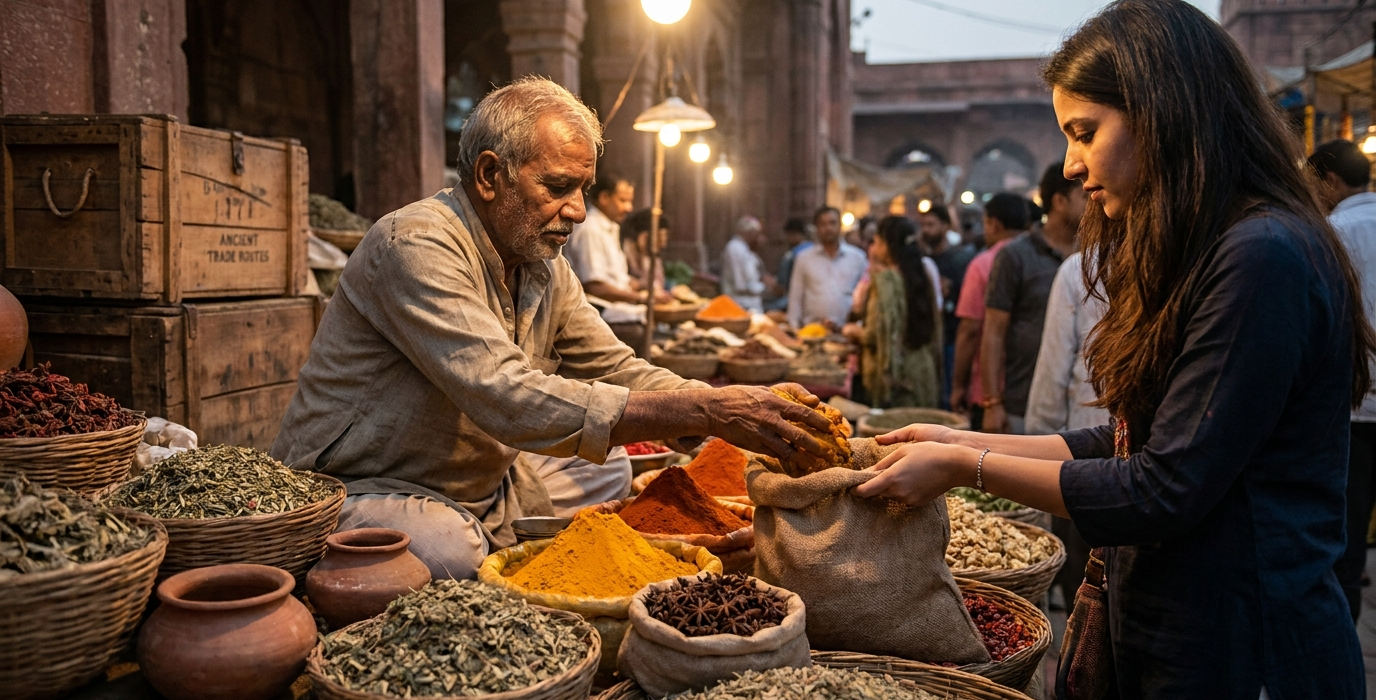
Spices are the soul of Indian cuisine, and their journey across continents and through millennia is a story in itself. While turmeric, cumin, and coriander are now household names, ancient India was a hub for exotic aromatics, traded along routes that connected it to the Roman Empire, Southeast Asia, and beyond. These spices weren’t just for flavour; they were used for medicinal purposes, preservation, and even as currency. Understanding these ancient blends is key to unlocking the true depth of Indian culinary heritage.
Consider the humble “garam masala.” While its composition varies wildly today, its origins lie in ancient Ayurvedic practices, where specific spice combinations were believed to balance the body’s humours and aid digestion. Early versions were often ground fresh before use, ensuring maximum potency. Different regions developed their own unique garam masalas; the Bengali *panch phoron*, a five-spice blend of fenugreek, nigella, cumin, mustard, and fennel seeds, is a prime example, traditionally used in tempering lentils and vegetables. This blend has a distinctly anise-like, slightly bitter profile that’s incredibly complex.
Then there are the less common, yet historically significant spices. Black cardamom, with its smoky, camphoraceous aroma, is crucial in many Punjabi and Kashmiri dishes, particularly in slow-cooked meats. Long pepper, once more prized than black pepper in Europe, offers a hotter, more pungent kick and is found in some older Indian recipes. Another fascinating ingredient is *dagad phool*, or “stone flower,” a lichen that imparts a earthy, musky flavour, often used in Maharashtrian *ghatni* masalas and Hyderabadi *kuchha qeema*. It’s an ingredient you won’t find in many modern kitchens, yet it adds an unparalleled depth.
The art of *tadka* or tempering, where whole or ground spices are fried in hot oil or ghee, is another ancient technique. This process releases their fat-soluble flavour compounds, transforming the base of a dish. Different regions favour different oils and spice combinations for their tadka, creating distinct flavour profiles. For instance, mustard oil is prevalent in the East, while ghee is favoured in the North. The subtle variations in these fundamental techniques speak volumes about the regional diversity that makes Indian cuisine so rich.
A Surprising Fact:
Did you know that the “spice route” wasn’t just about exporting spices from India? For centuries, India was also a major importer and refiner of spices from other regions. For example, cloves, native to the Moluccas (Indonesia), were brought to India and then widely traded, eventually influencing Indian cooking significantly. India acted as a crucial crossroads, integrating global flavours into its own unique culinary tapestry.
Regional Revelations: Karnataka’s Coastal Delights and Maharashtra’s Rustic Charm
Moving beyond the pan-Indian favourites, let’s immerse ourselves in the distinct flavours of the South and West. Karnataka, with its long coastline and fertile hinterlands, offers a culinary landscape as diverse as its geography. Along the coast, seafood reigns supreme. Think of *Meen Gassi*, a fiery coconut-based fish curry from Mangalore, where tamarind adds a signature tang and freshly ground masalas provide a complex heat. This dish showcases the region’s love for fresh ingredients and bold spices, often tempered with the cooling effect of coconut milk.
Further inland, in regions like Udupi, vegetarian cuisine takes centre stage, celebrated for its emphasis on fresh vegetables, lentils, and a unique balance of sweet, sour, and spicy notes. The *Saaru*, a thin, soupy broth flavoured with tamarind, spices, and sometimes a hint of jaggery, is a staple. It’s often served with rice and is a testament to the philosophy of using simple ingredients to create deeply satisfying meals. These dishes are often cooked using minimal oil, relying on the inherent flavours of the produce.
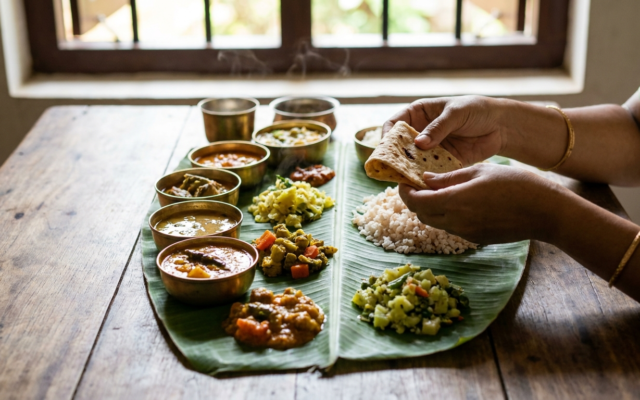
Across the border, Maharashtra presents a robust and earthy culinary tradition. The cuisine is known for its use of peanuts, sesame seeds, and coconut, often in combination. *Varan Bhat*, a simple yet profound dish of steamed rice served with a plain lentil preparation and a dollop of ghee, is the heart of Maharashtrian comfort food. It’s often accompanied by *amti*, a slightly sweet and sour lentil preparation, sometimes flavoured with *gode masala*, a unique spice blend that includes dried ginger, coriander, and cinnamon.
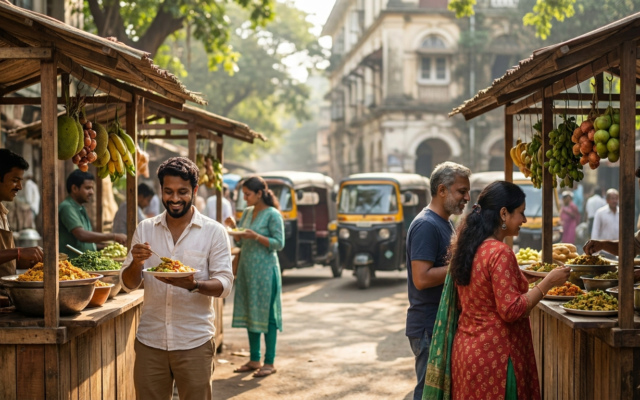
Don’t forget the street food of Mumbai, a vibrant expression of the state’s culinary ingenuity. *Pav bhaji*, a spicy mashed vegetable curry served with buttered bread rolls, and *vada pav*, a deep-fried potato fritter sandwiched in a bun, are iconic. These dishes are not just snacks; they are cultural touchstones, born out of necessity and adapted into beloved national treasures. They represent the resourcefulness and vibrant spirit of the region.
A Surprising Fact:
In Karnataka, a traditional breakfast dish called *Bisi Bele Bath* (hot lentil rice) is considered a complete meal. It’s a complex one-pot dish made with rice, lentils, vegetables, and a special spice powder known as *bisi bele bath powder*. What’s surprising is its historical connection: it originated in the royal kitchens of the Mysore Palace and was designed to be a nutritious and easily digestible meal for the entire household, showcasing early attempts at balanced, mass-produced meals.
The Royal Kitchens of Rajasthan: A Legacy of Durability and Flavour
The arid landscapes of Rajasthan have forged a culinary tradition built on resilience, ingenuity, and bold flavours. Historically, the region’s scarcity of water and fresh produce meant that dishes had to be hearty, long-lasting, and flavourful enough to be enjoyed even after days. This led to the extensive use of ghee, milk products, and spices that not only preserved food but also imparted a distinctive richness. The royal kitchens, in particular, developed elaborate preparations that are now iconic.
Perhaps the most famous Rajasthani dish is *Laal Maas*, a fiery red mutton curry. The “laal” (red) comes from the liberal use of dried red chillies, often Guntur or Mathania varieties, which lend both colour and a distinct, pungent heat. Slow-cooked to perfection in ghee and yoghurt, this dish is a testament to the region’s love for robust, intensely flavoured meats. The preparation often involves marinating the meat for hours, allowing the spices to penetrate deeply.
Another cornerstone of Rajasthani cuisine is its vegetarian fare, which is equally significant. *Dal Baati Churma* is a quintessential example. It comprises *baati*, hard, unleavened wheat bread baked in an oven or on a tandoor, which is then broken and soaked in ghee. This is served with *dal*, a spicy lentil curry, and *churma*, a sweet crumble made from the baati itself, often mixed with jaggery and ghee. The combination of textures and flavours – the crispness of the baati, the richness of the dal, and the sweetness of the churma – is utterly unique and deeply satisfying.
The use of *bajra* (pearl millet) is also central to Rajasthani cuisine. *Bajra ki Roti*, a flatbread made from millet flour, is a staple, providing essential nutrients and a distinct nutty flavour. These rotis are often served with various vegetable preparations like *Gatte ki Sabzi* – dumplings made from gram flour, steamed and then simmered in a yoghurt-based gravy. The resourceful use of ingredients, turning humble gram flour into a delectable curry, is a hallmark of Rajasthani cooking.
“The true essence of Indian heritage cuisine lies not just in the ingredients, but in the stories they tell of resourcefulness, adaptation, and the deep cultural connections we have with our food.”
Beyond the Tandoor: The Undiscovered World of Bengali Sweets and Eastern Flavours
Venturing east, we encounter a culinary universe that often gets overshadowed by its northern and southern counterparts: Bengal. This region, blessed with fertile lands and the mighty Ganges, boasts a culture deeply intertwined with its food, particularly its extraordinary array of sweets. While the West might be known for its rich, milk-based desserts, Bengali sweets often achieve a delicate balance of sweetness, often using *chhena* (freshly curdled milk solids) as their base.
The legendary *Rasgulla*, a soft, spongy cheese ball soaked in a light sugar syrup, is just the tip of the iceberg. *Sandesh*, a confection made from chhena, sugar, and sometimes cardamom or saffron, can be moulded into intricate shapes and offers a less syrupy, more delicate sweetness. Then there’s *Mishti Doi*, a baked yoghurt that achieves a creamy, caramelised sweetness through slow cooking, often served chilled as a perfect end to a meal. These sweets are not just desserts; they are an art form, a source of regional pride, and a vital part of any Bengali celebration.
Beyond sweets, Bengali cuisine is celebrated for its subtle yet complex flavour profiles. The use of *panch phoron* (the five-spice blend mentioned earlier) is ubiquitous, as is mustard oil, which imparts a pungent, distinctive character to many dishes. Fish, particularly freshwater varieties from the numerous rivers and ponds, forms the backbone of the Bengali diet. Dishes like *Machh Bhaat* (fish and rice) are a daily staple, prepared in countless ways, from the simple *Shorshe Ilish* (hilsa fish in mustard gravy) to the robust *Chingri Malaikari* (prawns in coconut milk curry).
The influence of the Mughal era and trade with the Portuguese is also evident. For instance, the *bhapa* technique, where food is steamed, is widely used, allowing ingredients to cook gently and retain their natural flavours. The liberal use of fresh coriander, green chillies, and ginger, combined with the unique spice blends, creates a palate that is both comforting and exhilarating. Exploring Bengali cuisine is an invitation to a world of refined tastes and culinary artistry.
A Surprising Fact:
Bengali sweets are not merely about sweetness. They represent a complex culinary science developed over centuries. For instance, the process of making *chhena* involves carefully curdling milk, often with a mild acid like lemon juice or tamarind. The way the curds are pressed and kneaded determines the final texture of sweets like Rasgulla and Sandesh. A truly remarkable aspect is the ability to create such diverse textures and flavours from essentially just milk solids and sugar, showcasing incredible culinary precision.
Bringing Heritage Home: Sourcing Ingredients and Recreating Recipes
The journey through India’s rich culinary heritage wouldn’t be complete without empowering you to bring these flavours into your own kitchen. Rediscovering these recipes often starts with sourcing the right ingredients. While staple spices like cumin and coriander are easily found, certain regional specialties might require a bit more effort.
For unique spices like *dagad phool* or specific varieties of dried chillies, explore dedicated Indian spice shops or reputable online retailers that specialise in regional Indian produce. Many of these shops offer freshly ground spice blends that are far superior to mass-produced versions. Don’t shy away from asking the shopkeepers; they are often a treasure trove of knowledge about their products and how to use them.
Fresh produce is key. If you’re trying to recreate a coastal dish, seek out fresh fish. For Maharashtrian or Rajasthani recipes, look for millet flour or gram flour. Local Indian grocery stores are your best bet for these. If you’re lucky enough to live in a city with a diverse population, you might find specialized farmers’ markets or ethnic food sections in larger supermarkets that carry these items.
When it comes to specific regional ingredients like tamarind paste or coconut milk, opt for high-quality versions. Freshly grated coconut, if available, can elevate many South Indian and Bengali dishes. For sweets like *chhena*, you can learn to make it at home – it’s a surprisingly simple process that yields far superior results to any pre-packaged substitute.
Don’t be intimidated by the seemingly complex recipes. Many heritage dishes, at their core, rely on simple techniques. The key is in the quality of ingredients and the slow, patient cooking that allows flavours to develop. Start with simpler regional dishes like a basic *Saaru* from Karnataka or *Varan* from Maharashtra before diving into more elaborate preparations like *Laal Maas*. Reading up on the cultural context of each dish can also enhance your appreciation and understanding of the cooking process.
Consider investing in a good mortar and pestle for grinding your own spices; the aroma difference is remarkable. Similarly, a heavy-bottomed pot or a cast-iron skillet can help achieve the perfect sear or slow simmer. Remember, cooking heritage recipes is a journey of discovery, not just of flavours, but of the history and culture they represent. Embrace the process, experiment, and most importantly, enjoy the delicious results!
Frequently Asked Questions
What is the difference between North Indian and South Indian cuisine?
North Indian cuisine often features richer, creamier curries made with dairy products like yoghurt and cream, and uses more wheat-based breads like naan and roti. South Indian cuisine, on the other hand, is known for its lighter, spicier dishes often using coconut, tamarind, and rice as staples, with rice being the primary accompaniment, often served with lentil preparations like sambar and rasam.
Are traditional Indian recipes difficult to cook?
While some traditional Indian recipes can be complex, many are surprisingly straightforward. The perceived difficulty often comes from the number of spices or steps. However, by breaking them down, using quality ingredients, and understanding the purpose of each step (like tempering spices), you can recreate authentic flavours. Starting with simpler regional dishes is a good approach.
Where can I find authentic Indian spices and ingredients?
Your best bet for authentic Indian spices and ingredients is to visit local Indian grocery stores. These stores often carry a wide variety of regional spices, flours, lentils, and produce. Reputable online retailers specializing in Indian foods are also excellent resources, especially for harder-to-find items.
How can I adapt heritage recipes for modern kitchens?
You can adapt heritage recipes by using readily available modern cooking appliances like pressure cookers or Instant Pots to speed up cooking times for lentils and meats. Sourcing fresh, high-quality ingredients available locally will also significantly enhance the flavour. For instance, using fresh ginger and garlic paste instead of pre-made versions makes a noticeable difference.
What are some important cooking techniques in Indian cuisine?
Key techniques include *tadka* (tempering spices in hot oil/ghee), *bhuna* (slow frying and caramelising spices and aromatics), *dum* cooking (slow cooking in a sealed pot), and marination. Understanding these fundamental techniques will significantly improve your ability to recreate authentic Indian flavours.