Key Takeaways
- Bengaluru is leading India’s EV revolution, with impressive growth in electric two- and three-wheeler adoption.
- The city faces critical challenges in charging infrastructure, grid capacity, and policy implementation, despite significant progress.
- By 2026, expect a surge in public-private partnerships to expand charging networks and address energy demands.
- Consumer adoption is driven by falling battery costs and government incentives, but range anxiety and upfront costs remain concerns.
Bengaluru: India’s Electric Vehicle Epicentre in 2026
Bengaluru, often hailed as India’s Silicon Valley, is rapidly cementing its reputation as the nation’s electric vehicle (EV) capital. In 2026, the city buzzes not just with data traffic but with the quiet hum of electric motors, signifying a profound shift in urban mobility. We’re witnessing an accelerated adoption curve, particularly in the two- and three-wheeler segments, which form the backbone of personal and commercial transport here. This transformation isn’t merely about new vehicles; it’s about a redefinition of city life, from cleaner air to reduced noise pollution and a potential economic boom powered by green technology.
The sheer scale of EV sales in Bengaluru is striking. While national statistics show a steady climb, Bengaluru consistently outperforms, especially in the electric scooter and auto-rickshaw categories. This surge is fueled by a confluence of factors: proactive state government policies, a growing environmental consciousness among its tech-savvy populace, and the rapid evolution of battery technology that has made EVs more accessible and practical. We’re seeing a palpable shift, where once a rare sight, electric vehicles are now a common and increasingly desirable mode of transport across its bustling streets.
However, this rapid ascent isn’t without its hurdles. The infrastructure required to support this burgeoning EV ecosystem is still playing catch-up. While public charging stations are increasing, their density and reliability remain a key concern for many potential buyers. Furthermore, the strain on the existing power grid, especially during peak hours, is a growing worry that city planners and energy providers are actively addressing. The narrative of Bengaluru’s EV success in 2026 is therefore a dual one – a story of remarkable progress intertwined with the urgent need for continued innovation and investment.
The Accelerating Adoption Curve: Two- and Three-Wheelers Lead the Charge
The most visible testament to Bengaluru’s EV leadership is the overwhelming popularity of electric two- and three-wheelers. For the average Bengalurean, a scooter or an auto-rickshaw represents daily commute and livelihood. The transition to electric variants in these segments is happening at a pace that few predicted even a couple of years ago. We’re seeing a significant number of new registrations, with electric models increasingly dominating showrooms across the city.
Several factors are driving this shift. The total cost of ownership for electric two-wheelers is becoming increasingly competitive, thanks to lower running costs (electricity versus petrol) and reduced maintenance. Government subsidies, like the FAME (Faster Adoption and Manufacturing of Hybrid and Electric Vehicles) scheme, though subject to changes, have provided a crucial initial impetus. Beyond economics, a growing awareness of air quality issues, particularly in congested urban centres, is nudging consumers towards cleaner alternatives. Young professionals and gig economy workers, who rely heavily on these vehicles, are particularly receptive to the benefits of EVs.
The electric three-wheeler segment, crucial for last-mile delivery and public transport, is also experiencing a similar boom. Fleet operators are recognising the long-term savings and operational efficiencies offered by electric autos and delivery vans. Bengaluru’s dynamic logistics sector, with its reliance on efficient and cost-effective transport, is a natural incubator for this adoption. This widespread embrace of electric two- and three-wheelers is not just a trend; it’s a fundamental reshaping of urban mobility, paving the way for broader EV integration across other vehicle classes.
Charging Infrastructure: The Bottleneck and the Breakthroughs
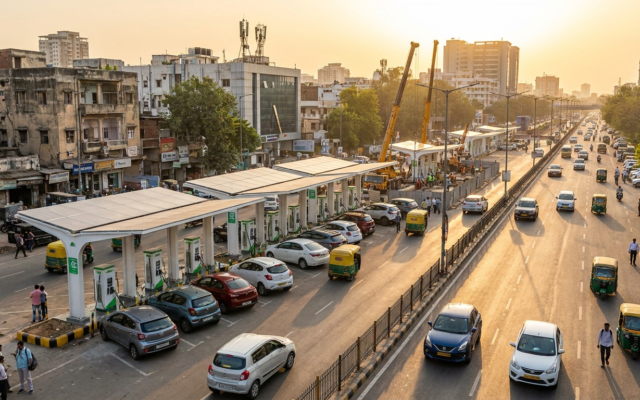
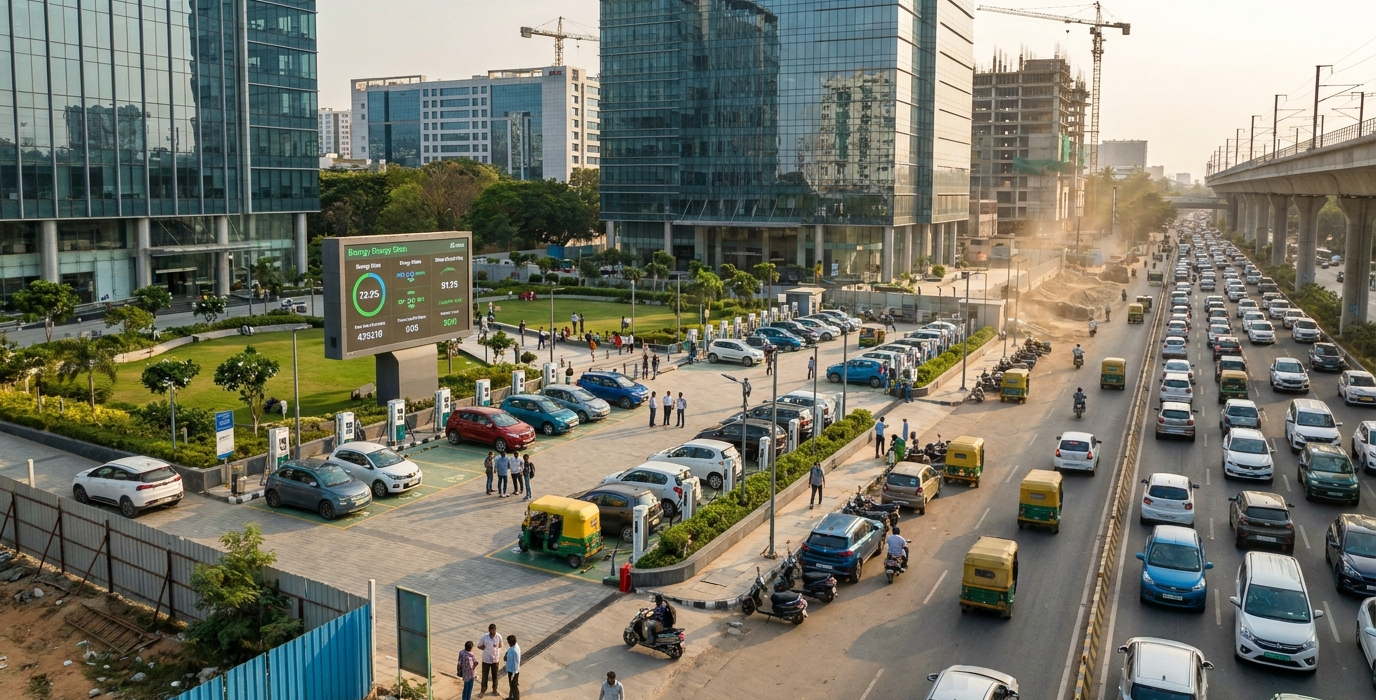
The most pressing challenge Bengaluru faces in its EV journey in 2026 is the expansion and optimisation of its charging infrastructure. While the number of charging points has grown, it still lags behind the soaring demand, creating ‘range anxiety’ for many potential EV owners. We hear stories of drivers circling for available spots or facing long queues at public charging stations, especially in densely populated areas like Indiranagar or Koramangala.
However, this bottleneck is also spurring significant innovation and investment. We’re seeing a surge in public-private partnerships aimed at rapidly deploying charging solutions. Companies are experimenting with various models, from dedicated public charging hubs to battery-swapping stations, particularly for electric three-wheelers. The Karnataka government is actively encouraging private players to set up charging infrastructure, offering incentives and streamlining the approval process. The aim is to create a dense, accessible, and reliable network that makes EV ownership as convenient as refueling a conventional vehicle.
One surprising development we’ve observed is the integration of charging facilities into existing urban infrastructure. Many commercial parking lots, residential complexes, and even public transport hubs are now incorporating EV charging points. Furthermore, the rapid advancement in fast-charging technology means that drivers can get a significant charge in a matter of minutes, reducing wait times. The challenge now is not just adding more chargers, but ensuring they are strategically located, consistently operational, and powered by increasingly renewable energy sources to truly maximise the environmental benefits.
Grid Capacity and Energy Management: Powering the Future
As Bengaluru electrifies its transport, a crucial question arises: can our existing power grid handle the increased demand? The answer in 2026 is complex. While the power distribution companies, like Bangalore Electricity Supply Company (BESCOM), are actively working on upgrading infrastructure, the rapid influx of EVs presents a significant challenge. Concentrated charging at peak hours could strain local transformers and substations, leading to power outages or reduced supply quality.
The strategy to counter this involves a multi-pronged approach. We’re seeing a push towards smart grid technologies that can manage electricity flow more efficiently, optimising charging schedules to avoid peak demand periods. This includes encouraging off-peak charging through differential tariffs, making it cheaper for EV owners to charge their vehicles overnight. Furthermore, there’s a growing emphasis on integrating renewable energy sources, particularly solar power, into the charging ecosystem. Rooftop solar installations on residential buildings and commercial establishments can help offset the increased demand on the grid. This approach not only diversifies our energy sources but also makes EV charging cleaner.
A truly groundbreaking initiative being explored is the concept of ‘Vehicle-to-Grid’ (V2G) technology. While still in its nascent stages for widespread commercial adoption in India, pilot projects are underway. V2G technology allows EVs to not only draw power from the grid but also feed it back during periods of high demand, effectively acting as mobile energy storage units. This could significantly stabilise the grid and provide an additional revenue stream for EV owners. The integration of smart charging, renewable energy, and potentially V2G technology will be critical for Bengaluru to sustain its EV momentum without compromising its power supply.
Consumer Confidence and Affordability: Navigating the EV Landscape
For many Indian consumers, the decision to switch to an EV in 2026 hinges on two primary factors: confidence in the technology and affordability. While the initial cost of EVs has historically been higher than their internal combustion engine (ICE) counterparts, this gap is rapidly narrowing. Falling battery prices, driven by global manufacturing scale and technological advancements, are making EVs more accessible than ever before. We’re now seeing electric scooters and even some entry-level electric cars priced competitively with their petrol equivalents.
Beyond the sticker price, the total cost of ownership is a compelling argument for EVs. The savings on fuel and maintenance are substantial over the lifespan of the vehicle. For a daily commuter covering 30-40 kilometers in Bengaluru, the monthly savings on running costs can be significant, making the initial investment more attractive. However, “range anxiety” – the fear of running out of charge before reaching a charging station – remains a persistent concern for some, especially those undertaking longer journeys or living in areas with sparser charging facilities.
To build consumer confidence, manufacturers are offering longer battery warranties and improved range figures on their latest models. Dealerships are increasingly providing test drives and educating potential buyers on the realities of EV ownership, including charging habits and available infrastructure. Moreover, innovative financing options and leasing models are emerging, further reducing the upfront financial burden. The positive word-of-mouth from early adopters, who are experiencing the benefits firsthand, is also a powerful driver of trust and adoption in Bengaluru’s burgeoning EV market.
Policy and Partnerships: The Government’s Role in Driving Electrification
Bengaluru’s journey towards becoming an EV hub is intrinsically linked to the proactive policies and strategic partnerships fostered by the Karnataka state government and civic bodies. In 2026, the government continues to play a pivotal role, not just through incentives but by creating an enabling ecosystem for EV adoption and manufacturing. The state’s EV policy, regularly updated to reflect evolving market dynamics, provides a roadmap for growth, focusing on areas like charging infrastructure, manufacturing incentives, and consumer subsidies.
One of the most significant aspects of the state’s approach is its commitment to facilitating public-private partnerships. Recognizing that the scale of the transition requires collaboration, the government has actively engaged with private players, from charging infrastructure providers and battery manufacturers to fleet operators and ride-hailing services. These partnerships are crucial for accelerating the deployment of charging networks, standardizing charging protocols, and integrating EVs into the urban transport fabric. For instance, collaborations with ride-sharing platforms have led to a significant increase in electric cabs on Bengaluru’s roads.
Beyond financial incentives, the government is also focusing on non-monetary support, such as fast-tracking permits for charging station installations and promoting awareness campaigns. The presence of a strong automotive R&D ecosystem in Bengaluru, with numerous startups and established companies, is also a key advantage. The government’s role extends to ensuring that policy interventions are sustainable and adaptable, addressing emerging challenges like battery recycling and grid integration effectively. This concerted effort, blending policy direction with collaborative action, is what truly propels Bengaluru’s EV ambitions forward in 2026 and beyond.
Frequently Asked Questions
What is the current range of electric scooters in Bengaluru?
In 2026, most new electric scooters available in Bengaluru offer a real-world range of 100-150 kilometers on a single charge, with some premium models exceeding 200 kilometers. This is generally sufficient for daily city commutes, but longer trips may require planning around charging points.
How much do government subsidies affect the price of EVs in Bengaluru?
Government subsidies, particularly under schemes like FAME, can significantly reduce the upfront cost of EVs. The exact reduction varies by vehicle type and model, but it can often bring the price of electric two-wheelers and three-wheelers closer to, or even below, their petrol-powered equivalents, making them more attractive to buyers.
Are there enough public charging stations in Bengaluru?
While the number of public charging stations is growing rapidly, their distribution can be uneven. Bengaluru is actively expanding its network, but some areas still have fewer charging points than others. It’s advisable to check the availability and location of chargers using dedicated apps before embarking on longer journeys.
What is the average cost of charging an electric vehicle in Bengaluru?
The cost of charging an EV in Bengaluru varies depending on the charging method (home vs. public) and electricity tariffs. On average, charging an electric scooter or car at home can cost between ₹1 to ₹2 per kilometer, making it significantly cheaper than petrol. Public fast-charging stations might be more expensive but offer faster charging times.
What happens to old EV batteries in Bengaluru?
Battery recycling and end-of-life management are critical concerns. Bengaluru is seeing the development of battery recycling facilities and second-life applications for used EV batteries, such as for energy storage. The state government is working on policies to ensure responsible disposal and reuse of these batteries.