Key Takeaways
- India’s solar power capacity has seen unprecedented growth in 2026, driven by ambitious government targets and falling technology costs.
- New solar parks, particularly in Rajasthan and Gujarat, are significantly boosting the nation’s clean energy output.
- Challenges remain in grid integration and energy storage, though innovative solutions are emerging.
- The surge in solar is creating substantial employment opportunities and attracting significant domestic and international investment.
The Sun Rises Anew: India’s 2026 Solar Power Revolution
As the Indian sun blazes across the vast plains and bustling cities in 2026, it’s not just illuminating the land; it’s powering a revolution. The nation’s solar energy sector has witnessed an explosive surge, shattering previous records and setting new benchmarks for renewable energy deployment. This isn’t a gradual shift; it’s a seismic transformation that is fundamentally reshaping India’s energy landscape and its global standing in the fight against climate change.
The year 2026 has been a watershed moment. Driven by a potent combination of aggressive policy support, remarkable technological advancements, and a relentless fall in manufacturing costs, solar power has cemented its position as the undisputed king of India’s renewable energy portfolio. We’re seeing utility-scale projects coming online at a pace that was once considered aspirational, transforming arid landscapes into gleaming expanses of photovoltaic panels.
This expansion isn’t just about megawatts; it’s about a deeper, more profound shift. It’s about energy independence, economic growth, and a cleaner future for billions. The sheer scale of deployment means that solar power is no longer a niche player but a mainstream source of electricity, contributing significantly to the national grid and providing reliable power to homes and industries alike. The implications for India’s economic trajectory and environmental commitments are immense, making this solar boom one of the most significant developments of the year.
Mega-Projects Fueling the Surge: Rajasthan and Gujarat Lead the Charge
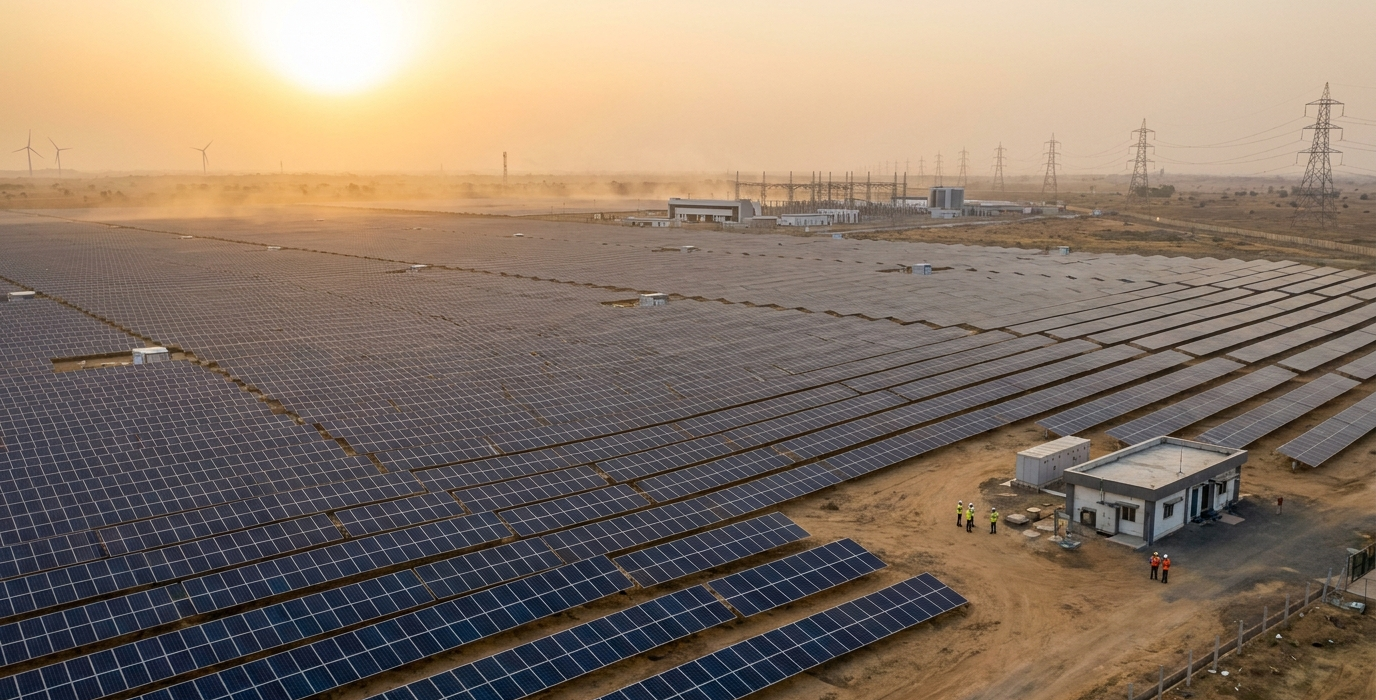
The story of India’s 2026 solar surge is intrinsically linked to the colossal solar parks taking shape in the nation’s sun-drenched western states. Rajasthan, with its vast, arid expanse, has emerged as a powerhouse, home to some of the world’s largest solar installations. Projects like the Bhadla Solar Park continue to expand, contributing gigawatts of clean power and demonstrating the state’s commitment to renewable energy.
Gujarat, another pioneer in solar adoption, is also witnessing significant capacity additions. The state’s proactive policies and its strategic location have made it an attractive destination for both domestic and international investors. New solar farms are dotting the landscape, integrating seamlessly with the existing power infrastructure and feeding clean energy into the grid. These mega-projects are not just about scale; they are marvels of engineering and logistical prowess, bringing together advanced technology and efficient execution.
Beyond these leading states, other regions are rapidly catching up. Uttar Pradesh, a state with immense energy demand, is also making substantial strides, diversifying its renewable energy mix with ambitious solar projects. The success of these large-scale parks serves as a testament to what can be achieved when there is a clear vision and unwavering commitment from both government and private enterprise. They are beacons of progress, showcasing India’s capability to harness solar power at an unprecedented scale.
Innovation in Storage: Addressing the Intermittency Challenge
While the sheer volume of solar capacity added in 2026 is cause for celebration, the inherent intermittency of solar power remains a critical challenge. The sun doesn’t shine at night, and cloud cover can significantly impact output. To ensure a stable and reliable electricity supply, India is increasingly focusing on advanced energy storage solutions. This is where innovation is truly shining.
Battery energy storage systems (BESS) are becoming a crucial component of new solar projects. These systems, ranging from large-scale grid-connected batteries to smaller, distributed solutions, are capable of storing excess solar energy generated during the day and releasing it when demand is high or solar generation is low. We are seeing pilot projects testing cutting-edge battery chemistries and grid-scale storage deployments that are crucial for grid stability.
Beyond batteries, India is also exploring other storage technologies. Pumped hydro storage, a mature and reliable technology, is being considered for new large-scale projects. Furthermore, advancements in green hydrogen production, powered by surplus solar energy, offer a long-term storage solution that can also be used for fuel. The integration of these diverse storage solutions is key to unlocking the full potential of India’s massive solar capacity and ensuring a 24/7 supply of clean energy.
Economic Ripples: Job Creation and Investment Frenzy
The explosive growth in India’s solar sector in 2026 is creating significant economic ripples, most notably in job creation and attracting substantial investment. The construction, operation, and maintenance of these massive solar parks require a vast workforce, from skilled engineers and technicians to ground staff and project managers. This surge in demand is directly translating into new employment opportunities across the country.
Beyond direct employment, the solar boom is spurring growth in ancillary industries. The manufacturing of solar panels, inverters, mounting structures, and other components is seeing a significant boost. This localization effort is not only reducing import dependence but also fostering a robust domestic manufacturing ecosystem. Companies that were once solely focused on assembly are now investing in research and development to produce more advanced and efficient components within India.
Furthermore, the sector is a magnet for both domestic and international investment. Venture capital, private equity, and large institutional investors are pouring billions into solar projects and companies. The government’s clear policy direction and the attractive economics of solar power have created a fertile ground for financial inflows. This investment is not just funding projects; it’s driving innovation and competition, further accelerating the pace of growth and making India a global leader in the renewable energy investment landscape.
Policy Prowess: Government Support Driving the Momentum
The remarkable trajectory of India’s solar power growth in 2026 would be unimaginable without the unwavering support and strategic vision of the Indian government. Ambitious national targets, coupled with pragmatic policy frameworks, have created an environment conducive to rapid deployment. These policies are not static; they are evolving to address the dynamic nature of the renewable energy sector.
Key initiatives like the National Solar Mission, which has been consistently updated and expanded, have set clear goals for capacity addition. The introduction of Production Linked Incentive (PLI) schemes for solar manufacturing has been a game-changer, encouraging domestic production and reducing reliance on imports. These incentives are vital for building a self-sufficient solar ecosystem.
Beyond manufacturing, policies aimed at streamlining land acquisition for solar projects and ensuring grid connectivity have been instrumental. The government’s commitment to long-term power purchase agreements (PPAs) provides much-needed revenue certainty for developers, de-risking investments. This sustained policy push, coupled with a proactive approach to addressing challenges, has been the bedrock upon which India’s solar success in 2026 is built. It signals a clear intent to prioritize clean energy for a sustainable future.
The Road Ahead: Challenges and Opportunities in 2026 and Beyond
While the successes of 2026 are undeniable, the journey of India’s solar power sector is far from over. The rapid pace of deployment presents its own set of challenges, particularly concerning grid integration and the need for sophisticated grid management systems. As solar contributes a larger percentage of the national grid, ensuring stability and reliability becomes paramount.
The development of smart grids, equipped with advanced monitoring and control capabilities, is crucial. These grids can better manage the fluctuating nature of solar generation and optimize energy flow. Furthermore, the need for efficient and cost-effective energy storage solutions will only intensify. Continued investment in research and development for batteries, pumped hydro, and other storage technologies is essential.
However, these challenges also represent significant opportunities. The demand for innovative solutions in grid modernization and energy storage is creating new markets and driving technological advancement. India’s position as a leader in solar deployment means it can play a pivotal role in developing and exporting these cutting-edge technologies. The next few years will be about consolidating the gains made in 2026 and building a truly resilient and sustainable energy future for all Indians.
| Metric | 2025 Projection | 2026 Actual (Estimated) | 2027 Projection |
|---|---|---|---|
| Total Solar Capacity (GW) | 140 GW | 175 GW | 210 GW |
| New Capacity Added (GW) | 25 GW | 35 GW | 35 GW |
| Solar Share in Energy Mix (%) | 15% | 18% | 21% |
| Investment in Solar Sector (USD Billion) | 18 | 25 | 28 |
“The sheer scale of solar deployment in 2026 is a testament to India’s commitment to a green future. What we’re witnessing is not just an energy transition, but an economic and social transformation powered by the sun.”
Frequently Asked Questions
What is the current installed solar power capacity in India as of August 2026?
As of early August 2026, India’s total installed solar power capacity is estimated to be around 175 GW, marking a significant leap from previous years due to the accelerated deployment throughout the year.
Which states are leading in solar power generation in India in 2026?
Rajasthan and Gujarat continue to lead in solar power generation, hosting some of the largest solar parks. However, states like Uttar Pradesh and Tamil Nadu are also making substantial contributions and rapidly increasing their solar capacity.
Are there enough skilled workers for the booming solar industry in India?
While the industry is creating vast employment, there is an ongoing effort to upskill and train the workforce to meet the demand for specialized roles in solar park development, operation, and maintenance. Skill development programs are a crucial focus area.
What are the main challenges facing India’s solar sector in 2026?
The primary challenges include grid integration of variable solar power, the need for robust energy storage solutions, efficient land acquisition, and ensuring the long-term financial viability of projects amidst evolving market dynamics.
How much is India investing in solar energy in 2026?
Investment in India’s solar sector in 2026 is estimated to be around USD 25 billion, driven by government incentives, private sector interest, and international funding for large-scale projects and manufacturing.