Key Takeaways
- India’s EV charging network is rapidly expanding, with new stations set to connect major cities and remote areas by 2026.
- Government initiatives and private sector investments are accelerating this growth, aiming to alleviate range anxiety for EV owners.
- Expect a diverse range of charging solutions, from ultra-fast chargers to home charging options, catering to different needs and budgets.
- Understanding the evolving charging landscape, including new payment systems and accessibility features, is crucial for seamless EV ownership.
The Electric Surge: India’s Charger Network on the Fast Track
The hum of electric vehicles is growing louder across India, and by the end of 2026, you’ll find it easier than ever to keep them powered up. India is in the midst of an ambitious and vital expansion of its electric vehicle (EV) charging infrastructure, a critical step towards achieving its ambitious sustainability goals and fostering widespread EV adoption. This isn’t just about a few more charging points; it’s a comprehensive, nationwide push designed to make EV ownership a practical and convenient reality for millions. We’re witnessing a strategic build-out that aims to connect not only our major metropolises like Delhi, Mumbai, and Bengaluru but also to penetrate deeper into Tier 2 and Tier 3 cities, and even rural hinterlands. This initiative is being driven by a potent combination of government mandates, supportive policies, and robust private sector investment, all working in concert to overcome the primary hurdle for many potential EV buyers: range anxiety. The goal is clear: to create a seamless and ubiquitous charging experience that rivals, and in some aspects surpasses, the convenience of traditional fossil fuel refueling.
The sheer scale of this undertaking is impressive. We’re talking about thousands of new charging stations being deployed, strategically located along national highways, within urban centers, and at popular travel destinations. This ensures that long-distance journeys are no longer a source of stress for EV drivers. Furthermore, the focus is on diversifying the types of chargers available. You’ll see an increasing number of ultra-fast DC chargers capable of adding hundreds of kilometers of range in mere minutes, alongside more common AC charging points suitable for overnight or workplace charging. This multi-pronged approach acknowledges that different users have different needs and that a one-size-fits-all solution won’t suffice. The government’s push, coupled with the proactive engagement of energy companies, automobile manufacturers, and dedicated EV charging infrastructure providers, paints a promising picture for the future of mobility in India.
Connecting the Continents: Highway Super Corridors Take Shape
One of the most exciting developments in India’s EV charging expansion is the creation of dedicated “super corridors” along major national highways. Think of these as arteries of the electric age, meticulously planned to ensure that long-distance travel is no longer a concern for EV owners. By the close of 2026, you should be able to drive from Chennai to Kanyakumari, or from Ahmedabad to Mumbai, with charging stations conveniently spaced every 50-100 kilometers. These corridors are not just about placing chargers; they are about building a truly integrated ecosystem. This means ensuring reliable power supply, robust connectivity for payment systems, and even amenities for drivers while they wait.
These highway networks are being developed with an eye on future scalability. The chargers installed are being designed to accommodate a growing number of EV models and charging standards, ensuring that your investment in an EV today will remain compatible with the infrastructure of tomorrow. Several consortiums, backed by significant investment from both domestic and international players, are leading this charge. They are working closely with the National Highways Authority of India (NHAI) and state road transport corporations to identify optimal locations and streamline the installation process. This collaborative approach is crucial for overcoming the logistical challenges inherent in such a large-scale infrastructure project. The aim is to remove the perception that EVs are only suitable for city commutes and to firmly establish them as a viable option for inter-state travel and commercial logistics.
Urban Charging Hubs: Greening Our Cities, One Plug at a Time
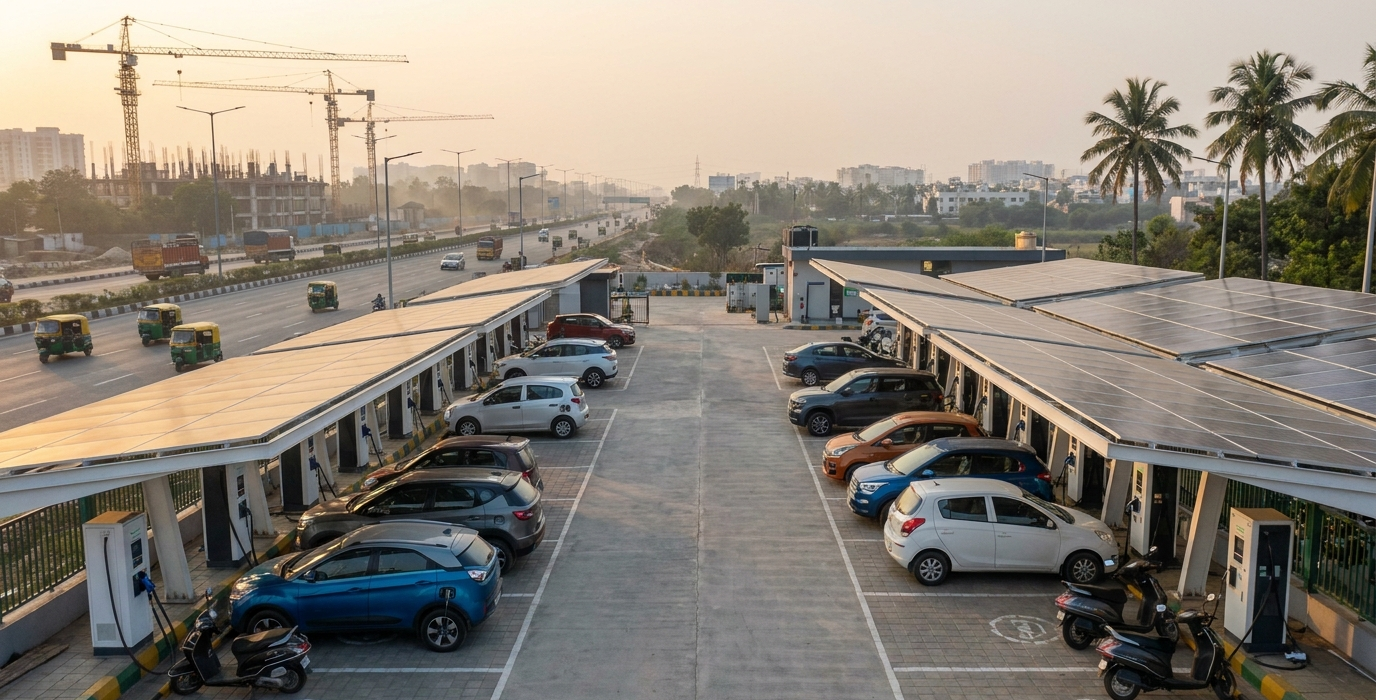
Beyond the highways, India’s urban centers are also becoming dense hubs of EV charging. Cities like Pune, Hyderabad, and Kolkata are leading the charge in integrating charging infrastructure into the very fabric of urban life. We’re seeing a proliferation of charging points in residential societies, commercial complexes, and public parking lots. This makes it incredibly convenient for daily commuters to charge their vehicles overnight or while they are at work or shopping. The goal is to make charging as accessible as finding a parking spot.
The integration goes beyond just placing chargers. Many cities are exploring smart charging solutions that can optimize energy consumption and even integrate with the local power grid. This means chargers can be programmed to operate during off-peak hours, reducing strain on the grid and potentially lowering electricity costs for users. We’re also seeing innovative solutions like battery swapping stations becoming more prevalent, especially for two- and three-wheeler segments, offering an even faster alternative to traditional charging. For apartment dwellers, the challenge of installing chargers has been a significant barrier, but new policies are being rolled out to facilitate easier installation in shared residential complexes. These policies often involve streamlined approvals and shared infrastructure models, making it easier for residents to go electric.
Surprising Fact: Did you know that some of the most ambitious charging network expansions are being spearheaded by companies traditionally known for fossil fuel distribution?
This indicates a significant industry-wide shift and a recognition of the inevitable future of electric mobility.
Beyond the Usual Suspects: Reaching Remote Regions and Rural India
A truly revolutionary aspect of India’s EV charging expansion is its commitment to reaching even the most remote corners of the country. This is where the impact of EVs can be most transformative, offering cleaner air and reduced reliance on imported fuels in areas that have historically been underserved. By the end of 2026, you’ll find charging stations cropping up in locations that might surprise you, from the foothills of the Himalayas in Himachal Pradesh to the coastal villages of Kerala. This is a monumental task, requiring innovative solutions for power availability and maintenance in challenging terrains.
The strategy involves a multi-pronged approach. Public charging stations are being installed in community centers, government facilities, and at key retail points in smaller towns. Furthermore, there’s a significant push to enable home charging solutions for rural households, often through partnerships with local energy providers and agricultural cooperatives. These initiatives often come with subsidies and financing schemes to make them affordable. The aim is not just to provide charging but to create micro-entrepreneurship opportunities around charging station management and maintenance, fostering local economic development. This ensures the long-term sustainability of the charging network in these areas.
Surprising Fact: Many of these remote charging stations are being powered by integrated solar energy solutions, making them truly green and self-sufficient, even in off-grid locations.
This showcases India’s ingenuity in leveraging renewable energy for its EV ambitions.
Navigating the Charging Ecosystem: Payment, Access, and User Experience
As the charging network expands, so too does the sophistication of the user experience. Gone are the days of clunky, proprietary payment systems. By 2026, you can expect a more unified and seamless approach to accessing and paying for charging. This includes widespread adoption of standardized payment gateways, mobile apps that allow for real-time charger availability checks, booking, and payment, and even interoperability between different charging networks. The goal is to make charging as simple as paying for your groceries.
We’re seeing the emergence of “charging-as-a-service” models, where companies offer subscription plans that bundle charging costs, maintenance, and even roadside assistance. This predictability in cost is a significant draw for many consumers. Furthermore, accessibility features are being integrated, ensuring that chargers are usable by people of all abilities. Digital payment solutions are rapidly evolving, with many platforms supporting UPI, credit/debit cards, and even loyalty points. The focus is on reducing friction at every touchpoint, from finding a charger to completing the payment and unplugging your vehicle.
| Charging Type | Typical Charging Time (for a 40 kWh battery) | Estimated Cost Per Charge (INR) | Best For |
|---|---|---|---|
| Level 1 (Standard Home Outlet) | 24-48 hours | ₹150 – ₹300 | Overnight charging, minimal daily commute |
| Level 2 (AC Fast Charger – Home/Public) | 6-10 hours | ₹200 – ₹400 | Daily charging at home or workplace, overnight top-ups |
| DC Fast Charger (Public) | 30-60 minutes (to 80%) | ₹300 – ₹600 | Long-distance travel, quick top-ups on the go |
| Ultra-Fast DC Charger (Public) | 15-30 minutes (to 80%) | ₹400 – ₹700 | Urgent charging needs, highway travel, commercial fleets |
The Road Ahead: Challenges and Opportunities for EV Owners
While the progress is undeniably exciting, it’s important to acknowledge that the EV charging landscape is still evolving. You might encounter occasional teething problems as the network scales, such as temporary power outages at a charging station or software glitches in payment apps. However, the pace of innovation and investment suggests that these issues are being addressed rapidly. The sheer scale of private and public investment is creating a competitive market, which ultimately benefits the consumer through better services and potentially lower costs.
One significant opportunity for EV owners is the potential for vehicle-to-grid (V2G) technology. As charging infrastructure becomes more sophisticated, your EV could potentially serve as a distributed energy storage unit, feeding power back to the grid during peak demand periods, earning you credits or even cash. This is still in its nascent stages in India, but by 2026, we expect to see pilot programs and early commercial deployments. Another opportunity lies in the data being generated. Companies are increasingly using data analytics to predict demand, optimize charger placement, and offer personalized charging plans, leading to a more efficient and user-friendly experience for everyone.
“The expansion of India’s EV charging network is not just about powering vehicles; it’s about powering a cleaner, more sustainable future for millions. By 2026, range anxiety will be a relic of the past, replaced by the confidence of a ubiquitous and accessible charging experience.”
Frequently Asked Questions
What is the current status of EV charging infrastructure in India as of August 2026?
As of August 2026, India’s EV charging network is undergoing rapid expansion. Thousands of new charging stations are being deployed across highways, urban centers, and even remote areas. The focus is on increasing both the number and types of chargers, including ultra-fast DC chargers, to alleviate range anxiety and support widespread EV adoption.
How much does it typically cost to charge an electric car in India?
The cost of charging varies depending on the type of charger and electricity tariffs, which differ by state. Generally, home charging (Level 1 or Level 2) is the most economical. Public DC fast chargers are more expensive but offer faster charging times. By 2026, expect a range of pricing models, including per-kWh rates and subscription plans.
Will I be able to find charging stations easily on long road trips?
Yes, the ongoing expansion of highway “super corridors” by 2026 is specifically designed to make long-distance EV travel feasible. Chargers are being strategically placed every 50-100 kilometers on major national highways, ensuring that you can travel across states with minimal range concerns.
What are the main government initiatives supporting EV charging infrastructure development?
Key government initiatives include subsidies for charger installation, the Faster Adoption and Manufacturing of Electric Vehicles (FAME) scheme, and policies to streamline land acquisition for charging stations. The government is also promoting standardization and inter-operability to create a seamless user experience.
Are there any special charging solutions for electric two-wheelers and three-wheelers?
Absolutely. The Indian market sees a significant number of electric two- and three-wheelers. Solutions like battery swapping stations are becoming increasingly popular for these segments, offering a quick and convenient way to exchange a depleted battery for a fully charged one in a matter of minutes.