Key Takeaways
- India’s digital landscape in 2026 is defined by a rapid AI integration across sectors, from rural healthcare to urban mobility.
- The nation is on the cusp of a widespread 5G rollout, promising unprecedented speeds and enabling new IoT applications.
- Sustainable tech and green innovations are gaining significant traction, driven by both government initiatives and consumer demand.
- Fintech continues its meteورية rise, with a focus on hyper-personalisation and seamless integration into daily life.
The AI Awakening: From Rural Clinics to Smart Cities
As we navigate 2026, artificial intelligence is no longer a futuristic concept for India; it’s a tangible force reshaping our daily lives. We’re seeing AI move beyond the boardrooms and into the fabric of our society, with profound implications for everything from public services to personal convenience. In rural Maharashtra, for instance, AI-powered diagnostic tools are assisting local health workers, providing preliminary assessments for common ailments and flagging critical cases for timely referral to district hospitals. This technology is not just about efficiency; it’s about democratising access to healthcare in regions with limited specialist availability.
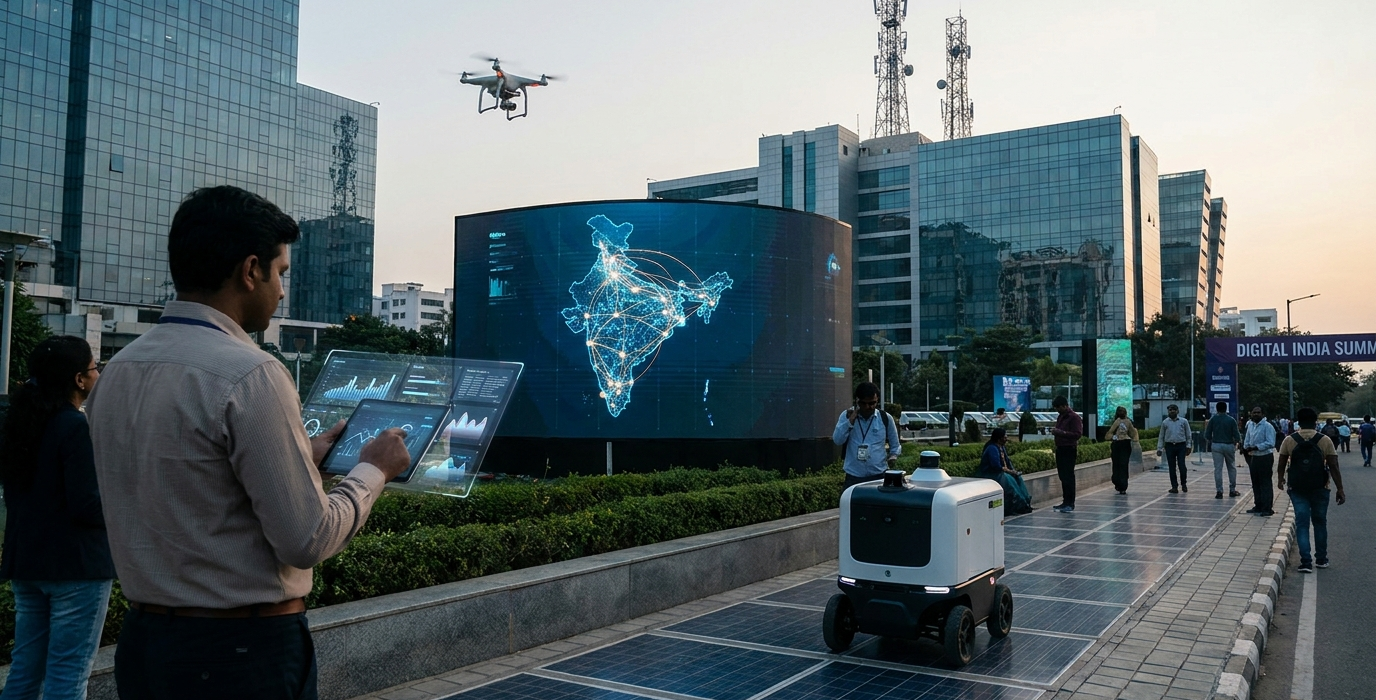
Similarly, our urban centres are experiencing an AI-driven transformation. Smart traffic management systems, powered by real-time data analysis and predictive algorithms, are beginning to ease the notorious congestion in cities like Bengaluru and Delhi. These systems learn traffic patterns, dynamically adjust signal timings, and even predict potential bottlenecks, offering a glimpse into a smoother commute. Beyond traffic, AI is also enhancing public safety through intelligent surveillance and anomaly detection, contributing to a more secure urban environment. The sheer pace of AI adoption across diverse sectors, from agriculture to education, is a testament to India’s burgeoning technological prowess.
AI in Agriculture: Precision Farming Takes Root
One of the most promising applications of AI is in revolutionising Indian agriculture. Imagine farmers in Punjab receiving hyper-localised weather forecasts and pest-attack predictions tailored to their specific fields. AI algorithms analyse satellite imagery, soil sensor data, and historical weather patterns to provide actionable insights. This allows for optimised irrigation, precise application of fertilisers, and early detection of crop diseases, leading to increased yields and reduced resource wastage. We are witnessing a significant shift towards data-driven farming, empowering even smallholder farmers with sophisticated decision-making tools. This trend is not just about technology adoption; it’s about ensuring food security for a growing population in a sustainable manner.
The 5G Horizon: Unleashing the Internet of Things
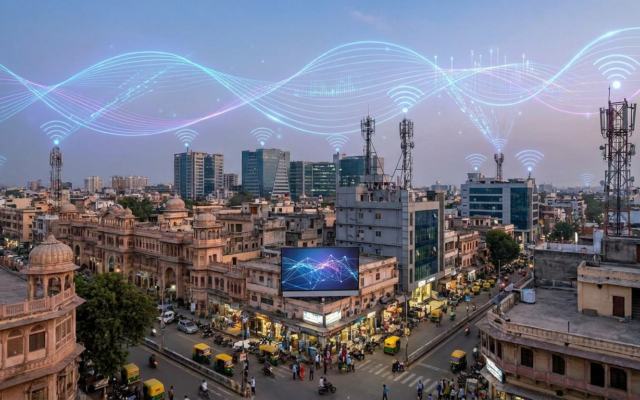
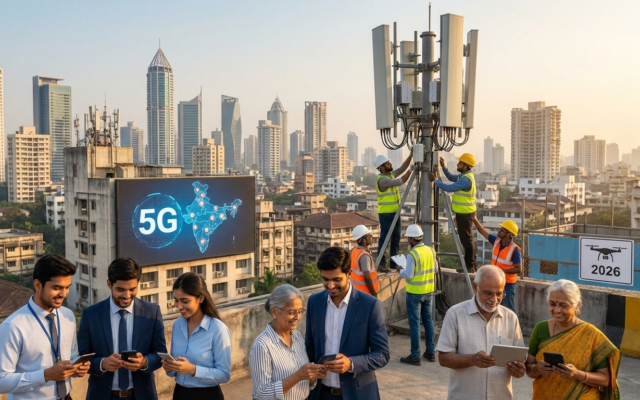
The year 2026 marks a pivotal moment for India’s connectivity infrastructure with the accelerated rollout of 5G technology across the nation. While early deployments began in select metros, we are now witnessing a broader expansion into Tier-2 and Tier-3 cities, fundamentally altering how we interact with the digital world. The promise of ultra-low latency and massive bandwidth is unlocking a wave of new applications, particularly in the realm of the Internet of Things (IoT). Think of interconnected smart homes in cities like Chennai that respond intelligently to your presence, or industrial IoT solutions optimising manufacturing processes in Gujarat’s industrial corridors.
This widespread 5G availability will be a game-changer for various sectors. In healthcare, remote patient monitoring and even remote-assisted surgeries, though still nascent, are becoming more feasible. For logistics and supply chain management, real-time tracking of goods across vast distances will improve efficiency and reduce pilferage. Even our beloved street food vendors might soon leverage 5G-enabled point-of-sale systems that are faster and more integrated. The true potential of 5G lies not just in faster downloads for our smartphones, but in enabling a truly connected ecosystem that drives innovation and efficiency across the board.
Smart Cities and 5G: A Symbiotic Relationship
The vision of India’s smart cities is intrinsically linked to the capabilities that 5G provides. Cities like Navi Mumbai are at the forefront of integrating 5G networks to power a multitude of smart services. This includes advanced public transportation systems that communicate seamlessly, intelligent waste management that optimises collection routes, and energy grids that are more responsive and efficient. The ability of 5G to handle a massive density of connected devices is crucial for the dense urban environments that characterise our growing metropolises. We are moving towards a future where city infrastructure is not just built, but intelligently managed and responsive to the needs of its citizens.
Green Tech Takes Centre Stage: Sustainability as a Strategy
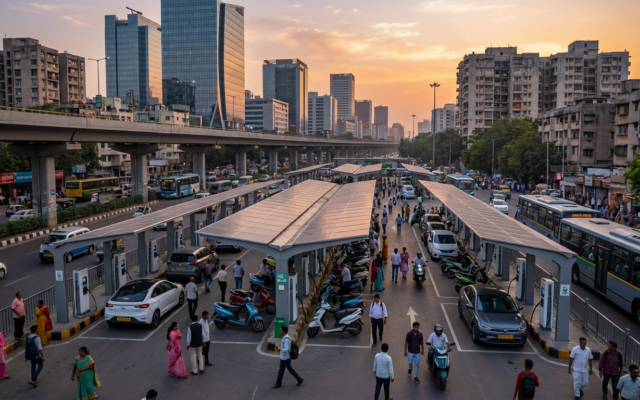
In 2026, the conversation around technology in India has fundamentally shifted to embrace sustainability. It’s no longer just about innovation; it’s about responsible innovation that minimises environmental impact. We’re seeing a surge in demand for and development of green technologies, driven by a combination of government policy, corporate responsibility, and a growing awareness among consumers. From solar-powered charging stations popping up in remote villages in Rajasthan to electric vehicle (EV) adoption accelerating in urban centres like Pune, the commitment to a greener future is palpable.
Beyond renewable energy, we’re also observing innovation in waste management and resource conservation. AI-powered systems are being deployed to optimise recycling processes, and companies are exploring biodegradable packaging solutions derived from agricultural waste. The push for a circular economy is gaining momentum, encouraging businesses to design products with longevity and recyclability in mind. This focus on sustainability isn’t just an ethical imperative; it’s becoming a competitive advantage, with consumers increasingly favouring brands that demonstrate a genuine commitment to environmental stewardship. We are collectively building a future where technological advancement and ecological balance go hand in hand.
The Rise of the Indian EV Ecosystem
The electric vehicle revolution is truly gaining speed in India. While challenges remain, 2026 sees significant advancements in battery technology, charging infrastructure, and a wider variety of affordable EV models. Government incentives and a growing awareness of fuel costs and environmental concerns are driving consumer adoption, particularly in two-wheeler and three-wheeler segments. Major cities are investing heavily in public charging networks, and private companies are exploring innovative battery-swapping solutions to address range anxiety. The development of a robust domestic EV manufacturing ecosystem is also a key focus, aiming to reduce import dependence and create jobs.
Fintech’s Evolution: Hyper-Personalisation and Embedded Finance
India’s fintech revolution continues its relentless march in 2026, moving beyond basic digital payments to offer deeply personalised and seamlessly integrated financial services. The ubiquitous UPI infrastructure has laid a robust foundation, and now, fintech players are leveraging data analytics and AI to understand individual customer needs with unprecedented granularity. This allows for hyper-personalised product offerings, from tailored loan options for small businesses in Surat to micro-insurance plans for gig economy workers in Kolkata. The focus is on making financial services intuitive and accessible, fitting effortlessly into our daily routines.
We’re also witnessing the rise of “embedded finance,” where financial services are integrated directly into non-financial platforms. Imagine booking your next train ticket on IRCTC and having pre-approved travel insurance options appear instantly, or a kirana store owner managing their inventory and receiving instant working capital loans directly through their point-of-sale system. This seamless integration reduces friction and makes financial tools more approachable for a wider segment of the population. The innovation in this space is driven by a desire to empower individuals and businesses with greater financial control and opportunity.
A Surprising Fact: The Growth of Neo-Banking for Seniors
One of the more surprising, yet incredibly useful, trends we’re observing is the emergence of neo-banking solutions specifically designed for India’s senior citizens. These platforms go beyond simple digital transactions, offering features like simplified interfaces, voice-activated commands, and AI-powered fraud detection tailored to the unique needs of older users. They also often integrate with healthcare providers and provide easy access to government pension schemes, making them a one-stop digital solution for essential services. This thoughtful approach ensures that the benefits of digital finance are accessible to all age groups, bridging the digital divide.
The EdTech Surge: Immersive Learning and Skill-Based Pathways
The educational technology (EdTech) sector in India has undergone a significant evolution by 2026, moving beyond supplementary learning to become an integral part of the educational journey. The pandemic accelerated digital adoption, and now, EdTech platforms are focusing on delivering more immersive and personalised learning experiences. Virtual reality (VR) and augmented reality (AR) are starting to be incorporated into curriculum delivery, allowing students in schools across Kerala to virtually dissect a frog or explore ancient Roman ruins. This makes learning more engaging and effective, catering to different learning styles.
Furthermore, there’s a strong emphasis on skill-based learning and vocational training. EdTech platforms are partnering with industries to offer courses that directly address the skills gap in the job market. This includes specialised training in AI, data science, cybersecurity, and green technologies, preparing students for the jobs of the future. We’re seeing a rise in hybrid learning models, combining the flexibility of online education with the structured environment of traditional institutions. The goal is to make education more accessible, relevant, and aligned with the demands of India’s rapidly evolving economy.
Bridging the Rural-Urban Divide in Education
A significant achievement in 2026 is the progress made in extending quality EdTech resources to rural and semi-urban areas. Initiatives focusing on affordable internet access and localised content delivery are crucial. Platforms are developing multilingual content and leveraging vernacular languages to reach a wider audience. Teacher training programs focused on digital pedagogy are also key, empowering educators in remote locations to effectively integrate these new tools into their classrooms. This democratisation of knowledge is vital for equitable development and unlocking the full potential of India’s youth.
The Blockchain Boom: Beyond Cryptocurrencies
While cryptocurrencies continue to capture headlines, the real story for India in 2026 lies in the expanding applications of blockchain technology beyond speculative assets. We’re seeing significant traction in areas that demand transparency, security, and immutability. For instance, the land records digitisation projects in states like Odisha are increasingly using blockchain to create tamper-proof registries, significantly reducing fraud and disputes. This ensures clear ownership and streamlines property transactions, a critical step for economic development.
Supply chain management is another area where blockchain is proving its worth. Companies are implementing blockchain solutions to track goods from origin to destination, providing an unalterable audit trail. This is particularly impactful in sectors like pharmaceuticals and agriculture, where ensuring product authenticity and provenance is paramount. Imagine being able to scan a QR code on your bottle of turmeric powder from Telangana and instantly verifying its entire journey from the farm to your kitchen shelf. This level of transparency builds trust and enhances accountability across entire value chains.
A Surprising Fact: Blockchain for Intellectual Property Rights
A less-discussed but incredibly important application of blockchain in India by 2026 is its use in protecting Intellectual Property (IP) rights. Artists, musicians, writers, and innovators are using blockchain to create immutable records of their creations, establishing clear ownership and timestamps. This provides a robust mechanism for proving authorship and can be instrumental in resolving copyright disputes. Platforms are emerging that allow creators to securely register their IP on a distributed ledger, making it easier to license their work and protect it from infringement. This is a significant step in fostering a culture of innovation and creativity in the country.
Frequently Asked Questions
What is the biggest tech trend impacting India in 2026?
The most pervasive trend is the widespread integration of Artificial Intelligence (AI) across various sectors, from healthcare and agriculture to urban management and personal services, making technology more intelligent and responsive.
How is 5G technology changing India?
5G’s high speeds and low latency are enabling a new era of Internet of Things (IoT) applications, powering smart cities, advanced industrial automation, and revolutionising sectors like remote healthcare and logistics.
Is sustainability becoming a major focus for Indian tech companies?
Yes, green tech and sustainable innovations are gaining significant momentum, driven by government initiatives, consumer demand for eco-friendly products, and a growing corporate commitment to environmental responsibility.
How is fintech evolving beyond digital payments in India?
Fintech is moving towards hyper-personalisation and embedded finance, offering tailored financial products and integrating services seamlessly into non-financial platforms, making finance more accessible and intuitive.