Key Takeaways
- India’s green hydrogen sector is poised for unprecedented growth in 2026, driven by strong government push and private investment.
- Key states like Gujarat, Rajasthan, and Tamil Nadu are emerging as hubs, offering significant opportunities for businesses and skilled professionals.
- The National Green Hydrogen Mission is accelerating infrastructure development, including dedicated ports and pipelines, critical for scaling up production and distribution.
- While challenges remain, particularly in cost competitiveness and supply chain maturity, the outlook for India’s green hydrogen future is exceptionally bright.
The Unfolding Green Hydrogen Revolution in India: 2026 and Beyond
The year 2026 marks a pivotal moment for India’s clean energy ambitions, with the green hydrogen sector set to witness an explosive surge in growth. This isn’t just about meeting climate targets; it’s about a fundamental shift in our energy landscape, creating new industries, jobs, and a pathway to energy independence. We are at the cusp of a revolution, and understanding its contours is crucial for businesses, investors, and individuals alike. The government’s proactive policies, coupled with substantial private sector interest, are fueling an expansion that was once a distant dream. From ambitious pilot projects to large-scale manufacturing initiatives, the momentum is undeniable. This article delves into the core drivers, emerging opportunities, and the evolving ecosystem that is shaping India’s green hydrogen future.
We will explore how the National Green Hydrogen Mission is translating into tangible action, examining the policy frameworks and incentives that are attracting significant capital. Understanding the geographical concentration of this growth is also vital, as certain states are rapidly becoming epicenters of this clean energy transformation. Furthermore, we will touch upon the technological advancements and infrastructure developments that are underpinning this rapid expansion. It’s a complex but exhilarating narrative, one that promises to redefine India’s role on the global energy stage. The year 2026 is not merely a point on a timeline; it signifies the acceleration of a profound and necessary transition.
State-Led Initiatives and Emerging Hubs
India’s green hydrogen journey is being significantly propelled by proactive initiatives at the state level. Several states have emerged as frontrunners, recognizing the immense economic and environmental potential of this nascent industry. Gujarat, with its extensive coastline and robust industrial infrastructure, is leading the charge. The state government has been instrumental in facilitating land acquisition and providing a conducive policy environment for renewable energy projects, which are the bedrock of green hydrogen production. Their ambitious targets for renewable energy deployment directly translate into a strong foundation for hydrogen generation.
Rajasthan, another key player, is leveraging its vast solar potential to power electrolyser plants. The state’s arid landscape, often seen as a challenge, is actually an advantage for solar energy, offering consistent sunlight throughout the year. Similarly, Tamil Nadu is making substantial investments in port infrastructure and renewable energy capacity, positioning itself as a major hub for both domestic production and potential exports of green hydrogen. These states are not just offering land; they are actively creating ecosystems that include single-window clearance mechanisms and attractive investment incentives, making them prime destinations for green hydrogen projects. The competition among states to attract these investments is healthy, driving innovation and faster execution.
Government Policies and the National Green Hydrogen Mission
The Indian government’s commitment to green hydrogen is unequivocally demonstrated through the National Green Hydrogen Mission (NGHM). Launched with significant fanfare, the NGHM is more than just a policy document; it’s a comprehensive roadmap designed to make India a global hub for green hydrogen production and export. The mission outlines a multi-pronged strategy encompassing incentives, research and development support, and infrastructure development. A key component of the NGHM is the Production Linked Incentive (PLI) scheme, which aims to reduce the cost of manufacturing electrolysers and producing green hydrogen, thereby making it economically competitive with fossil fuels.
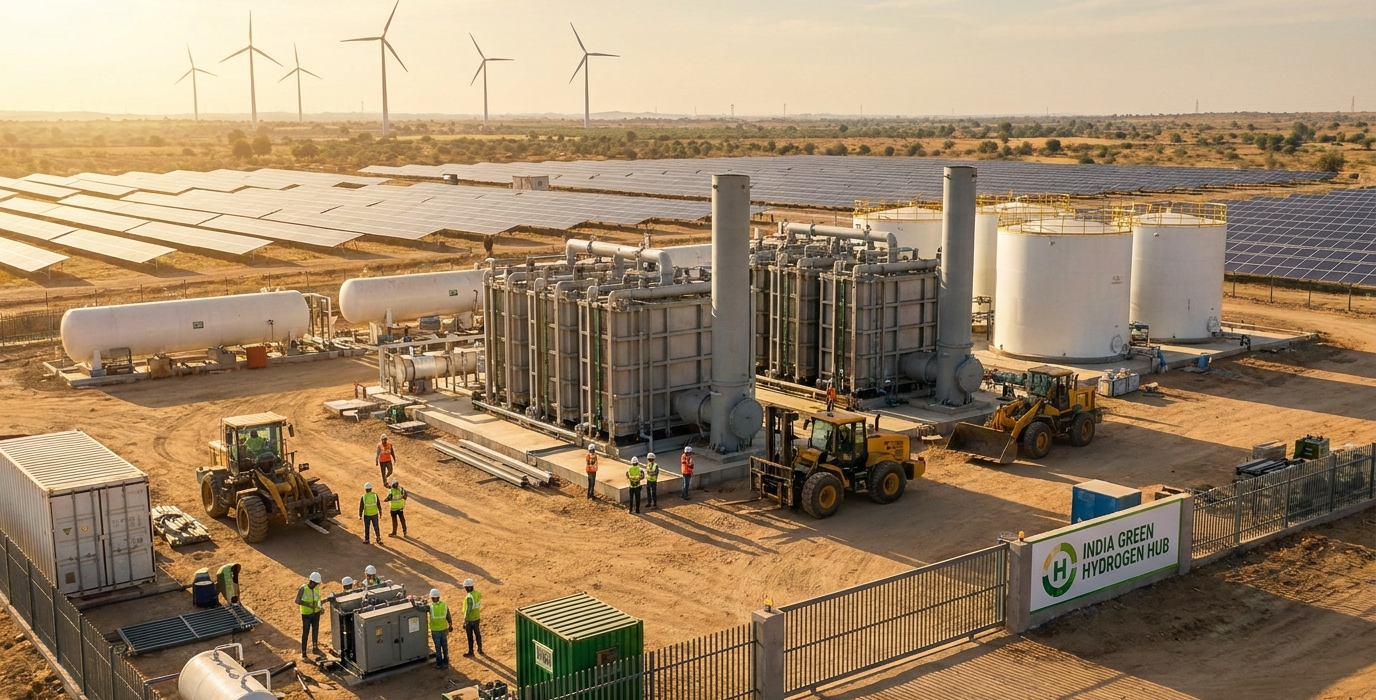
Beyond direct financial incentives, the mission is also focused on creating the necessary ecosystem. This includes the development of dedicated ports for hydrogen handling, the establishment of hydrogen valleys, and the promotion of pilot projects across various sectors like refining, fertilizers, and mobility. The government is actively working to de-risk investments and create a stable regulatory framework. Furthermore, the NGHM emphasizes research and innovation, encouraging the development of advanced electrolyser technologies and cost-effective production methods. The vision is clear: to build a robust, self-reliant green hydrogen economy that contributes significantly to India’s net-zero targets. The urgency and scale of these initiatives underscore the government’s determination to seize this opportunity.
Infrastructure Development: Ports, Pipelines, and Storage
The ambitious growth targets for green hydrogen in India are inextricably linked to the development of robust infrastructure. Simply producing hydrogen is not enough; it needs to be transported, stored, and utilized efficiently. Recognizing this, the government is fast-tracking the development of dedicated infrastructure tailored for the hydrogen economy. This includes the establishment of specialized ports capable of handling hydrogen carriers, such as ammonia or liquid hydrogen, for both domestic distribution and international trade. Ports in Gujarat and Tamil Nadu, for instance, are being retrofitted and expanded to accommodate these new logistical demands.
Pipelines are another critical area of focus. While building new hydrogen-specific pipelines is a long-term endeavor, there is significant discussion and planning around repurposing existing natural gas pipelines for hydrogen transport, especially for blended hydrogen applications. This approach can significantly reduce capital expenditure and accelerate deployment. For storage, solutions ranging from underground geological formations to advanced cryogenic tanks are being explored. The development of a comprehensive storage and transportation network is vital to ensure a consistent and reliable supply of green hydrogen to various end-user industries, from large-scale industrial complexes to emerging mobility solutions. Without this foundational infrastructure, the entire growth trajectory of the sector would be severely hampered.
Opportunities for Businesses and Skilled Workforce
The burgeoning green hydrogen sector in India presents a wealth of opportunities for both established businesses and new entrants. For manufacturers, there is immense potential in producing electrolysers, fuel cells, and other critical components required for the hydrogen value chain. Companies involved in renewable energy generation, such as solar and wind power developers, are naturally positioned to become key suppliers of the clean electricity needed for green hydrogen production. Furthermore, industries that are traditionally heavy consumers of fossil fuels, such as steel, cement, and fertilizers, are exploring the adoption of green hydrogen as a decarbonization strategy, creating demand.
The demand for a skilled workforce is also escalating. This includes engineers specializing in chemical, mechanical, and electrical fields, as well as technicians for installation, operation, and maintenance of hydrogen production facilities. The government and various academic institutions are ramping up training programs to bridge this skill gap. For entrepreneurs, the sector offers fertile ground for innovation, from developing novel hydrogen storage solutions to creating advanced monitoring and safety systems. The entire ecosystem, from research and development to manufacturing, logistics, and end-use applications, is ripe for disruption and growth. This creates a multiplier effect, stimulating economic activity and creating high-value jobs across the country.
Challenges and the Path to Cost Competitiveness
Despite the immense potential and rapid progress, the green hydrogen sector in India faces several critical challenges. Foremost among these is the cost of production. Currently, green hydrogen is more expensive than conventional grey hydrogen, which is produced from natural gas. This cost differential is primarily due to the high capital expenditure of electrolysers and the ongoing cost of renewable electricity. Achieving cost parity, or even a competitive edge, requires significant technological advancements and economies of scale. The reduction in the price of renewable energy, driven by India’s aggressive solar and wind power deployment, is a crucial factor already working in favour of green hydrogen.
Another significant challenge lies in the maturation of the supply chain. While efforts are underway to boost domestic manufacturing of electrolysers and other components, India still relies on imports for certain critical technologies. Building a resilient and localized supply chain is essential for long-term sustainability and cost-effectiveness. Furthermore, infrastructure development, as discussed earlier, needs to keep pace with production growth. Ensuring adequate and safe transportation and storage solutions will be paramount. Finally, policy consistency and long-term clarity are vital to attract sustained investment. While the NGHM provides a strong foundation, ongoing refinement and predictable implementation of policies will be key to overcoming these hurdles and unlocking the full potential of India’s green hydrogen boom.
The true measure of India’s green hydrogen success in 2026 will not just be in the gigawatts of electrolysers deployed, but in the tangible decarbonization of its heavy industries and the creation of a resilient, export-oriented clean energy economy.
Frequently Asked Questions
What is green hydrogen and why is it important for India?
Green hydrogen is hydrogen produced by splitting water molecules using electricity generated from renewable sources like solar or wind power. It is crucial for India as it offers a clean fuel alternative to fossil fuels, helping the nation reduce its carbon emissions, combat climate change, and achieve energy independence. It plays a vital role in decarbonizing hard-to-abate sectors like steel and fertilizers.
Which states are leading the green hydrogen development in India?
Currently, states like Gujarat, Rajasthan, and Tamil Nadu are at the forefront of green hydrogen development. They are attracting significant investments due to their strong renewable energy potential, existing industrial infrastructure, and proactive government policies aimed at fostering the sector.
What are the main government initiatives supporting green hydrogen in India?
The National Green Hydrogen Mission (NGHM) is the flagship government initiative. It provides financial incentives, promotes research and development, supports infrastructure development (like ports and pipelines), and aims to make India a global hub for green hydrogen production and export. The Production Linked Incentive (PLI) scheme is a key component for boosting manufacturing.
When can we expect green hydrogen to become cost-competitive with traditional fuels?
While the exact timeline varies, significant progress is being made. With the decreasing cost of renewable energy and advancements in electrolyser technology, many experts predict that green hydrogen could become cost-competitive with grey hydrogen (produced from fossil fuels) within the next 3-5 years, potentially by 2028-2030, especially with continued policy support and economies of scale.
What kind of jobs will be created in the green hydrogen sector?
The sector is expected to create a wide range of jobs, from engineers (chemical, mechanical, electrical) involved in plant design and operation to technicians for installation and maintenance. Opportunities will also emerge in research and development, project management, supply chain logistics, and safety and compliance. It represents a significant avenue for skilled employment growth.