Key Takeaways
- Specific yoga poses can significantly reduce knee pain by strengthening supporting muscles and improving flexibility.
- Gentle, low-impact movements are crucial; avoid poses that put direct stress on the knee joint.
- Consistency is key: integrating a short, mindful yoga practice daily can yield lasting relief.
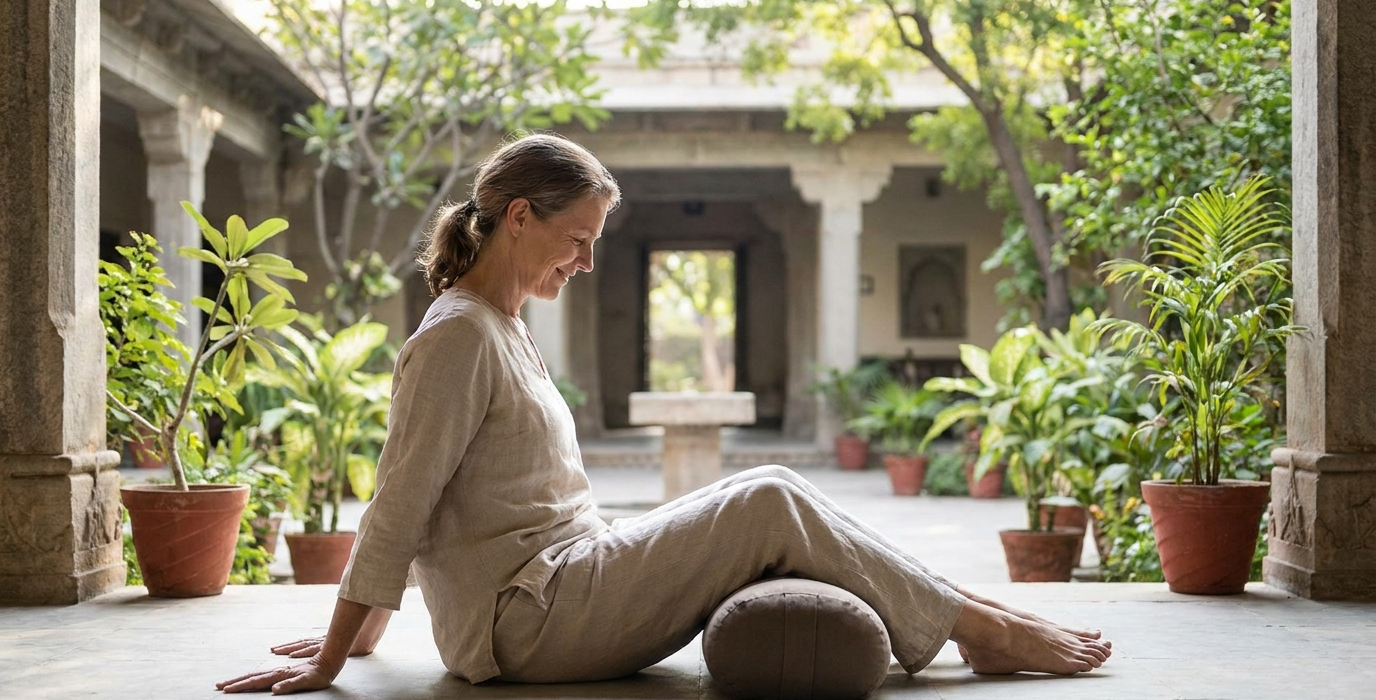
- Listen to your body and modify poses as needed, using props like blocks and blankets for support.
Understanding Knee Pain and the Role of Yoga
Knee pain can be a debilitating issue, affecting millions across India and globally, impacting daily activities from climbing stairs to simply walking. Whether it stems from arthritis, injury, or overuse, finding effective relief is paramount. While medical interventions and physiotherapy are common, many are discovering the profound benefits of yoga for managing and alleviating knee discomfort. This ancient practice, deeply rooted in Indian culture, offers a holistic approach, focusing on gentle strengthening, improved flexibility, and mindful movement.
Yoga is not about strenuous poses that might exacerbate your condition. Instead, we’ll explore a curated selection of poses designed to be kind to your knees. The goal is to build strength in the muscles surrounding the knee joint – the quadriceps, hamstrings, and calf muscles – which act as natural shock absorbers and stabilizers. By improving flexibility in the hips and ankles, we can also reduce the compensatory strain that often travels up to the knees.
The beauty of yoga for knee pain lies in its adaptability. With modifications and the use of props like blankets, blocks, and straps, virtually any pose can be made accessible and beneficial, regardless of your current pain level or physical condition. We’ll guide you through poses that promote circulation, reduce inflammation, and encourage relaxation, all contributing to a healthier, more comfortable knee.
Gentle Poses for Knee Strengthening and Stability
Building strength around the knee joint is foundational to alleviating pain. Stronger muscles can better support the knee, absorb shock, and reduce the load on the joint itself. The following poses focus on engaging these crucial muscle groups without placing undue stress on the knee.
1. Mountain Pose (Tadasana) with Knee Bend Modification
This fundamental standing pose is about alignment and grounding. Stand with your feet hip-width apart, distributing your weight evenly. Engage your quadriceps gently, lifting your kneecaps slightly. Now, the modification: very gently bend your knees as if you were about to sit in a chair, but only a few inches, ensuring your knees do not go past your toes. Hold this for a few breaths, feeling the engagement in your thighs. This subtle movement strengthens your quads and improves proprioception without overstraining.
2. Warrior II (Virabhadrasana II) with Knee Alignment Focus
Warrior II is a powerful pose, but when approached mindfully, it’s excellent for knee health. Step your feet wide apart. Turn your right foot out 90 degrees and your left foot slightly in. Bend your right knee so it stacks directly over your right ankle, creating a 90-degree angle. Crucially, ensure your front thigh is parallel to the floor, or as far as you can comfortably go, *without* letting the knee collapse inward or extend beyond your ankle. Your back leg remains straight, but not locked. This pose builds strength in both legs and improves hip flexibility, which indirectly benefits the knees.
3. Chair Pose (Utkatasana) – Modified
While Chair Pose can be intense, a modified version is highly beneficial. From Mountain Pose, simply bend your knees as if sitting back into a chair. The key is to limit the depth of the bend. Imagine you’re sliding your back down a wall. Ensure your knees track over your ankles and avoid sinking too deeply if it causes discomfort. Hold for a few breaths, focusing on the isometric contraction of your quadriceps. This pose is fantastic for building endurance in the thigh muscles.
Poses for Flexibility and Range of Motion
Beyond strengthening, increasing flexibility in the muscles surrounding the knee, as well as in the hips and ankles, is vital for reducing knee pain. Tight hamstrings and calf muscles can pull on the knee joint, exacerbating pain. Similarly, limited hip mobility can force the knees to compensate.
1. Reclining Hand-to-Big-Toe Pose (Supta Padangusthasana) with Strap
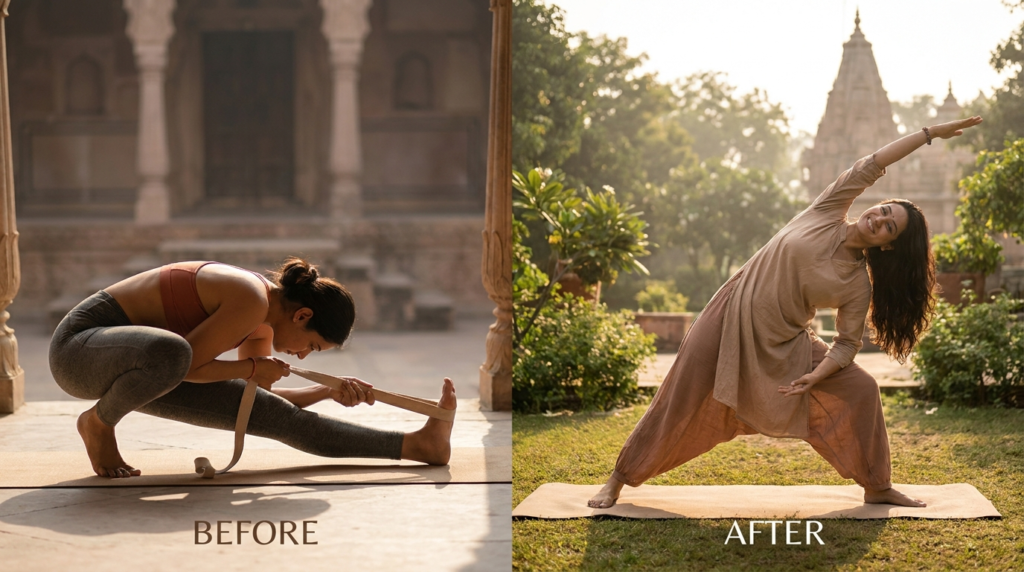
This pose is a gentle yet effective hamstring stretch. Lie on your back. Loop a yoga strap or towel around the sole of your right foot. Keeping your left leg extended on the floor (or bent with the foot flat if that’s more comfortable), gently draw your right leg upwards towards the ceiling. Use the strap to control the stretch, aiming to keep both your standing leg and your raised leg as straight as your body allows. You should feel a stretch along the back of your thigh. Hold for 30-60 seconds, breathing deeply. Repeat on the other side. This directly targets tight hamstrings, a common culprit for knee pain.
2. Cow Face Pose Legs (Gomukhasana Legs) – Seated Variation
This pose targets hip flexibility, which is crucial for knee health. Sit comfortably with your legs extended. Bend your right knee and place your right foot flat on the floor outside your left thigh. Now, bend your left knee and try to slide your left foot towards your right hip. The goal is to stack your knees one above the other, or as close as you can get. You might only be able to bring one knee on top of the other, or even just have one leg bent while the other is extended. Use a blanket or block under your hips for support if needed. Hold for a few breaths, feeling the stretch in your hips. You can gently lean forward to deepen the stretch if comfortable.
3. Gate Pose (Parighasana)
Gate Pose is a wonderful side-body and hamstring stretch that also opens the hips. Start on your hands and knees. Extend your right leg straight out to the side, with your right foot flat on the floor. Keep your left leg bent at 90 degrees. Inhale and lift your right arm towards the ceiling, then exhale and reach it over your head, creating a long line from your right foot to your fingertips. You should feel a stretch along the side of your torso and into your inner thigh. Keep your supporting left knee directly under your hip. Hold for a few breaths and repeat on the other side.
Restorative Poses for Knee Pain Relief and Inflammation Reduction
When knee pain flares up, the focus shifts to rest, rejuvenation, and reducing inflammation. Restorative yoga uses props to support the body in gentle poses, allowing for deep relaxation and healing. These poses are about passive stretching and soothing the nervous system.
1. Supported Child’s Pose (Balasana)
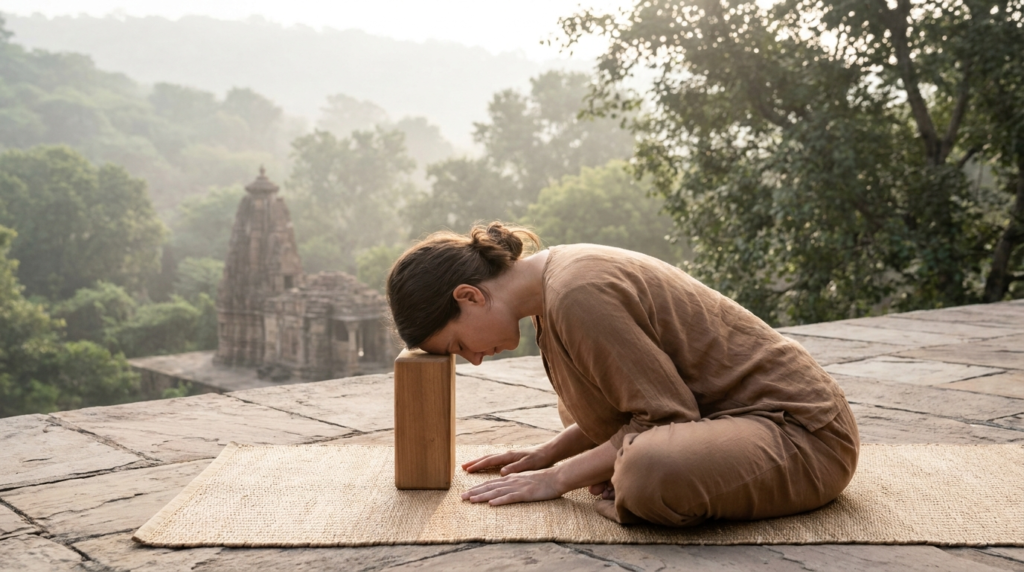
Child’s Pose is a classic resting pose, and when supported, it can be incredibly soothing for the knees. Start on your hands and knees. Bring your big toes to touch and widen your knees apart (as much as comfortable – a closer stance might be better for some). Lower your torso down between your thighs and rest your forehead on the mat. For more support, place a folded blanket or bolster under your forehead. You can also place a rolled blanket between your buttocks and heels if your knees feel strained in the traditional position. Allow your body to completely surrender into the support.
2. Legs-Up-the-Wall Pose (Viparita Karani)
This inversion is a powerful restorative pose for the entire body, including the knees. Sit on the floor with one hip close to a wall. Swing your legs up to rest against the wall, allowing your back to lower onto the floor. You can place a folded blanket or bolster under your hips for added comfort and a gentle inversion. Relax your arms by your side, palms facing up. This pose helps to reduce swelling and calm the nervous system. It’s a deeply relaxing pose that can be held for 5-10 minutes or longer.
3. Reclining Bound Angle Pose (Supta Baddha Konasana) with Props
This pose gently opens the hips and groin while being incredibly restorative. Lie on your back and bring the soles of your feet together, letting your knees fall open to the sides. To support your knees and thighs, place blocks or rolled blankets under each knee. You can also place a bolster or folded blanket under your upper back if you want a slight chest opener. Allow gravity to do the work, releasing tension in your hips and groin. This pose promotes relaxation and can help alleviate stiffness.
Mindful Movement and Breathwork for Knee Health
Yoga is not just about the physical postures; it’s also about the union of breath and movement. Incorporating mindful breathing techniques and conscious movement can significantly enhance the benefits for your knees.
The Importance of Breath (Pranayama)
Your breath is your anchor in yoga. Deep, conscious breathing, known as pranayama, can help to calm the nervous system, reduce pain perception, and improve oxygen flow throughout the body. For knee pain, focus on slow, deep inhalations and exhalations. Try practices like Dirga Pranayama (Three-Part Breath), where you consciously expand your belly, rib cage, and chest on the inhale, and reverse the order on the exhale. This can help to release tension held in the body, including around the knees.
Connecting Breath with Movement
As you move through the gentle poses, sync your breath with your actions. For instance, in Mountain Pose with a slight knee bend, inhale to straighten your legs and exhale to gently bend them. This conscious coordination ensures you are moving with awareness, not forcing your body into positions. It helps you to listen to your body’s signals, pausing or modifying when you feel any sharp pain. This mindful approach is key to preventing further injury and promoting healing.
Surya Namaskar (Sun Salutation) – Modified for Knee Safety
A modified Sun Salutation can be a wonderful way to warm up the body and gently engage the muscles supporting the knees. The key is to eliminate or significantly reduce any deep knee bends. For example, in the plank pose and downward-facing dog, you can keep your knees bent. When transitioning from kneeling to standing, use your hands for support and avoid deep lunges. Focus on the flow and the breath, making it a gentle, full-body movement rather than a strength-testing sequence.
Integrating Yoga into Your Daily Routine for Long-Term Relief
Consistency is far more impactful than intensity when it comes to yoga for knee pain. Making a short, mindful practice a daily habit can lead to significant long-term improvements in comfort and mobility.
Creating a Practice Schedule
Aim for a 15-20 minute practice each day. This could be first thing in the morning to gently awaken your body, or in the evening to unwind and release tension. Even 10 minutes of focused breathing and a few key poses can make a difference. Choose a time that you can realistically commit to, and stick with it. Your knees will thank you for the consistent attention and care.
Listening to Your Body and Modifications
This is perhaps the most critical aspect of practicing yoga for knee pain. Your body will tell you what it needs. If a pose causes sharp pain, stop. If you feel discomfort, modify. Use props liberally. For example, if sitting on the floor is painful, practice in a chair. If a forward fold aggravates your knees, keep a generous bend in them. The Mayo Clinic emphasizes listening to your body and avoiding activities that worsen pain, a principle that applies directly to yoga practice.
When to Seek Professional Guidance
While yoga can be incredibly beneficial, it’s not a substitute for medical advice. If your knee pain is severe, sudden, or accompanied by swelling or instability, consult a healthcare professional. A doctor or a physiotherapist can diagnose the cause of your pain and recommend appropriate treatments. Many yoga instructors also have specialized training in therapeutic yoga and can offer personalized guidance for your specific condition, ensuring you practice safely and effectively.
Frequently Asked Questions
What are the most important yoga poses for knee pain?
The most beneficial poses generally focus on strengthening the quadriceps, hamstrings, and calf muscles, while also improving hip and ankle flexibility. Poses like Modified Mountain Pose, Modified Warrior II, Supported Child’s Pose, and Reclining Hand-to-Big-Toe Pose with a strap are excellent starting points.
Can yoga worsen knee pain?
Yes, yoga can potentially worsen knee pain if performed incorrectly or if poses that put excessive stress on the joint are attempted. It is crucial to listen to your body, modify poses as needed, and avoid any movements that cause sharp or intense pain. Focusing on gentle, restorative, and strengthening poses is key.
How often should I practice yoga for knee pain?
Consistency is more important than duration. Aim for a short, mindful practice of 15-20 minutes daily. Even shorter sessions of 10 minutes focusing on breath and a few key poses can yield significant benefits over time.
What props are essential for practicing yoga with knee pain?
Essential props include yoga blocks (for support under hands or hips), a yoga strap or towel (for deeper stretches), and blankets or bolsters (for cushioning and support under knees, head, or back). These aids allow for safe and comfortable execution of poses.
Is it okay to bend my knees in yoga poses if I have knee pain?
Absolutely. In fact, for many poses, a slight bend in the knees is not only acceptable but recommended to protect the joint. For example, in poses like Mountain Pose or Forward Folds, avoiding locking the knees is crucial for knee health. Always prioritize comfort and safety over achieving a specific pose depth.