Key Takeaways
- AI is moving beyond the research labs to become a practical tool for Indian farmers in 2026, offering tangible improvements in crop yields and resource management.
- Precision farming techniques, powered by AI, are helping farmers in regions like Punjab and Maharashtra make smarter decisions about irrigation, fertilization, and pest control, leading to significant cost savings.
- The integration of AI is democratising access to advanced agricultural knowledge, with mobile-first platforms and local language support bridging the digital divide for even smallholder farmers.
- Looking ahead, AI is poised to play a crucial role in climate change adaptation for Indian agriculture, predicting weather patterns and suggesting resilient crop varieties.
AI: The New Plough for India’s Fields in 2026
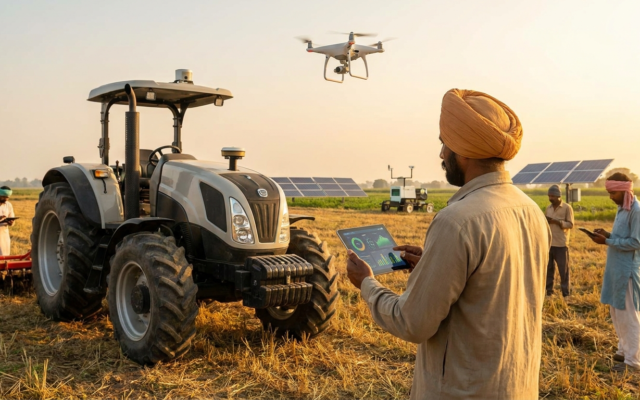
The whisper of artificial intelligence has grown into a powerful roar across India’s vast agricultural landscape in 2026. No longer confined to academic papers or high-tech urban labs, AI is now a tangible force, actively shaping how our nation’s farmers cultivate their land and nurture their crops. From the fertile plains of Punjab to the sun-drenched fields of Maharashtra, we’re witnessing a quiet revolution. Farmers are embracing AI-powered tools that promise not just incremental improvements, but transformative shifts in productivity and sustainability. This isn’t about replacing the farmer’s intuition; it’s about augmenting it with data-driven insights, helping them navigate the complex challenges of modern agriculture with unprecedented precision.
We are moving past the era of generic advice. Today, AI offers bespoke solutions, tailored to the specific needs of individual plots of land, even down to the microclimate of a single village. This granular approach is crucial for a country where agricultural practices can vary dramatically from one district to the next. The adoption of AI is directly translating into better harvests, reduced waste, and a more resilient food system for millions. As we delve deeper, you’ll discover how these technologies are becoming accessible and genuinely useful, empowering farmers to secure their livelihoods and contribute to India’s food security in the years to come.
Precision Farming: Smarter Decisions, Bountiful Harvests
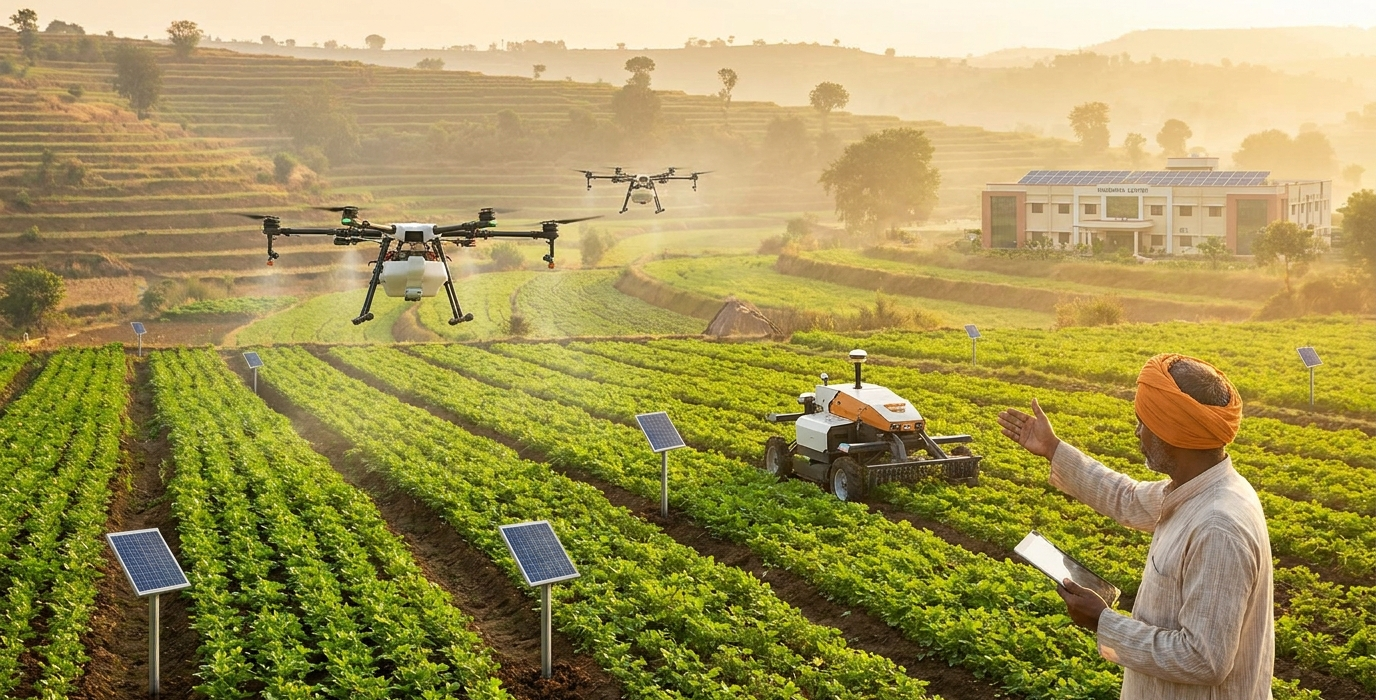
One of the most significant impacts of AI in Indian agriculture in 2026 is the widespread adoption of precision farming techniques. Imagine knowing exactly how much water your wheat crop needs at a particular stage, or identifying a pest infestation before it spreads across your entire paddy field. AI makes this possible. Sophisticated algorithms analyse data from various sources – satellite imagery, on-ground sensors, and local weather forecasts – to provide farmers with actionable recommendations. These systems can pinpoint areas of a field that require more or less irrigation, suggest the optimal type and quantity of fertiliser, and even predict the likelihood of disease outbreaks.
Consider the success stories emerging from the heartland. Farmers in the Barnala district of Punjab, traditionally reliant on extensive groundwater irrigation, are now using AI-driven platforms to monitor soil moisture levels in real-time. This has led to a reported 20% reduction in water usage while maintaining, and in many cases, improving wheat yields. Similarly, in Maharashtra, farmers cultivating sugarcane are leveraging AI to detect early signs of red rot disease by analysing leaf colour and texture from drone imagery. This proactive approach allows for targeted interventions, minimising the need for broad-spectrum pesticides and thereby reducing costs and environmental impact. The intelligence derived from AI is empowering these farmers to make informed decisions at a level of detail previously unimaginable.
The Power of Data Analytics
At its core, AI in agriculture thrives on data. Sensors embedded in the soil, drones equipped with multi-spectral cameras, and even data aggregated from neighbouring farms are fed into AI models. These models learn from vast datasets to identify patterns and anomalies that human eyes might miss. This analytical power is crucial for understanding the intricate relationship between soil health, weather patterns, and crop performance. By processing this information, AI provides predictive insights, enabling farmers to anticipate challenges and optimise their strategies well in advance.
For instance, AI algorithms can forecast yield potential based on historical data, current weather conditions, and soil nutrient levels. This helps farmers in planning their logistics, from storage to market access, more effectively. It’s a shift from reactive farming to proactive management, where every decision is backed by robust data, leading to greater efficiency and profitability. The days of relying solely on past experience are being complemented by the predictive power of artificial intelligence, creating a more robust and resilient agricultural ecosystem.
Bridging the Digital Divide: AI for Every Farmer
A common concern when discussing advanced technologies is accessibility, particularly for India’s vast number of smallholder farmers. However, the AI revolution in agriculture in 2026 is consciously designed to bridge this divide. Developers are prioritising mobile-first platforms, ensuring that even farmers with basic smartphones can access powerful AI tools. Crucially, these platforms are increasingly available in regional Indian languages, breaking down literacy barriers. This democratisation of technology is a cornerstone of its success.
Companies are rolling out AI advisory services that work via simple SMS or voice interfaces. A farmer in a remote village in Bihar can simply dial a number, describe their problem – perhaps stunted growth in their rice seedlings – and receive tailored advice generated by an AI engine, spoken in Bhojpuri. This removes the need for complex apps or high-speed internet. Furthermore, many of these services are offered on a subscription model that is affordable for small landholdings, or sometimes even subsidised through government initiatives. We’re seeing farmer producer organisations (FPOs) play a pivotal role, aggregating resources and providing training on these AI tools, making them accessible to their members.
Localised Knowledge, Global Technology
The true genius lies in the localisation of AI. These models are not just trained on global agricultural data; they are continuously refined with local soil types, specific pest profiles, and regional weather nuances. This ensures that the advice given is not only technologically sound but also culturally and geographically relevant. For example, an AI system advising on pest management in Kerala will have different parameters than one advising in Rajasthan, accounting for distinct ecosystems and prevalent issues. This fusion of global AI capabilities with deep local understanding is what makes these solutions so effective.
The impact of this localised approach is profound. Farmers are no longer receiving generic advice that may not be applicable to their specific context. Instead, they are getting recommendations that are fine-tuned to their immediate environment. This increased relevance fosters greater trust and adoption, proving that AI is not an alien imposition but a natural extension of existing farming wisdom, enhanced by modern technology. The aim is to empower, not overwhelm, ensuring that every farmer, regardless of their location or technological proficiency, can benefit from these advancements.
AI-Powered Irrigation: Conserving Every Drop
Water scarcity is a critical challenge for Indian agriculture, and AI is emerging as a powerful ally in its conservation. In 2026, AI-driven irrigation systems are moving beyond simple timers to intelligent, adaptive networks. These systems use real-time data from soil moisture sensors, weather forecasts, and crop-specific water needs to optimise irrigation schedules. The goal is to deliver water precisely when and where it’s needed, minimising evaporation and runoff, and significantly reducing overall water consumption.
In the semi-arid regions of Gujarat, farmers are experimenting with AI-controlled drip irrigation systems. These systems analyse data not only on current moisture levels but also predict rainfall events and plant transpiration rates. If the AI predicts significant rainfall, it will automatically delay scheduled irrigation, preventing overwatering and saving precious water resources. This level of intelligent automation ensures that water is used with maximum efficiency, a vital step in adapting to changing climate patterns. The savings are substantial, not just in water, but also in energy costs associated with pumping water.
The Smart Sensor Revolution
The backbone of AI-powered irrigation is an array of smart sensors. These low-cost, robust sensors are increasingly being deployed across fields, transmitting data wirelessly. They measure soil moisture content at various depths, temperature, and humidity. This granular data is then fed into AI algorithms that build a comprehensive picture of the field’s water status. The AI can then control pumps and valves, opening and closing them according to the calculated needs, often remotely via a mobile app.
Consider the implications for staple crops like rice and wheat, which are notoriously water-intensive. By optimising irrigation, AI can help maintain yields even in drought-prone areas, ensuring greater food security. A surprising fact is that some AI systems are now incorporating leaf wetness sensors, which can detect the presence of moisture on plant leaves. This data is invaluable for predicting fungal diseases that thrive in damp conditions, allowing for preventative measures that also reduce the need for fungicide applications, further conserving water and reducing chemical usage.
Pest and Disease Management: Early Detection, Targeted Action
Crop protection is a constant battle for farmers, and AI is revolutionising how we combat pests and diseases in 2026. Traditional methods often involve broad-spectrum spraying, which can be costly, harmful to beneficial insects, and lead to pesticide resistance. AI-powered systems offer a more precise and sustainable approach, focusing on early detection and targeted interventions.
Using machine learning algorithms trained on vast libraries of images, AI can identify specific pests and diseases from drone footage or even smartphone photos uploaded by farmers. These systems can detect subtle visual cues, such as discolouration, wilting patterns, or the presence of specific insect eggs, long before they become obvious to the human eye. This early warning system allows farmers to take precise action, often using minimal amounts of the most effective treatment, rather than broad-brush applications.
Visual Recognition and Predictive Modelling
The visual recognition capabilities of AI are particularly impressive. Farmers can upload images of affected plants, and the AI can identify the problem with remarkable accuracy, often providing information on the severity of the infestation and recommending specific treatments. This is akin to having a plant pathologist available 24/7. Furthermore, AI models can predict the likelihood of pest outbreaks based on historical data, current weather patterns, and the presence of host crops in the vicinity. This predictive power allows for preventative measures to be taken, potentially averting widespread damage.
We’ve seen pilot programs in the cotton belts of Telangana successfully use AI to identify bollworm infestations. By analysing drone imagery, the AI can map the precise locations and density of the infestation. Farmers are then directed to treat only those affected areas, reducing pesticide use by up to 40% and significantly lowering input costs. This targeted approach not only saves money but also helps preserve beneficial insects and pollinators, contributing to a healthier farm ecosystem. A surprising fact is that some AI models are also being trained to detect nutrient deficiencies by analysing leaf colour, offering another layer of proactive crop management.
AI for Climate Resilience and Future-Proofing
The escalating impacts of climate change present one of the most formidable challenges to Indian agriculture. Extreme weather events, unpredictable monsoons, and rising temperatures are threatening traditional farming practices. In 2026, AI is emerging as a critical tool for building resilience and future-proofing our agricultural sector.
AI algorithms can process vast amounts of climate data, historical weather records, and climate models to predict future trends with greater accuracy. This allows farmers and agricultural planners to make informed decisions about crop selection, planting seasons, and resource management. For example, AI can identify which crop varieties are likely to perform best under projected future climate conditions in a specific region. This proactive adaptation is crucial for maintaining food production in the face of environmental uncertainties.
Crop Diversification and Climate-Smart Varieties
One of the key strategies for climate resilience is crop diversification. AI can analyse local soil conditions, water availability, and predicted climate scenarios to recommend alternative crops or crop rotations that are better suited to a changing environment. This might involve suggesting drought-tolerant millets in regions historically dependent on water-intensive rice, or identifying new cash crops that can thrive in warmer climates.
Beyond just selection, AI is also aiding in the development and deployment of climate-smart crop varieties. By analysing genetic data and field performance under various conditions, AI can help accelerate the breeding process for crops that are more resistant to heat, drought, or salinity. This fusion of AI with agricultural research holds immense promise for developing a robust and adaptable food system. It’s a tangible step towards ensuring that Indian agriculture can continue to feed a growing population, even as the planet warms. The vision is not just about surviving climate change, but thriving in its presence, with AI as a key enabler.
Frequently Asked Questions
What are the most common AI tools being used in Indian agriculture right now?
In 2026, the most common AI tools include mobile-based advisory services for pest/disease identification and management, AI-powered irrigation optimisation systems leveraging sensors, and drone-based analytics for crop health monitoring. These are often integrated into user-friendly platforms accessible in local languages.
How much does it typically cost for a smallholder farmer to adopt AI in their farming practices?
Costs vary, but many AI solutions are now designed to be affordable. Subscription models for advisory services can range from ₹200-₹500 per year, while sensor packages for irrigation might involve an initial investment of ₹5,000-₹15,000, often with government subsidies available. Drone services are typically charged per acre.
Will AI replace farmers in India?
No, AI is intended to augment, not replace, farmers. It provides data-driven insights and automation for specific tasks, allowing farmers to make better decisions, reduce labour intensity in certain areas, and focus on overall farm management and strategic planning. The human element of farming remains vital.
Are there any government initiatives supporting AI adoption in Indian agriculture?
Yes, the Indian government is actively promoting the use of technology in agriculture. Initiatives under the Digital India and National Mission for Sustainable Agriculture frameworks often include subsidies and support for farmers adopting AI-driven solutions, precision farming equipment, and related training programs.