Key Takeaways
- AI is moving beyond theoretical discussions to tangible applications in Indian farms, boosting yields and efficiency.
- Precision agriculture, powered by AI, allows for targeted interventions, reducing waste and increasing profitability for farmers.
- From pest detection to market predictions, AI tools are empowering farmers with data-driven decision-making capabilities.
- Challenges remain in infrastructure and digital literacy, but the momentum towards an AI-enabled agricultural future is undeniable.
The Dawn of the AI-Powered Plough: Real Impact on Indian Farms
The image of the Indian farmer, traditionally tied to the rhythm of the monsoon and age-old wisdom, is rapidly evolving. We’re witnessing a quiet but profound revolution, driven not by tractors alone, but by artificial intelligence. AI in agriculture is no longer a futuristic concept whispered in research labs; it’s actively transforming fields across India, from the paddy farms of Kerala to the wheat belts of Punjab. This isn’t about replacing the farmer, but about equipping them with tools that amplify their expertise and significantly improve their livelihoods. We’re seeing concrete, measurable gains in crop yields, reduced resource wastage, and a more resilient agricultural sector.
The scale of this transformation is immense. India’s agricultural sector, a lifeline for a significant portion of its population, is notoriously susceptible to unpredictable weather patterns, pest outbreaks, and fluctuating market demands. AI offers a powerful antidote to this inherent volatility. By leveraging data – from satellite imagery and drone surveillance to on-ground sensor readings – AI algorithms can provide farmers with insights previously unimaginable. This allows for a shift from reactive farming to proactive, data-driven strategies that promise higher returns and a more sustainable future for Indian farming.
Precision Agriculture: The Smart Way to Grow
At the heart of AI’s impact lies precision agriculture. Imagine a farmer being able to know exactly which part of a field needs water, fertilizer, or pest treatment, and precisely how much. This is the promise, and increasingly, the reality, of AI-driven precision farming. Using AI-powered analytics, farmers can get hyper-localised insights for every square metre of their land. This means no more blanket applications of expensive inputs, leading to significant cost savings and a drastic reduction in environmental impact.
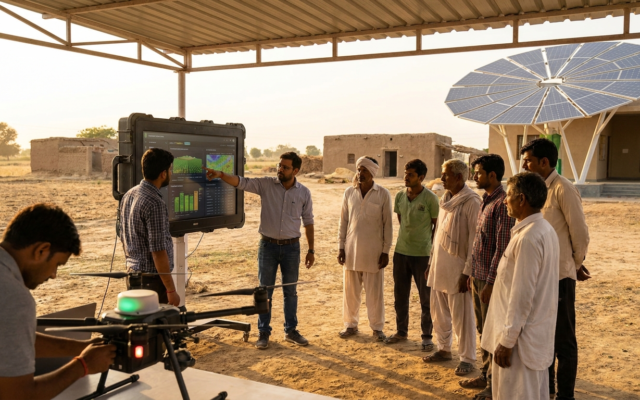
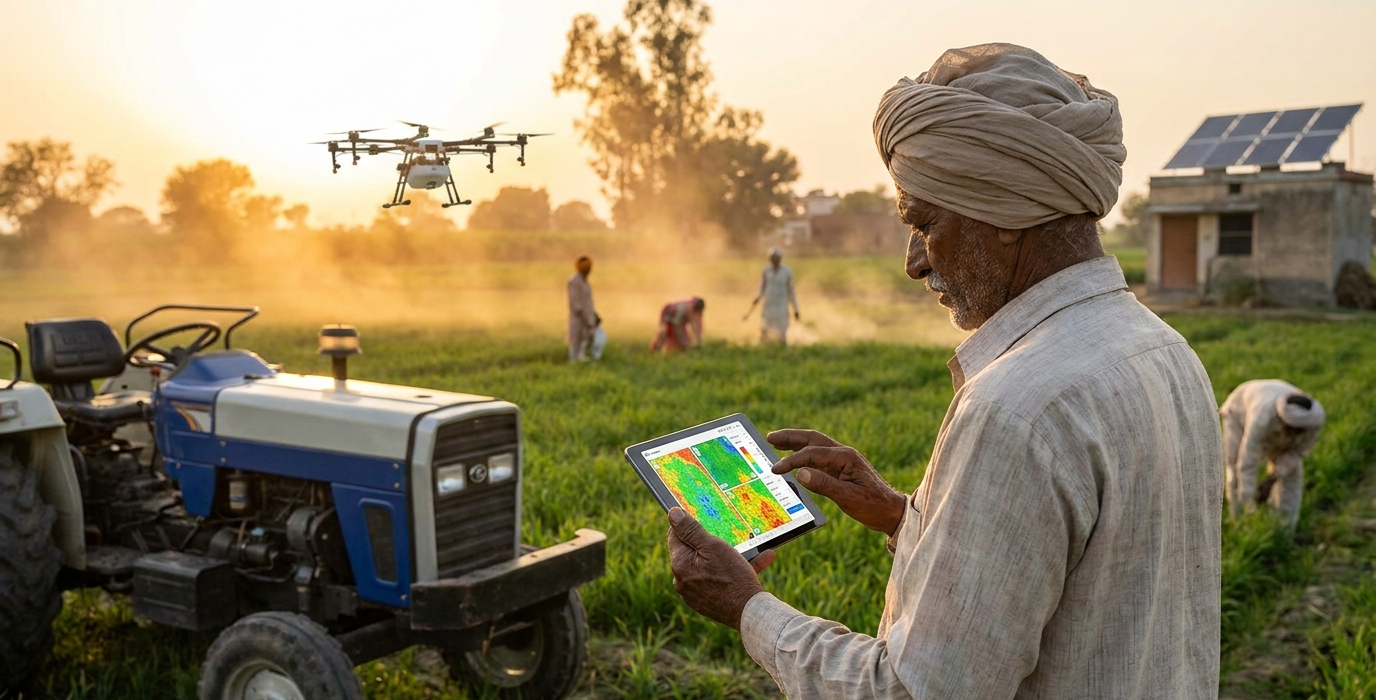
Drones equipped with multispectral cameras can fly over fields, capturing data that reveals subtle differences in crop health, soil moisture, and nutrient deficiencies long before they are visible to the naked eye. AI algorithms then process this imagery, identifying specific areas requiring attention. For instance, a particular patch of ground might show early signs of a fungal infection, allowing for targeted spraying of fungicides only on that small area, rather than the entire field. This not only saves money on chemicals but also protects the environment and ensures healthier crops. We’re seeing startups and established agri-tech companies collaborating to bring these sophisticated tools to farmers, often through service models that make them accessible even to smallholders.
From Seeds to Harvest: AI’s Watchful Eye
The application of AI extends from the very beginning of the cultivation cycle. AI-powered tools can help farmers select the most suitable crops and varieties based on local soil conditions, historical weather data, and projected market demand. During the growth phase, sensors can continuously monitor soil health, moisture levels, and ambient temperature. AI then uses this data to provide real-time recommendations on irrigation schedules and fertiliser requirements. This intelligent guidance helps prevent over-watering or under-fertilisation, both of which can severely impact crop yields. It’s a level of granular control that was simply not possible a decade ago.
AI for Pest and Disease Management: A Proactive Defence
One of the most significant threats to crop yields in India is the relentless onslaught of pests and diseases. Traditionally, farmers rely on visual inspection and historical knowledge to identify and combat these threats, often leading to delayed or ineffective interventions. AI is revolutionising this by offering early detection and precise intervention strategies. Image recognition algorithms, trained on vast datasets of pest and disease symptoms, can identify problems at their nascent stages.
Farmers can upload images of affected plants taken via their smartphones to AI-powered apps, which then analyse the images and provide instant diagnoses and recommended treatments. This is particularly valuable in remote areas where access to agricultural experts might be limited. Furthermore, AI can predict the likelihood of pest or disease outbreaks based on weather patterns, humidity levels, and historical infestation data, allowing farmers to take preventive measures *before* an outbreak occurs. This proactive approach significantly reduces crop loss and the need for widespread, often harmful, pesticide use. We’ve heard reports from farmers in Maharashtra who have seen a 15-20% reduction in crop damage after adopting these AI-driven pest management systems.
Predictive Power for Prevention
The power of AI lies not just in identification but also in prediction. By analysing data from weather stations, soil sensors, and historical outbreak records, AI models can forecast the probability of specific pests or diseases appearing in a region. This allows farmers to implement preventative measures, such as applying specific organic treatments or adjusting irrigation to create less hospitable environments for pests. This is a paradigm shift from fighting fires to preventing them altogether, a crucial step for a more sustainable and profitable agricultural future.
Optimising Water and Resource Management with AI
Water scarcity is a growing concern across many agricultural regions of India. AI offers a powerful solution by enabling hyper-efficient water management. Through a network of soil moisture sensors and weather forecasting data, AI systems can precisely determine the optimal amount of water each section of a field requires and at what time. This intelligent irrigation drastically reduces water consumption, a critical benefit in water-stressed areas like Rajasthan and parts of Gujarat.
Beyond water, AI also optimises the use of fertilisers and other crucial inputs. By analysing soil nutrient levels and crop growth stages, AI can recommend precise fertiliser dosages, preventing wastage and ensuring that crops receive the exact nutrients they need for optimal development. This not only saves money for farmers but also contributes to healthier soil ecosystems and reduces chemical runoff into water bodies. For example, systems are being developed that integrate with existing irrigation infrastructure, allowing for automated, AI-controlled watering cycles. This level of automation frees up farmers’ time and ensures that resources are used with maximum efficiency.
“AI is not just about technology; it’s about empowering the farmer with knowledge that was previously the domain of expensive consultants. We are seeing farmers make better decisions, earn more, and farm more sustainably.”
The Economic Benefits of Smart Resource Use
The economic implications are substantial. Reduced expenditure on water, fertilisers, and pesticides directly translates to higher profit margins for farmers. Furthermore, by ensuring optimal growth conditions, AI contributes to higher and more consistent crop yields. This increased productivity, coupled with reduced costs, makes farming a more viable and attractive profession, especially for the younger generation who might otherwise seek opportunities in urban centres. The economic upliftment of rural communities is a significant, albeit often overlooked, benefit of AI in agriculture.
AI for Market Access and Price Prediction
A farmer’s success isn’t solely determined by their ability to grow crops; it’s also about selling them at a profitable price. AI is increasingly being deployed to bridge the gap between farmers and markets, offering insights that can significantly improve their bargaining power. By analysing vast amounts of market data, including historical prices, supply-demand dynamics, weather impacts on harvests, and even global commodity trends, AI algorithms can predict future market prices with a reasonable degree of accuracy.
This predictive power allows farmers to make informed decisions about when to sell their produce. Instead of being forced to sell immediately after harvest at potentially low prices due to storage constraints or immediate cash needs, farmers can hold onto their produce for a more opportune moment. This is a game-changer, especially for smallholder farmers who are often at the mercy of intermediaries. Furthermore, AI platforms can connect farmers directly with buyers, cutting out multiple layers of middlemen and ensuring that farmers receive a larger share of the final sale price. We’re seeing pilot programs in states like Uttar Pradesh where farmers are using AI-driven apps to get real-time price updates from various local and regional markets.
Leveraging Data for Better Deals
The ability to access and interpret market data is crucial. AI-powered platforms can aggregate information from various sources, presenting it to farmers in an easy-to-understand format. This democratises market intelligence, giving farmers the same kind of data-driven insights that large corporations have long used to their advantage. This shift in information parity is fundamental to creating a more equitable agricultural ecosystem.
The Road Ahead: Challenges and Opportunities
While the transformative potential of AI in Indian agriculture is undeniable, the path to widespread adoption is not without its hurdles. One of the primary challenges is infrastructure. Access to reliable internet connectivity, particularly in remote rural areas, remains a significant barrier. Without this, farmers cannot access cloud-based AI platforms or transmit data from sensors and drones. The digital divide needs to be addressed through government initiatives and private sector investment in rural broadband expansion.
Another crucial aspect is digital literacy and farmer training. Many farmers, particularly older generations, may be unfamiliar with smartphones and digital interfaces. Comprehensive training programs are essential to equip them with the skills needed to utilise AI-powered tools effectively. This requires a collaborative effort between technology providers, agricultural universities, and government extension services. The surprising fact is that despite these challenges, some farmers in remote villages of Uttarakhand have started using AI-powered apps for weather forecasting and pest identification, showcasing the growing desire for technological adoption.
Bridging the Digital Divide
The success of AI in Indian agriculture hinges on ensuring that these technologies are accessible and usable for *all* farmers, not just the tech-savvy or those with larger landholdings. This means developing user-friendly interfaces, offering support in local languages, and creating service models that cater to the economic realities of smallholder farmers. The aim must be to uplift the entire agricultural community, not just a select few.
Frequently Asked Questions
What are the primary AI applications in Indian farming today?
Currently, the main AI applications focus on precision agriculture (optimising irrigation, fertilisers), pest and disease detection (using image recognition for early diagnosis), yield prediction, and market price forecasting to help farmers make better selling decisions.
How does AI help in reducing crop loss due to pests?
AI-powered apps and drone imagery analyse plant health to detect early signs of pest infestations or diseases before they become widespread. This allows for targeted, precise application of treatments, significantly reducing overall crop damage and the need for broad pesticide use.
Can AI truly improve the profitability of smallholder farmers in India?
Yes, AI can improve profitability by reducing input costs (water, fertilisers, pesticides), increasing yields through optimal growing conditions, and providing market intelligence to help farmers sell their produce at better prices. However, access to technology and training are crucial enablers.
What are the biggest challenges to AI adoption in Indian agriculture?
The major challenges include limited internet connectivity in rural areas, the digital literacy gap among farmers, the initial cost of some technologies, and the need for user-friendly interfaces and local language support to ensure widespread adoption and accessibility.