Key Takeaways
- India is on the cusp of a potential edible insect revolution, driven by sustainability and nutritional benefits.
- From cricket flour to mealworm pasta, innovative products are emerging, offering familiar formats with a novel protein source.
- Regulatory hurdles and consumer perception remain significant challenges to widespread adoption.
- Exploring insect-based foods can offer a sustainable and nutrient-dense alternative to traditional protein sources.
The Buzz About Protein: Why Insects Are Taking Centre Stage
The global conversation around sustainable protein is intensifying, and a surprising contender is making waves across India. For centuries, many cultures have incorporated insects into their diets, but Western influence and changing food habits led to a decline. Today, a confluence of factors – environmental consciousness, a search for nutrient-dense foods, and innovative culinary approaches – is bringing edible insects back into the spotlight. We’re not just talking about survival food; we’re discussing a potential superfood that could redefine India’s plate in the coming years. The sheer efficiency of insect farming, coupled with their impressive nutritional profile, makes them an attractive option for a rapidly growing population.
Consider the environmental footprint. Raising livestock, particularly cattle, demands vast tracts of land, significant water resources, and produces substantial greenhouse gas emissions. Insects, on the other hand, require a fraction of the resources. They can be farmed vertically, consuming organic waste streams and converting them into high-quality protein. This makes them an incredibly circular and sustainable food source, aligning perfectly with India’s growing commitment to ecological balance and resource conservation. It’s a paradigm shift from traditional agriculture, one that promises to feed more people with less impact.
Nutritional Powerhouses: Unpacking the Benefits of Entomophagy
The nutritional profile of many edible insects is nothing short of remarkable. They are packed with complete proteins, meaning they contain all the essential amino acids our bodies need. This makes them a fantastic alternative for vegetarians and vegans looking to boost their protein intake, as well as for anyone seeking to diversify their diet with high-quality nutrients. Beyond protein, insects are rich in vital micronutrients like iron, zinc, and B vitamins, often in forms that are highly bioavailable. For a country like India, where micronutrient deficiencies can be a concern, this is a significant advantage.
For instance, crickets are a particularly impressive source of iron, comparable to or even exceeding that found in beef. This is crucial for combating iron deficiency anaemia, a prevalent issue in many parts of India. Mealworms, another popular option, are rich in healthy fats and offer a good dose of fibre, something often lacking in Westernised diets. The versatility in how these nutrients can be delivered – from whole roasted insects to finely ground powders incorporated into everyday foods – makes them an accessible dietary supplement. We are looking at a food source that can simultaneously address protein needs and micronutrient gaps, a dual benefit that is hard to ignore.
From Farm to Fork: Innovations in Insect-Based Products
The edible insect industry is rapidly evolving, moving beyond novelty snacks to sophisticated, consumer-friendly products. Companies are investing in research and development to create familiar food items infused with insect protein, making the transition easier for hesitant consumers. Think protein bars made with cricket powder, pasta incorporating mealworm flour, or even subtly flavoured insect-based crisps. These innovations aim to mask any initial ‘ick factor’ by leveraging existing food preferences and formats. This approach is crucial for broader market acceptance.
One fascinating development is the use of insect protein isolates. These are highly purified proteins derived from insects, which can then be blended into existing food products without significantly altering taste or texture. This allows for a stealthy nutritional upgrade, benefiting consumers without them necessarily knowing they are consuming insects. Imagine your favourite atta or besan being fortified with insect protein – the potential is immense. Start-ups across India are experimenting with local insect species, aiming to develop unique flavour profiles and product lines that resonate with Indian palates. This localised approach is key to unlocking the market.
Navigating the Challenges: Regulation and Consumer Perception
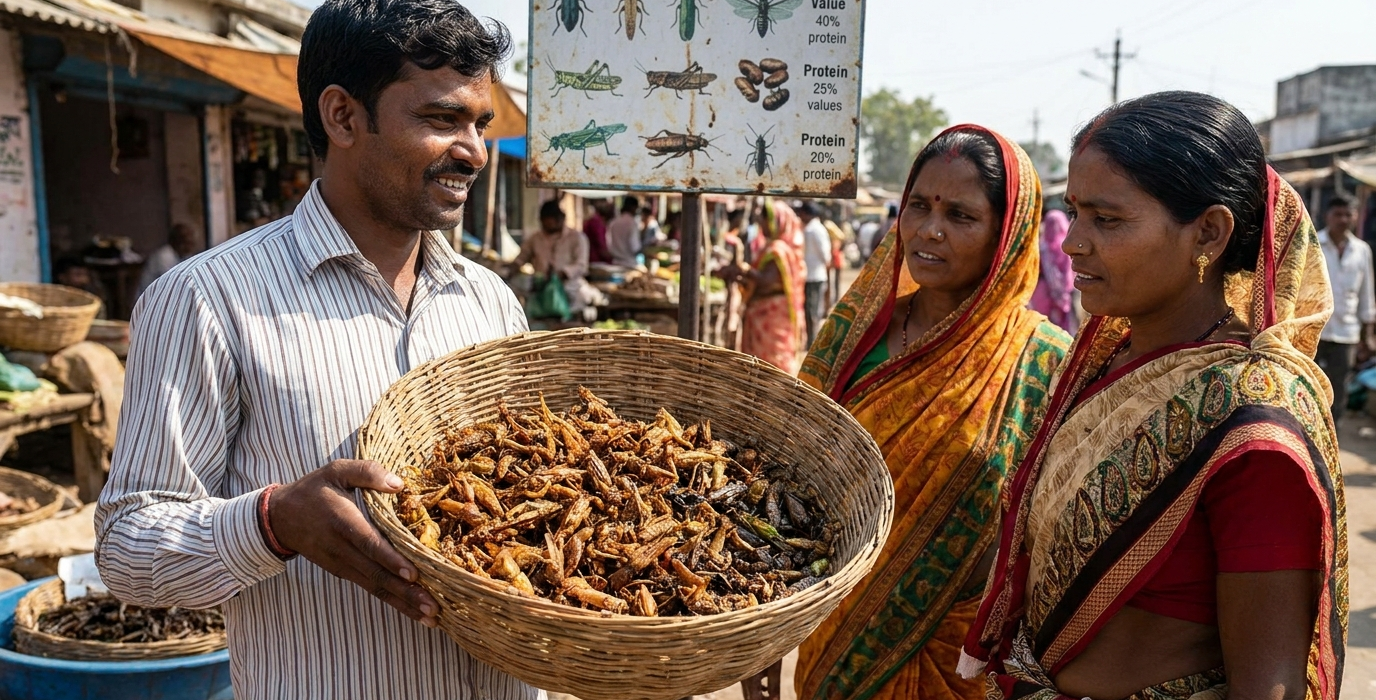
Despite the immense potential, the widespread adoption of edible insects in India faces significant hurdles. Chief among these are regulatory frameworks and deeply ingrained consumer perceptions. While insects have historically been part of tribal diets in certain regions, mainstream Indian cuisine has largely shied away from them. The idea of eating insects can evoke disgust or apprehension, often referred to as the ‘yuck factor’. Overcoming this requires sustained public education and a gradual introduction to palatable products.
Currently, the Food Safety and Standards Authority of India (FSSA I) is in the process of developing comprehensive guidelines for the production and sale of edible insects. This is a crucial step that will provide clarity and confidence for both producers and consumers. Without clear standards for farming, processing, and labelling, it’s difficult for the industry to scale and for consumers to trust the safety of these products. Companies are actively engaging with regulatory bodies to ensure that when products do hit the shelves, they meet the highest safety and quality standards. This proactive engagement is vital for building a robust industry.
“The future of food is not about replacing what we love, but about augmenting it with smarter, more sustainable choices. Edible insects offer precisely that – a potent nutritional boost with a dramatically reduced environmental footprint.”
Advertisement300×250 / native
The Economics of Entomophagy: A Sustainable Business Model
The economic case for insect farming is compelling, especially in a country like India where agricultural innovation is paramount. Insect farming offers a lower barrier to entry compared to traditional livestock, requiring less capital investment and space. This opens up opportunities for small-scale farmers and entrepreneurs, potentially creating new avenues for income and employment, particularly in rural areas. The efficiency of feed conversion means that less feed is needed to produce the same amount of protein, leading to lower operational costs.
Furthermore, the by-products of insect farming, such as insect frass (manure), can be processed into high-quality organic fertiliser, creating a closed-loop system and adding another revenue stream. This circular economy approach is incredibly attractive. We’re seeing a growing number of agri-tech startups in India exploring insect farming as a viable business model, driven by both domestic demand potential and export opportunities. The global market for edible insects is projected to grow significantly, and India is well-positioned to become a major player. The scalability and efficiency of insect farming present a truly sustainable business model for the 21st century.
Global Trends and India’s Potential: A Comparative Look
Globally, countries like Thailand, Mexico, and the Netherlands are already well-established in the edible insect market. Thailand, for instance, has a long tradition of consuming fried crickets and grasshoppers, which are now widely available as snacks and even incorporated into restaurant dishes. Mexico boasts a rich culinary heritage featuring insects like chapulines (grasshoppers) and escamoles (ant larvae), considered a delicacy. European countries are increasingly investing in insect farming for animal feed and exploring its potential for human consumption.
India, with its vast agricultural base and diverse culinary landscape, has immense untapped potential. While we may not have the centuries-old traditions of insect consumption seen in some other nations, our capacity for innovation and our growing awareness of sustainable food systems give us an edge. The key will be to adapt global best practices while respecting local palates and cultural nuances. Imagine a future where insect protein is as common in Indian kitchens as paneer or lentils, offering a sustainable and nutritious protein source for millions.
Here’s a look at how insect protein stacks up against some traditional sources, considering protein content and environmental impact factors.
| Food Item | Protein (per 100g, approximate) | Land Use (m²/kg protein) | Water Use (L/kg protein) | Greenhouse Gas Emissions (kg CO2e/kg protein) |
|---|---|---|---|---|
| Crickets (whole, dried) | 60-70g | 5-10 | 50-100 | 1-2 |
| Mealworms (whole, dried) | 50-60g | 8-15 | 70-120 | 1.5-3 |
| Beef | 26g | 200-300 | 15,000-30,000 | 60-100 |
| Chicken | 31g | 40-60 | 4,000-6,000 | 6-10 |
| Lentils | 24g | 10-20 | 1,000-3,000 | 0.5-1.5 |
Frequently Asked Questions
What are the most common edible insects being explored in India?
Cricket powder and mealworm flour are currently leading the charge due to their ease of farming and versatile application in food products. Other species like grasshoppers and black soldier fly larvae are also being explored for various uses, including animal feed and protein extraction.
Is it safe to eat insects?
Yes, when insects are farmed, processed, and prepared under controlled conditions, they are safe to eat. Reputable producers adhere to strict hygiene and safety standards. It’s crucial to consume insects from trusted sources, just as you would with any other food product.
How can I try edible insects in India?
Currently, the easiest way to try insect-based products is through specialised online retailers and emerging food startups that offer items like cricket protein bars, flours, and snacks. As regulations evolve, we expect to see them appear in more mainstream health food stores and potentially even restaurants.
Are there any allergic reactions associated with eating insects?
Individuals with shellfish allergies may also be allergic to insects, as they belong to the same phylum (Arthropoda) and share similar proteins like chitin. It is advisable to start with small quantities if you have known allergies or concerns.
What is the primary advantage of insect protein over traditional sources like chicken or beef?
The primary advantages are significantly lower environmental impact (less land, water, and greenhouse gas emissions) and a highly efficient conversion of feed into protein. Insects also offer a comparable or superior nutritional profile in many aspects, including protein completeness and micronutrient density.