Key Takeaways
- This monsoon, embrace the vibrant and diverse regional specialties that bloom across India, from the Konkan coast’s seafood to Himachal’s hearty fare.
- We explore unique monsoon ingredients like jackfruit, bamboo shoots, and local mushrooms, often overlooked but central to seasonal flavour.
- Discover how ancient culinary practices are being revived and adapted by contemporary chefs and home cooks alike.
- Our guide offers practical tips on sourcing and preparing these seasonal delights, bringing the essence of India’s monsoon kitchens to your table.
The Monsoon’s Embrace: A Season of Culinary Rebirth
The monsoon in India is more than just rain; it’s a sensory symphony that profoundly influences our lives, and perhaps nowhere more deliciously than in our kitchens. As the parched earth drinks greedily, a wave of life sweeps through the flora and fauna, ushering in a unique bounty. This is the season when certain ingredients, dormant for much of the year, burst forth, transforming regional cuisines into something truly special. From the misty hills of the North to the humid coastlines of the South, India’s culinary landscape undergoes a magical metamorphosis, offering a spectrum of flavours that are both comforting and exhilarating.
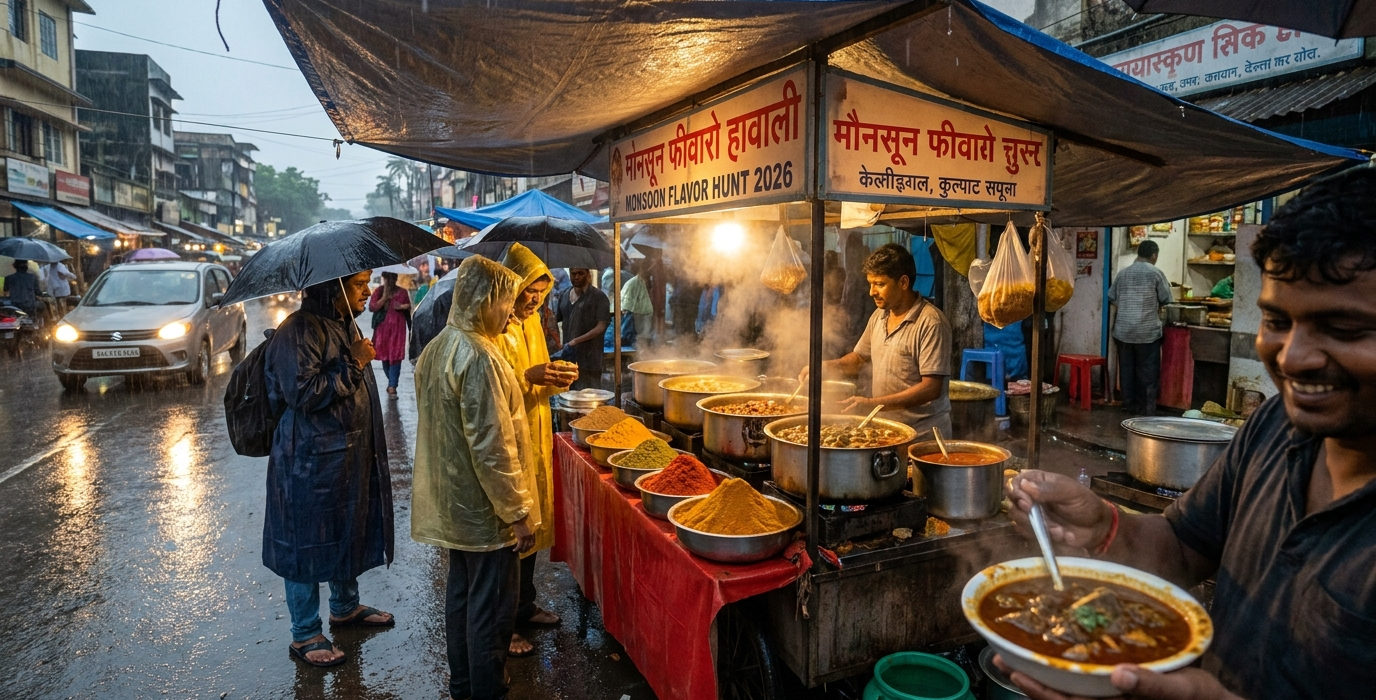
In 2026, we invite you to embark on a flavour hunt, seeking out these ephemeral monsoon delicacies. We’ll delve into the heart of regional kitchens, uncovering recipes passed down through generations and exploring how contemporary chefs are reinterpreting these traditions. This is an opportunity to connect with the land, understand the seasonality of food, and savour tastes that are intrinsically linked to the rhythm of the rains. Forget your usual fare; the monsoon calls for something more elemental, more vibrant, and deeply rooted in our shared heritage.
Konkan Coast’s Seafood Symphony: Fresh Catches and Fiery Flavours
As the monsoon clouds gather over the Arabian Sea, the coastal regions of Maharashtra and Goa come alive with a unique culinary celebration. This is prime time for seafood, with the rough seas keeping trawlers ashore for much of the season, allowing fish stocks to replenish. What emerges are plump, succulent catches that form the backbone of Konkan cuisine during the rains. Think of the succulent prawns, the firm mackerel, and the delicate white fish, all transformed by the region’s characteristic spice blends.
A star ingredient here is the ubiquitous jackfruit, or ‘phanas’ in Marathi. While often enjoyed ripe and sweet, during the monsoon, the unripe, green jackfruit is a vegetable superstar. Its firm texture and mild flavour absorb the robust spices beautifully, making it a popular substitute for meat in vegetarian dishes like ‘Phanasachi Bhaji’. Another monsoon delicacy is the ‘Kothimbir Vadi’, a savoury coriander fritter, crispy on the outside and soft within, perfect for a rainy afternoon chai. The spice levels often rise with the humidity, with liberal use of red chillies and kokum, the souring agent derived from a local fruit, adding a delightful tang that cuts through the richness of the seafood and the earthiness of the vegetables.
The preparation methods are often simple, designed to let the freshness of the ingredients shine. Steaming, pan-frying, and shallow-frying are common, preserving the delicate textures of the fish. A surprising fact is that many traditional Konkani homes still use a heavy stone mortar and pestle, the ‘ghotni’, to grind their masalas, believing it releases a deeper aroma and flavour than modern blenders. This dedication to traditional techniques ensures that the essence of the monsoon’s bounty is captured in every bite, offering a truly authentic taste of the coast.
The Hills Are Alive: Himachal’s Hearty Harvest and Medicinal Greens
Journey north to the majestic Himalayas, where the monsoon paints the landscape in vibrant shades of green and brings forth a different kind of culinary magic. Himachal Pradesh, with its rugged terrain and cool climate, offers a stark contrast to the coastal deluges, yet its monsoon cuisine is equally rich and comforting. Here, the focus shifts from delicate seafood to robust grains, hearty vegetables, and an abundance of wild, edible greens that are packed with nutrients and flavour.
One of the most iconic Himachali monsoon dishes is ‘Siddu’. This steamed bread, often made with wheat flour and stuffed with a savoury mixture of ground walnuts, poppy seeds, or fermented soybeans (like ‘Bae’), becomes a staple. It’s typically served with a dollop of ghee and a spicy chutney, providing essential warmth and energy against the chill. Another delightful find is the use of fresh bamboo shoots, or ‘bamboo ki kodi’ as they are locally known. These tender shoots are carefully harvested, often boiled to remove any bitterness, and then stir-fried with spices or added to lentil preparations, lending a unique texture and a subtle, earthy flavour.
The monsoon is also the season for foraging. Local communities venture into the forests and meadows to collect an array of wild edibles. These include various types of mushrooms, ‘lingri’ (fiddlehead ferns), and nutrient-rich leafy greens like ‘chaulai’ (amaranth). These greens are often simply blanched and tempered with garlic and mustard oil, or incorporated into lentil stews for added flavour and nutrition. A truly surprising aspect of Himachali monsoon cuisine is the medicinal quality attributed to many of these foraged ingredients, deeply ingrained in traditional Ayurvedic practices. For instance, certain wild mushrooms are believed to have anti-inflammatory properties, while specific greens are prized for their digestive benefits, making the monsoon harvest a feast for both the palate and the body.
Bengal’s Rainy Day Delights: Hilsa, Potatoes, and the Comfort of Rice
In West Bengal, the monsoon season is inextricably linked with the arrival of the revered ‘Ilish’ or Hilsa fish. This oily, flavourful fish, synonymous with Bengali identity, reaches its peak during the rains, its rich flesh absorbing the delicate curries it is cooked in. The sheer anticipation of the first Ilish of the season is a cultural phenomenon, celebrated with joyous reverence across households and restaurants alike.
The preparation of Ilish is an art form. While ‘Ilish Bhapa’ (steamed in mustard paste) and ‘Ilish Paturi’ (wrapped in banana leaves and grilled) are classics, the monsoon also brings out simpler, yet equally delicious, preparations. ‘Shorshe Ilish’ (Hilsa in mustard gravy) is a ubiquitous favourite, its pungent mustard sauce perfectly complementing the fish’s richness. Beyond the star fish, the monsoon in Bengal also elevates the humble potato. Dishes like ‘Aloo Posto’ (potatoes in a poppy seed paste) and ‘Aloo Dhokar Dalna’ (potato curry with lentil cakes) take on a special significance, offering a comforting counterpoint to the richer fish preparations. The earthy flavour of potatoes, especially when paired with the nutty notes of poppy seeds, is a quintessential rainy day comfort food.
Rice, the staple grain, is paramount. During the monsoon, the focus is often on freshly harvested ‘new rice’ or ‘gobindobhog’, a fragrant, short-grain variety that is slightly sticky and incredibly flavourful. It’s cooked to perfection, often simply steamed, to accompany the curries and fried dishes. A fascinating, though perhaps less appetising to some, tradition involves the use of certain fermented foods during the monsoon. ‘Gondhoraj lebu’, a fragrant lime, becomes a vital ingredient, its zest and juice used liberally to counter the richness of the food and to add a unique aroma. A surprising fact is that many traditional Bengali households still believe that cooking Ilish requires a specific type of iron wok (‘loha’r kadai’) to enhance its flavour and texture, a culinary secret passed down through generations.
The South’s Monsoon Bounty: Kerala’s Flavours and the Magic of Bamboo
The verdant landscapes of Kerala transform dramatically with the onset of the monsoon. The heavy rains replenish its numerous rivers and backwaters, leading to an abundance of fresh produce and aquatic life. This season is a time of culinary rejuvenation, where traditional recipes are dusted off, and unique ingredients come to the fore, creating a symphony of flavours that is distinctly Keralite.
One of the most exciting monsoon ingredients in Kerala is the bamboo shoot, known locally as ‘Kudana’ or ‘Mula’. Harvested during the rains, these tender shoots are a versatile ingredient, used in everything from stir-fries (‘thoran’) to curries. They have a unique, slightly bitter taste that, when properly prepared (often by boiling and then sautéing), adds a wonderful depth to dishes. Another monsoon specialty is the proliferation of various types of mushrooms, both cultivated and wild. These are often prepared as ‘Puzhukku’ (a dry curry) or added to lentil preparations, showcasing their earthy flavours.
Seafood also plays a significant role, with the calmer seas post-monsoon allowing for richer catches. Fish curries, often prepared with a tangy tamarind and coconut milk base, are a staple. However, the true monsoon magic lies in the less common dishes. ‘Chemmeen Ularthiyathu’, a dry prawn preparation, often featuring grated coconut and fragrant spices, is a particular treat. A surprising fact is the traditional belief that certain dishes are best cooked and consumed only during the monsoon months, as the atmospheric conditions are believed to enhance their medicinal properties and digestive qualities. For instance, dishes featuring the medicinal herb ‘Shatavari’ are often prepared during this time, believed to be particularly beneficial for women’s health.
Beyond the Plate: The Cultural Significance of Monsoon Cooking
The act of cooking and eating during the monsoon in India is deeply intertwined with cultural practices and beliefs. It’s a time when families gather, sharing stories and meals that evoke a sense of comfort and togetherness. The monsoon rains often disrupt outdoor activities, encouraging indoor pursuits, with cooking taking centre stage. This shared experience strengthens familial bonds and passes down culinary heritage from one generation to the next.
Many regional festivals and rituals are also observed during the monsoon, often involving specific food offerings. The focus on locally available, seasonal produce is not merely a matter of taste; it’s a sustainable practice honed over centuries. This connection to the land and its cycles fosters a deep respect for nature and its bounty. The belief in the medicinal properties of monsoon foods, as we’ve seen, is also a crucial aspect, linking diet with well-being and health in a holistic manner.
Contemporary chefs are increasingly drawing inspiration from these traditional monsoon ingredients and recipes. They are not just recreating old dishes but innovating, using modern techniques to highlight the unique flavours and textures of seasonal produce. This revival ensures that these culinary treasures are not lost to time. A surprising cultural insight is that in certain parts of rural India, specific types of clay pots are used exclusively for monsoon cooking, believed to impart a distinct flavour and to preserve the natural moisture of the ingredients, further underscoring the intricate relationship between food, culture, and the environment.
“The monsoon season is a culinary awakening, a time when India’s diverse landscapes offer up their most treasured, ephemeral gifts. To truly taste India is to savour these seasonal blessings.”
Frequently Asked Questions
What are the most common monsoon vegetables in India?
Common monsoon vegetables include unripe jackfruit (‘phanas’), bamboo shoots (‘kodi’/’mula’), various types of mushrooms, fiddlehead ferns (‘lingri’), and leafy greens like amaranth (‘chaulai’). These thrive in the increased moisture and cooler temperatures.
Is it safe to eat street food during the monsoon?
While tempting, it’s generally advisable to be cautious with street food during the monsoon. Increased humidity can foster bacterial growth. Opt for freshly cooked, hot food from reputable vendors, and ensure good hygiene practices are followed.
How does the monsoon affect the availability of certain fish in India?
For many coastal regions like the Konkan, the monsoon season often means a temporary scarcity of certain popular fish due to rough seas. However, it also allows fish stocks to replenish, leading to an abundance of specific, often richer, catches once the seas calm down post-monsoon.
Are there any specific cooking techniques that are popular during the Indian monsoon?
Yes, simple cooking methods that preserve the natural flavour and texture of ingredients are popular. These include steaming, light frying, and slow cooking. In many homes, traditional grinding stones are still preferred for masalas, believed to enhance flavour.
What are the health benefits of eating seasonal monsoon foods?
Many monsoon vegetables and greens are rich in vitamins, minerals, and antioxidants. Traditional beliefs often attribute medicinal properties to these seasonal foods, linking them to improved digestion, immunity, and overall well-being, aligning with principles of natural, seasonal eating.