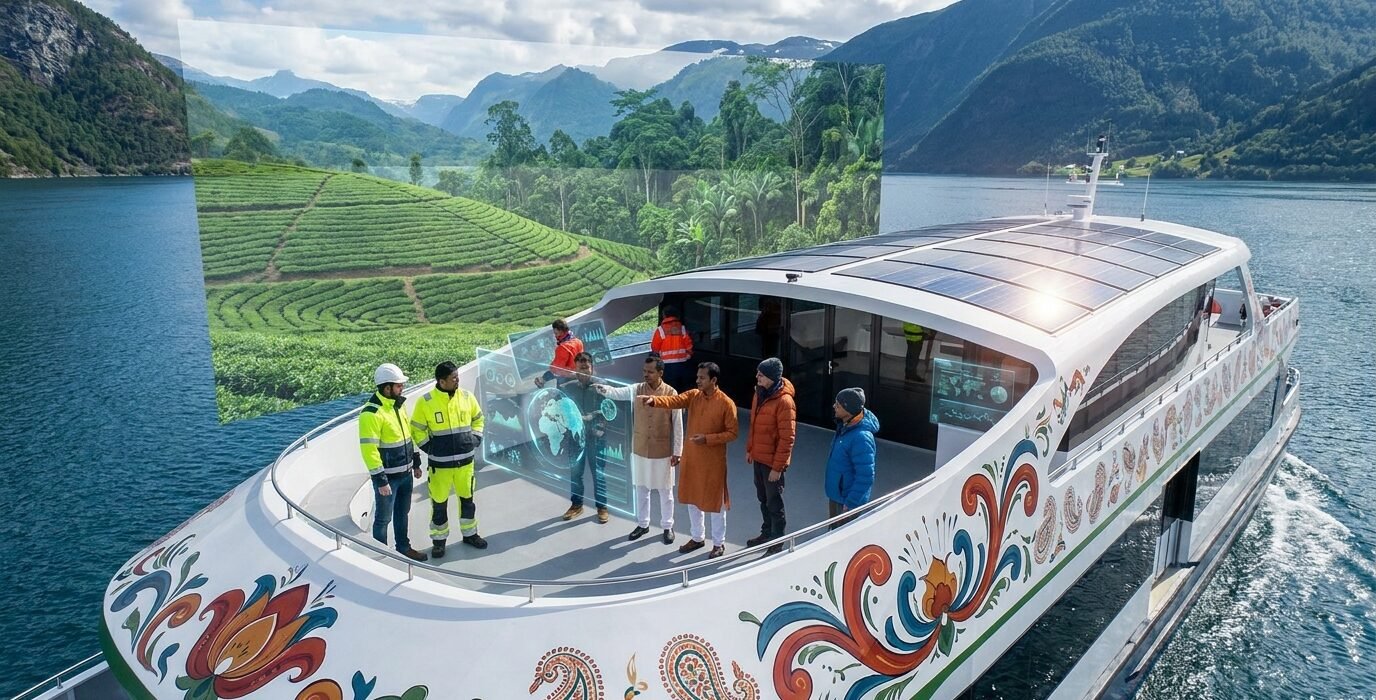
The icy winds whipping off the Norwegian Sea might seem a world away from the bustling tech hubs of Bengaluru and Gurugram. Yet, a quiet revolution is brewing. Indian green technology startups are setting their sights on the Scandinavian nation. This isn’t just about chasing foreign investment. It’s about finding fertile ground for innovation. It’s about a market ripe for sustainable solutions. It’s about a partner in the global fight against climate change.
Key Takeaways:
- Indian green tech startups are increasingly targeting Norway for market entry and investment.
- Norway’s strong environmental policies, robust R&D funding, and established green industries create an attractive ecosystem.
- Key sectors of interest include renewable energy, sustainable transport, circular economy solutions, and green hydrogen.
- Challenges such as cultural differences and navigating regulatory landscapes exist but are seen as surmountable.
- Successful collaborations can lead to significant market expansion for Indian firms and advanced green solutions for Norway.
India’s tech scene boasts sheer ambition. This, coupled with the urgent global demand for climate-friendly solutions, pushes entrepreneurs beyond familiar shores. Norway, with its progressive environmental agenda and deep pockets for innovation, presents a compelling proposition. Imagine this: a nation where over 98% of its electricity comes from hydropower. A nation with a sovereign wealth fund larger than the GDP of many countries. For an Indian startup developing cutting-edge solar technology or a novel waste-to-energy system, this isn’t just another market. It’s a potential launchpad. The stories emerging from this cross-border interest paint a picture of hope. They show strategic foresight. They reflect a shared commitment to a greener future.
The Allure of the Fjords: Why Norway Beckons Indian Innovators
Norway isn’t just a land of stunning fjords and the Northern Lights. It’s a global leader in environmental policy and sustainable development. For Indian tech entrepreneurs, this translates into a uniquely attractive ecosystem. Picture a country where government mandates actively push for renewable energy adoption. Think about a place where carbon taxes are a reality. Consider a market where consumer demand for eco-friendly products is the norm, not a niche. This is the landscape drawing the attention of India’s dynamic green tech sector.
Consider the Svalbard Global Seed Vault. It stands as a testament to Norway’s forward-thinking approach to safeguarding the planet’s biodiversity. This same mindset permeates its approach to technological innovation. The Norwegian government consistently invests heavily in research and development. This investment focuses particularly on areas crucial for a sustainable future. Substantial funding flows into initiatives in offshore wind, carbon capture, battery technology, and green shipping. For an Indian startup that has perfected a highly efficient solar panel or a smart grid management system, Norway offers more than just a potential market. It offers a testing ground for scaling and refinement. This happens under supportive policy frameworks. The Innovation Norway agency, for instance, actively scouts for and supports innovative companies. This includes those with international ambitions. We’ve seen numerous reports of Indian companies attending webinars and seeking partnerships facilitated by such bodies. It’s a proactive approach. It signals a genuine welcome. The sheer scale of investment in green initiatives means promising technologies often find receptive investors and strategic partners much faster. This is true compared to many other developed markets. This proactive environment starkly contrasts with the often-arduous journey of securing funding and approvals faced by many startups in their home markets. The cultural affinity for innovation and environmental consciousness creates fertile ground. Indian green tech can not just survive, but thrive here.
Pioneers of the Green Wave: Success Stories and Emerging Players
The narrative of Indian companies venturing into Norway isn’t entirely new. However, its acceleration in the green tech space is a recent phenomenon. One notable example is Oorja. This Bengaluru-based company specializes in solar-powered irrigation systems for farmers. While their primary market has been India, they’ve been actively exploring opportunities in regions with similar agricultural needs and a strong push for sustainable farming practices. Norway, with its advanced agricultural technology sector and focus on reducing its carbon footprint, presents an interesting, albeit different, landscape. Direct agricultural applications might be niche. However, the underlying technology – robust, efficient solar power generation for remote or off-grid applications – holds significant appeal. Consider Norway’s extensive coastline. Think about its reliance on efficient energy for remote communities or specialized industrial applications. Oorja’s expertise in providing reliable, off-grid solar solutions could find applications in powering remote research stations. It could also power aquaculture facilities. It might even support the transition of traditional fishing communities towards more sustainable energy sources. Their journey into Norway, though perhaps still in its nascent stages, highlights the adaptability of Indian green tech.
Another emerging player to watch is LogiNext. This company uses AI and machine learning to optimize logistics and fleet management. While not exclusively a “green tech” company, their solutions directly contribute to reducing carbon emissions. They achieve this by improving route efficiency and minimizing fuel consumption. Norway, with its stringent environmental regulations for transportation and a growing emphasis on sustainable supply chains, is a prime market for such innovations. Imagine the vast network of ferries and trucks crisscrossing the country. LogiNext’s ability to analyze real-time data and suggest the most fuel-efficient routes can lead to substantial reductions in emissions for Norwegian logistics companies. Their potential entry into the Norwegian market underscores a broader trend. Any technology that contributes to environmental sustainability, directly or indirectly, is gaining traction. These aren’t just abstract concepts. These are real companies with tangible solutions. They are actively seeking to bridge the gap between Indian innovation and Norwegian demand. The keen interest shown by Norwegian venture capitalists in sustainable solutions is noteworthy. Firms like North Energy and Equinor Ventures actively seek out promising green technologies. This further fuels cross-border engagement. This is more than just anecdotal. It’s a strategic alignment of interests.
Navigating the Nordic Waters: Challenges and Opportunities
Embarking on a new market is never without its hurdles. For Indian green tech startups eyeing Norway, the path presents a unique set of challenges. One of the most immediate is cultural and business practice differences. Norway operates with a distinct business etiquette. It emphasizes consensus-building, punctuality, and a more hierarchical yet informal communication style. This contrasts with the often-rapid pace of Indian business dealings. Building trust and understanding these nuances are crucial for forging strong partnerships. Language, while English is widely spoken in business circles, can still be a subtle barrier. This is true in informal settings or with certain segments of the population. Furthermore, the regulatory landscape, while supportive of green initiatives, can also be complex. Understanding Norway’s environmental standards, certification processes, and incentive structures requires dedicated effort. It often necessitates local expertise.
However, these challenges are precisely what make the opportunities so significant for those who can navigate them. Norway’s strong commitment to research and development means startups can tap into a wealth of knowledge and potential collaborators. Institutions like SINTEF, one of Europe’s largest independent research organizations, are at the forefront of green technology innovation. They offer immense potential for joint projects and technology validation. The Norwegian government’s proactive policies, such as subsidies for electric vehicles and investments in green hydrogen infrastructure, create ready-made markets for complementary technologies. For instance, a company developing advanced charging solutions for electric vehicles or innovative electrolyzer technologies for green hydrogen production would find a receptive audience. They would also find a supportive regulatory framework. The Norwegian sovereign wealth fund, the world’s largest, while not directly investing in early-stage startups, influences market trends. It encourages large corporations to adopt sustainable practices. This, in turn, creates demand for green tech solutions. The sheer scale of Norway’s commitment to decarbonisation, aiming for carbon neutrality by 2050, provides a long-term vision. This vision aligns perfectly with the goals of Indian green tech companies. This shared long-term vision is a powerful catalyst for collaboration.
The Green Hydrogen Gold Rush: A Key Sector of Interest
One area where the synergy between India and Norway in green tech is particularly potent is green hydrogen. Norway, with its abundant renewable energy sources (primarily hydropower) and established expertise in the oil and gas sector, is strategically positioned to become a major player in the global green hydrogen market. Indian companies, meanwhile, are developing innovative and cost-effective technologies for hydrogen production, storage, and utilization. This creates a perfect match. Companies like Greenko Group in India are already investing heavily in green hydrogen production. They aim to leverage their renewable energy portfolio. Their ambitions align seamlessly with Norway’s national strategy to develop a robust green hydrogen industry. This is particularly for decarbonizing its maritime sector and heavy industries.
Consider the intricate network of fjords. Think about the extensive shipping routes that define Norway. The transition from fossil fuels to green hydrogen for its vast fleet of ferries, offshore supply vessels, and even potentially larger cargo ships is a monumental undertaking. Indian startups that can offer scalable, efficient, and cost-competitive electrolyzer technologies, advanced storage solutions, or fuel cell systems are finding a receptive market. Nel ASA, a Norwegian company and a global leader in electrolyzers, is a prime example. It represents the kind of established player that Indian firms can partner with or learn from. The potential for joint ventures, technology licensing, and direct market entry is immense. The Norwegian government has set ambitious targets for hydrogen production. It is actively seeking international partnerships to achieve them. This includes significant investments in port infrastructure and research facilities dedicated to hydrogen technologies. For Indian entrepreneurs, this translates into a clear pathway for market entry and substantial growth opportunities. The narrative of Norway as a potential exporter of green hydrogen, powered by its renewable energy, and India as a key developer of the underlying technologies, is a compelling one for the future of sustainable energy. This convergence of interests is more than just a trend. It’s a strategic imperative driven by global climate goals and economic opportunity.
Beyond Hydrogen: Circular Economy and Sustainable Solutions
While green hydrogen garners significant attention, the interest from Indian green tech startups in Norway extends beyond this single sector. The concept of the circular economy, where waste is minimized and resources are reused and recycled, is deeply ingrained in Norwegian policy and consumer behavior. This presents fertile ground for Indian companies offering innovative solutions in waste management, recycling technologies, and sustainable materials. For example, startups developing advanced plastic recycling methods, technologies for converting organic waste into biogas or fertilizers, or innovative solutions for textile recycling are finding Norway to be an ideal market to showcase their capabilities.
One surprising aspect is how Norway, despite its relatively small population, leads in per capita waste management innovation. Cities like Oslo are at the forefront of implementing smart waste collection systems and advanced sorting facilities. Indian companies with proven track records in developing cost-effective and efficient waste-to-energy plants or sophisticated material recovery facilities could find significant opportunities here. Imagine a startup that has perfected a process for turning electronic waste into valuable raw materials. Norway’s strong consumer electronics market and its commitment to e-waste recycling make it an ideal testing ground. Furthermore, the trend towards sustainable construction and the use of eco-friendly materials is gaining momentum. Indian companies that can offer innovative building materials derived from recycled content or sustainable sources, or provide technologies that improve energy efficiency in buildings, will find a strong market. The emphasis on extended producer responsibility in Norway means manufacturers are increasingly accountable for the lifecycle of their products. This creates demand for companies that can help them meet these obligations through innovative recycling and reuse solutions. This creates consistent demand for services and technologies that close the loop on material flows. The proactive approach to environmental stewardship, exemplified by initiatives like the Norwegian Directorate for Civil Protection (DSB) promoting safety and preparedness in various sectors, often includes a strong focus on resource efficiency and waste reduction. This creates a supportive backdrop for circular economy innovations.
The Road Ahead: Collaboration, Growth, and a Greener Planet
The journey of Indian green tech startups into the Norwegian ecosystem is more than just a business venture. It’s a testament to the power of global collaboration in tackling climate change. The challenges are real – cultural differences, regulatory nuances, and the sheer distance. But they are outweighed by immense opportunities. Norway offers a stable, supportive, and forward-thinking environment. This is coupled with significant investment in green technologies. For Indian entrepreneurs, this means access to capital, cutting-edge research, and a market that actively rewards sustainability.
We’ve seen how sectors like green hydrogen and the circular economy are prime areas for synergy. However, the potential extends to renewable energy integration, sustainable transportation, and even innovative solutions for energy efficiency. This applies to industries that have historically been carbon-intensive. The success of early movers will undoubtedly pave the way for many more. As Indian companies gain a foothold, they bring not only their technological prowess but also their agility and cost-effectiveness. This can help accelerate Norway’s transition to a fully sustainable economy. In turn, it provides Indian startups with invaluable experience and a global stamp of approval. The Nordic Environment Finance Corporation (NEFCO), for example, is an intergovernmental financial institution. It invests in green projects in the Nordic region and beyond, offering another avenue for potential funding and collaboration. The shared vision for a low-carbon future is a powerful connector. It’s about building partnerships that transcend borders and create tangible impact. The stories that will emerge from this burgeoning relationship will be crucial. They will demonstrate how innovation, when coupled with strategic international collaboration, can truly drive the global green transition. This cross-pollination of ideas and technologies is not just beneficial for the involved economies. It’s vital for the planet. The commitment from both sides to foster these connections suggests a promising future. Indian ingenuity and Norwegian environmental leadership can combine to create a more sustainable world for generations to come. It’s a narrative of hope and tangible progress, playing out on the global stage.