Key Takeaways
- Kerala’s backwaters are pioneering sustainable tourism, focusing on community involvement and environmental preservation.
- Discover unique eco-lodges and homestays that offer authentic cultural experiences with minimal ecological impact.
- Learn about responsible travel practices that directly benefit local communities and protect fragile ecosystems.
- Explore how technology is enhancing eco-tourism, from solar-powered houseboats to digital platforms connecting travelers with local artisans.
The Green Embrace: Reimagining Kerala’s Backwaters
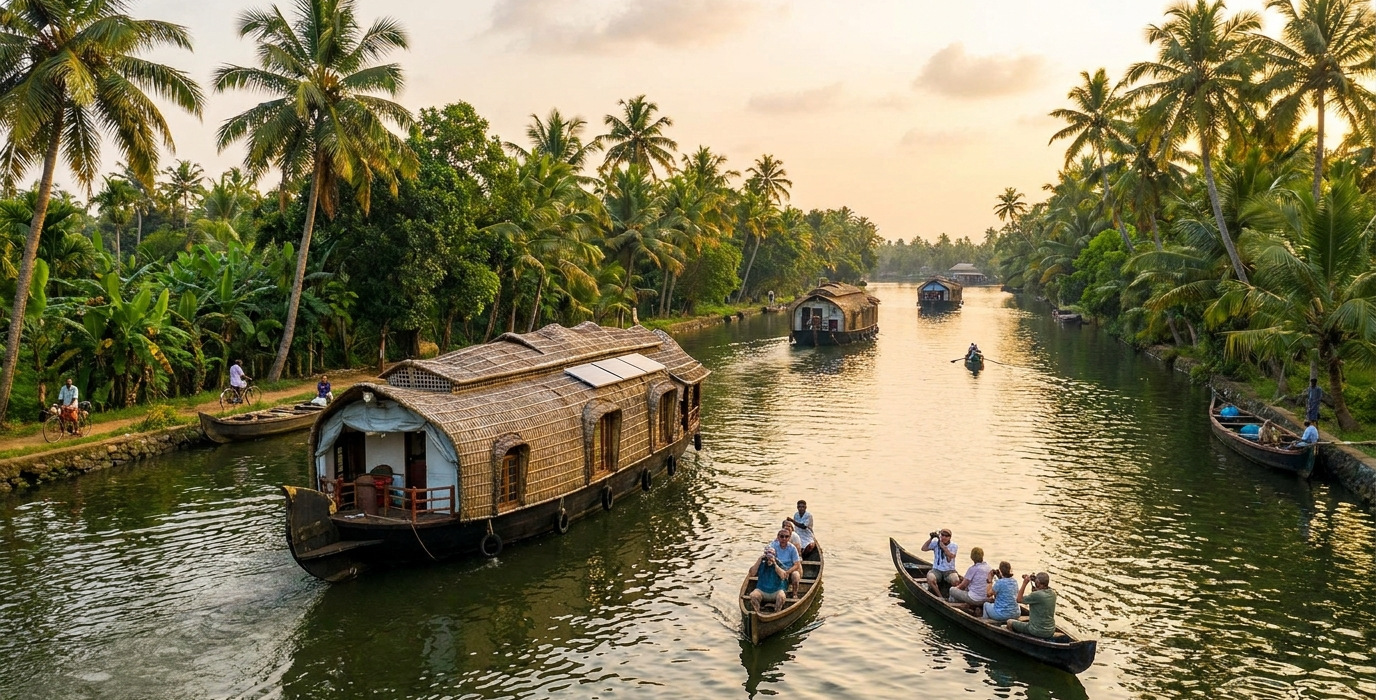
Imagine gliding through serene turquoise canals, the gentle lapping of water against your traditional houseboat your only soundtrack. This isn’t just a postcard scene; it’s the emerging reality of Kerala’s backwaters, a region rapidly transforming into a global beacon for eco-tourism. For decades, the allure of Alleppey’s (Alappuzha) labyrinthine waterways and the tranquil beauty of Kumarakom have drawn visitors. Now, a conscious shift is underway, moving beyond mass tourism towards an experience that nourishes both the soul and the environment.
This evolution is driven by a deep-seated respect for the delicate balance of these unique ecosystems and a commitment to empowering the local communities who call them home. We’re witnessing a renaissance, where luxury meets sustainability, and where every tourist rupee spent directly contributes to preserving this natural wonder for generations to come. It’s about experiencing Kerala’s heart, not just its surface. This transformation is not merely about preserving the past; it’s about actively building a greener, more equitable future.
Beyond the Houseboat: Embracing Local Stays
While iconic houseboats have long defined the backwaters experience, the true heart of sustainable tourism lies in immersing yourself within the local communities. This means choosing homestays and eco-lodges that are deeply integrated with their surroundings. Forget sprawling resorts; think charming, family-run establishments built with local materials, often powered by renewable energy. These aren’t just places to sleep; they are gateways to understanding Keralan life.
You’ll find yourself sharing meals with host families, learning traditional cooking techniques, and perhaps even participating in daily village activities. Consider places like those found near the Vembanad Lake, where many initiatives focus on organic farming and artisanal crafts. These stays offer an unparalleled authenticity, far removed from the superficiality of conventional travel. You’re not just a guest; you become a temporary member of the community, fostering genuine connections.
One surprising aspect of this shift is the revival of traditional building practices. Many new eco-lodges are incorporating techniques like rammed earth construction and thatched roofs made from local palm leaves. These not only blend seamlessly with the landscape but also offer excellent natural insulation, reducing the need for artificial cooling. This careful integration ensures that the beauty of the backwaters is preserved, not overshadowed by development.
Guardians of the Waterways: Community-Led Conservation
The success of Kerala’s eco-tourism pivot hinges on the active participation of its residents. Local cooperatives and self-help groups are now at the forefront of conservation efforts. They are not just beneficiaries of tourism; they are its custodians. These groups are instrumental in managing waste, protecting biodiversity, and ensuring that tourism activities adhere to strict environmental guidelines.
Take, for instance, initiatives in the Kuttanad region, where farmers are actively involved in promoting responsible water usage and preventing pollution of the paddy fields and canals. They understand that the health of their land is directly linked to the viability of tourism. This community-led approach ensures that the benefits of tourism are distributed equitably, fostering economic empowerment at the grassroots level.
Furthermore, many of these community-led projects are reviving traditional livelihoods. You might encounter women’s cooperatives producing coir products, or local fishermen offering guided tours that highlight sustainable fishing practices. These initiatives not only provide income but also preserve cultural heritage. It’s a powerful testament to how tourism, when managed responsibly, can be a force for positive social and environmental change.
The Digital Current: Technology Meets Tradition
Technology is playing an increasingly vital role in enhancing the sustainability and accessibility of Kerala’s eco-tourism offerings. Digital platforms are connecting travelers directly with local service providers, cutting out intermediaries and ensuring a larger share of revenue stays within the community. Online booking portals now feature curated lists of certified eco-friendly accommodations and tour operators.
Beyond bookings, technology is facilitating smarter, greener operations. You’ll find a growing number of solar-powered houseboats navigating the backwaters, significantly reducing their carbon footprint. Some operators are even using GPS and real-time data to optimize routes, minimizing fuel consumption and environmental disturbance. This integration of technology isn’t about replacing the charm of the traditional; it’s about augmenting it with responsible innovation.
Moreover, digital storytelling is becoming a powerful tool. Local communities are using social media and dedicated websites to share their stories, their culture, and their conservation efforts. This transparency builds trust and attracts travelers who are genuinely interested in responsible tourism. It allows you to connect with the spirit of the place even before you arrive, ensuring your visit is both enriching and impactful.
Navigating the Waters: Your Guide to Responsible Travel
As a traveler, your choices have a direct impact. Embracing eco-tourism in Kerala’s backwaters means making conscious decisions at every step. Prioritize accommodations that are certified for their sustainable practices, ideally those that are community-owned or operated. Look for places that actively engage in waste management, water conservation, and the use of renewable energy.
When it comes to activities, opt for experiences that support local livelihoods. This could include visiting coir-making units, participating in organic farm tours, or engaging with local artisans. Instead of generic souvenir shops, seek out authentic crafts directly from the makers. Your interactions should be respectful, and always ask for permission before taking photographs of people.
Reducing your environmental footprint is paramount. Carry a reusable water bottle and avoid single-use plastics. Be mindful of water consumption, as fresh water is a precious resource in these regions. When on houseboats or boats, ensure that no waste is discarded into the waterways. Simple actions, when multiplied by many visitors, can make a significant difference in preserving the pristine beauty of the backwaters.
“The true beauty of Kerala’s backwaters lies not just in its serene waters and lush greenery, but in the resilience and ingenuity of its people who are safeguarding this paradise through responsible stewardship.”
Sustainable Stays: Options for Every Traveler
Kerala’s backwaters offer a diverse range of eco-friendly accommodation options, catering to various preferences and budgets. From luxurious eco-resorts to intimate village homestays, the emphasis is consistently on minimizing environmental impact and maximizing community benefit. We’ve highlighted a few categories to help you choose your perfect sustainable retreat.
Eco-Lodges and Resorts
These establishments often combine comfort and sustainability. They typically feature architecture that blends with the natural environment, utilize renewable energy sources, and implement comprehensive waste management and water conservation programs. Many also offer educational programs about local flora, fauna, and culture, enriching your stay.
Community-Led Homestays
For an authentic cultural immersion, homestays are unparalleled. You’ll be welcomed into local families’ homes, sharing meals and daily life. These accommodations directly support families and communities, ensuring that tourism revenue circulates locally. They are often simpler but offer a depth of experience that larger establishments cannot match.
Floating Eco-Homes
A unique innovation in the region, these are modern interpretations of traditional houseboats, designed with sustainability in mind. They often feature solar panels for power, advanced waste treatment systems, and eco-friendly materials. While offering the classic backwaters experience, they do so with a significantly reduced environmental impact.
Here’s a quick comparison to help you decide:
| Accommodation Type | Key Features | Best For | Typical Price Range (per night, approx.) |
|---|---|---|---|
| Eco-Lodges/Resorts | Comfort, amenities, educational programs, sustainable infrastructure | Travelers seeking comfort with a conscience, families | ₹8,000 – ₹25,000+ |
| Community Homestays | Authentic cultural immersion, direct community support, home-cooked meals | Solo travelers, cultural enthusiasts, budget-conscious travelers | ₹3,000 – ₹7,000 |
| Floating Eco-Homes | Unique backwaters experience, reduced environmental impact, modern amenities | Couples, small groups, those wanting a blend of tradition and innovation | ₹10,000 – ₹30,000+ (often priced per boat) |
Frequently Asked Questions
What are the best months to visit Kerala’s backwaters for eco-tourism?
The most pleasant months are generally from September to March, offering cooler temperatures and lower humidity, ideal for exploring the backwaters. However, the monsoon season (June to August) also offers a unique, lush green experience and can be a great time for budget travel if you don’t mind occasional rain.
How can I ensure my visit directly benefits local communities?
Choose homestays and locally-owned eco-lodges, purchase handicrafts directly from artisans, eat at small, local restaurants, and book tours with community-based operators. Always ask about the sustainability practices of the businesses you patronize.
Are there specific regions within the backwaters that are more focused on eco-tourism?
While the entire backwater region is embracing sustainability, areas like Kumarakom and certain villages around Vembanad Lake are particularly noted for their community-led initiatives and well-established eco-tourism infrastructure. Many smaller, lesser-known villages are also developing excellent sustainable options.
What are some essential items to pack for an eco-friendly trip to the backwaters?
Pack reusable water bottles, cloth bags for shopping, reef-safe sunscreen (if applicable to any water activities), and eco-friendly toiletries. Bringing your own biodegradable insect repellent is also a good idea. Minimizing single-use plastics is key.