Key Takeaways
- AI is dramatically improving diagnostic accuracy and speed in Indian hospitals, often spotting anomalies missed by the human eye.
- Telemedicine platforms powered by AI are bridging the rural-urban healthcare divide, bringing specialist consultations to remote villages.
- Personalised treatment plans, driven by AI analysis of patient data, are becoming a reality, promising better outcomes and reduced side effects.
- AI-powered drug discovery and clinical trial optimisation are accelerating the development of new, affordable medicines for India.
The AI Ascendancy: Diagnostics Get Smarter
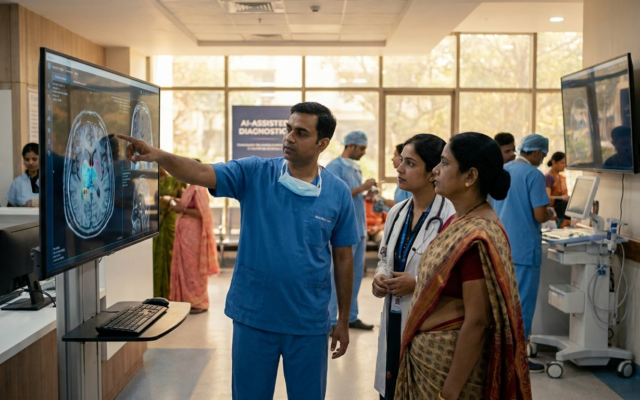
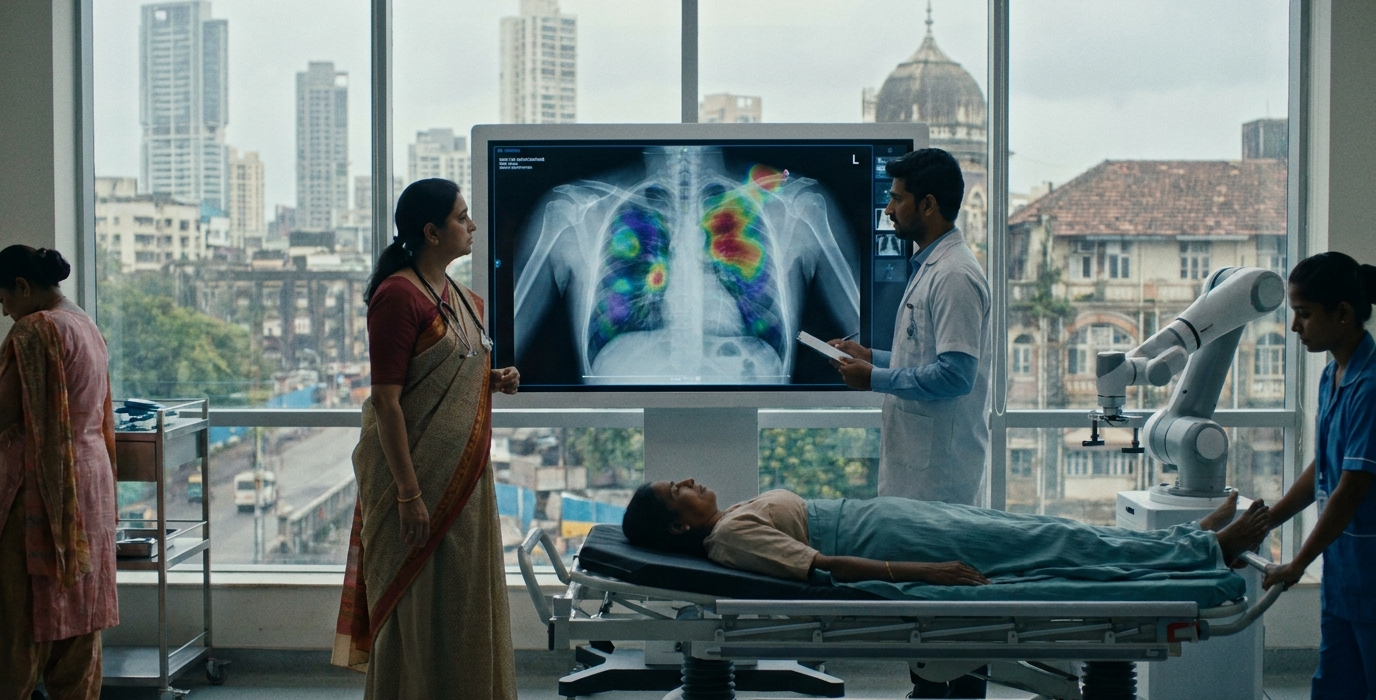
The hum of servers in Indian hospitals is no longer just about managing patient records; it’s the engine driving a revolution in medical diagnostics. Artificial intelligence is rapidly becoming an indispensable partner for doctors, enhancing their ability to detect diseases with unprecedented speed and accuracy. In bustling metros like Mumbai and Bengaluru, AI algorithms are now analysing medical images – X-rays, CT scans, and MRIs – with remarkable precision. They can identify subtle patterns indicative of early-stage cancers, diabetic retinopathy, or cardiovascular issues, often before they become clinically apparent. This isn’t about replacing doctors, but about augmenting their capabilities, freeing them from tedious manual analysis and allowing them to focus on complex cases and patient interaction.
Consider the sheer volume of medical scans generated daily across India. Manually reviewing each one is a Herculean task, prone to fatigue and potential oversight. AI, however, can process thousands of images tirelessly, flagging anything suspicious for expert review. This proactive approach means earlier interventions, which invariably lead to better patient prognoses and reduced healthcare burdens. For instance, AI models trained on vast datasets of Indian patient images are becoming increasingly adept at recognising variations specific to our population, overcoming some limitations of globally trained models. We are seeing AI integrated not just in large tertiary care centres, but also in smaller diagnostic labs, democratising access to advanced screening.
Bridging the Divide: AI-Powered Telemedicine
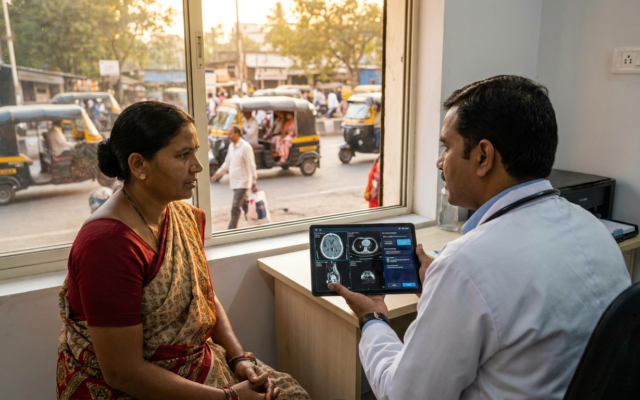
India’s vast geography presents a unique healthcare challenge: ensuring equitable access for its citizens, especially those in remote rural areas. This is where AI-powered telemedicine is emerging as a game-changer, connecting patients in far-flung villages with urban specialists. Platforms are now leveraging AI not just for video consultations, but also for preliminary symptom assessment and even remote monitoring of chronic conditions. Imagine a farmer in a remote village in Rajasthan, experiencing chest discomfort. Through an AI-enabled app, they can describe their symptoms, and the AI can triage their condition, advising them on the urgency of seeking in-person care or even facilitating a virtual consultation with a cardiologist in Jaipur.
These AI tools are designed to be user-friendly, often incorporating voice-based interfaces and regional language support, making them accessible to individuals with varying literacy levels. The AI can analyse the patient’s reported symptoms, vital signs captured through connected devices (like smartwatches or simple blood pressure monitors), and medical history to provide a preliminary diagnosis or recommend the most appropriate specialist. This reduces the need for arduous travel to distant cities, saving patients time, money, and precious energy. Furthermore, AI assists doctors by summarising patient histories and highlighting critical information during virtual consultations, making these remote interactions more efficient and effective.
Personalised Medicine: Tailoring Treatments with Data
The era of one-size-fits-all medicine is slowly giving way to a more nuanced, personalised approach, and AI is the driving force behind this transformation. By analysing a patient’s unique genetic makeup, lifestyle, medical history, and even real-time data from wearables, AI algorithms can predict their susceptibility to certain diseases and their likely response to different treatments. This allows clinicians to craft highly specific treatment plans, optimising drug dosages, selecting the most effective therapies, and minimising the risk of adverse reactions.
In oncology, for example, AI is revolutionising how cancer is treated. It can analyse complex genomic data from a tumour to identify specific mutations that can be targeted with precision therapies. This moves beyond broad-spectrum chemotherapy to treatments that are far more effective and less debilitating for the patient. Similarly, for chronic conditions like diabetes and hypertension, AI can continuously monitor a patient’s data and suggest adjustments to diet, exercise, and medication in real-time. This proactive, data-driven management empowers patients and prevents complications, leading to improved quality of life. A surprising fact: AI models are now being developed to predict individual patient responses to Ayurvedic and Unani medicines based on their unique bio-signatures, blending traditional wisdom with cutting-edge technology.
Accelerating Discovery: AI in Drug Development
The journey from a laboratory discovery to a market-ready drug is notoriously long, expensive, and fraught with failure. Artificial intelligence is dramatically shortening this timeline and increasing the probability of success in pharmaceutical research and development within India. AI algorithms can sift through vast databases of chemical compounds, biological targets, and existing research papers at speeds unimaginable for human researchers. This allows for the rapid identification of potential drug candidates for various diseases, from infectious diseases to rare genetic disorders.
AI is also proving invaluable in optimising clinical trials. It can help in identifying suitable patient cohorts for trials more efficiently, predicting potential side effects, and analysing trial data with greater speed and accuracy. This means that promising new treatments can reach patients faster, and those that are unlikely to succeed can be identified and discontinued earlier, saving significant resources. The impact is particularly profound for diseases that disproportionately affect India, such as tuberculosis and certain tropical ailments. The ability to rapidly screen compounds and predict efficacy means that India, a global pharmaceutical hub, can accelerate its efforts to develop novel, affordable medicines for both domestic and international markets.
Enhancing Hospital Operations: The Smart Hospital
Beyond direct patient care, AI is quietly optimising the back-end operations of Indian hospitals, making them more efficient and patient-centric. From managing hospital beds and scheduling staff to predicting patient flow and optimising supply chains for medicines and equipment, AI is streamlining processes that were once manual and often chaotic. This leads to reduced waiting times for patients, better resource allocation, and a more harmonious working environment for healthcare professionals.
Consider patient admissions and discharges. AI can predict peak times and potential bottlenecks, allowing hospitals to proactively allocate staff and resources. It can also automate administrative tasks, such as billing and appointment scheduling, freeing up valuable human resources. For a patient, this translates to a smoother, less stressful hospital experience, from the moment they walk in for an appointment to their eventual discharge. A lesser-known benefit is AI’s role in predictive maintenance of medical equipment. By analysing sensor data from devices like MRI machines or ventilators, AI can forecast potential failures, allowing for proactive repairs and preventing costly downtime, ensuring critical equipment is always operational.
The Ethical Compass: Navigating AI in Healthcare
As AI becomes more integrated into healthcare, addressing the ethical considerations is paramount. Issues of data privacy, algorithmic bias, and accountability require careful navigation. Ensuring that AI systems are trained on diverse datasets that represent India’s varied population is crucial to avoid perpetuating existing health disparities. Transparency in how AI makes decisions is also vital, so doctors and patients can understand and trust the recommendations provided.
We must also consider the human element in AI-driven healthcare. While AI can enhance efficiency and accuracy, it cannot replace the empathy, compassion, and nuanced judgment of a human caregiver. The goal is a synergistic relationship where AI supports clinicians, allowing them to provide even better care. Robust regulatory frameworks are being developed to govern the use of AI in healthcare, ensuring patient safety and promoting responsible innovation. This includes clear guidelines on data security, validation of AI algorithms, and mechanisms for redressal in case of errors. The ongoing dialogue between technologists, clinicians, policymakers, and the public will shape a future where AI in Indian healthcare is both powerful and profoundly human.
Frequently Asked Questions
What are the biggest benefits of AI in Indian healthcare?
The primary benefits include improved diagnostic accuracy and speed, enhanced access to healthcare through telemedicine, personalisation of treatment plans, and acceleration of drug discovery. These advancements collectively aim to make healthcare more efficient, accessible, and effective for all Indians.
Is AI replacing doctors in India?
No, AI is not replacing doctors. Instead, it acts as a powerful assistant and augmentation tool for healthcare professionals. AI handles data-intensive tasks and pattern recognition, allowing doctors to focus on complex decision-making, patient interaction, and providing compassionate care.
How is AI helping rural healthcare in India?
AI-powered telemedicine platforms are crucial for rural areas. They connect patients with specialists remotely, provide preliminary symptom analysis, and facilitate continuous monitoring of chronic conditions. This significantly bridges the gap in access to quality healthcare between urban and rural populations.
What are the privacy concerns with AI in healthcare?
Key concerns revolve around data security and patient confidentiality. Robust encryption, anonymisation techniques, and strict access controls are essential to protect sensitive medical information. Regulations are also being strengthened to ensure AI systems comply with privacy laws.