Key Takeaways
- AI is significantly accelerating diagnostics in Indian hospitals, reducing wait times for critical tests.
- Telemedicine platforms are integrating AI to offer more accurate remote consultations and personalized treatment plans.
- Machine learning algorithms are proving vital in identifying early disease markers, particularly for conditions like diabetes and cardiovascular issues prevalent in India.
- The integration of AI is creating new skill demands for healthcare professionals, necessitating upskilling and specialized training.
AI’s Accelerating Hand in Indian Diagnostics
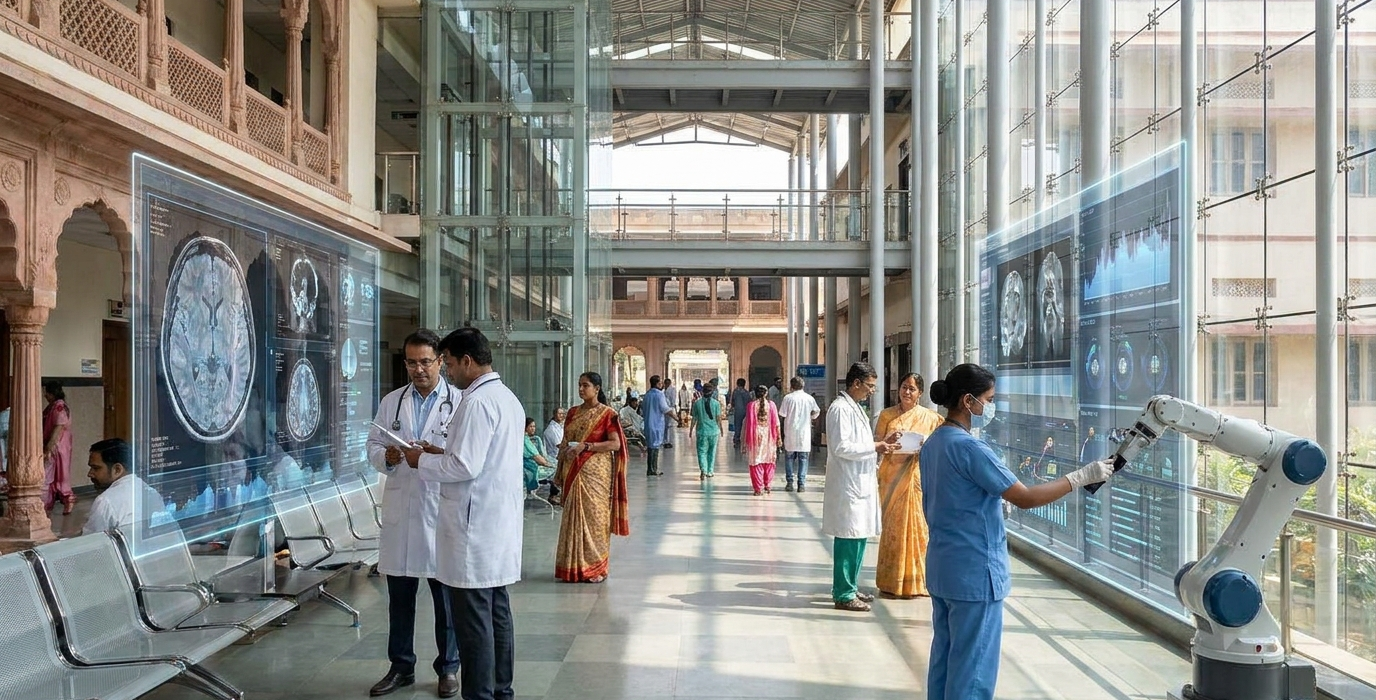
The hum of advanced machinery in Indian hospitals is increasingly being joined by the subtle, yet powerful, processing of artificial intelligence. For too long, delays in diagnostic reports have been a source of anxiety and a barrier to timely treatment for countless Indians. Today, in 2026, AI is actively rewriting this narrative. Imagine walking into a diagnostic centre in, say, Bengaluru, and receiving your radiology report in a fraction of the time it used to take. This isn’t science fiction; it’s the present reality powered by sophisticated algorithms.
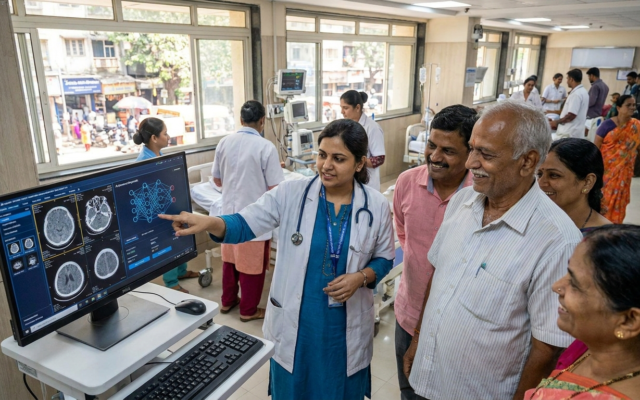
These AI systems are trained on vast datasets of medical images – X-rays, CT scans, MRIs – learning to identify anomalies with remarkable speed and accuracy. This allows radiologists to focus on complex cases and more nuanced interpretations, rather than spending hours on routine screenings. Think about the impact in a bustling metropolis like Mumbai, where patient volumes are immense. AI-driven image analysis can triage cases, flagging potential critical findings for immediate review. This not only speeds up the diagnosis but also reduces the burden on overburdened medical professionals, allowing them to dedicate more time to patient interaction and complex decision-making.
Beyond radiology, AI is making inroads into pathology, analyzing tissue samples and identifying cancerous cells with increased precision. In smaller towns and remote villages, where access to specialist pathologists might be limited, AI can serve as an invaluable first line of analysis, assisting local doctors and ensuring that no critical diagnosis is missed due to a lack of expertise. This democratization of diagnostic capabilities is a game-changer for healthcare accessibility across India.
Revolutionizing Remote Patient Care with AI-Powered Telemedicine
The reach of Indian healthcare is expanding rapidly, and artificial intelligence is a key enabler of this growth, particularly in the realm of telemedicine. For citizens living in Tier 2 and Tier 3 cities, or even in remote hamlets of the Northeast, accessing specialist medical advice has always been a challenge. Now, AI is bridging that gap with intelligent telemedicine platforms. These platforms are no longer just video call interfaces; they are sophisticated diagnostic aids.
When you connect with a doctor through an AI-enhanced telemedicine service, the system can discreetly gather and analyze your vital signs through your smartphone camera or connected wearable devices. It can process your reported symptoms, cross-referencing them with a vast medical knowledge base to suggest potential diagnoses or highlight critical questions the doctor should ask. This prepares the doctor for the consultation, making it more efficient and effective. For instance, an AI might detect subtle changes in your skin tone that could indicate an underlying medical condition, prompting the doctor to investigate further.
Furthermore, AI is personalizing treatment recommendations delivered remotely. Based on your medical history, lifestyle, and the current diagnostic information, the AI can suggest tailored medication regimens, dietary advice, or physiotherapy exercises. This level of personalized remote care was unimaginable just a few years ago. It empowers patients to manage their health more proactively, reducing the need for frequent physical visits to clinics, which is especially beneficial for individuals with chronic conditions like diabetes or hypertension. The AI can also monitor your adherence to treatment plans and flag any deviations to your doctor, ensuring continuous and proactive management of your well-being, even from afar.
Early Detection: AI’s Vigilance Against India’s Chronic Disease Burden
India grapples with a significant burden of non-communicable diseases (NCDs) such as diabetes, cardiovascular ailments, and certain cancers. Detecting these conditions in their nascent stages is paramount to improving patient outcomes and reducing the long-term strain on the healthcare system. This is where artificial intelligence is proving to be a formidable ally, offering an unprecedented level of vigilance in early disease detection.
Machine learning algorithms are being deployed to analyze vast quantities of patient data, looking for subtle patterns and risk factors that might elude human observation. For example, AI models can analyze retinal scans to detect early signs of diabetic retinopathy, a leading cause of blindness, often before a patient experiences any symptoms. Similarly, AI can sift through electrocardiogram (ECG) data to identify subtle arrhythmias or predict the risk of future cardiac events with remarkable accuracy. This proactive approach is crucial, especially in a country where many individuals only seek medical attention when their condition is advanced.
Consider the power of AI in identifying pre-diabetic individuals. By analyzing a combination of genetic predispositions, lifestyle factors captured through apps, and even subtle changes in blood glucose patterns, AI can predict an individual’s risk of developing Type 2 diabetes years in advance. This allows for targeted interventions, such as lifestyle modification programs or preventative medications, significantly reducing the incidence of full-blown diabetes. The surprising fact here is that some AI models are now proving more effective than standard screening methods in identifying individuals at high risk for certain cancers, by analyzing blood samples for minute molecular markers that are invisible to the human eye. This predictive power is transforming preventative healthcare in India.
Bridging the Skill Gap: The Evolving Role of Healthcare Professionals
The integration of AI into Indian healthcare is not about replacing doctors and nurses; it’s about augmenting their capabilities and, in doing so, transforming their roles. This technological leap necessitates a corresponding evolution in the skills of our healthcare workforce. For many medical professionals, the past few years have been a period of significant adaptation and learning. The traditional medical curriculum is now being supplemented with courses on data science, AI interpretation, and the ethical considerations of using AI in patient care.
Doctors are increasingly expected to understand how AI models arrive at their conclusions, to critically evaluate AI-generated insights, and to communicate these findings effectively to their patients. This requires a deeper understanding of statistics, machine learning principles, and the limitations of AI. Nurses, too, are becoming proficient in operating AI-assisted diagnostic equipment and using AI-powered patient monitoring systems. Their role is shifting towards managing the human-AI interface, ensuring that technology enhances, rather than detracts from, the empathetic aspect of care.
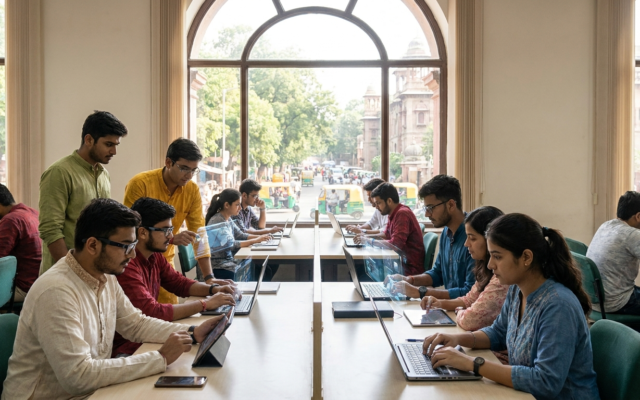
The demand for specialized roles is also on the rise. We’re seeing a growing need for clinical informaticians who can manage and interpret the vast amounts of data generated by AI systems, and for AI ethics officers who ensure responsible and equitable deployment of these technologies. Universities and medical institutions across India are responding by introducing new postgraduate programs and specialized training modules. For instance, the Indian Institute of Technology (IIT) campuses are collaborating with medical colleges to offer courses in biomedical data science. This proactive upskilling ensures that as AI becomes more sophisticated, our healthcare professionals are not just keeping pace, but are leading the charge in leveraging it for better patient outcomes.
The Data Backbone: Ensuring Privacy and Security in AI Healthcare
As AI systems become more integral to patient care in India, the underlying data infrastructure and its security are of paramount importance. The sheer volume of sensitive health information being processed requires robust protocols to ensure patient privacy and data integrity. We are witnessing a significant push towards developing and implementing strong data governance frameworks that align with global standards, while also respecting India’s unique legal and cultural landscape.
The Indian government, through bodies like the National Health Authority (NHA), has been actively working on establishing secure digital health ecosystems. Platforms like Ayushman Bharat Digital Mission (ABDM) are laying the groundwork for interoperable health records, which can then be securely accessed by authorized AI systems for diagnostic and treatment purposes. However, the challenge lies in ensuring that this data is not only accessible for beneficial AI applications but also protected from unauthorized access, breaches, and misuse.
This involves a multi-pronged approach. Encryption technologies are being employed at every stage of data transmission and storage. Access controls are becoming more stringent, ensuring that only authorized personnel and AI models can interact with specific datasets. Furthermore, there’s a growing emphasis on anonymization and pseudonymization techniques, where patient-identifying information is removed or masked before data is used for training AI models. This ensures that even if a dataset were somehow compromised, it would not reveal the identity of individual patients. A surprising, yet crucial, development is the increasing use of blockchain technology for securing health records, offering an immutable and transparent ledger of data access and modifications, thereby enhancing trust and accountability in the entire system.
The Ethical Compass: Navigating AI’s Moral Landscape in Indian Medicine
The rapid advancement of AI in Indian healthcare, while offering immense benefits, also brings with it a complex set of ethical considerations that we, as a society, must actively navigate. As these intelligent systems become more involved in decision-making, questions of accountability, bias, and equitable access come to the forefront. It is crucial that we approach these challenges with a clear ethical compass to ensure that AI serves humanity without compromising its values.
One of the most significant ethical concerns is the potential for bias in AI algorithms. If the data used to train these systems disproportionately represents certain demographics, the AI may inadvertently perpetuate or even amplify existing health disparities. For instance, an AI trained primarily on data from a specific region or socioeconomic group might not perform as accurately for patients from underrepresented communities in, say, rural Rajasthan. Therefore, rigorous testing and validation across diverse populations are essential to mitigate these biases.
Another critical area is accountability. When an AI system makes an incorrect diagnosis or a flawed treatment recommendation, who is responsible? Is it the developer of the AI, the hospital that deployed it, or the clinician who followed its advice? Establishing clear lines of responsibility is vital for building trust and ensuring patient safety. This is an ongoing debate, with legal scholars and medical ethicists in India working to define frameworks for AI-related medical malpractice.
> “The true promise of AI in healthcare lies not in its ability to replace human judgment, but in its capacity to amplify it, making healthcare more accessible, efficient, and personalized for every Indian.”
The equitable distribution of AI-powered healthcare is also a major ethical imperative. We must ensure that these advanced technologies do not widen the gap between the affluent and the underprivileged. Initiatives aimed at making AI-driven diagnostics and telemedicine affordable and accessible in remote areas are crucial. This requires a collaborative effort between government, private healthcare providers, and technology developers to create solutions that are both cutting-edge and inclusive. The aim is to harness AI’s power for the benefit of all, ensuring that no one is left behind in this technological revolution of healthcare.
Frequently Asked Questions
What is the biggest challenge in AI adoption for Indian healthcare?
The biggest challenge is the integration of AI with existing healthcare infrastructure and the need for extensive training of healthcare professionals to effectively use and interpret AI-driven insights. Ensuring data privacy and security also remains a paramount concern.
Are AI diagnostics more accurate than human doctors in India?
AI is proving highly accurate, often matching or exceeding human capabilities in specific diagnostic tasks, particularly in image analysis. However, AI is designed to augment, not replace, human doctors. The most accurate outcomes are achieved through a collaboration between AI and experienced clinicians.
How is AI helping to reduce healthcare costs in India?
By automating routine tasks, improving diagnostic speed and accuracy, and enabling more effective remote care, AI can lead to significant cost reductions. Early detection of diseases also prevents the need for expensive, late-stage treatments.
What are the ethical concerns surrounding AI in Indian healthcare?
Key ethical concerns include potential biases in AI algorithms that could lead to health disparities, establishing clear accountability for AI-related errors, and ensuring equitable access to AI-powered healthcare services for all segments of the population.
Will AI lead to job losses for doctors and nurses in India?
While AI will change the nature of some roles, it is more likely to create new specialized jobs and enhance the capabilities of existing professionals. The focus is on upskilling healthcare workers to collaborate effectively with AI, rather than being replaced by it.