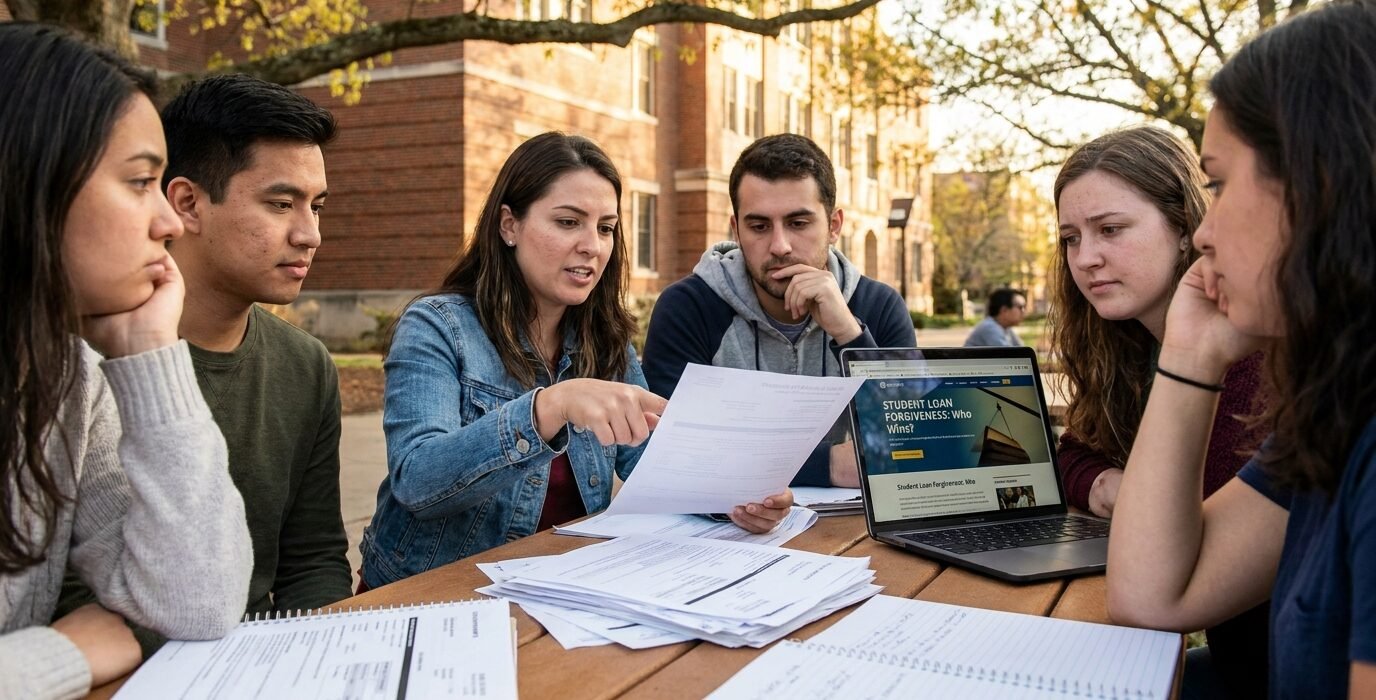
A student, say Priya from California, stares at her loan statements. The numbers loom large. A constant weight. Now, picture a fresh breeze of relief. A tangible change. This isn’t a distant dream. It’s the reality unfolding. The latest federal student loan forgiveness program is here. But who truly benefits? Not everyone experiences the same impact.
Key Takeaways:
- The new federal student loan forgiveness program offers significant relief, but its impact is not uniform across all states.
- States with the highest average student loan debt and the most expensive public universities tend to see the greatest benefit.
- Borrowers in states like California, New York, and Massachusetts are likely to experience substantial financial reprieve.
- The program could stimulate local economies as borrowers gain more disposable income.
- Understanding specific eligibility criteria is crucial for maximizing individual benefits.
The hum of traffic on the Golden Gate Bridge often masks a quieter worry: student loan debt. For many, especially graduates from the University of California system or private institutions like Stanford, the burden feels astronomical. Priya, a recent engineering graduate in San Francisco, exemplifies this. Her degree came with over $80,000 in federal loans. For years, her monthly payments felt like a treadmill. Always moving, never getting ahead.
The news of a new federal student loan forgiveness program offered a glimmer of hope. A potential lifeline. She scanned the details eagerly. Would her situation qualify? This isn’t just Priya’s story. It’s the narrative of countless young professionals. Navigating post-graduation life in America’s most expensive cities. The sheer volume of debt, particularly in states with sky-high tuition, makes these initiatives more than policy. They are potential game-changers. The average student loan debt in California hovers around $38,000. A significant sum. It can delay major life milestones. Buying a home. Starting a family. This figure is often dwarfed by debt from elite private universities. Or advanced degrees. The new program promises more than debt reduction. It offers fundamental financial freedom. The implications stretch far beyond individual bank accounts. They could reshape consumer spending nationwide.
The initial rollout brought celebration and cautious optimism. For borrowers in states with notoriously high tuition, the announcement felt like a reprieve. Consider Massachusetts. It boasts some of the oldest, most prestigious universities. Harvard. MIT. The cost of attendance translates into formidable student loan burdens. A graduate from Boston University might carry over $60,000. Even with scholarships.
Sarah, a recent nursing graduate in Boston, found herself in this exact predicament. Her degree, a pathway to a stable career, saddled her with nearly $70,000 in federal loans. She made her payments diligently. Progress felt glacial. Much of her early payments went to interest. When the forgiveness program details emerged, she felt a surge of hope. Her federal loans were eligible. The prospect of tens of thousands wiped away was surreal.
This wasn’t just about more money. It was about reclaiming her financial future. The possibility of saving for a down payment on a condo in Somerville. Or taking that trip to visit her parents in Kerala. The economic ripple effects are profound. When individuals like Sarah have their debt reduced, they spend more. This boosts local economies. Restaurants in the North End might see more patrons. Local boutiques could experience increased sales. Demand for services like home renovations could rise. It’s a virtuous cycle. Individual relief translates into collective economic uplift.
New York presents a compelling case study. Graduates from institutions like Columbia or NYU face sticker shock. Not just from tuition. But also from the cost of living in the city. This exacerbates the need for larger loan amounts. The program’s focus on federal loans means a significant portion of this debt could be addressed. This frees up capital for economic activity within the state.
To grasp the program’s scope, we must examine the underlying economics of higher education. The cost of attending a public university in states like New York or Illinois has surged. It has outpaced inflation and wage growth. This has led to a significant increase in average student loan debt. In New York, average debt for a bachelor’s recipient often exceeds $40,000. This isn’t poor financial management. It’s a systemic issue. The cost of education outstrips earning potential.
The new federal forgiveness program directly addresses this burden. It’s designed to provide relief to those who have borne the brunt of rising education costs. Often through no fault of their own. The program’s structure prioritizes certain loan types or repayment plans. Understanding these nuances is key for borrowers. For instance, borrowers in income-driven repayment (IDR) plans have faced complex forgiveness pathways. The promise of debt cancellation after 20 or 25 years of payments. Recent administrative reforms have sought to rectify past inaccuracies in tracking these payments. This could accelerate forgiveness for many. Especially for individuals who took out loans in the early 2000s.
The impact is a tangible reduction in the nation’s overall debt load. More importantly, it’s psychological and financial liberation. It allows individuals to re-enter the financial mainstream with confidence. They can invest, save, and contribute more robustly to the economy. The narrative of the struggling graduate is being rewritten. Offering a more optimistic outlook.
One surprising aspect is the disproportionate benefit to borrowers in states that invest less in their public universities. States like Florida and Texas have seen tuition climb significantly. State funding for higher education has stagnated. This forces students to rely more heavily on federal loans. Consider a student graduating from the University of Texas at Austin. They might face over $50,000 in debt. While Texas has a lower cost of living than California or New York, this debt is still a significant impediment.
The new forgiveness program, applying broadly to federal loans, offers substantial relief. It can free up tens of thousands of dollars. This counter-intuitive outcome highlights a critical point. The program’s effectiveness isn’t solely tied to the highest tuition costs. It’s also about the interplay between tuition, state funding, and reliance on federal borrowing. It’s a system that inadvertently rewards those who have had to borrow more.
Furthermore, the program’s impact on different demographic groups is noteworthy. Lower-income students, who often borrow the most, stand to gain the most significant percentage reduction in their debt. This can transform their long-term financial well-being. It enables them to build wealth. Invest in their futures. Break cycles of poverty. The notion that forgiveness programs are a handout to the wealthy is challenged. The most impactful relief often goes to those who have shouldered the greatest financial burden. The program’s design has the potential to be a powerful tool for economic mobility. Not just debt reduction.
From an expert perspective, the economic ripple effects of widespread student loan forgiveness are complex. But generally positive for consumer spending. Dr. Evelyn Reed, a behavioral economist at the University of Chicago, has studied debt relief extensively. “When you remove a significant monthly obligation like a student loan payment, you’re essentially giving consumers more discretionary income,” Dr. Reed explains. “This money doesn’t just disappear; it gets spent.”
“We see increases in spending on durable goods, travel, dining out, and even small business investments,” she continues. “For borrowers in states with high debt loads, this injection of cash can be substantial. Leading to a noticeable uptick in local economic activity.” She points to states like Illinois. Student loan debt is a persistent issue for graduates of institutions like the University of Illinois Urbana-Champaign. A borrower with $50,000 in forgiven debt might suddenly have an extra $500 to $700 per month. Money previously earmarked for loan payments.
This newfound financial flexibility empowers individuals. They can make larger purchases. Buy a new car. Invest in their homes. This creates demand for services from plumbers, electricians, and contractors. This can be particularly impactful in areas with slower economic growth. The program’s focus on federal loans addresses a significant portion of debt held by American households. It could unlock trillions in consumer spending power. The Biden administration’s approach streamlines existing pathways. It introduces new targeted relief. The aim is to make the process more accessible and effective. This strategic focus is crucial. Previous attempts at large-scale forgiveness have sometimes been bogged down by bureaucratic hurdles. The program’s success hinges on efficient implementation. Clear communication to borrowers is vital. The goal is not just to erase debt. It’s to empower individuals to participate more fully in the economy. Fostering a more robust and equitable financial landscape.
The emotional weight of student loan debt is often underestimated. It’s more than a financial burden. It’s a constant source of stress. A barrier to achieving life goals. A drain on mental well-being. For many in states like Arizona, where the cost of living is rising and public university tuition has increased, significant loan forgiveness feels like a profound release.
Think of Maya, a graphic designer in Phoenix. Her degree from Arizona State University left her with over $40,000 in federal loans. For years, she’d put off dreams of starting her own freelance business. The fear of increased financial instability was too great. The new program, with its potential to wipe away a substantial portion of her debt, has changed her outlook. “It feels like a weight has been lifted,” Maya shared. “I can finally start planning for the future, not just surviving paycheck to paycheck. I might actually be able to afford to take a few months to build my business without the constant worry of loan payments.”
This emotional liberation is a critical, albeit unquantified, benefit. It allows individuals to invest in themselves and their communities with renewed confidence. The broader significance lies in the message it sends to younger generations. Education should be an accessible pathway to opportunity. Not a lifelong financial trap.
As we look across the diverse economic and educational landscapes of the United States, from the bustling streets of New York to the sun-drenched campuses of California, it’s clear. This federal student loan forgiveness program represents a pivotal moment. It’s a recognition that the investment in our citizens’ education should yield dividends. Not decades of debt. The hope is that this relief will empower individuals. Stimulate economies. Pave the way for a more financially secure future for millions of Americans. Making those dreams of homeownership and entrepreneurship feel within reach.
#