The hum of electric vehicles is growing louder on Germany’s autobahns. It’s a symphony of a nation embracing a cleaner automotive future. But beneath the sleek exteriors and silent powertrains lies a critical component. This silent workhorse determines range, charging speed, and ultimately, the success of this electric revolution: the battery. Germany, long a titan of automotive engineering, isn’t just adopting EVs. It’s actively shaping their future, pouring resources and brilliant minds into developing the next generation of battery technology. This isn’t just about making cars go further. It’s about redefining energy storage, pushing the boundaries of what’s possible, and securing a sustainable tomorrow.
Key Takeaways:
- Germany is at the forefront of developing advanced EV battery technologies, including solid-state and silicon-anode batteries.
- Significant investment is flowing into research institutions and battery manufacturing facilities across the country.
- The focus extends beyond batteries to encompass integrated charging solutions and sustainable material sourcing.
- German expertise in automotive engineering is a key driver of innovation in this sector.
- The nation aims to reduce reliance on current battery supply chains and foster domestic innovation.
The Race for the Solid-State Frontier
Current lithium-ion battery technology, while a significant leap forward, has its limitations. We’ve all experienced that pang of range anxiety. The endless hunt for a charging station. The agonizing wait for a full charge. Germany’s automotive giants and leading research institutions are keenly aware of these pain points. They’re not waiting for incremental improvements. Instead, they are boldly venturing into the realm of solid-state batteries.
Imagine a battery that offers significantly higher energy density. This means more range for your EV. Picture a battery that’s inherently safer. This eliminates the risk of thermal runaway that has plagued some older lithium-ion designs. This is the promise of solid-state technology. Germany is investing heavily to make it a reality.
At the Fraunhofer Institute for Solid State Research (IFK) in Stuttgart, scientists are working tirelessly on developing novel solid electrolytes. These materials, unlike the liquid electrolytes in current batteries, are solid. They offer improved safety and the potential for higher energy storage.
Dr. Anja Müller, a lead researcher at IFK, explained the complexity and excitement surrounding this field. “We are exploring a multitude of ceramic and polymer-based solid electrolytes,” she shared during a recent lab tour. “The challenge lies not only in finding materials that conduct ions efficiently but also in ensuring their stability and manufacturability at scale. We are seeing remarkable progress, moving from lab curiosities to prototypes that are genuinely exciting.” This dedication to fundamental research, often supported by government grants and industry partnerships, forms the bedrock of Germany’s battery innovation. The sheer volume of patent applications in solid-state battery research originating from Germany is staggering. It’s a testament to the nation’s commitment to leading this technological shift.
The potential implications are immense. A solid-state battery could mean an EV with a range comparable to a gasoline car. This would be coupled with charging times that rival a quick coffee break. This would fundamentally alter the EV adoption landscape. It would make electric mobility accessible and convenient for a much wider segment of the population. Think of those long road trips through the Bavarian Alps. No longer punctuated by anxious charging stops, but by scenic vistas and effortless onward journeys. The quest for the solid-state frontier is not just a scientific endeavor. It’s a quest for a more practical, more enjoyable, and more sustainable electric future for drivers across Germany and beyond. The institute’s work is a prime example of how German engineering prowess is being redirected towards solving the critical challenges of electrification.
Silicon: The Next Frontier in Anode Technology
While solid-state batteries represent a significant leap, incremental but crucial advancements are also being made in refining existing lithium-ion chemistry. One of the most promising areas of development, with Germany playing a pivotal role, is the silicon anode. For decades, graphite has been the standard anode material in lithium-ion batteries. However, silicon boasts a theoretical capacity to hold ten times more lithium ions than graphite. This translates directly into higher energy density. Thus, longer range for electric vehicles. The problem historically has been silicon’s tendency to swell and degrade rapidly when absorbing and releasing lithium ions. This leads to a shortened battery lifespan.
German battery researchers, often collaborating with automotive manufacturers like Volkswagen and BMW, are tackling this “silicon swelling” problem head-on. Companies like Sila Nanotechnologies, though American-based, have strong ties and partnerships with German auto firms. They are looking to integrate their silicon-dominant anodes into future EV platforms. Within Germany itself, institutions like the Helmholtz-Zentrum Berlin (HZB) are conducting cutting-edge research into nano-structuring silicon particles. They are also developing advanced binders and electrolyte additives to mitigate the expansion issues.
Professor Klaus Schmidt, a materials scientist at HZB, explained the intricate dance of atoms involved. “We are designing silicon nanostructures that can accommodate the volume changes more gracefully,” he stated during a presentation at a recent battery technology conference in Munich. “It’s about creating a more robust architecture at the nanoscale, allowing the silicon to flex rather than fracture. This involves a deep understanding of electrochemical processes and material science at its most fundamental level.”
The implications of successful silicon anode integration are substantial. It means that even without a full transition to solid-state, current battery technology can be significantly enhanced. Imagine your current EV, already a familiar and comfortable part of your daily commute from Berlin to Potsdam, suddenly boasting an extra 100 kilometers of range on a single charge. This would alleviate range anxiety for many. It would make EV ownership a more practical proposition for those living in more rural areas of Germany. Furthermore, silicon is far more abundant than the cobalt often used in current battery cathodes. This potentially leads to more sustainable and ethically sourced battery components. This focus on enhancing existing, proven technologies while simultaneously pursuing revolutionary ones showcases Germany’s pragmatic and comprehensive approach to EV battery advancement. The subtle yet powerful impact of silicon anodes is a testament to the meticulous engineering that defines German industry.
Scaling Up: The Gigafactory Boom and Domestic Production
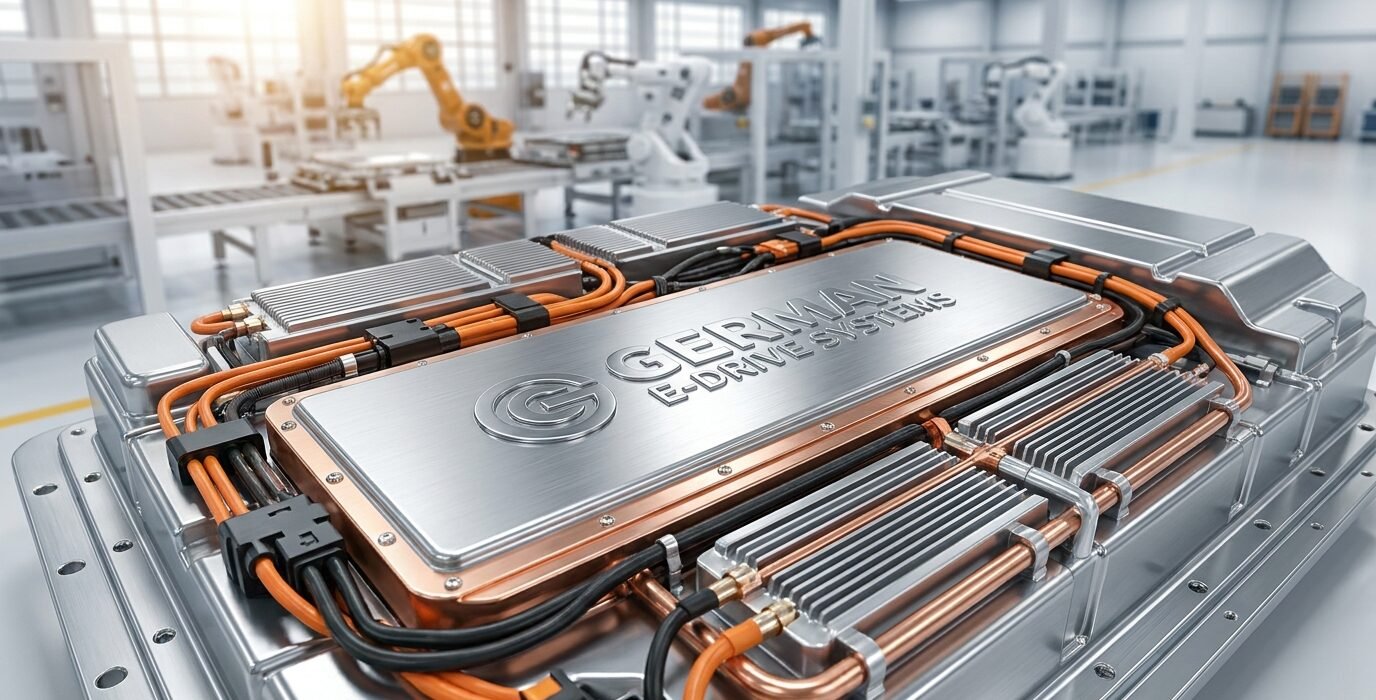
The theoretical breakthroughs in battery chemistry are only part of the equation. To truly electrify the German automotive industry and beyond, these innovations need to be manufactured at an unprecedented scale. This realization has spurred a significant gigafactory boom across Germany. These massive manufacturing facilities are the engine rooms of the EV revolution. They churn out millions of battery cells annually. This isn’t just about meeting demand. It’s a strategic move to reduce Germany’s reliance on current battery supply chains. These are heavily concentrated in Asia. Building domestic production capacity is seen as crucial for economic security and technological sovereignty.
One of the most prominent examples is the Northvolt Ett gigafactory in Skellefteå, Sweden. This is a significant partner for German automotive giants like BMW, demonstrating a pan-European effort. However, Germany itself is not far behind. Volkswagen’s own gigafactory in Salzgitter is a prime example of this commitment. This facility is designed to produce battery cells for millions of electric vehicles. It showcases the sheer scale of ambition. The construction and operation of these gigafactories are complex undertakings. They involve massive capital investment, the creation of thousands of skilled jobs, and the development of sophisticated supply chains for raw materials and manufacturing equipment. The challenges are immense. This ranges from securing consistent access to raw materials like lithium and nickel to training a workforce capable of operating highly automated production lines.
The strategic importance of these gigafactories extends beyond mere production numbers. They are designed to integrate advanced battery chemistries and manufacturing processes developed by German researchers. This ensures that the innovations born in laboratories are efficiently translated into products that can be deployed on our roads. For consumers, this means a more stable supply of EVs and batteries. This could lead to more predictable pricing and availability. It also signifies a shift in global manufacturing power. Germany aims to reclaim a leading role in a critical automotive component. The ripple effect of these investments is felt across the country. This ranges from the specialized engineering firms providing machinery to the logistics companies managing the flow of materials. The sheer scale of these projects is a testament to Germany’s unwavering commitment to leading the electric vehicle transition.
Beyond the Cell: Integrated Charging and Sustainable Sourcing
The conversation around EV batteries in Germany extends far beyond the individual battery cell itself. A truly holistic approach is being taken. This encompasses integrated charging solutions and a strong emphasis on sustainable material sourcing. It’s no good having a super-advanced battery if it takes hours to charge. Or if the materials used to build it have a significant negative environmental or ethical impact. German engineers and policymakers are acutely aware of this. They are pushing for solutions that address the entire EV ecosystem. This forward-thinking perspective is crucial for widespread EV adoption. It’s also vital for building a truly sustainable transportation system.
Consider the advancements in charging infrastructure. Companies like Siemens are developing smart charging solutions. These not only allow for rapid charging but also integrate with the power grid to optimize energy usage. Imagine your EV charging during off-peak hours when electricity is cheaper and cleaner. Or even feeding power back into the grid during peak demand. This intelligent integration is vital for managing the increased load on the electricity network as more EVs come online. Furthermore, research into faster charging technologies, such as higher voltage systems and advanced thermal management, is ongoing. The aim is to reduce charging times to mere minutes. This isn’t just about convenience. It’s about making EV ownership as seamless and practical as filling up a gasoline car. The goal is to make charging an afterthought, not a barrier.
Equally critical is the focus on sustainable sourcing. The ethical implications and environmental footprint of mining raw materials like lithium, cobalt, and nickel have been widely discussed. Germany is actively investing in research and development for battery recycling technologies. The aim is to create a closed-loop system. Valuable materials can be recovered from end-of-life batteries and reused in new ones. Initiatives like the “Circular Economy for Batteries” project, led by various research institutions and industry partners, are exploring innovative methods for material recovery. Moreover, there’s a growing interest in exploring alternative battery chemistries. These rely on more abundant and ethically sourced materials. This comprehensive view, encompassing the entire lifecycle of the battery from raw material extraction to recycling, demonstrates Germany’s commitment to not just electric mobility, but genuinely sustainable mobility. The nation’s efforts here are a blueprint for how other countries can approach the complex challenges of EV battery development.
The Human Element: Research, Engineering, and Everyday Impact
At the heart of Germany’s leading role in developing next-generation EV battery technology are the people: the brilliant researchers, the meticulous engineers, and the visionary leaders who are driving this transformation. It’s easy to get lost in the technical jargon of solid electrolytes and silicon anodes. But it’s crucial to remember the human element. The dedication and the sheer ingenuity that underpins these advancements. The story of German battery innovation is woven into the fabric of its strong scientific tradition. It’s also part of its world-renowned automotive heritage. From the bustling innovation hubs in Munich to the hallowed research halls in Stuttgart, a palpable sense of purpose permeates the air.
One individual embodying this spirit is Dr. Lena Schneider, a materials scientist at the Technical University of Munich (TUM). Her team is focused on developing more robust and efficient battery management systems (BMS). The BMS is the “brain” of the battery. It constantly monitors temperature, voltage, and current to ensure optimal performance and safety. “A great battery chemistry is only as good as its management system,” Dr. Schneider explained during a recent interview. “We’re developing AI-driven algorithms that can predict battery degradation with incredible accuracy. This allows us to extend lifespan and optimize charging cycles in real-time. It’s about making the battery smarter, more intuitive, and ultimately, more reliable for the driver.” Her work, like that of countless others, is directly contributing to the everyday experience of EV owners.
The impact of this research extends beyond the laboratory. It translates into tangible benefits for consumers. Imagine a family in Hamburg, planning a weekend getaway to the coast. The confidence that their electric vehicle, equipped with the latest German battery technology, will reliably get them there and back, with minimal charging stops, is a direct result of this relentless pursuit of innovation. It’s about freedom from range anxiety. It’s the peace of mind that comes with knowing your car is powered by cutting-edge, safe, and increasingly sustainable technology. The ongoing investment in training the next generation of battery engineers through specialized university programs and apprenticeships ensures that this expertise will continue to flourish. This isn’t just about building better batteries. It’s about building a better future for mobility, powered by German ingenuity and a deep understanding of what drivers truly need. The dedication seen in these institutions echoes the meticulous craftsmanship Germany is known for worldwide.
The Road Ahead: Challenges and Opportunities
The path to a fully electrified automotive future, powered by revolutionary battery technology, is not without its hurdles. Germany’s ambition to lead in this critical sector is commendable. But significant challenges remain alongside immense opportunities. The global competition for battery technology is fierce. Other nations are also investing heavily in research and manufacturing. Securing a stable and ethical supply of raw materials, particularly lithium and cobalt, continues to be a complex geopolitical and logistical puzzle. Furthermore, the sheer cost of developing and deploying these advanced technologies at scale presents a substantial financial undertaking. This is for both industry and government.
Despite these challenges, the opportunities are arguably even greater. Germany has a unique advantage in its established automotive industry. It also has a strong research ecosystem and its commitment to high-quality engineering. The development of next-generation batteries will not only solidify Germany’s position as a leader in automotive manufacturing. It will also create new high-skilled jobs. It will foster innovation across related sectors, such as materials science, software development, and renewable energy integration. The potential for export of German battery technology and manufacturing expertise is enormous. This positions the nation as a key player in the global transition to sustainable transportation.
One surprising fact is that while Germany is pushing hard for domestic production, the average lifespan of an EV battery is still often underestimated by consumers. Many batteries are designed to last for well over 100,000 miles. With advancements in battery management systems and cell technology, this is only set to increase. This longevity, coupled with the progress in recycling, is crucial for dispelling concerns about the environmental impact of battery disposal. The ongoing push for innovation in areas like solid-state batteries, while still some years away from mass adoption, promises to extend these lifespans even further. It will also offer enhanced safety features. The future of electric vehicles is intrinsically linked to the evolution of battery technology. Germany is strategically positioning itself at the very forefront of this critical development. The ongoing innovation here isn’t just about making cars. It’s about engineering a sustainable planet.