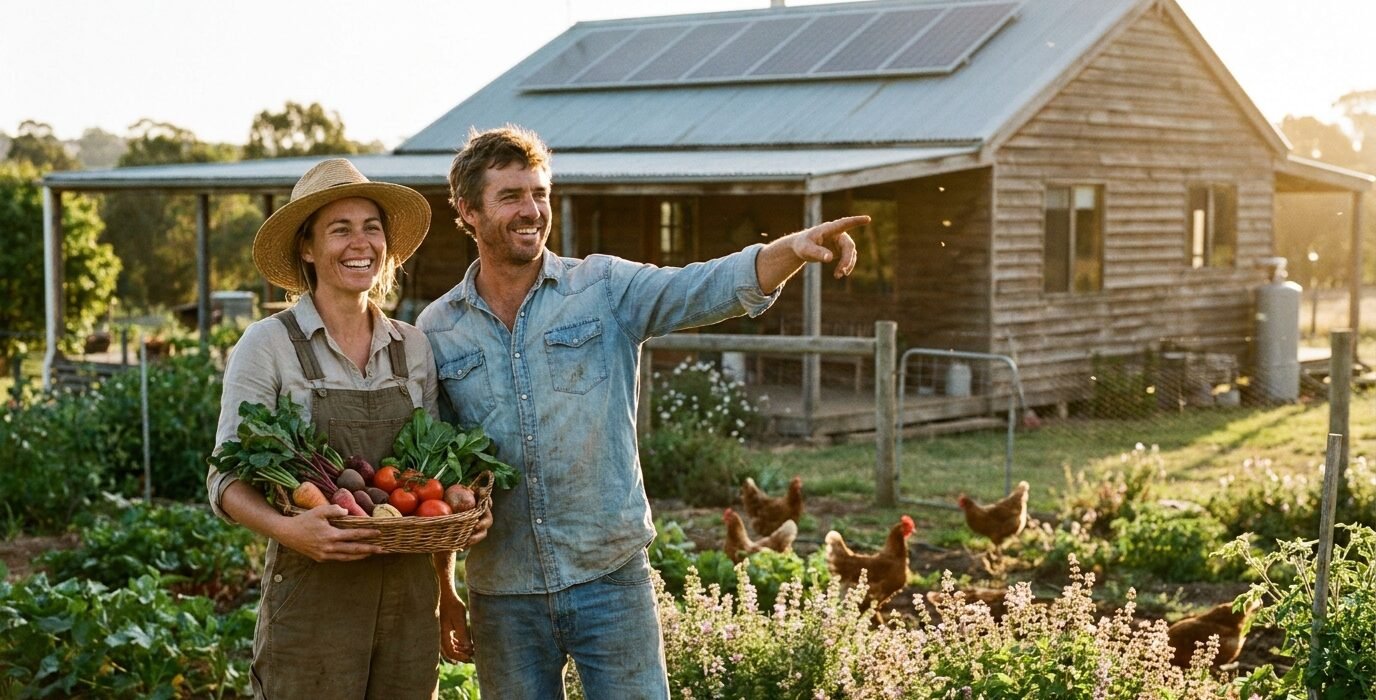
The dust swirled around Sarah and Ben’s battered ute. It was a familiar dance on the unsealed track. This track led to their slice of Queensland paradise. Just a few years ago, their biggest daily worry was the morning commute into Brisbane. Now, their world revolved around the sun and the rain. It also revolved around the quiet hum of their solar panels.
This is their story. Two city dwellers who traded concrete for compost. They learned profound lessons building a life off the grid.
Key Takeaways:
Advertisement300×250 / native
- Discover the initial motivations driving Sarah and Ben’s radical lifestyle change.
- Learn about the specific challenges of establishing an off-grid power and water system in rural Queensland.
- Understand the emotional and psychological shifts involved in embracing self-sufficiency.
- Gain insights into the unexpected joys and community connections found in a remote setting.
- Explore the practicalities and realistic expectations of creating a sustainable farm.
The Seed of Change is Planted
The decision didn’t happen overnight. For Sarah, a graphic designer, and Ben, a software engineer, the relentless pace of city life in Brisbane had begun to feel hollow. Long hours at their desks were draining. The constant noise was a burden. The disconnect from anything “real” gnawed at them.
They’d spend weekends dreaming. They scrolled through images of rolling hills. Sustainable living blogs offered an escape. This was a stark contrast to their cramped apartment. “We just felt like we were living someone else’s life,” Sarah recalls. Her voice was soft with reflection. “We wanted our days to have a purpose that went beyond deadlines and emails.”
Ben, ever the pragmatist, started researching. He devoured books on permaculture, solar power, and water harvesting. He crunched numbers. He calculated the viability of their dream against their savings. “It wasn’t about escaping,” he clarifies. His brow furrowed in thought. “It was about building something that mattered to us. Something tangible.”
They found themselves drawn to regional Queensland. Its vastness offered space. It promised a sense of possibility. The idea of owning land, of growing their own food, and of being truly independent began to take root. It was a daunting prospect. A leap into the unknown. But the seed of change had been firmly planted. It was watered by a shared yearning for a different kind of existence. They knew it would be hard work. But the allure of a life aligned with nature was too strong to ignore. The thought of waking up to the sounds of birds instead of traffic was a powerful motivator.
The Great Escape to the Bush
Their search eventually led them to a 50-acre property. It was near the small town of Miriam Vale. This town is nestled between Gladstone and Bundaberg. It was rough, undeveloped land. Mostly cleared pasture. A few stubborn eucalyptus trees dotted the landscape. The previous owners had used it for occasional grazing. But it was a blank canvas. A formidable challenge that excited Sarah and Ben.
They sold their Brisbane apartment. They pared down their possessions to the essentials. With a mix of trepidation and exhilaration, they moved. They moved into a small, temporary shed on the land. The reality of their chosen path began to sink in immediately. There was no mains power. No town water. And definitely no NBN.
Their first few weeks were a steep learning curve. A crash course in bush survival. “The silence was the first thing that hit us,” Sarah laughs. She recalled the initial shock. “And then the sheer amount of work. We quickly realised our city skills weren’t going to cut it out here.”
They spent their days clearing, planning, and learning. Ben, with his engineering background, tackled the complex task. He designed their off-grid power system. This involved selecting the right solar panels, batteries, and inverter. He ensured they could meet their needs sustainably. Sarah, meanwhile, focused on the practicalities of water. She dug trenches for rainwater tanks. She researched greywater systems.
They invested in a sturdy generator for backup. A necessity in those early days. They acknowledged that complete reliance on solar wasn’t always feasible. The local community, though small, proved to be a lifeline. Neighbours like old Mick, a retired farmer from further down the road, would often drop by. He offered advice and a helping hand. “He showed us how to properly check the bore water and told us which native plants would thrive,” Ben remembers gratefully. “We wouldn’t have made it without that kind of support.” They were no longer just Sarah and Ben from Brisbane. They were the new folks out at the old Miller place. The community embraced them.
Powering Their Dreams: The Solar Symphony
The heart of their off-grid existence is undoubtedly their solar power system. It’s more than just panels on a roof. It’s a carefully orchestrated symphony of technology and natural energy. Ben’s meticulous planning paid off. They installed 20 high-efficiency solar panels on the roof of their newly constructed house. They were angled perfectly to capture the Queensland sun.
This system feeds into a bank of deep-cycle batteries. These batteries store enough energy to see them through cloudy days and evenings. “We calculated our daily energy consumption down to the kilowatt,” Ben explains. “It’s about understanding your needs and not overspending energy. Every watt counts.”
The initial outlay was significant. A substantial chunk of their savings. But the long-term vision of zero electricity bills and a reduced carbon footprint was the driving force. They learned to be mindful of their energy usage. Not out of necessity due to a lack of power. But out of respect for the system and the environment.
This meant unplugging appliances when not in use. Using energy-efficient LED lighting. Scheduling energy-intensive tasks, like running the washing machine or the water pump, for peak sunlight hours. A surprising revelation for them was the sheer amount of energy common household items consume. Their old fridge, for instance, was a power hog. Upgrading to a highly efficient, DC-powered model made a noticeable difference.
They also installed a sophisticated monitoring system. This displays their power generation and consumption in real-time. It turned energy management into an almost addictive game. This constant feedback loop reinforces their awareness. It encourages smarter usage. The hum of the inverter became a comforting sound. A constant reminder of their self-sufficiency. A quiet testament to their commitment. The system generates an average of 35 kWh per day. More than enough for their needs. This is a significant achievement in a region that can experience extreme weather.
Water is Life: Harvesting and Conserving
Water is the lifeblood of any farm. For Sarah and Ben, it’s a precious commodity. They harvest and guard it with vigilance. Their property, while not arid, receives variable rainfall. This makes a robust water management strategy paramount. They’ve installed a network of rainwater tanks. They are strategically placed to capture runoff from their house roof and several smaller sheds.
These tanks have a combined capacity of over 100,000 litres. A staggering amount. It provides them with water for drinking, cooking, and general household use. “You become acutely aware of every drop,” Sarah says. Her gaze sweeps across the landscape. “You don’t just turn on the tap without thinking.”
Their commitment extends beyond simple collection. They’ve implemented a sophisticated filtration and purification system. This ensures their harvested rainwater is safe and potable. This involves a multi-stage process. It includes sediment filters, charcoal filters, and UV sterilization. They also practice rigorous water conservation. Low-flow showerheads and dual-flush toilets are standard. A greywater system recycles water from their washing machine and sinks for irrigation.
This greywater system, a clever piece of engineering, significantly reduces their reliance on fresh water. It supplies their burgeoning vegetable garden and fruit trees. Ben estimates they reclaim nearly 40% of their household water through this method. Beyond the practicalities, there’s an emotional connection to the water. They track the rainfall religiously. They celebrate every significant shower as a victory. The sound of water filling the tanks is a deeply satisfying reminder of their self-reliance. In a region that can experience prolonged dry spells, this careful management is not just about convenience. It’s about security and sustainability. They’ve learned that in this environment, water is not an endless resource. It is a gift to be nurtured. The ingenuity of their system ensures they can weather the harshest of Queensland’s dry seasons.
The Rhythms of the Land: Farming and Community
Life off-grid isn’t just about technology. It’s about reconnecting with the earth and its rhythms. Sarah and Ben have transformed a portion of their land into a vibrant permaculture garden. It’s a testament to their dedication and willingness to learn. They started small, with raised beds for vegetables. But their ambition grew as their knowledge did.
They’ve since planted a variety of fruit trees. These include mangoes, avocados, and citrus. They are experimenting with raising chickens for eggs. They also have a few sheep for wool and meat. “It’s incredibly rewarding to eat food you’ve grown yourself,” Sarah beams. “There’s a connection to your meals that you just don’t get from the supermarket.”
Their farming practices are guided by permaculture principles. They focus on sustainability. They mimic natural ecosystems. This means composting all organic waste. Using natural pest control methods. Building healthy soil. They’ve embraced the challenges. They’ve learned to adapt to the Queensland climate. Its heat, its humidity, and the occasional cyclones all present unique hurdles.
A surprising discovery for them was the sheer abundance of edible native plants. These plants thrive in the surrounding bushland. This knowledge was passed down from neighbours like Mick. They’ve also found a deep sense of community in their rural setting. While they initially worried about isolation, they’ve discovered a warmth and interconnectedness. They never experienced this in the city.
They regularly participate in local events. They share produce with neighbours. They have found a supportive network of like-minded individuals embracing similar lifestyles. Their farm is not just a place to live. It’s a hub of activity. A place where they are actively building relationships. They are contributing to the local fabric. The annual Miriam Vale Show, for instance, has become a highlight. It’s a chance to showcase their produce and connect with the wider community. They’ve learned that self-sufficiency doesn’t mean isolation. It often means a richer, more interconnected existence. Their efforts in reviving the old farm land have also become a point of pride for the local community.
Beyond the Horizon: Challenges and the Future
The journey hasn’t been without its hurdles. There have been moments of doubt. Particularly during extended dry spells. Water levels dropped precariously low. A storm once damaged their fencing. This required immediate, costly repairs. The physical labor is demanding. It’s often more so than their previous office jobs.
There are also the inevitable challenges of living remotely. From accessing specialized services to the occasional feeling of being cut off from the wider world. “You have to be resilient,” Ben admits. “Things go wrong, and you just have to roll up your sleeves and fix them. There’s no calling a repairman to come out the next day.”
However, the rewards far outweigh the difficulties. The sense of accomplishment is immense. The connection to nature is profound. The peace that comes from living a life aligned with their values is immeasurable. They’ve learned to be resourceful, adaptable, and incredibly self-reliant. Their initial goal of sustainability has evolved into a broader philosophy of mindful living.
They are constantly experimenting, learning, and refining their practices. Their future plans include expanding their fruit orchards. Establishing a small-scale market garden to sell at local farmers’ markets. They might even host workshops to share their knowledge. They envision their farm not just as a home. It is a living demonstration of what’s possible when you choose a different path. Sarah and Ben’s story is a powerful reminder. True wealth isn’t always measured in dollars. It is measured in the quality of life, the connection to the earth, and the peace of mind. This peace comes from building a life on your own terms. Their off-grid dream is a vibrant, evolving reality. A testament to their courage and their commitment. Their success serves as an inspiration to others seeking a more meaningful connection to their environment and way of life.