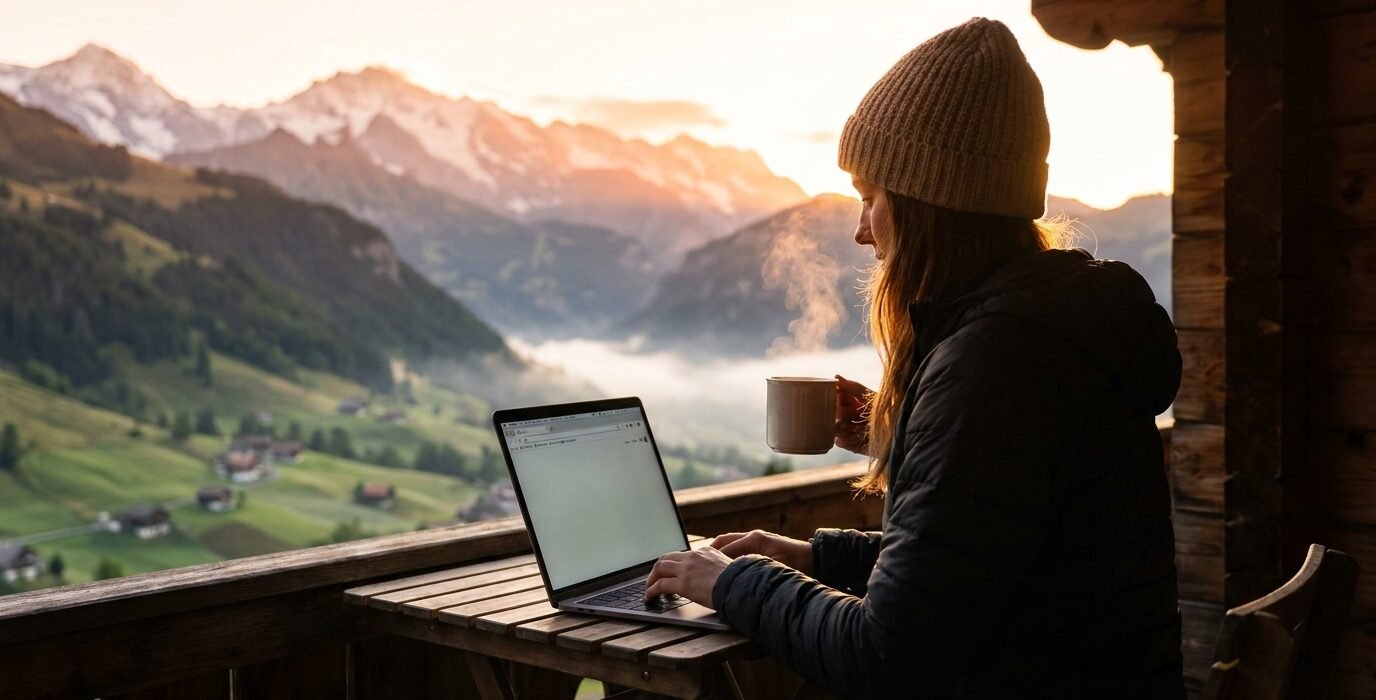
The crisp mountain air of Grindelwald still surprises Anna whenever she steps onto her balcony. Just two years ago, she was navigating the smoggy streets of London. Her career felt like a treadmill. Now, her morning commute involves a brisk walk past snow-capped peaks. Her office? A sun-drenched attic room overlooking the Eiger. Anna isn’t a ski instructor or a wealthy retiree. She’s a freelance graphic designer. She found her alpine dream thanks to Switzerland’s burgeoning digital nomad visa program. This story is unfolding in pockets across this stunning country. It’s attracting a new wave of talent to its charming valleys and historic towns.
Key Takeaways:
- Switzerland’s digital nomad visa is opening doors for remote workers to experience life in its picturesque alpine towns.
- The visa offers a unique blend of high quality of life, stunning natural beauty, and a robust infrastructure for remote work.
- Successful applicants often highlight the seamless integration into local communities and the significant boost to their work-life balance.
- Beyond the scenic views, the program underscores Switzerland’s commitment to attracting global expertise and fostering innovation.
- Navigating the application process requires careful preparation, but the rewards are substantial for those seeking a change of scenery and pace.
From City Hustle to Chalet Calm
Anna’s journey began not with a desire for a new job, but for a new life. The relentless pace of London, coupled with a growing sense of professional stagnation, had her yearning for something more. “I remember staring out my office window, a grey rectangle of concrete, and thinking, ‘Is this it?'” she recalls. Her voice still carries a trace of that past frustration. She’d always been drawn to the idea of living somewhere that offered not just work, but a profound sense of well-being. Switzerland, with its iconic landscapes and reputation for efficiency, had always held a certain allure. However, the traditional work permit barriers seemed insurmountable for a freelancer. That all changed when she stumbled upon an article detailing Switzerland’s initiative to attract digital nomads.
The program, still in its nascent stages compared to some European counterparts, was specifically designed to draw skilled professionals. These individuals could work remotely for companies outside of Switzerland. It wasn’t a simple tourist visa extension. It was a pathway to residency, albeit temporary, for those whose work wasn’t tied to the Swiss economy directly. For Anna, a designer whose clients spanned continents, this was a revelation. The application process, while meticulous, felt achievable. She gathered her proof of freelance income, her client contracts, and a compelling statement of purpose. This detailed not just her professional intent but her desire to immerse herself in Swiss culture. Her chosen canton, Bern, known for its accessible nature and charming villages, felt like the perfect fit. The thought of waking up to the sound of cowbells instead of sirens was an irresistible prospect. This wasn’t just about a change of address. It was about a fundamental shift in her daily existence. It was a chance to breathe deeply and build a life that felt truly her own. The initial visa granted was for a year. It came with the possibility of extension, a carefully calibrated approach. This allowed both the applicant and the canton to assess the fit.
The Lucerne Lure: A New Beginning for Tech Innovators
When Mark, a software engineer from Silicon Valley, first heard about Switzerland’s digital nomad visa, he was skeptical. His initial thought was that Switzerland was a place for banking and watches. Not for burgeoning tech talent seeking a vibrant, collaborative environment. He’d spent years in the cut-throat world of app development. His days were a blur of code, deadlines, and endless meetings. He loved his work, but the relentless pressure had taken its toll. He craved a different kind of inspiration. He wanted a slower pace that could foster creativity rather than stifle it. The idea of working from a place with unparalleled natural beauty, yet still possessing cutting-edge digital infrastructure, seemed almost too good to be true.
He decided to explore the possibility, focusing his attention on Lucerne. This lakeside city, with its medieval architecture and breathtaking mountain backdrop, offered a compelling contrast to the sprawling urban landscape he was accustomed to. He envisioned himself working from a co-working space with panoramic views of Lake Lucerne. His afternoons would be filled with invigorating hikes instead of soul-crushing commutes. The application required him to demonstrate substantial financial means. He had to prove he could support himself without working for a Swiss employer. He also needed proof of ongoing remote work for non-Swiss clients. Mark meticulously documented his freelance projects. He showcased his expertise in artificial intelligence and machine learning, fields Switzerland was actively seeking to bolster. He also had to secure health insurance valid in Switzerland, a standard but crucial requirement. The process, he admitted, was more involved than he’d anticipated. He spent weeks compiling documents, translating them where necessary, and ensuring every detail was perfect. But the thought of trading his cramped apartment for a stylish lakeside studio, with the Alps as his constant companion, fueled his determination. He saw it not just as a visa, but as an investment in his well-being and his creative future.
Beyond the Postcard: Practicalities of Alpine Living
The allure of Switzerland is undeniable, painted in the vibrant hues of storybook villages and majestic peaks. But what lies beneath the postcard perfection for a digital nomad? For many, the reality of settling into a Swiss canton involves a learning curve. This is particularly true when it comes to integrating into the local fabric and managing daily life. Sarah, a freelance writer who chose the charming canton of Vaud, found that while the scenery was spectacular, the social landscape required a more active approach. She quickly learned that while Swiss people are polite and efficient, their social circles can be somewhat insular, especially outside the major cities like Lausanne.
“I expected to make friends easily, perhaps at a local café or a community event,” Sarah shared. “But it took a conscious effort. I had to actively join local hiking groups and language exchange meetups to break the ice.” She also discovered that the cost of living, while anticipated, still presented challenges. A simple grocery shop could be significantly more expensive than what she was used to. Finding affordable, well-located accommodation required patience and persistence. She learned to embrace the Swiss appreciation for punctuality. She realized that arriving even five minutes late for a social gathering could be perceived as disrespectful. Furthermore, understanding the nuances of Swiss German, or French, depending on the region, became an important part of her integration. Even with fluent English, making an effort to speak the local language opened doors and fostered a deeper connection. One surprising revelation for her was the deeply ingrained sense of community responsibility. This ranged from meticulously sorting recycling to participating in local festivals like the Fête des Vignerons in Vevey, a tradition that dates back centuries. These weren’t just quaint customs. They were the threads that held the community together. By participating, she felt a growing sense of belonging.
The Unexpected Draw: Innovation Hubs in Quiet Towns
When people imagine Switzerland, they often picture serene landscapes and quiet, traditional towns. What many overlook is the nation’s sophisticated approach to fostering innovation. This is true even in its more remote locales. For digital nomads, this presents an unexpected advantage. Contrary to the stereotype of a country solely focused on finance and tourism, Switzerland actively cultivates sectors like biotechnology, artificial intelligence, and renewable energy. This commitment extends to creating environments conducive to knowledge sharing and collaboration. This is true even for those not directly employed by Swiss companies.
Consider the canton of Graubünden, a vast and mountainous region often associated with winter sports and hiking. However, cities like Chur and Davos are increasingly becoming hubs for research and development. They attract international conferences and foster a spirit of technological advancement. A digital nomad working in a niche tech field might find themselves surprisingly well-connected. For instance, a remote AI consultant could discover local research institutions or start-ups working on similar challenges. This could lead to unexpected collaborations or valuable networking opportunities. It’s a counter-intuitive fact: these seemingly sleepy towns often possess a cutting-edge intellectual energy. The Swiss government, through various cantonal and federal initiatives, actively supports innovation. It offers grants and incentives that create a fertile ground for new ideas. This creates a unique ecosystem where the tranquility of the Alps meets the dynamism of global innovation. You might be sipping coffee on a terrace overlooking a glacier. Simultaneously, you could be engaging in a discussion about quantum computing with a local researcher met through a serendipitous networking event. This blend of natural serenity and intellectual vigor is a powerful draw for many. It offers a work environment that is both inspiring and grounding.
Expert Insights: Navigating the Swiss Dream
Securing a digital nomad visa for Switzerland isn’t just about packing your bags and heading for the mountains. It requires strategic planning and a clear understanding of the requirements. We spoke with Dr. Lena Fischer, an immigration consultant based in Zurich. She specializes in assisting skilled professionals looking to relocate to Switzerland. “The key is to be thoroughly prepared and to understand that each canton has a degree of autonomy in its application process,” she explained. “While the federal guidelines are clear, local interpretations and priorities can influence outcomes.”
Dr. Fischer emphasized that demonstrating financial self-sufficiency is paramount. “Applicants need to provide robust proof of consistent income from sources outside of Switzerland. This means clear bank statements, audited financial reports if self-employed, and detailed contracts with non-Swiss clients.” She also highlighted the importance of having a solid understanding of the chosen canton’s economic profile. She stressed knowing how your skills might indirectly benefit the region, even if you’re not directly employed there. “It’s about showing that you will be a positive addition to the community, not just someone passing through.” She also advised applicants to be realistic about the initial visa period. “The first visa is typically granted for one year. It’s an opportunity to prove your integration and your adherence to Swiss regulations. Successful renewals depend on maintaining these standards.” A surprising piece of advice she offered was to actively engage with the local community before arriving. “Attend online events, connect with expat groups, and research local cultural norms. This proactive approach demonstrates genuine commitment and can significantly smooth your transition.” For those looking to make Switzerland their long-term base, she added, understanding the pathways to longer-term residency and eventual citizenship is a crucial part of the long-term planning.
The Enduring Echo: More Than Just a Beautiful View
The digital nomad visa for Switzerland is more than just an administrative process. It represents a profound shift in how we perceive work and life. It also shows how nations like Switzerland are adapting to a globalized workforce. For individuals like Anna, Mark, and Sarah, it has been a catalyst for transformative change. It has offered not just a change of scenery but a recalibration of their priorities. The allure of the Alps is undeniable. But the deeper impact of this program lies in its ability to foster a more balanced, inspired, and integrated way of living.
It’s about the quiet satisfaction of a productive workday. This is followed by an evening stroll through a medieval town square. The crisp air fills your lungs. It’s about the unexpected connections made at a local market. It’s about the shared appreciation for the simple things. This program taps into a universal desire for a life that harmonizes professional ambition with personal well-being. This desire resonates deeply in our increasingly connected yet often isolating world. Switzerland, by opening its doors to these global talents, is not just attracting skilled workers. It’s enriching its own cultural landscape and fostering a unique blend of tradition and innovation. The echo of this initiative will undoubtedly reverberate. It will shape not only the lives of those who choose to answer the call of the mountains. It will also shape the evolving narrative of what it means to live and work in the 21st century. The journey is individual. But the collective impact is shaping a new chapter for these picturesque Swiss locales.