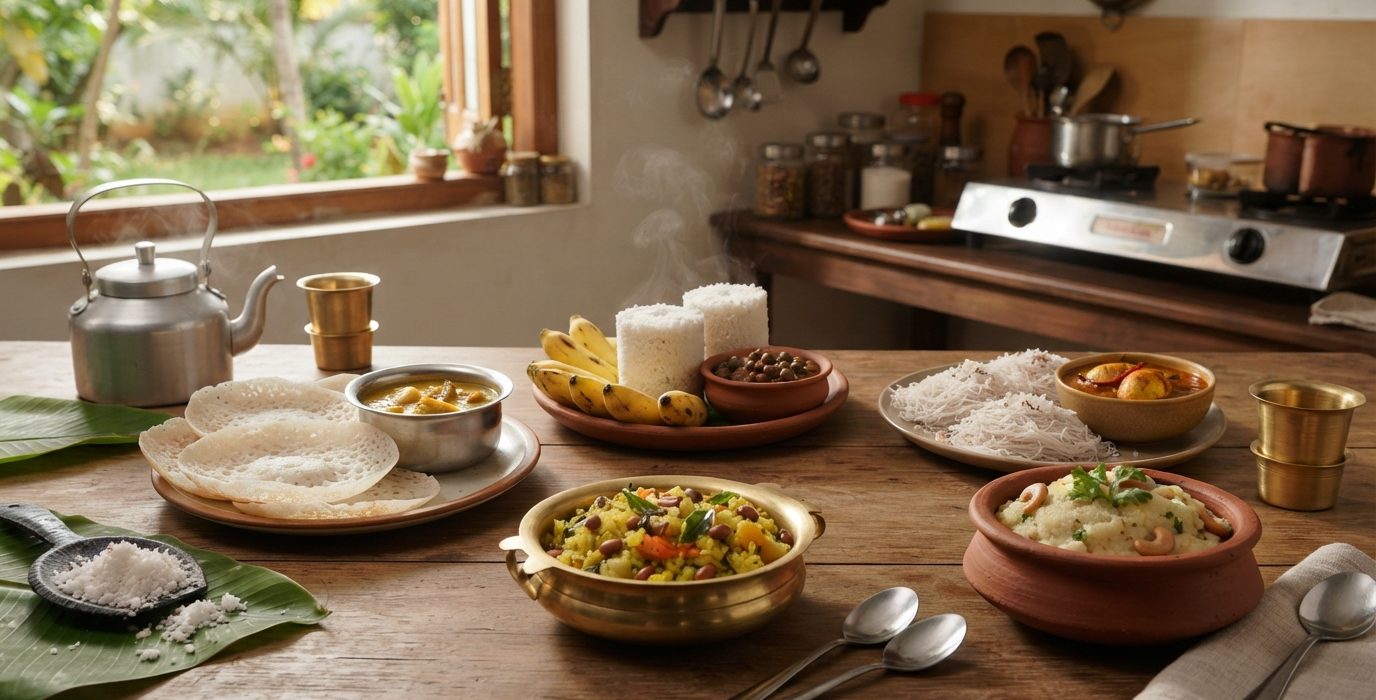
The gentle scent of toasted coconut and curry leaves defines the morning in a Malayali kitchen, offering a nutritious start that sustains you through the busiest of days. Mastering these five traditional Kerala breakfast staples allows you to bring the authentic flavors of the Malabar Coast into your home with minimal fuss.
Key Takeaways
- Puttu and Kadala curry provide a perfectly balanced combination of complex carbohydrates and plant-based protein.
- Traditional Appam batter relies on natural fermentation, which enhances gut health through beneficial probiotics.
- Kerala breakfast staples are naturally gluten-free and dairy-free, catering to diverse dietary requirements.
- Simple techniques like using high-quality raw rice and fresh-grated coconut significantly improve the texture of your dishes.
The Art of the Perfect Puttu
Puttu is the undisputed king of Kerala breakfasts, consisting of steamed cylinders of ground rice layered with fresh coconut. Achieving the right consistency is a matter of hydration; your rice flour should feel like damp sand, holding its shape when squeezed but crumbling easily upon touch. If your mixture is too dry, the result will be crumbly; too wet, and it becomes a dense, doughy lump.
To steam your puttu, you will need a traditional cylindrical steamer known as a puttu kutti. Most modern households in Kochi or Thiruvananthapuram now use stainless steel versions that fit directly onto a pressure cooker base. Always ensure the water is boiling vigorously before placing the filled cylinder on top to ensure even steam penetration.
Pro-tip: Use roasted rice flour for a nuttier flavor profile, or stick to raw “puttu podi” for the classic white aesthetic. Once steamed for about six to eight minutes, turn it out onto a plate and serve immediately with a spicy black chickpea curry, known locally as Kadala curry. The contrast between the mild, fluffy rice and the robust, spice-heavy gravy is what makes this meal a global favorite.
Appam and Stew: A Harmonious Pairing
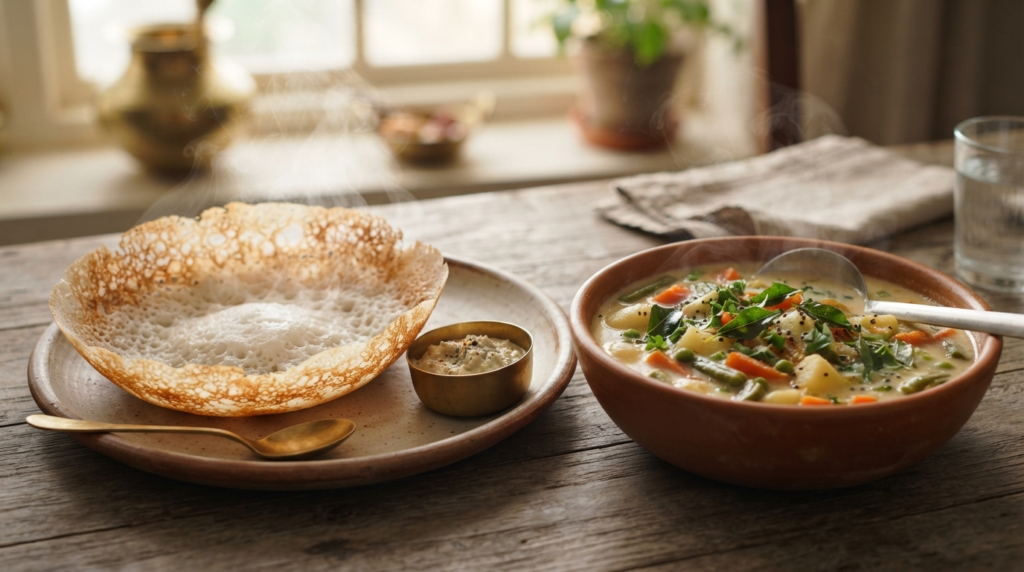
Appams are delicate, bowl-shaped pancakes made from fermented rice and coconut milk batter, featuring a soft, spongy center and paper-thin, crispy edges. The secret to a perfect lacy edge is the presence of “toddy” or a small amount of yeast in the batter, which creates the carbon dioxide bubbles necessary for the signature texture. According to the Food Safety and Standards Authority of India, traditional fermentation not only leavens the bread but also increases the bioavailability of nutrients in the rice.
The ideal companion for an Appam is a mild, fragrant vegetable or chicken stew. Unlike many other Indian gravies, a Kerala stew relies on fresh coconut milk and whole aromatics like cinnamon, cloves, and green chilies. You do not need to use heavy cream; the natural richness of the coconut milk provides a luxurious mouthfeel that is both light and satisfying.
Surprising fact: While many believe Appams are strictly Hindu or Christian, the dish has deep roots in the historical spice trade, influenced by the culinary exchanges between the Malabar Coast and the Middle East. Preparing the batter the night before is essential, as the overnight fermentation is what develops the characteristic slightly tangy flavor profile.
Idiyappam: The String Hopper Delight
Idiyappam, or string hoppers, are essentially steamed rice noodles pressed through a mold. They are exceptionally light on the stomach, making them a preferred choice for children and the elderly. To prepare them, you must use a boiling water-based dough, which gelatinizes the rice starch and prevents the strings from breaking during the steaming process.
Once you press the dough into fine strands onto a greased plate, they only require about five minutes of steaming. You can serve Idiyappam with a simple coconut milk dip sweetened with jaggery or a spicy egg roast. The versatility of Idiyappam is why it remains a staple across various regions, from the northern districts of Kasaragod to the southern tip of Kanyakumari.
Precision is key: Ensure your dough is soft and smooth before loading it into the press. If the dough is too firm, you will struggle to push it through, and the strings will be thick and chewy rather than delicate and light. Always keep the Idiyappam covered with a damp cloth after steaming to prevent them from drying out before they hit the dining table.
Comparing Your Morning Options
Choosing the right breakfast depends on your time constraints and flavor preferences. Use the table below to decide which dish fits your morning schedule best.
| Breakfast Dish | Prep Time | Cooking Time | Complexity |
|---|---|---|---|
| Puttu | 10 mins | 10 mins | Low |
| Appam | 8 hours (ferment) | 15 mins | High |
| Idiyappam | 15 mins | 10 mins | Medium |
| Dosa | 12 hours (ferment) | 5 mins | Medium |
Dosa and Chutney: The Everyday Classic
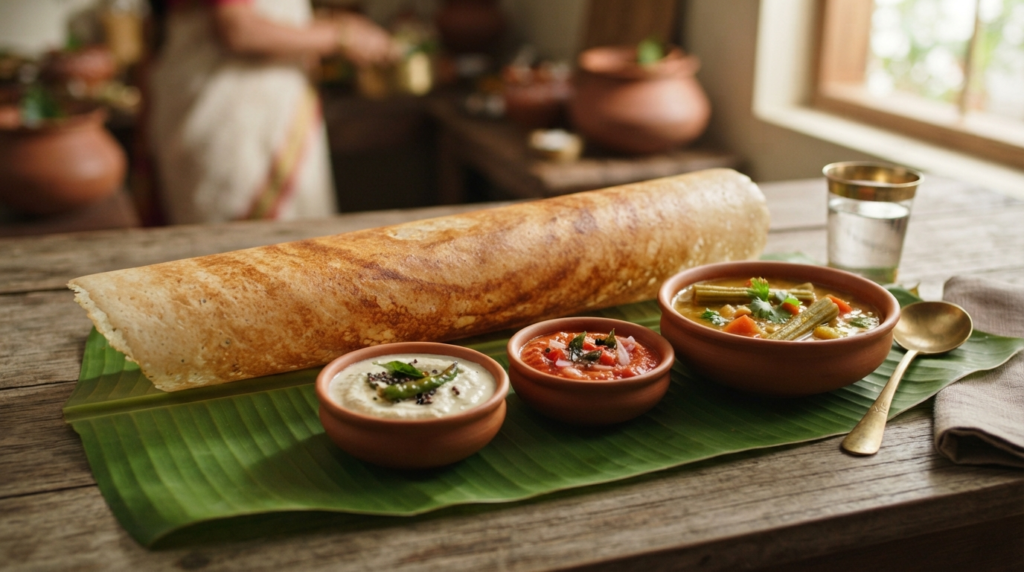
While the Dosa is a pan-Indian favorite, the Kerala-style Dosa is often slightly thicker and softer than the paper-thin versions found in Tamil Nadu. Using a blend of parboiled rice and urad dal is the standard practice, as it provides a robust structure and a distinct fermented tang. The Indian Council of Medical Research emphasizes that such fermented cereal-pulse combinations provide a complete protein profile, making them excellent for breakfast.
To master the Kerala Dosa, ensure your tawa is seasoned well. A quick trick is to wipe the hot surface with a halved onion dipped in oil before pouring the first ladle of batter. This creates a non-stick layer that ensures your dosa releases perfectly every single time.
Surprising fact: Some traditional Kerala recipes incorporate a small amount of cooked rice into the batter during the grinding stage. This specific technique produces a Dosa that remains soft for hours, which is perfect for packing in lunchboxes or school tiffin carriers. Always pair your Dosa with a fresh coconut chutney spiked with green chilies and ginger for that quintessential kick.
Vellayappam and Other Variations
Vellayappam is a thicker, softer cousin of the Appam, often made without the lacy edges by omitting the yeast and relying on a slightly thicker batter. It is cooked in a flat pan rather than the specialized appachatti, making it much easier for beginners. These cakes are fluffy and naturally sweet, often enjoyed by children with a side of sweetened coconut milk or even a spicy vegetable curry.
Incorporating these variations into your weekly rotation prevents breakfast fatigue. Because these dishes are fundamentally simple, the quality of your ingredients—especially the coconut—is non-negotiable. Always prioritize fresh, mature coconuts over desiccated versions, as the oils in fresh coconut are crucial for the authentic aroma and texture required in these recipes.
The soul of Kerala’s breakfast tradition lies in the balance of simplicity and spice; it is not merely about fueling the body, but about respecting the rhythm of the day through fresh, fermented ingredients.
The Importance of Fresh Ingredients
When cooking traditional Keralite food, you must pay attention to the freshness of your curry leaves and mustard seeds. In many parts of India, these are easily sourced, but the “Kerala” flavor profile specifically relies on coconut oil. Using refined sunflower oil will significantly alter the taste of your Kadala curry or stew; for true authenticity, stick to cold-pressed coconut oil.
By keeping your pantry stocked with high-quality rice flour, urad dal, and fresh coconut, you reduce the barrier to entry. These dishes are not just for weekends; once you have your batter or dough prepped, they are among the fastest breakfasts you can cook. They are nutritionally superior to processed cereals and provide the sustained energy required for a long day of work or study.
Frequently Asked Questions
Can I make Puttu without a traditional steamer?
Yes, you can use a regular stainless steel bowl covered with a plate inside a deep pot, or even steam the mixture in small portions inside greased tumblers placed in a pressure cooker. The result will be similar, though the iconic cylindrical shape will be missing.
How do I fix Appam batter that is not fermenting?
If your batter hasn’t fermented due to cold weather, place the container in a warm corner of your kitchen or inside an oven with the light turned on. If you added yeast and it still failed, check your yeast expiry date; adding a pinch of sugar can also help jumpstart the process.
Is Kerala breakfast suitable for weight loss?
Most Kerala breakfasts are naturally steamed rather than deep-fried, making them a healthy option. However, portion control is key, especially with sides like coconut milk or thickened gravies. Pairing them with high-fiber curries like Kadala (chickpea) or vegetable-heavy stews can help keep you full for longer.
Can I store Appam or Dosa batter in the fridge?
Yes, you can store fermented batter in an airtight container in the refrigerator for up to three days. It is best to remove it from the fridge at least 30 minutes before cooking so it returns to room temperature, which ensures better texture.