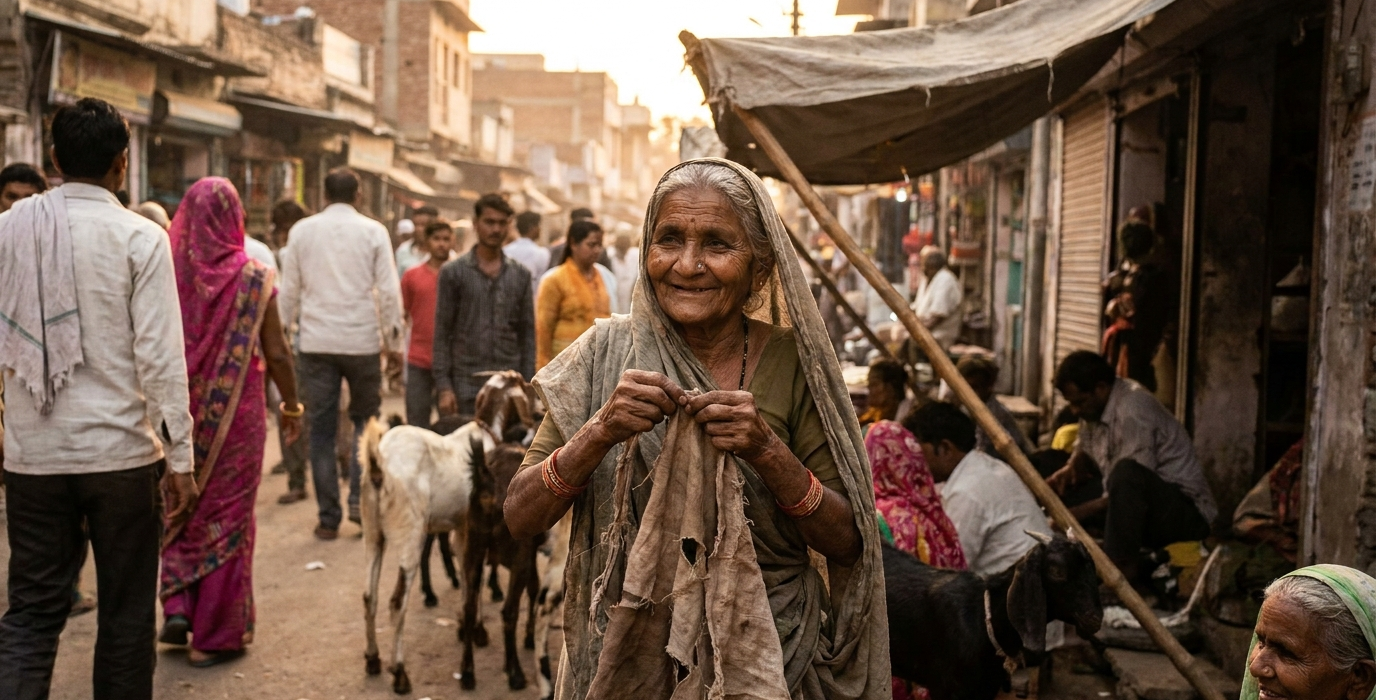
The Unfolding Silk: From Surat’s By-lanes to Global Recognition
In the heart of Surat, Gujarat, a city synonymous with diamonds and textiles, a quiet revolution was brewing, one thread at a time. This is the story of Maya Sharma, a woman whose journey from the cramped lanes of Nanpura to the grand halls of international fashion weeks is a testament to unwavering spirit and the power of a single, well-executed dream. Maya wasn’t born into privilege; her childhood was marked by the humble hum of handlooms and the scent of raw silk that permeated her family’s modest dwelling. Her parents, skilled artisans themselves, poured all their hopes and savings into a small silk weaving unit, a dream that often felt as fragile as the threads they worked with.
From a young age, Maya was immersed in the world of textiles. While other children played with dolls, she learned the intricate dance of the shuttle, the precise tension of the warp, and the subtle beauty of natural dyes. She absorbed her parents’ passion, their dedication etched into her very being. However, the traditional silk weaving industry, though rich in heritage, faced numerous challenges. Fluctuating raw material prices, competition from mass-produced synthetic fabrics, and a lack of access to wider markets constantly threatened their livelihood. Maya witnessed firsthand the anxieties that shadowed her parents’ every decision, the quiet desperation that sometimes crept into their conversations.
Yet, it was within this challenging environment that Maya’s entrepreneurial spark ignited. She saw not just problems, but opportunities. She noticed how the younger generation was increasingly drawn to fast fashion, often overlooking the exquisite craftsmanship and sustainable nature of handwoven silk. Maya believed that this disconnect wasn’t due to a lack of appreciation, but a lack of understanding and accessibility. She envisioned a way to bridge this gap, to bring the timeless elegance of Indian handloom silk into the modern world, making it not just a garment, but a statement of conscious living and cultural pride. Her vision was ambitious, and many initially dismissed it as naive idealism.
The traditional methods, while beautiful, were slow and labor-intensive, making it difficult to compete on price and volume. Maya, however, was not interested in mass production. She was focused on elevating the craft, on infusing it with contemporary design sensibilities while preserving its soul. Her initial steps were tentative, marked by sleepless nights and tireless research. She spent hours studying market trends, understanding consumer preferences, and exploring innovative weaving techniques. The idea was to create designs that were both rooted in tradition and appealing to a global audience. This involved experimenting with unique motifs, incorporating subtle embellishments, and exploring a wider palette of natural dyes sourced from across India.
One of Maya’s earliest breakthroughs came when she decided to collaborate with young Indian designers. She believed that their fresh perspectives could infuse new life into traditional weaves. Initially, the established weavers were hesitant, accustomed to age-old patterns. But Maya’s conviction and her ability to articulate her vision slowly won them over. She organized workshops, demonstrating how contemporary silhouettes and innovative draping techniques could complement the inherent richness of handwoven silk. This cross-pollination of ideas proved to be transformative, breathing a new vibrancy into the age-old craft.
From Local Looms to the Global Catwalk
Maya’s journey from her family’s small weaving unit to international runways was not a single leap, but a series of calculated, determined steps. She began by establishing a small online presence, showcasing her family’s finest creations. The response was initially modest, but the quality and uniqueness of the silk pieces began to attract attention from discerning customers. She focused on telling the story behind each saree and dupatta – the weaver’s hands, the origin of the silk, the inspiration for the motif. This narrative approach resonated deeply, transforming mere garments into wearable art.
The turning point arrived when a renowned fashion blogger, visiting India for a story on sustainable textiles, stumbled upon Maya’s work online. Intrigued by the intricate designs and the compelling backstory, she reached out to Maya for an interview. This chance encounter led to Maya’s first major feature, catapulting her brand, ‘Sutranya’ (meaning ‘essence of silk’), into the national spotlight. Suddenly, orders started pouring in from major cities like Delhi, Mumbai, and Bengaluru. This initial success provided Maya with the confidence and the capital to expand her operations and invest in better equipment, though she steadfastly refused to compromise on the handloom aspect.
Her next ambitious move was to participate in a national handloom exhibition in New Delhi. Here, she not only sold her creations but also networked with influential figures in the fashion industry. It was at this exhibition that she caught the eye of a curator for a prestigious international fashion week, who was actively seeking authentic, ethically sourced Indian textiles. Maya was invited to showcase her collection. This was an opportunity she had only dreamed of, a chance to present Surat’s rich weaving heritage to a global audience.
Preparing for the international show was a Herculean task. Maya and her team worked day and night, perfecting every weave, every dye, every embellishment. They created a collection that showcased the versatility of handloom silk, featuring not just traditional sarees but also contemporary prêt-à-porter pieces – elegant blouses, flowing skirts, and structured jackets, all crafted from the finest Indian silks. The collection was a harmonious blend of tradition and modernity, a visual symphony of colours, textures, and intricate craftsmanship. The intricate ‘Zari’ work, a hallmark of Surat’s silk weaving, was reimagined with contemporary motifs, giving it a fresh, avant-garde appeal.
When Maya’s collection graced the international runway, the response was overwhelming. Critics lauded the exquisite craftsmanship, the unique designs, and the ethical sourcing. Buyers from leading international boutiques placed orders, recognizing the immense potential of Sutranya. Maya Sharma, the girl from Surat’s by-lanes, had not only achieved her dream but had also opened a new chapter for Indian handloom silk on the global stage. Her success story inspired countless other artisans, proving that tradition and innovation could indeed walk hand-in-hand.
The Art of Dyeing: Nature’s Palette in Every Thread
Maya’s commitment to authenticity extended deeply into her approach to dyeing. She understood that the soul of handloom silk lay not just in the weave but also in the colour. In an era dominated by synthetic dyes, Maya steadfastly championed the use of natural dyes, a practice that has been an integral part of Indian textile traditions for centuries. This decision was not merely aesthetic; it was a conscious choice rooted in environmental consciousness and a desire to preserve traditional knowledge.
Sourcing these natural dyes was an adventure in itself. Maya and her team scoured the length and breadth of India, forging relationships with farmers and local communities who cultivated plants, roots, and barks used for dyeing. They learned the ancient secrets of extracting vibrant hues from sources like turmeric for yellow, indigo for deep blues, madder root for rich reds, and pomegranate rinds for earthy browns and greens. This process was not just about pigment; it was about understanding the ecosystems and the sustainable harvesting practices that ensured the longevity of these natural resources.
The dyeing process itself was a labor of love, requiring patience and an intimate understanding of the materials. Unlike synthetic dyes, natural dyes offer a softer, more nuanced palette. They possess a unique luminescence that synthetic colours often lack, and they age beautifully, developing a patina over time that adds to the garment’s character. Maya’s team meticulously controlled the temperature, the mordants (natural fixatives), and the dyeing time to achieve the desired shades, ensuring consistency without compromising the organic nature of the process.
One of the most fascinating aspects of Maya’s natural dyeing practice was the discovery of how different silks reacted to the same dyes. The subtle variations in the protein structure of mulberry silk versus tasar silk, for example, resulted in distinct colour depths and textures. This allowed Maya to create a truly unique range of colours that were not easily replicated. She embraced these inherent variations, seeing them as part of the charm and uniqueness of each hand-dyed piece.
Furthermore, Maya recognized the significant environmental benefits of natural dyeing. Traditional synthetic dyeing processes often involve harsh chemicals that can pollute water sources. Natural dyes, when sourced and used responsibly, are biodegradable and far gentler on the environment. This commitment to sustainability became a core pillar of the Sutranya brand, appealing to a growing segment of consumers who are increasingly conscious of their environmental footprint. Her efforts helped revive a dying art form, showcasing its relevance and beauty in the 21st century, and proving that beautiful, vibrant colours could indeed be drawn directly from nature’s abundant palette.
The ‘Kachchh’ Connection: A Surprising Collaboration
While Surat is the heartland of Maya’s silk weaving, her vision for Sutranya extended beyond its immediate borders, leading to an unexpected and highly successful collaboration with artisans from the arid Kutch region of Gujarat. Kutch, known for its vibrant embroidery and textile traditions, might seem worlds apart from Surat’s silk looms. Yet, Maya saw a unique synergy waiting to be unlocked.
She had always admired the intricate mirror work and the bold, colourful embroidery of Kutch, particularly the styles practiced by the Meghwal and Rabari communities. These communities possess generations of expertise in transforming simple fabrics into breathtaking works of art. Maya believed that combining the lustrous sheen of her handwoven silks with the textural richness of Kutch embroidery would create something truly extraordinary, a fusion of two distinct yet complementary Indian art forms.
The initial outreach was met with a degree of skepticism. The Kutch artisans, deeply rooted in their own traditions, were hesitant about integrating their work with a different textile medium and a designer from outside their immediate community. Maya, however, approached this collaboration with immense respect and humility. She spent weeks in Kutch, living among the artisans, learning about their techniques, their motifs, and the cultural significance behind their embroidery.
She didn’t impose her designs; instead, she engaged in a dialogue, understanding what they wanted to create. She showed them samples of her silk fabrics, explaining the drape and the feel. The artisans, in turn, shared their knowledge of traditional stitches like ‘Soof’ (a geometric stitch), ‘Khaarek’ (a diagonal stitch), and the iconic mirror work that is synonymous with Kutch. A particularly surprising element that emerged from these discussions was the discovery that certain Kutch motifs, like the ‘Akha’ (peacock) and the ‘Phool’ (flower), were historically found in very early Indian textiles, predating the distinct regional styles we know today. This historical connection resonated deeply with Maya’s philosophy of reviving and reinterpreting heritage.
The first collection born from this collaboration was a revelation. Imagine the fluid grace of Surat silk adorned with the intricate, colourful embroidery and shimmering mirrors of Kutch. The contrast was striking yet harmonious. The silk provided a luxurious canvas, while the embroidery added depth, texture, and a vibrant storytelling element. The collection featured stunning sarees, elegant kurtas, and unique home décor items, all showcasing the masterful blend of these two distinct crafts. Buyers and critics alike were captivated by the originality and the sheer artistry of these pieces, which represented a beautiful dialogue between two of Gujarat’s most celebrated textile traditions. This cross-pollination not only enriched Maya’s brand but also provided a significant new market and recognition for the Kutch artisans, ensuring their ancient skills continued to thrive.
Empowering Weavers: The Human Heart of Sutranya
Beyond the exquisite designs and the global acclaim, Maya’s true legacy lies in the profound impact she has had on the lives of the artisans she works with. For Maya, Sutranya was never just about creating beautiful garments; it was about empowering the people behind the threads, the unsung heroes whose skill and dedication brought her vision to life. Her commitment to fair trade practices and artisan welfare was not an afterthought but a foundational principle from day one.
In the traditional weaving communities, artisans often faced exploitation, working long hours for meager wages, with little access to healthcare or education for their children. Maya implemented a system that ensured fair and timely payments, often exceeding the market rate, recognizing the immense value of their craft. She established a cooperative model where weavers were not just employees but stakeholders, sharing in the success of Sutranya. This fostered a sense of ownership and pride, transforming the often-precarious livelihood of a weaver into a respected profession.
Maya also invested in the well-being of the artisan families. She initiated programs that provided access to health check-ups and subsidized medical care. Recognizing the importance of education, she partnered with local schools to support children from weaver families, ensuring they had the resources to attend and succeed. For the women weavers, who often juggle household responsibilities with their craft, Maya introduced flexible working hours and provided childcare support where feasible, enabling them to participate more fully in the economic life of their families.
A particularly heartwarming initiative was the ‘Master Weaver’s Fund’. This fund, seeded by a percentage of Sutranya’s profits, was established to support senior artisans, providing them with a pension and financial security in their later years. It was a way of honouring their decades of dedication and ensuring that their invaluable knowledge was passed down, not lost to hardship. The weavers themselves became advocates for Maya’s approach, sharing their stories of improved living standards, better education for their children, and a newfound sense of dignity and respect.
Maya’s approach demonstrated that profitability and ethical practices were not mutually exclusive. By prioritizing the human element, she created a business that was not only commercially successful but also socially responsible and deeply humane. The stories of families whose lives were transformed, whose children could now dream of higher education, and whose craft was celebrated rather than marginalized, are the true threads of strength woven into the fabric of Sutranya, making it a beacon of hope and a model for sustainable fashion in India and beyond.
The Future Unravelled: Innovation and Legacy
As Sutranya continues to weave its magic on the global stage, Maya Sharma remains grounded, her gaze fixed on the future with an unwavering commitment to innovation and the preservation of heritage. She understands that standing still in the dynamic world of fashion is akin to unravelling one’s own success. Her vision extends beyond mere commercial growth; it encompasses a broader mission of safeguarding traditional crafts and fostering a new generation of artisans.
Maya is actively exploring new frontiers in textile innovation. This includes research into sustainable silk alternatives, such as peace silk (Ahimsa silk), which is harvested without harming the silkworms. She is also experimenting with biodegradable materials and developing closed-loop manufacturing processes that minimize waste and environmental impact. Her aim is to ensure that Sutranya remains at the forefront of ethical and sustainable fashion, setting new benchmarks for the industry.
A significant part of her future plans involves establishing a ‘Heritage Textile Academy’. This academy will serve as a hub for learning, research, and development, dedicated to preserving and promoting traditional Indian textile techniques. It will offer training programs for aspiring artisans, focusing on weaving, dyeing, and embroidery, ensuring that these invaluable skills are passed on to future generations. The academy will also collaborate with academic institutions and researchers to document and digitize traditional knowledge, making it accessible to a wider audience and fostering innovation based on historical foundations.
Maya is also keen on expanding Sutranya’s reach to smaller towns and villages across India, creating more direct employment opportunities and empowering local communities. She envisions a network of artisan clusters, each specializing in a particular craft, all connected under the Sutranya umbrella. This decentralised model will help preserve regional textile identities while ensuring a consistent standard of quality and ethical production.
Her ultimate goal is to build a lasting legacy, one where Sutranya is not just a brand but a movement. A movement that celebrates the artistry of Indian artisans, promotes sustainable practices, and inspires conscious consumerism. She dreams of a future where handloom silk is not just a luxury item, but a choice made by millions, a symbol of cultural pride, environmental responsibility, and enduring human ingenuity. Maya’s journey, from the humble looms of Surat to the global fashion spotlight, is a powerful reminder that with passion, perseverance, and a commitment to one’s roots, even the most delicate threads can be woven into a tapestry of extraordinary achievement.