Key Takeaways
- Many pivotal figures in India’s freedom struggle are overlooked, their contributions vital yet often unrecorded in mainstream narratives.
- From tribal leaders in Jharkhand to women revolutionaries in Bengal, diverse groups and individuals played crucial roles.
- Understanding these unsung heroes enriches our comprehension of India’s complex fight for independence and inspires future generations.
- Exploring their stories reveals the multifaceted nature of the struggle, involving armed resistance, intellectual discourse, and grassroots mobilization.
The Whispers of Revolution: Unearthing India’s Forgotten Freedom Fighters
As we celebrate India’s Republic Day each year, our thoughts often turn to the towering figures of the freedom struggle – Gandhi, Nehru, Patel. Their sacrifices and vision are undeniably etched in our national consciousness. Yet, beyond these celebrated names lies a vast ocean of bravery and dedication, a chorus of voices whose stories, though instrumental, often remain whispers in the grand narrative of our independence.
These are the individuals who, in their own unique ways, contributed to the monumental task of freeing India from colonial rule. Their struggles, often against overwhelming odds and with little recognition, form the bedrock of our hard-won freedom. We owe it to ourselves and to future generations to bring these unsung heroes from the shadows into the light, to understand the true breadth and depth of the movement that shaped modern India.
This exploration is not merely an exercise in historical remembrance; it is an act of national gratitude. It’s about acknowledging that the fight for freedom was a collective endeavour, a tapestry woven with threads of courage from every corner of the subcontinent and every strata of society. Join us as we shine a spotlight on some of these remarkable individuals and communities whose sacrifices paved the way for the India we know today.
Tribal Uprisings: The Fierce Resistance in the Chotanagpur Plateau
While the plains buzzed with nationalist rhetoric, the dense forests and rolling hills of the Chotanagpur Plateau in present-day Jharkhand witnessed a different kind of struggle for autonomy. The tribal communities here, whose lives were intrinsically linked to the land, faced exploitation not only from British rulers but also from encroaching outsiders and oppressive land revenue systems. Their fight was for survival, for the preservation of their culture and their very existence.
One of the most significant, yet often overlooked, movements was the Kol uprising of 1831-1832. Led by figures like Buddhu Bhagat, Joa Bhagat, and Madara Mahato, the Kols rose against the imposition of alien laws and the intrusion of non-tribal landlords and moneylenders. Their revolt, though brutally suppressed, sent shockwaves through the region and demonstrated the fierce spirit of resistance embedded within these indigenous communities. They fought with traditional weapons like bows, arrows, and axes, their courage undimmed by the advanced weaponry of the colonial forces.
Later, the Santhal rebellion (1855-1856) led by Sidhu and Kanhu Murmu, and the Munda uprising (1899-1900) spearheaded by the iconic Birsa Munda, further cemented this legacy of defiance. Birsa Munda, revered as ‘Dharti Abba’ (Father of the Earth), not only led a powerful rebellion against British rule and the exploitative ‘dikus’ (outsiders) but also envisioned a Munda raj. His movement blended religious reform with political awakening, inspiring his people to resist oppression and reclaim their rights.
These tribal leaders and their followers did not seek a unified Indian nation in the way nationalist leaders did. Their primary aim was to protect their traditional way of life and assert their self-governance. However, their unwavering resistance against colonial authority and exploitation undeniably weakened the British hold and contributed to the broader anti-colonial sentiment that would eventually culminate in India’s independence.
The Courageous Women: Beyond the Headlines
When we think of women in the Indian freedom struggle, names like Sarojini Naidu and Annie Besant might come to mind. While their contributions were immense, the reality is that countless women, from every walk of life, participated actively and courageously, often at great personal risk. Their roles ranged from organizing protests and boycotts to engaging in armed resistance and espionage, their stories often overshadowed by the more prominent male leaders.
Consider the women of the ‘Arzi Hukumat’ (Provisional Government) during the Quit India Movement in 1942. In places like the Satara district of Maharashtra, women played a vital role in underground activities, spreading information, and even participating in sabotage. They risked imprisonment, torture, and social ostracization to support the cause of independence. Their resilience in the face of such adversity is a testament to their unwavering patriotism.
In Bengal, figures like Pritilata Waddedar and Kalpana Dutt (later Kalpana Chawla) were part of revolutionary groups that engaged in direct action against British officials. Pritilata, a student of Bethune College, led an attack on the Pahartali European Club in Chittagong in 1932. She tragically died during the operation, becoming a martyr for the cause. Kalpana Dutt, inspired by Surya Sen, was also involved in revolutionary activities and was imprisoned for her role in the Chittagong armoury raid conspiracy. Her subsequent memoir offers a vivid account of the sacrifices made by women revolutionaries.
Even in the non-violent movements, women were not just passive participants. They organized hartals, spun khadi with fierce determination, and faced lathis and imprisonment with remarkable fortitude. Their participation was crucial in mobilizing the masses and giving the freedom struggle a truly national character. The strength and courage they displayed, often in the domestic sphere as well as the public, were foundational to the success of the movement.
The Unarmed Warriors: Intellectuals and Activists
The Indian freedom struggle was not solely a matter of marches and protests; it was also a battle of ideas, fought in the hallowed halls of academia, in the pages of newspapers, and through impassioned speeches. Intellectuals and activists, armed with their pens and their principles, played a crucial role in shaping public opinion, articulating the vision of a free India, and challenging the moral and philosophical underpinnings of British rule.
Think of figures like Rabindranath Tagore, whose poetry and prose not only celebrated Indian culture but also critiqued colonial policies and the narrow nationalism of the time. His renunciation of his knighthood in protest against the Jallianwala Bagh massacre was a powerful moral statement. Similarly, Bal Gangadhar Tilak, while a proponent of assertive nationalism, used his newspaper ‘Kesari’ to awaken a sense of national pride and advocate for Swaraj.
Beyond these well-known figures, there were countless others who dedicated their lives to disseminating nationalist ideas. For instance, Gopal Ganesh Agarkar, a contemporary of Tilak, was a rationalist and a social reformer who used his publication ‘Sudharak’ to advocate for critical thinking and social reform alongside political awakening. He believed that true freedom required not just political independence but also the liberation of minds from superstition and blind adherence to tradition.
In South India, poets and writers like Subramania Bharati in Tamil Nadu used their verses to ignite patriotic fervor and challenge the status quo. His powerful Tamil poems spoke of a resurgent India, free from foreign domination. These intellectuals and activists, through their writings and public discourse, provided the ideological framework for the freedom struggle, inspiring millions and laying the groundwork for a sovereign nation that was not just politically independent but also intellectually vibrant.
The Silent Force: Grassroots Mobilizers and Local Leaders
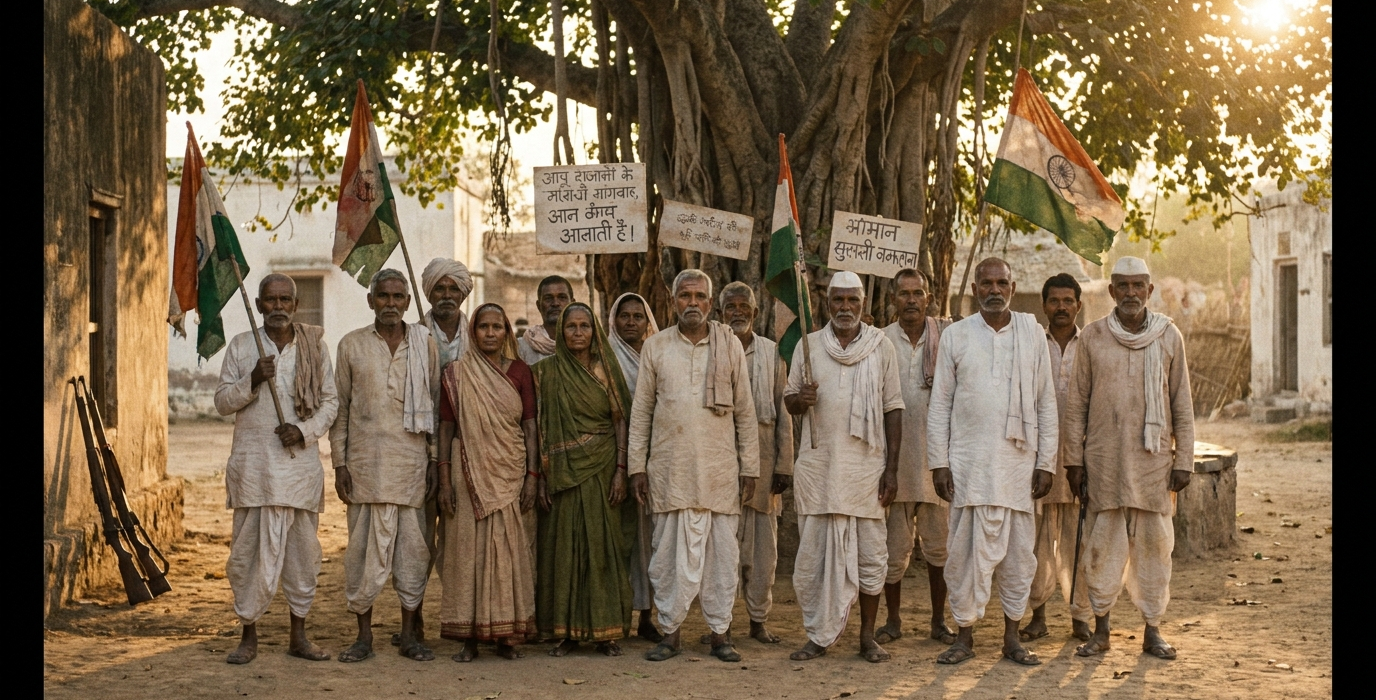
The grand narrative of independence often focuses on national leaders and major events. However, the true strength of any movement lies in its ability to connect with the masses, to resonate with the aspirations of ordinary people in villages and small towns. This was achieved through the tireless efforts of countless grassroots mobilizers and local leaders who worked diligently, often in obscurity, to spread the message of freedom and galvanize support.
These were the individuals who organized village meetings, explained the significance of boycotting foreign goods, and encouraged participation in civil disobedience. They faced immense pressure from local authorities and often endured hardship, yet their dedication to the cause never wavered. In Uttar Pradesh, for example, local Congress workers played a pivotal role in organizing farmers’ protests against oppressive land revenue policies, linking the struggle for independence with the immediate concerns of the rural population.
Consider the role of ‘Satyagrahis’ who quietly defied unjust laws, enduring imprisonment and humiliation without resorting to violence. Their personal acts of courage, multiplied across the nation, created a powerful moral pressure on the British administration. These were not always men and women with grand titles or public platforms; they were the shopkeepers who refused to sell foreign cloth, the farmers who withheld taxes, and the students who boycotted government schools.
One surprising fact is the significant role of village headmen (Sarpanchs) and local community leaders in certain regions who secretly supported the freedom movement, providing shelter to activists or aiding in the dissemination of information. Their local influence and understanding of community dynamics were invaluable. These unsung heroes ensured that the spirit of rebellion permeated the deepest layers of Indian society, making the freedom struggle a truly people’s movement.
The Overseas Connection: Indians Abroad and Their Fight
The struggle for India’s independence was not confined to its geographical borders. Indian diaspora communities across the globe also played a crucial, albeit often less visible, role in advocating for their homeland’s freedom and challenging colonial narratives on international stages. These individuals, living far from their ancestral land, found ways to contribute to the cause through political activism, fundraising, and raising international awareness.
In countries like Canada and the United States, early Indian immigrants, facing discrimination themselves, formed organizations to champion India’s cause. The Ghadar Party, founded in San Francisco in 1913, was a revolutionary organization that aimed to overthrow British rule in India. Its members, including many Punjabi immigrants, published newspapers and pamphlets in multiple languages, urging soldiers of Indian origin in the British army to mutiny and actively planned armed uprisings. While their direct impact on the ground in India was limited due to suppression, their efforts kept the flame of rebellion alive abroad.
In Southeast Asia, particularly during World War II, Indian National Army (INA) under Subhas Chandra Bose became a significant force. While Bose is a well-known figure, the tens of thousands of ordinary Indian soldiers and civilians who joined the INA, often as prisoners of war or motivated by nationalist fervor, represent a crucial element of this overseas contribution. Their willingness to fight against the Allied forces alongside the Axis powers, aiming for India’s liberation, was a bold and significant act of defiance, even if ultimately unsuccessful.
Another surprising fact is the role of Indian students studying in Britain who actively engaged with British politicians and public opinion, forming groups like the Indian League. They sought to highlight the injustices of colonial rule and garner support for Indian self-determination. Their intellectual engagement and persistent advocacy in the heart of the empire contributed to the growing pressure on the British government to grant independence.
Frequently Asked Questions
Who was the first tribal leader to revolt against the British?
While pinpointing the absolute “first” is challenging due to fragmented historical records, figures like Tilka Manjhi of the Santhal community are recognized for leading significant early revolts against British encroachment and exploitation in the late 18th century. His defiance in 1784 against the British East India Company set a precedent for later tribal uprisings.
Were there any women who fought in armed groups for India’s freedom?
Yes, absolutely. Women like Pritilata Waddedar and Kalpana Dutt were actively involved in revolutionary organizations in Bengal, participating in armed actions against British authorities. Their bravery and participation in direct confrontation challenged traditional gender roles and showcased their commitment to the freedom struggle.
What role did Indian diaspora play in the freedom movement?
The Indian diaspora played a crucial role by forming organizations like the Ghadar Party in North America, which advocated for armed revolt, and by raising international awareness and support for India’s independence. They also contributed financially and provided platforms for anti-colonial discourse outside of India.
How did intellectuals contribute to India’s freedom struggle?
Intellectuals contributed by articulating the philosophical basis for independence, critiquing colonial policies through writings and speeches, and fostering national consciousness and pride. Figures like Rabindranath Tagore and Subramania Bharati used their literary talents to inspire and unite people against foreign rule.
Why are these unsung heroes important to remember?
Remembering unsung heroes is vital because it provides a more complete and nuanced understanding of India’s freedom struggle. Their contributions highlight the diverse nature of the movement, the sacrifices made by ordinary people, and the widespread desire for independence across all sections of society, enriching our national history and inspiring future generations.