Key Takeaways
- The Digital Rupee (e₹) is steadily integrating into India’s payment ecosystem, offering faster, cheaper, and more secure transactions for both consumers and businesses.
- E-commerce, cross-border payments, and financial inclusion are key sectors poised for significant transformation by e₹ adoption.
- Security features, including tokenisation and offline capabilities, are robust, addressing common digital payment concerns.
- While widespread adoption is still evolving, understanding the benefits and accessibility of e₹ will be crucial for navigating India’s evolving financial landscape.
The Digital Rupee: A New Dawn for Indian Payments
As of July 2026, India’s financial landscape is experiencing a quiet revolution, driven by the Reserve Bank of India’s (RBI) ambitious Central Bank Digital Currency (CBDC) initiative, colloquially known as the Digital Rupee or e₹. This isn’t just another digital wallet; it represents a fundamental shift in how we think about and use money. The e₹ aims to complement, not replace, existing forms of currency, offering a secure, efficient, and sovereign digital alternative.
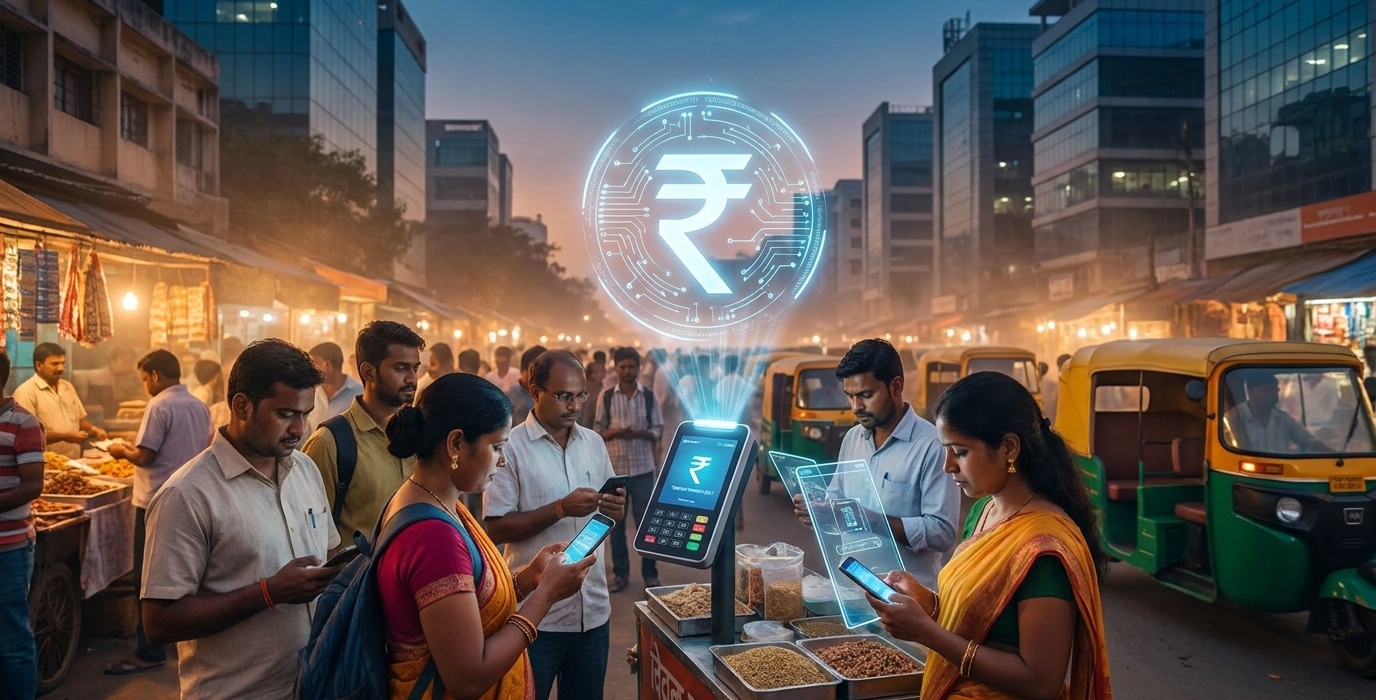
Initially launched in pilot phases for wholesale and retail transactions, the e₹ has begun to weave itself into the fabric of daily financial life for many Indians. We’re seeing increased integration with popular payment apps and growing merchant acceptance, signalling a promising trajectory. For everyday consumers and large corporations alike, the e₹ promises a future of near-instantaneous settlements, reduced transaction costs, and enhanced security, especially as concerns about data privacy and digital fraud continue to be paramount.
Our exploration will delve into the practical implications of this digital transformation. We’ll examine how the e₹ is impacting various sectors, from the bustling markets of Chandni Chowk to the sophisticated financial hubs of Bandra Kurla Complex. Understanding its nuances will empower you to make informed decisions about your financial future and leverage the full potential of this groundbreaking technology. The journey of the e₹ is a testament to India’s commitment to digital innovation and financial inclusion on a global scale.
Transforming Everyday Transactions: The Retail e₹ Experience
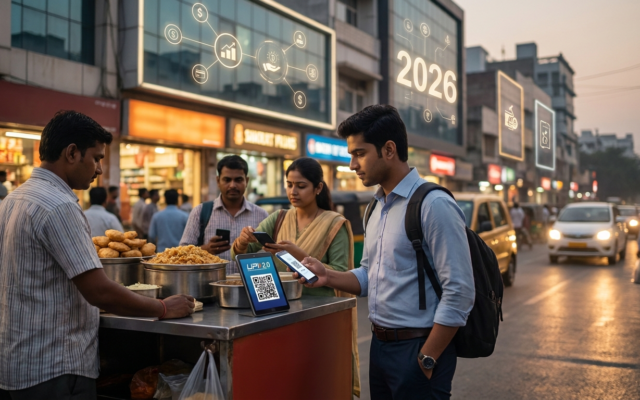
For the average Indian consumer, the retail version of the Digital Rupee (e₹-R) is where the most tangible benefits are emerging. Imagine buying your morning chai in Connaught Place or paying for your groceries in a South Mumbai kirana store, all with the speed and efficiency of digital transfer, but with the inherent trust and backing of the RBI. This is the promise of e₹-R, and it’s increasingly becoming a reality. The technology behind it ensures that transactions are not only faster but also significantly cheaper, cutting out intermediaries that often add to the cost of traditional digital payments.
One of the most compelling aspects is its potential to enhance financial inclusion. For individuals who might still rely heavily on cash or have limited access to traditional banking services, the e₹-R, with its potential for offline functionality, offers a bridge. This means even in areas with intermittent internet connectivity, essential payments can still be made securely. This is particularly relevant for rural India, where the digital divide can be a significant barrier to economic participation. The e₹-R is designed to be as accessible as possible, aiming to bring the benefits of digital currency to every corner of the nation.
We are also seeing innovative use cases emerge. For instance, smart contracts built on the e₹ platform could automate payments upon fulfilment of certain conditions, a feature that could revolutionise everything from salary disbursements to vendor payments. This level of programmable money, backed by a sovereign currency, opens up a world of possibilities that were previously confined to theoretical discussions. The RBI’s careful rollout strategy ensures that these functionalities are being tested and refined for widespread, secure adoption.
E-commerce and Cross-Border Payments: A Paradigm Shift
The impact of the Digital Rupee on e-commerce and cross-border transactions is poised to be nothing short of revolutionary. For online businesses in India, from the smallest artisanal seller on Etsy to large e-commerce giants like Flipkart, accepting e₹ as a payment method translates to faster settlement times and reduced processing fees. This efficiency directly boosts profit margins and improves cash flow, enabling businesses to reinvest more into their operations and customer experience. Furthermore, the enhanced security features of the e₹ can help mitigate risks associated with online fraud, building greater trust between buyers and sellers.
Cross-border payments, often plagued by high fees, slow transfer times, and complex compliance procedures, are another area ripe for disruption. The e₹ has the potential to streamline international remittances and trade settlements, making them significantly more efficient and cost-effective. Imagine sending money to family in London or paying an overseas supplier for raw materials with the ease and speed of a domestic transaction. This could boost India’s international trade relationships and make it easier for Indians living abroad to send money home.
A surprising fact is that the e₹ is designed to be interoperable with other CBDCs and traditional payment systems. This means that while the e₹ is India’s sovereign digital currency, its underlying technology is being developed with a view towards global integration. This foresight is crucial for establishing India as a leader in the future of international digital finance. We are not just building a digital currency; we are building a bridge for seamless global commerce and financial interaction. The implications for India’s economic growth and its integration into the global digital economy are immense.
Security and Privacy: Building Trust in the Digital Realm
One of the primary considerations for any new digital currency is its security and the privacy it affords users. The RBI has placed immense emphasis on these aspects for the Digital Rupee (e₹), understanding that user trust is paramount for widespread adoption. The e₹ employs advanced cryptographic techniques, including tokenisation, which essentially means your actual bank account details are not directly exposed during a transaction. Instead, a unique digital token represents the value being transferred.
This token-based system significantly enhances security by reducing the risk of sensitive financial data being compromised. In the event of a data breach, the compromised tokens would be useless without the underlying private keys, unlike traditional payment systems where stolen card numbers can be exploited. Furthermore, the e₹ is being developed with robust anti-money laundering (AML) and counter-terrorism financing (CTF) measures built into its architecture, ensuring compliance with global financial regulations while safeguarding legitimate user activity.
Privacy is also a key concern, and the RBI has stated its commitment to ensuring user anonymity for everyday transactions, similar to how cash operates. While transactions will be recorded on a distributed ledger for audit and security purposes, the identity of the transacting parties will be protected. This careful balance between transparency for regulatory oversight and privacy for individual users is crucial for building long-term confidence. We are also seeing innovative features like the ability to set spending limits or restrict usage to specific types of merchants, giving users granular control over their digital currency.
The Technology Behind the Digital Rupee: A Glimpse Under the Hood
The Digital Rupee (e₹) is built on a sophisticated technological foundation, leveraging distributed ledger technology (DLT) to ensure its integrity and security. Unlike some cryptocurrencies that rely on public, permissionless blockchains, the e₹ operates on a permissioned DLT system managed by the RBI and its authorised intermediaries. This approach provides a crucial balance: it allows for the transparency and immutability associated with DLT while maintaining the control and regulatory oversight necessary for a central bank-issued currency.
The retail e₹ (e₹-R) is designed to be user-friendly, with access typically provided through mobile applications developed by banks and payment service providers. These apps will allow users to hold, transfer, and use e₹ much like they would with digital wallets today. A key technological innovation is the planned offline functionality. This feature means that e₹ transactions can be completed even without an active internet connection, by using secure elements within the device. This is a significant advancement, particularly for remote areas or during network outages, ensuring the currency remains functional and accessible in all conditions.
A surprising technical aspect is the concept of programmable money. The e₹ platform is being designed to support smart contracts, which are self-executing contracts with the terms of the agreement directly written into code. This opens up possibilities for automated payments, escrow services, and conditional transactions. For example, a government subsidy could be programmed to be released only after a specific milestone is achieved by a beneficiary. This technological leap signifies India’s commitment to not just adopting digital currency but also to innovating with its capabilities.
Navigating the Future: Adoption, Challenges, and Opportunities
As we move further into 2026, the adoption of the Digital Rupee (e₹) is gaining momentum, but it’s a journey that involves both significant opportunities and inherent challenges. For consumers, the primary opportunity lies in experiencing faster, cheaper, and more secure transactions. Imagine the convenience of instant peer-to-peer transfers without the friction of traditional banking hours or transfer fees, especially when sending money across different states for family needs or emergencies. Businesses, in turn, benefit from improved operational efficiency and reduced costs.
However, widespread adoption hinges on several factors. Education is key; many individuals and businesses still need to understand what the e₹ is, how it works, and its advantages over existing payment methods. The RBI and financial institutions are actively working on awareness campaigns, but a concerted effort is required to demystify digital currency. Another challenge is the need for robust infrastructure and interoperability. While the e₹ is designed to be interoperable, ensuring seamless integration with all existing payment systems and devices across diverse technological capabilities will be crucial.
The opportunities are immense, particularly in fostering financial inclusion and driving innovation. The e₹ can empower millions of unbanked and underbanked individuals by providing them with a secure and accessible digital financial tool. Beyond payments, its programmable nature can unlock new avenues for financial services, such as micro-loans, insurance, and capital markets, all executed with greater efficiency and transparency. India’s foray into CBDCs positions it at the forefront of global financial innovation, and understanding its evolution will be vital for all of us navigating the digital economy.
“The Digital Rupee is not just a technological upgrade; it’s a strategic imperative for India to enhance economic efficiency, deepen financial inclusion, and assert its leadership in the global digital economy.”
Frequently Asked Questions
What is the difference between Digital Rupee and UPI?
The Digital Rupee (e₹) is a form of digital currency issued by the RBI, essentially a digital representation of the Indian Rupee. UPI (Unified Payments Interface) is a payment system that facilitates instant fund transfers between bank accounts using mobile devices. While UPI is an infrastructure for making payments, e₹ is the actual digital money being transacted.
Can I convert my physical cash to Digital Rupee?
Yes, you can convert your physical cash into Digital Rupee through your bank account. You will deposit your cash into your bank account, and then you can use your bank’s app to convert an equivalent amount into e₹, which will then be stored in your digital wallet.
Is the Digital Rupee safe to use?
Yes, the Digital Rupee is designed with robust security features, including tokenisation and advanced cryptography, to protect against fraud and ensure transaction integrity. It is backed by the RBI, providing a high level of trust and security, similar to physical currency.
Will the Digital Rupee replace physical cash?
The RBI has stated that the Digital Rupee is intended to complement, not replace, physical cash and other forms of currency. Both will continue to exist, offering consumers choice in how they conduct their transactions.
How can businesses start accepting the Digital Rupee?
Businesses can begin accepting the Digital Rupee by integrating e₹ payment options into their point-of-sale systems or e-commerce platforms through their banking partners. They will need to ensure their systems are compatible with the e₹ framework being rolled out by the RBI.