Key Takeaways
- Bengaluru’s AI startup scene is experiencing unprecedented growth in 2026, attracting significant global and domestic venture capital.
- Key sectors for AI innovation include healthcare, fintech, and sustainable agriculture, reflecting India’s pressing needs and market opportunities.
- The government’s supportive policies, coupled with a deep talent pool, are accelerating the pace of AI development and adoption.
- While challenges remain, the future of AI in India, spearheaded by Bengaluru, looks exceptionally bright, promising transformative societal and economic impacts.
Bengaluru’s AI Renaissance: A Global Magnet for Innovation
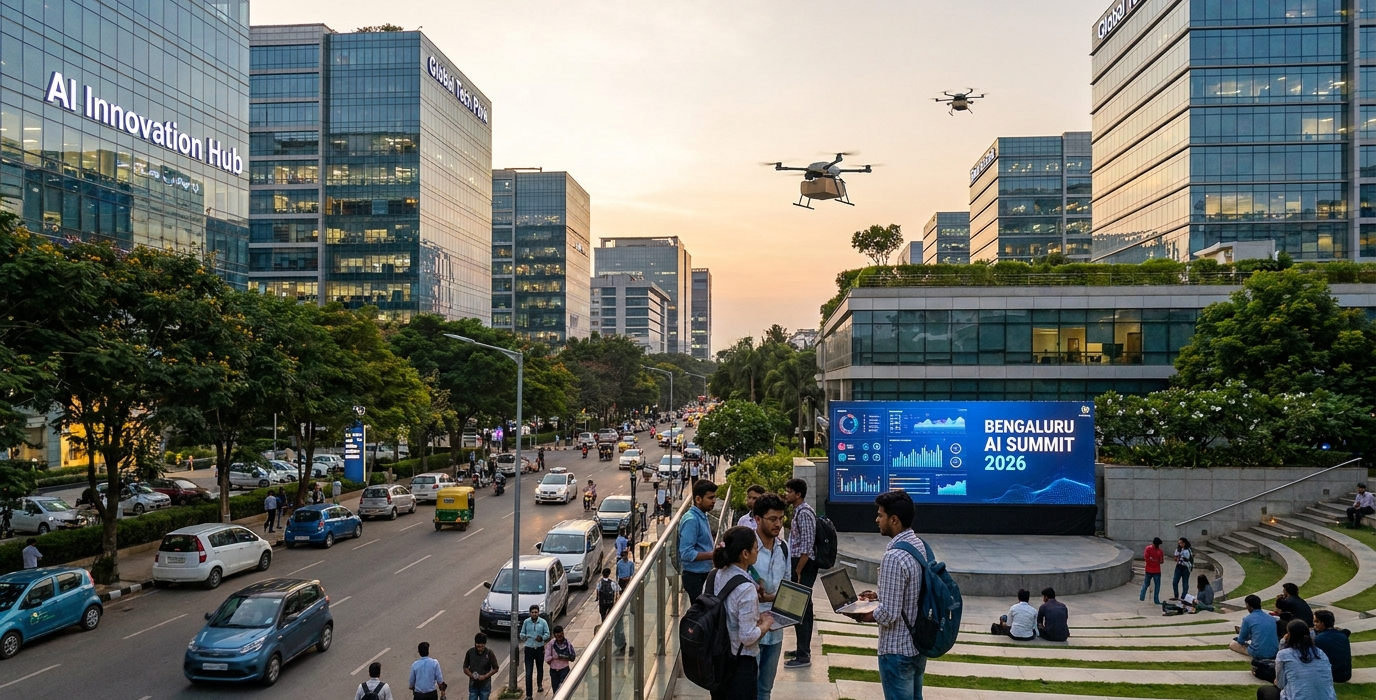
The year 2026 marks a watershed moment for Bengaluru, solidifying its position as India’s undisputed AI capital and a formidable player on the global stage. We’re witnessing an explosion of artificial intelligence startups, fueled by a potent combination of visionary founders, readily available capital, and a burgeoning demand for intelligent solutions across diverse sectors. This isn’t just incremental progress; it’s a genuine renaissance, reshaping industries and promising to address some of India’s most complex challenges.
Venture capital firms, both international powerhouses and agile Indian funds, are descending upon the city with unprecedented enthusiasm. Deals that were unthinkable just a few years ago are now becoming routine, propelling promising AI ventures from nascent ideas to significant market players. This influx of capital is not only funding innovation but also fostering a competitive ecosystem that drives further advancement. We are seeing valuations climb, and the pace of new company formation is simply breathtaking.
The sheer diversity of AI applications emerging from Bengaluru is astounding. From hyper-personalization in e-commerce to predictive maintenance in manufacturing, the city’s entrepreneurs are leveraging AI to create tangible value. This surge is a testament to India’s growing technological prowess and its ability to not just adopt but to innovate at the forefront of global trends. The ripple effects are already being felt across the economy, promising a future where AI is seamlessly integrated into our daily lives and business operations.
AI in Healthcare: Diagnostics, Drug Discovery, and Patient Care Revolutionised
One of the most impactful arenas for Bengaluru’s AI boom is undoubtedly healthcare. We are seeing a wave of startups leveraging AI to revolutionize everything from early disease detection to personalized treatment plans. Companies are using sophisticated algorithms to analyze medical images with a speed and accuracy that often surpasses human capabilities, leading to earlier diagnoses for conditions like cancer and diabetic retinopathy.
The realm of drug discovery is also being transformed. Instead of years of painstaking lab work, AI platforms are now capable of sifting through vast datasets of molecular compounds, predicting efficacy, and identifying potential drug candidates in a fraction of the time. This acceleration is critical in tackling emerging health threats and making life-saving treatments more accessible.
Beyond diagnostics and discovery, AI is enhancing patient care. Virtual health assistants are providing round-the-clock support, answering patient queries, monitoring vital signs remotely, and even flagging potential health issues before they become critical. This not only improves patient outcomes but also eases the burden on overburdened healthcare professionals, a critical need in a country of India’s scale. Bengaluru’s proactive approach here is setting a benchmark for how AI can directly improve the well-being of millions.
Fintech’s Intelligent Future: AI-Powered Financial Inclusivity and Security
The financial technology sector in India has always been a hotbed of innovation, and in 2026, AI is pushing the boundaries even further. Bengaluru’s fintech startups are at the forefront of creating intelligent solutions that are not only enhancing efficiency but also driving financial inclusivity across the nation.
From advanced fraud detection systems that learn and adapt to new threats in real-time, to personalized investment advisory services that cater to the unique financial goals of individuals, AI is becoming the bedrock of modern financial services. These tools are making sophisticated financial management accessible to a wider population, breaking down traditional barriers.
Credit assessment is another area seeing dramatic improvement. AI algorithms can now analyze a much wider array of data points, including alternative data sources, to provide more accurate credit scores for individuals and small businesses traditionally underserved by conventional banking systems. This is a game-changer for economic empowerment, opening doors for countless entrepreneurs and families. We are also seeing AI play a crucial role in ensuring regulatory compliance, making the financial ecosystem safer and more trustworthy for everyone involved. Bengaluru’s fintech innovation is truly democratizing finance.
Sustainable Agriculture: AI for Smarter Farming and Food Security
India’s agricultural sector, the backbone of its economy, is undergoing a significant transformation powered by AI, with Bengaluru at the heart of many of these developments. Startups are developing intelligent systems to address critical challenges like climate change, resource scarcity, and yield optimization, directly contributing to food security.
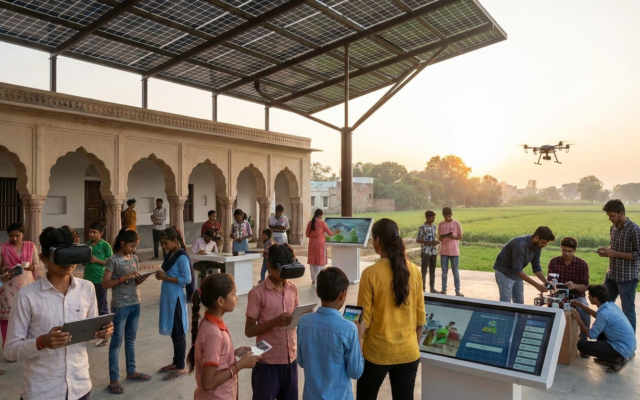
Precision agriculture is becoming a reality, thanks to AI. Drones equipped with advanced sensors, coupled with AI-driven analytics, can monitor crop health, soil conditions, and pest infestations at a granular level. This allows farmers to apply water, fertilizers, and pesticides precisely where and when they are needed, significantly reducing waste and environmental impact.
Furthermore, AI is being used to develop predictive models for weather patterns and crop yields. This helps farmers make informed decisions about planting, harvesting, and market strategies, mitigating risks associated with unpredictable weather events. We are also seeing AI-powered platforms connecting farmers directly to consumers or businesses, streamlining supply chains and ensuring fairer prices. This focus on sustainability and efficiency is crucial for India’s future, and Bengaluru’s tech minds are leading the charge.
AI in Education: Personalized Learning and Skill Development for Tomorrow
The education sector is ripe for disruption, and AI-powered solutions are emerging from Bengaluru to tackle this head-on. The focus is on creating more personalized, accessible, and effective learning experiences for students of all ages.
Adaptive learning platforms are a prime example. These systems use AI to assess a student’s strengths and weaknesses in real-time, tailoring the curriculum and pace of instruction accordingly. This ensures that no student is left behind and that advanced learners are appropriately challenged. It’s about moving away from a one-size-fits-all approach to a truly individualized educational journey.
AI is also being deployed to automate administrative tasks for educators, freeing up their valuable time to focus on teaching and mentoring. Beyond traditional schooling, these AI tools are crucial for upskilling and reskilling the workforce, equipping individuals with the competencies needed for the jobs of the future. A surprising fact is that some AI-driven platforms are now being used to identify potential career paths based on a student’s learning patterns and aptitude, offering guidance far beyond simple subject choices. This proactive approach to education is vital for India’s continued economic growth.
The Talent Nexus: Bengaluru’s Enduring Advantage in the AI Race
While capital and innovative ideas are crucial, Bengaluru’s most enduring advantage in the AI race is its unparalleled talent pool. The city has cultivated a vibrant ecosystem that attracts, nurtures, and retains some of the brightest minds in artificial intelligence and related fields.
Prestigious institutions like the Indian Institute of Science (IISc) and numerous engineering colleges consistently produce graduates with strong foundational knowledge in computer science, mathematics, and data analytics. This steady influx of skilled professionals forms the bedrock of the burgeoning startup scene.
Moreover, the presence of established tech giants and a thriving startup culture creates a dynamic environment where learning and innovation are continuous. Professionals here are exposed to cutting-edge technologies and complex problem-solving, fostering a culture of rapid skill development. A truly remarkable aspect is the increasing number of AI researchers and engineers returning to India from global tech hubs, drawn by the exciting opportunities and the chance to contribute to India’s technological advancement. This brain gain is invaluable. We are also seeing a rise in specialized AI bootcamps and certification programs, further refining this talent pipeline.
Frequently Asked Questions
What are the biggest AI sectors in India in 2026?
The most prominent AI sectors experiencing rapid growth in India during 2026 are healthcare (diagnostics, drug discovery), fintech (fraud detection, credit scoring), and sustainable agriculture (precision farming, yield prediction). Education and e-commerce are also seeing significant AI adoption.
Is Bengaluru still the top tech hub in India for AI?
Yes, Bengaluru continues to be India’s premier tech hub for AI in 2026, attracting the largest share of venture capital investment and housing the most AI startups. Its deep talent pool, supportive infrastructure, and established ecosystem solidify its leading position.
What government policies are supporting AI development in India?
The Indian government is actively promoting AI through initiatives like the National AI Strategy, which focuses on research and development, skill development, and ethical AI deployment. Incentives for startups, data policy reforms, and investments in AI infrastructure are also key drivers.
How is AI impacting traditional industries in India?
AI is transforming traditional industries by improving efficiency, reducing costs, and creating new business models. In manufacturing, it’s used for predictive maintenance and automation. In retail, it enhances customer personalization. Agriculture benefits from precision farming, and healthcare sees improved diagnostics and patient care.
Are there concerns about job displacement due to AI in India?
While AI is automating certain tasks, the primary focus is on augmenting human capabilities and creating new job roles. The emphasis is on reskilling and upskilling the workforce to adapt to the evolving job market, rather than widespread displacement. India’s focus on AI for societal good also creates new opportunities.