Key Takeaways
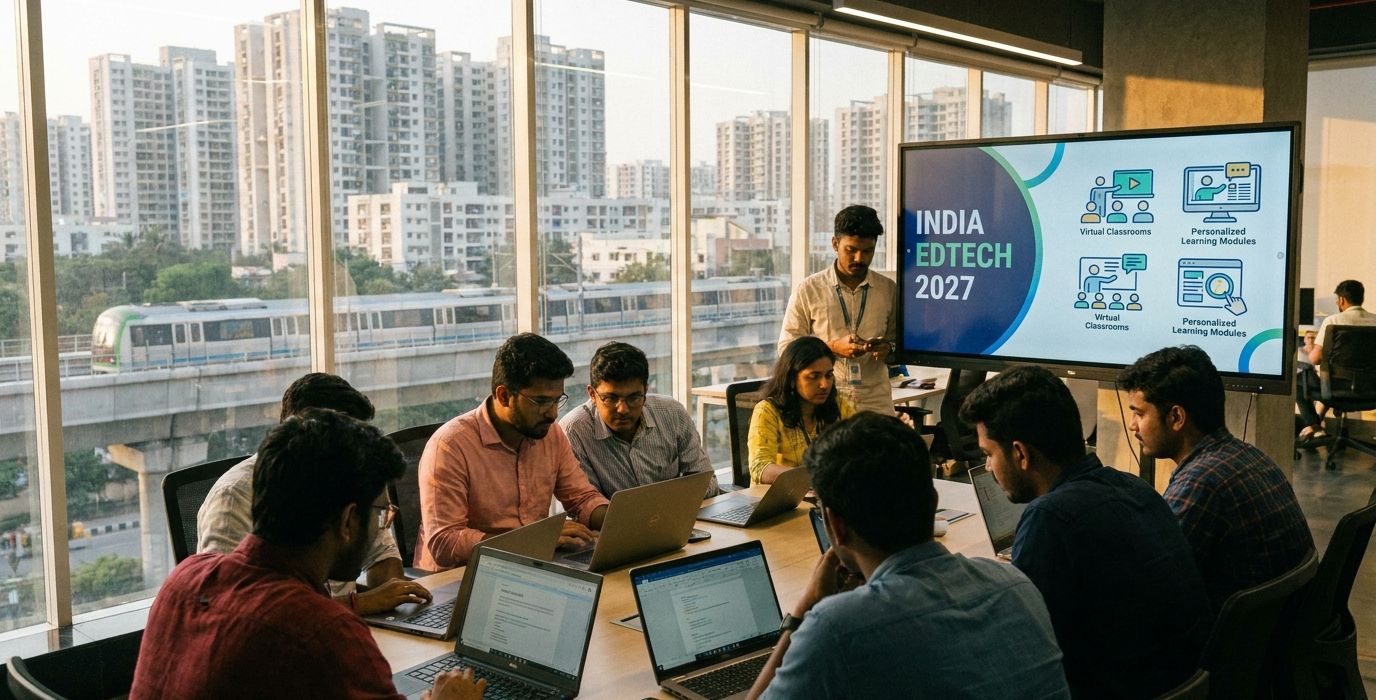
- India’s EdTech sector is poised for significant growth, driven by AI-powered personalized learning and hybrid models.
- Remote learning, once a necessity, is evolving into a strategic component, offering accessibility and flexibility.
- Focus is shifting towards skill-based training and upskilling for the future workforce, bridging the gap between education and employment.
- The integration of gamification and immersive technologies is making learning more engaging and effective for students of all ages.
The Dawn of Hyper-Personalized Learning
The Indian EdTech landscape is no longer about simply digitizing textbooks. By 2027, we’re witnessing a profound shift towards hyper-personalized learning experiences, powered by sophisticated Artificial Intelligence. Imagine a learning platform that understands your child’s unique pace, identifies their specific learning gaps in real-time, and curates content not just for their current grade, but for their future aspirations. This is the promise of AI in education.
Companies like Newton AI, based out of Bengaluru, are already making strides. Their adaptive learning engine analyzes student performance patterns from quizzes, assignments, and even their interaction with the platform. Based on this data, it dynamically adjusts the difficulty, provides targeted remediation, and suggests supplementary materials. This isn’t just about getting a student through an exam; it’s about building a deep, lasting understanding.
The implications are vast. For students struggling with a particular concept in, say, quantum physics, the AI won’t just offer more practice problems. It might present the information through a visual simulation, a gamified challenge, or even a short animated explainer tailored to their preferred learning style. This level of individual attention, once the exclusive domain of expensive private tutors, is becoming democratized.
The AI Tutor in Your Pocket
Platforms are also integrating AI-powered chatbots that act as virtual tutors. These bots can answer student queries 24/7, provide instant feedback on assignments, and even guide them through complex problem-solving. This frees up human educators to focus on higher-order thinking skills, mentorship, and emotional support, rather than repetitive explanation.
A surprising fact: some of these AI tutors are being trained on vast datasets of pedagogical research and student interaction, allowing them to predict potential learning roadblocks before a student even encounters them. This proactive approach to intervention is a game-changer.
The Hybridisation of Education: Blending the Best of Both Worlds
The pandemic accelerated the adoption of online learning, but the subsequent years have shown us that a purely digital approach isn’t always the answer for everyone. The future of Indian EdTech lies in a nuanced hybrid model, seamlessly integrating online and offline learning experiences. This approach acknowledges the unique benefits each modality offers.
We’re seeing a rise in “phygital” learning centers, particularly in Tier 2 and Tier 3 cities like Indore and Kochi. These centers offer structured classroom sessions, peer interaction, and hands-on lab work, complemented by robust online platforms for personalized practice, supplementary resources, and remote expert guidance. This blend caters to diverse learning needs and preferences, ensuring no student is left behind.
For instance, a student in a remote village might attend weekly physical classes at a local learning hub, covering core concepts. The rest of their learning journey – practice exercises, doubt clearing via video calls with instructors from a major city, and access to a wider library of digital content – happens online. This hybrid approach leverages technology for scale and personalization while retaining the crucial human element of in-person instruction and community.
Beyond the Classroom Walls
The hybrid model isn’t just for K-12. Universities and vocational training institutes are also adopting it. Imagine a post-graduate engineering student in Chennai attending lectures online from industry leaders across the globe, but then participating in physical lab sessions and collaborative projects at their local campus. This maximizes access to top-tier faculty and resources, regardless of geographical barriers.
The key here is flexibility. Students can choose the blend that best suits their schedule and learning style. Some might prefer more in-person interaction, while others thrive on the autonomy of online learning. The EdTech platforms of 2027 are designed to accommodate this spectrum of choices, making education more accessible and adaptable than ever before.
Skill-Up India: Bridging the Employability Gap
The rapid evolution of industries means that traditional degrees alone are often insufficient to guarantee a successful career. India’s EdTech sector is stepping up to address this employability gap by focusing heavily on skill-based training and continuous upskilling. The emphasis is shifting from rote memorization to practical, job-ready competencies.
Platforms like Simplilearn and UpGrad, both significant players in the Indian market, are leading this charge. They offer specialized courses in high-demand fields such as data science, artificial intelligence, cybersecurity, cloud computing, and digital marketing. These programs are often developed in collaboration with industry experts and universities, ensuring their relevance to the current job market.
The content is designed to be hands-on, incorporating real-world case studies, projects, and simulations. Students aren’t just learning theoretical concepts; they’re building portfolios and gaining practical experience that employers are actively seeking. This focus on outcome-based learning is crucial for a nation with a young, ambitious workforce.
Micro-Credentials and Lifelong Learning
A significant trend is the rise of micro-credentials and certifications. Instead of lengthy degree programs, individuals can now earn verifiable credentials for specific skills. This allows professionals to continuously update their knowledge and adapt to changing job requirements throughout their careers. It’s a paradigm shift towards lifelong learning, making education an ongoing process rather than a one-time event.
The government’s National Education Policy 2020 has also laid a strong foundation for this, encouraging vocational training and skill development. EdTech companies are instrumental in implementing these policy goals at scale, providing accessible and affordable avenues for citizens to acquire the skills needed for the 21st-century economy.
Gamification and Immersive Technologies: Making Learning Fun and Engaging
Let’s face it, traditional learning methods can sometimes be dry. The EdTech sector in India is rapidly embracing gamification and immersive technologies like Virtual Reality (VR) and Augmented Reality (AR) to make learning more interactive, engaging, and effective. This isn’t just about adding points and badges; it’s about creating deeper levels of understanding and retention.
Imagine a history lesson where students can virtually walk through ancient Rome, interacting with historical figures and exploring architectural marvels. Or a biology class where they can dissect a virtual frog without any ethical concerns or mess. These immersive experiences create powerful, memorable learning moments that go far beyond reading a textbook. Companies like Eklavya VR, a Pune-based startup, are pioneering these applications for subjects ranging from science to art.
Gamification elements, such as leaderboards, challenges, and rewards, are being integrated into learning platforms to boost student motivation and participation. These elements tap into our natural inclination for play and competition, making the learning process feel less like a chore and more like an enjoyable activity. This is particularly effective for younger learners, but the principles apply across all age groups.
The Future is Interactive
The use of AR is also transforming subjects like mathematics and physics. Students can use their smartphones or tablets to overlay complex 3D geometric shapes onto their desks, manipulate them, and understand spatial relationships in a tangible way. This visual and interactive approach can demystify difficult concepts and foster a deeper appreciation for the subject matter.
A surprising fact is how quickly these technologies are becoming more affordable and accessible, moving beyond niche applications. The cost of VR headsets has fallen dramatically, and AR is now a native feature on most smartphones, making these immersive learning tools available to a much wider audience than ever before. This democratization of engaging learning experiences is a testament to the rapid pace of technological advancement.
Addressing the Digital Divide: Inclusivity in EdTech
As India’s EdTech revolution accelerates, a critical challenge remains: ensuring equitable access for all. The digital divide, while narrowing, still presents a significant hurdle for many students, particularly those in rural areas or from economically disadvantaged backgrounds. The most forward-thinking EdTech companies are actively working to bridge this gap.
This involves developing low-bandwidth solutions and offline access capabilities for their platforms. Content is being optimized to consume minimal data, and learning modules are designed to be downloaded and accessed without a constant internet connection. This ensures that students in remote regions, where internet connectivity might be intermittent or expensive, are not excluded from quality education.
Furthermore, partnerships with local community centers, NGOs, and government initiatives are crucial. These collaborations help provide access to shared devices and internet facilities, creating digital learning hubs in underserved areas. Companies are also focusing on creating content that is culturally relevant and available in multiple regional languages, going beyond just English and Hindi.
Affordability as a Key Driver
Affordability is another cornerstone of inclusive EdTech. While premium personalized learning experiences are valuable, there’s a growing demand for cost-effective solutions that cater to a broader economic spectrum. This can manifest in flexible pricing models, subscription plans that are accessible, and the offering of free basic resources alongside paid advanced features.
The innovation isn’t just in the technology; it’s in the business models that support widespread adoption. Companies that prioritize accessibility and affordability are not only doing good but are also tapping into a massive, underserved market. This dual approach is vital for the sustainable growth of Indian EdTech and for truly empowering every learner across the nation.
The Evolving Role of Educators in the EdTech Era
The rise of sophisticated EdTech tools doesn’t signal the obsolescence of teachers; rather, it heralds an evolution of their role. In the age of AI-powered personalization and readily available digital resources, educators are shifting from being primary knowledge dispensers to becoming facilitators, mentors, and guides. Their human touch remains irreplaceable.
With AI handling much of the repetitive tasks like grading basic assignments and providing foundational explanations, teachers can dedicate more time to fostering critical thinking, problem-solving, creativity, and socio-emotional development. They become orchestrators of learning experiences, helping students navigate complex information, develop collaborative skills, and apply knowledge in meaningful ways.
This new role requires educators to be tech-savvy and adaptable. They need to understand how to integrate EdTech tools effectively into their pedagogy, interpret the data provided by learning platforms to understand individual student needs, and create engaging blended learning environments. Professional development programs focused on these new skills are becoming increasingly important for teachers across India.
Mentorship and Soft Skills
Perhaps the most significant shift is the increased emphasis on mentorship. Educators are now in a prime position to help students develop essential soft skills like communication, teamwork, resilience, and ethical reasoning – skills that are difficult for technology to replicate. They can inspire, motivate, and provide the emotional support that is crucial for a student’s holistic development.
A surprising insight from recent educational research suggests that the most effective learning environments are those where technology augments, rather than replaces, the human educator. The synergy between intelligent digital tools and a skilled, compassionate teacher is where true educational transformation will occur. This partnership is the bedrock of India’s future learning landscape.
Frequently Asked Questions
What are the most promising EdTech trends in India for 2027?
The most promising trends include AI-powered hyper-personalization, hybrid learning models (blending online and offline), skill-based training for employability, and the integration of gamification and immersive technologies like VR/AR to enhance engagement.
How is EdTech addressing the issue of accessibility in India?
EdTech companies are focusing on developing low-bandwidth and offline solutions, creating digital learning hubs in underserved areas through partnerships, and offering content in multiple regional languages. Affordability through flexible pricing models is also a key strategy.
Will teachers be replaced by AI in the future?
No, the role of teachers is evolving, not disappearing. They are transitioning to become facilitators, mentors, and guides, focusing on critical thinking, socio-emotional development, and personalized student support, while AI handles more routine tasks.
What is the impact of gamification on student learning?
Gamification significantly boosts student motivation and participation by making learning more interactive and enjoyable. Elements like leaderboards, challenges, and rewards enhance engagement and retention of information across various subjects and age groups.
Are there specific regions in India leading the EdTech innovation?
While innovation is widespread, major tech hubs like Bengaluru and Hyderabad are prominent. However, there’s a growing focus on reaching Tier 2 and Tier 3 cities like Indore and Kochi with hybrid models, and startups are emerging across the country, each addressing unique regional needs.