Key Takeaways
- India’s electric vehicle charging infrastructure is set to witness an unprecedented expansion, with projections indicating a near threefold increase in charging points by the end of 2027.
- This surge is driven by government initiatives, private sector investment, and a growing consumer appetite for EVs, particularly in urban and semi-urban areas.
- Key players are focusing on both fast-charging solutions for highways and slower, more accessible charging for residential and commercial complexes.
- Challenges remain, including grid stability and the need for standardisation, but the outlook is overwhelmingly positive for EV adoption in India.
The Great Indian Charging Surge: Powering a Greener Tomorrow
India stands on the precipice of an electric vehicle revolution, and the most critical fuel for this transformation is already being laid: charging infrastructure. Imagine a future where range anxiety is a relic of the past, where topping up your EV is as commonplace as refuelling a petrol car is today. This isn’t a distant dream; it’s the unfolding reality. By the close of 2027, India’s electric vehicle charging network is projected to explode, nearly tripling its current capacity.
This monumental leap is fueled by a potent cocktail of government policy, aggressive private sector investment, and a burgeoning consumer consciousness towards sustainable mobility. From the bustling metropolises of Mumbai and Delhi to tier-2 cities like Lucknow and Coimbatore, the hum of electric motors is set to become a familiar sound, supported by a vastly expanded and more accessible charging ecosystem. We are witnessing the birth of a new era in Indian transportation.
Government’s Green Light: Policy and Push
The Indian government has unequivocally placed its bet on electric mobility, and this commitment is translating into tangible support for charging infrastructure development. Initiatives like the Faster Adoption and Manufacturing of Electric Vehicles (FAME) scheme have been instrumental, not just in subsidising vehicle purchases but also in incentivising the establishment of charging stations. The Ministry of Power’s directives mandating charging facilities in new residential and commercial buildings are already showing an impact.
Furthermore, the recent policy push towards developing dedicated charging hubs and streamlining land allocation for charging infrastructure projects is a game-changer. States like Gujarat and Maharashtra are leading the charge, offering attractive subsidies and facilitating faster clearances for private players. We are seeing a clear intent to create an environment where setting up and operating charging stations is not just viable but highly encouraged. This proactive stance from policymakers is a critical bedrock for the anticipated expansion.
Private Sector Powering Up: Investments and Innovations
The private sector is responding with remarkable alacrity, recognising the immense market potential of a robust EV charging network. Major energy companies, automotive giants, and dedicated EV charging startups are all pouring significant capital into this burgeoning sector. Companies like Tata Power, Statiq, and Fortum are actively expanding their footprints, establishing charging points across highways, public parking lots, and residential communities. We’re seeing partnerships emerge that combine automotive manufacturing with charging solutions.
These investments aren’t just about quantity; they’re also about quality and innovation. The focus is increasingly shifting towards high-speed DC fast chargers, crucial for long-distance travel and reducing downtime for commercial fleets. Simultaneously, there’s a growing emphasis on smart charging solutions that can manage grid load efficiently and offer flexible payment options for consumers. The competition is driving innovation, ensuring that as the number of chargers grows, their efficiency and user-friendliness also improve.
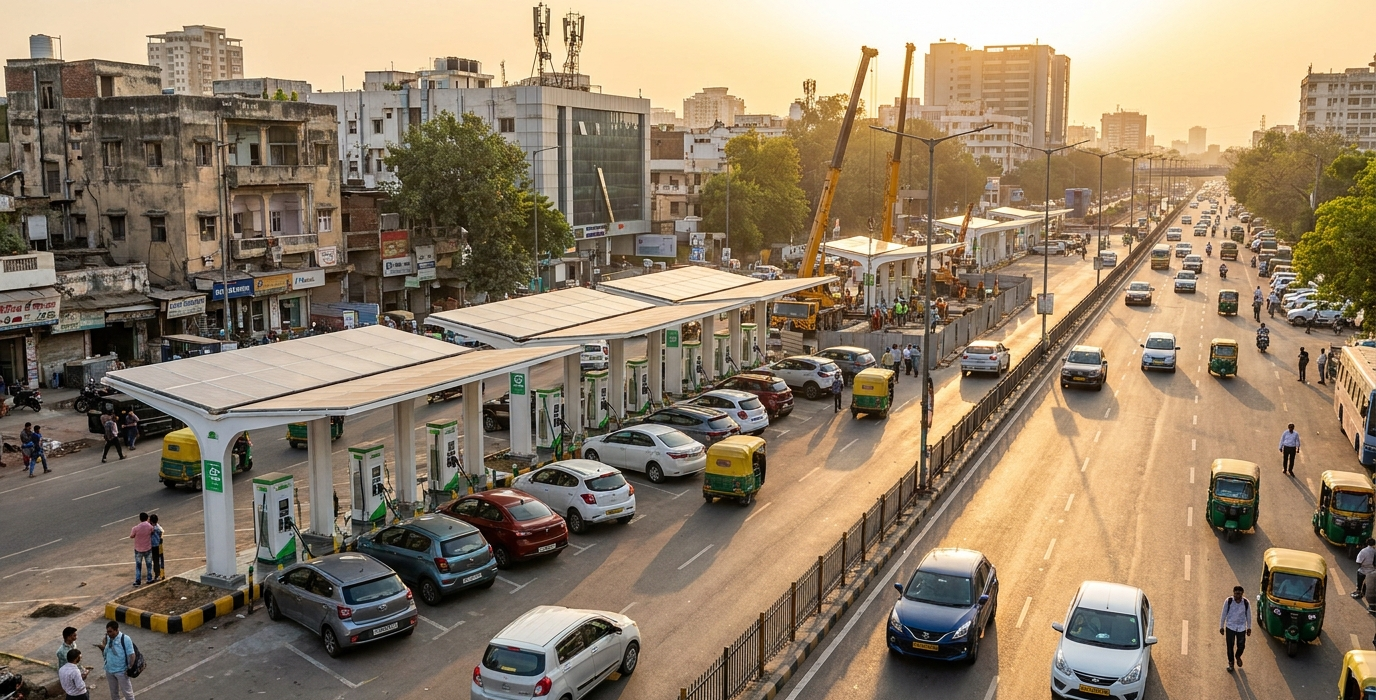
One particularly interesting development is the integration of charging stations with renewable energy sources. Several companies are piloting solar-powered charging kiosks, reducing the strain on the grid and offering a truly green charging experience. This forward-thinking approach ensures that the growth of EV charging aligns with India’s broader renewable energy goals, making the entire ecosystem more sustainable. This integrated approach is a key differentiator that will define the future of EV charging in India.
Highway Havens and Urban Hubs: A Dual Approach
The expansion strategy is intelligently bifurcated, addressing the distinct needs of different user segments. On our vast national highways, the focus is on creating ‘highway havens’ – strategically located charging stations offering rapid charging capabilities. These are designed to eliminate range anxiety for inter-state travellers, making long-distance EV journeys a practical reality. Imagine driving from Bengaluru to Chennai and finding a reliable, fast charger every 100-150 kilometres. This is the vision being implemented.
In urban and semi-urban centres, the emphasis is on accessibility and convenience. Charging points are being integrated into residential complexes, commercial parking lots, and public spaces. This ‘urban hub’ approach caters to the daily commuting needs of EV owners, allowing them to charge their vehicles while they work, shop, or rest. The goal is to make charging as seamless as plugging in a mobile phone. This dual strategy ensures that both long-distance travel and daily commutes are adequately supported by the expanding network.
A surprising fact emerging from the ground is the rapid adoption of charging solutions within corporate campuses. Many large IT parks and industrial zones are now installing dedicated EV charging facilities for their employees, acknowledging the growing number of EV owners and the environmental benefits. This is not just about employee perks; it’s a strategic move to support their sustainability targets and reduce their operational carbon footprint. This internal infrastructure development is a significant, often overlooked, contributor to the overall growth.
Bridging the Gap: Affordability and Accessibility
While the expansion is impressive, a critical challenge remains: ensuring affordability and accessibility for all segments of society. The initial cost of setting up advanced charging infrastructure can be substantial, potentially leading to higher per-charging costs. However, various models are emerging to counter this. Public-private partnerships are crucial in sharing the investment burden, while innovative pricing strategies are being explored to make charging more economical for everyday users.
We are also seeing a focus on developing a wider range of charging speeds to match different budgets and needs. While fast chargers are essential for highways, slower, AC chargers are more cost-effective for residential use and can be installed in larger numbers. This multi-tiered approach ensures that EV charging isn’t exclusively for the premium segment. The government’s push for localisation of charging equipment manufacturing is also expected to drive down costs in the long run, making EV charging more competitive with traditional fuel options.
“The next five years will see charging stations become as ubiquitous as ATMs, transforming the very fabric of urban and rural mobility in India.”
The development of smart charging solutions that allow users to schedule charging during off-peak hours, when electricity tariffs are lower, is another key strategy. This not only benefits the consumer’s pocket but also helps in better managing the demand on the power grid. By making charging more predictable and affordable, we can encourage wider adoption and ensure that the benefits of electric mobility are shared across the nation.
Navigating the Hurdles: Grid, Standards, and User Experience
Despite the optimistic trajectory, the path forward isn’t without its challenges. A significant concern is the capacity of the existing power grid, especially in areas with high EV penetration. Rapid charging draws substantial power, and ensuring grid stability requires significant upgrades and smart grid management technologies. Utilities are actively working on these upgrades, integrating renewable energy sources, and implementing demand-response mechanisms to cope with the increased load.
Standardisation is another area that needs constant attention. Ensuring interoperability between different charging equipment manufacturers and vehicle models is vital for a seamless user experience. While progress is being made, further harmonisation of charging connectors and communication protocols will accelerate adoption. The aim is to create a plug-and-play environment for EV owners, regardless of the brand of their vehicle or the charging station they use.
Beyond the technicalities, the user experience is paramount. This includes ease of payment, clear signage, and reliable uptime of charging stations. Companies are investing in user-friendly mobile apps that help locate chargers, check availability, book slots, and process payments effortlessly. The goal is to make the entire process as intuitive and hassle-free as possible, encouraging more people to switch to electric vehicles. We are seeing significant efforts to ensure that the charging experience matches the convenience offered by modern digital services.
Frequently Asked Questions
What is the projected growth rate of EV charging stations in India by 2027?
Projections indicate that India’s electric vehicle charging network is expected to nearly triple its current capacity by the end of 2027, signifying a massive expansion. This growth is driven by government support and private investment.
Are there specific government incentives for setting up EV charging stations in India?
Yes, the Indian government offers various incentives through schemes like FAME (Faster Adoption and Manufacturing of Electric Vehicles) and specific state-level policies. These often include subsidies, tax benefits, and support for land allocation.
What types of EV chargers are being prioritised in India’s expansion plans?
The expansion plans focus on both high-speed DC fast chargers for highways to enable long-distance travel and slower AC chargers for residential and commercial use, ensuring accessibility and affordability across different needs.
How is India addressing the potential strain on the electricity grid due to increased EV charging?
Efforts are underway to upgrade the grid, integrate more renewable energy sources, and implement smart grid technologies like demand-response management. The promotion of off-peak charging also helps in distributing the load more evenly.
Will EV charging become cheaper than traditional fuel in India soon?
With government incentives, technological advancements, and increasing competition, the cost of EV charging is becoming more competitive. While direct price comparisons vary, the overall cost of ownership for EVs, including charging, is projected to become more favourable than traditional fuel-based vehicles in the coming years.