Key Takeaways
- The Digital Rupee (e₹) is poised for significant expansion in 2027, moving beyond pilot phases into broader retail and wholesale applications.
- Expect enhanced interoperability with existing payment systems, including UPI, making transactions seamless for everyday users.
- Security and privacy remain paramount, with ongoing technological advancements to safeguard digital rupee holdings.
- International collaboration is on the horizon, potentially enabling cross-border payments and reducing reliance on traditional correspondent banking.
Digital Rupee: A Glimpse into 2027 and Beyond
The journey of India’s Central Bank Digital Currency (CBDC), the Digital Rupee or e₹, is rapidly evolving. As we stand on the cusp of 2027, the initial pilot programs are transitioning into a more robust, accessible, and integrated digital financial ecosystem. This isn’t just about a new form of money; it’s about reimagining how India transacts, saves, and invests.
The Reserve Bank of India (RBI) has been meticulously laying the groundwork, learning from the limited-use pilots that began in late 2022. These early phases focused on wholesale transactions and specific retail segments, providing invaluable data and insights. Now, the focus is shifting towards scaling up, ensuring security, and fostering widespread adoption.
For you, as a consumer or business owner, this means a potentially more efficient, secure, and cost-effective way to conduct financial activities. We are moving from a testing ground to a launchpad, with significant implications for financial inclusion and innovation across the nation. The digital rupee is no longer a distant concept; it’s becoming a tangible part of India’s financial future.
Expanding Horizons: Retail and Wholesale Adoption
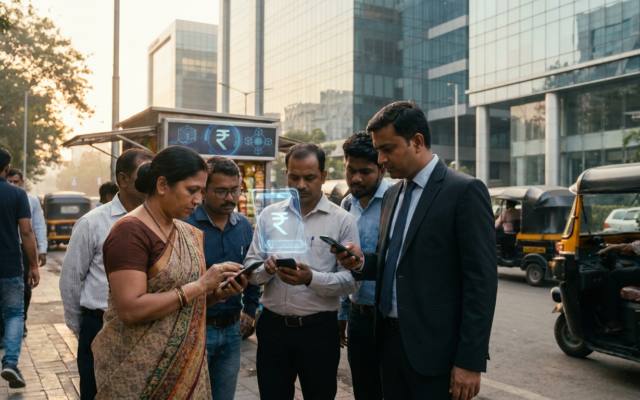
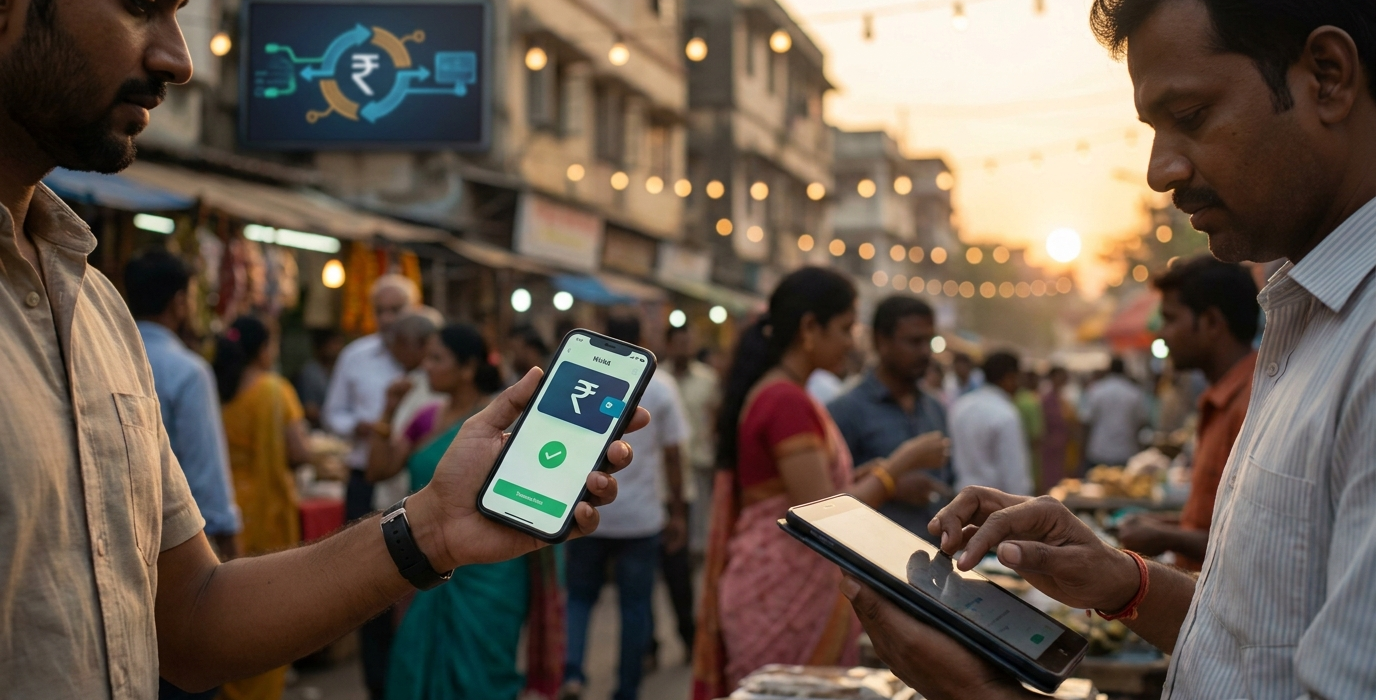
The most significant development anticipated for the Digital Rupee in 2027 is the substantial expansion of its use cases, particularly in the retail sector. While the initial pilots primarily targeted wholesale interbank settlements and a select group of retail users, the next phase aims for mass adoption. Imagine paying for your morning chai at a stall in Chandni Chowk, Delhi, or purchasing groceries in a bustling market in Bengaluru, all with a few taps using your digital rupee wallet.
This expansion will be facilitated by increased accessibility through a wider range of financial institutions and payment service providers. Banks and non-banking financial companies are actively integrating e₹ functionalities into their existing mobile banking apps and digital platforms. The goal is to make using the digital rupee as intuitive and effortless as using UPI today, ensuring a smooth transition for millions of users.
In parallel, the wholesale segment will also see deeper integration. Corporates and financial institutions will leverage the e₹ for more efficient interbank transfers, securities settlement, and cross-border transactions. This will streamline complex financial operations, reduce settlement times, and enhance liquidity management for large-scale financial activities. The RBI’s phased approach ensures that the infrastructure can handle the increased volume and complexity of these transactions.
Interoperability: The Key to Seamless Integration
A critical factor in the success of the Digital Rupee will be its seamless interoperability with India’s existing and highly successful digital payment infrastructure, most notably the Unified Payments Interface (UPI). The RBI understands that introducing a new digital currency will only gain traction if it doesn’t require users to learn entirely new systems or navigate separate applications. Therefore, a major focus for 2027 is the robust integration of e₹ wallets and transactions with UPI-enabled platforms.
This means you could potentially select “Digital Rupee” as a payment option directly within your preferred UPI app, alongside your bank accounts and other payment methods. Imagine paying for your Ola or Uber ride, or even your Amazon order, with a direct debit from your e₹ wallet, initiated through familiar UPI interfaces. This interoperability aims to make the transition from traditional digital payments to the digital rupee feel almost invisible.
Furthermore, discussions are underway to ensure that the e₹ can interact with other digital payment systems, including those used by businesses for point-of-sale transactions and online gateways. The aim is to create a truly unified digital payment experience, where the underlying technology – whether UPI, card networks, or the digital rupee – becomes secondary to the ease and speed of the transaction itself. This approach significantly lowers the barrier to entry for widespread adoption.
Security and Privacy: Safeguarding Your Digital Wealth
As the Digital Rupee moves towards broader adoption, the RBI’s commitment to robust security and privacy measures remains paramount. Concerns about the safety of digital assets are natural, and the central bank is investing heavily in advanced technological solutions to address these. The e₹ is designed with multi-layered security protocols to protect users from fraud, hacking, and unauthorized access.
One of the key technological underpinnings involves advanced cryptographic techniques to ensure the integrity and authenticity of every digital rupee transaction. While the specific architecture remains proprietary, the focus is on creating a system that is both secure and resilient. This includes measures for identity verification, transaction monitoring, and dispute resolution, ensuring that your digital holdings are protected at every step.
Privacy is also a central tenet. The RBI has emphasized that while transactions will be traceable to prevent illicit activities, the privacy of individual users will be maintained. This balance is crucial for building trust and encouraging people to adopt the e₹ for their everyday financial needs. Expect ongoing updates and public awareness campaigns to educate users about the security features and how they can protect their digital rupee wallets. A surprising fact is that the architecture may incorporate features allowing for ‘programmable money’ – meaning digital rupees could be programmed with specific spending conditions, potentially for targeted welfare schemes or business transactions, adding another layer of innovation and control.
International Prospects: The Digital Rupee on the Global Stage
While the immediate focus for the Digital Rupee in 2027 is on domestic adoption, the long-term vision includes its role in international finance. The RBI is actively exploring avenues for cross-border integration, which could significantly transform India’s engagement with the global economy. This move is part of a broader trend among central banks to explore how CBDCs can facilitate more efficient and cost-effective international payments.
Imagine a scenario where Indian businesses can pay their suppliers in, say, Singapore or the UAE, directly using the Digital Rupee, bypassing some of the traditional correspondent banking channels. This could lead to faster settlement times, reduced transaction fees, and greater transparency in international trade. For individuals, it could mean sending remittances to family abroad with greater ease and at a lower cost.
The RBI is engaging in bilateral discussions with other central banks and international financial institutions to explore interoperability frameworks. While full-scale international adoption might be beyond 2027, the groundwork and preliminary agreements are expected to be laid. This could position the Digital Rupee as a significant currency in regional trade and potentially as a settlement currency in specific international markets. The global financial landscape is shifting, and India aims to be at the forefront of this digital transformation.
The Economic and Financial Impact: Beyond Transactions
The implications of a widely adopted Digital Rupee extend far beyond mere transactional efficiency. For the Indian economy, it offers the potential to foster greater financial inclusion, bringing millions of unbanked and underbanked individuals into the formal financial system. With a digital rupee wallet, even those without traditional bank accounts could access digital financial services, participate in e-commerce, and receive government subsidies directly and securely.
Economically, the e₹ could also lead to a reduction in the cost of printing and managing physical currency, freeing up resources for other developmental initiatives. Furthermore, by providing a more transparent ledger for financial transactions, it could aid in combating the shadow economy and improving tax compliance. This enhanced transparency, while respecting user privacy, offers significant potential for economic growth and stability.
For financial markets, the Digital Rupee could introduce new avenues for monetary policy transmission and innovation. The ability to potentially embed smart contract functionalities within the e₹ opens up possibilities for automated payments, conditional transactions, and even new forms of digital financial products. The RBI’s cautious yet progressive approach aims to harness these benefits while mitigating any potential risks to financial stability. A surprising, yet significant, potential benefit is the enhanced data analytics capabilities for the RBI, allowing for more precise economic forecasting and policy adjustments, informed by real-time transaction flows.
Frequently Asked Questions
What is the Digital Rupee (e₹)?
The Digital Rupee (e₹) is a digital form of India’s fiat currency, issued by the Reserve Bank of India (RBI). It’s a liability of the central bank and functions similarly to physical cash but in a digital format, aiming to enhance efficiency and innovation in payments.
How will the Digital Rupee affect my daily transactions in 2027?
By 2027, you can expect the Digital Rupee to be integrated into common payment apps, making it easy to use for everyday purchases. Interoperability with UPI will be a key feature, allowing for seamless transactions from familiar interfaces, potentially with lower fees and faster processing.
Is using the Digital Rupee safe and private?
Yes, the RBI is implementing robust security and privacy measures, including advanced encryption and authentication protocols, to protect your digital rupee holdings and transactions. While transactions are traceable to prevent illegal activities, individual user privacy is a priority.
Will the Digital Rupee replace physical cash?
The RBI has stated that the Digital Rupee is intended to complement, not replace, physical cash. Both will continue to coexist, offering consumers choices in how they prefer to transact. The goal is to provide an additional, more efficient digital payment option.
Can I use the Digital Rupee for international payments?
While full international integration is a longer-term goal, by 2027, India is expected to be exploring and potentially initiating pilot programs for cross-border use of the Digital Rupee. This could lead to more efficient international remittances and trade payments in the future.