Key Takeaways
- Artificial Intelligence is significantly boosting crop yields and reducing waste across India, from the Punjab plains to the Kerala backwaters.
- Precision farming techniques, powered by AI, are optimizing water and fertilizer use, leading to substantial cost savings for farmers.
- Early disease detection and pest management through AI-driven imagery analysis are preventing widespread crop damage.
- The integration of AI is creating new skill demands, necessitating training programs for farmers in digital literacy and data interpretation.
The Dawn of the AI-Powered Farm in India
Imagine a future where every farmer in India, from the sprawling wheat fields of Haryana to the delicate tea estates of Darjeeling, has an intelligent assistant guiding their every decision. This isn’t science fiction; it’s the rapidly unfolding reality of Artificial Intelligence transforming Indian agriculture. We are witnessing a profound shift, moving beyond traditional methods to embrace data-driven, precision farming that promises to secure our nation’s food supply and uplift rural economies.
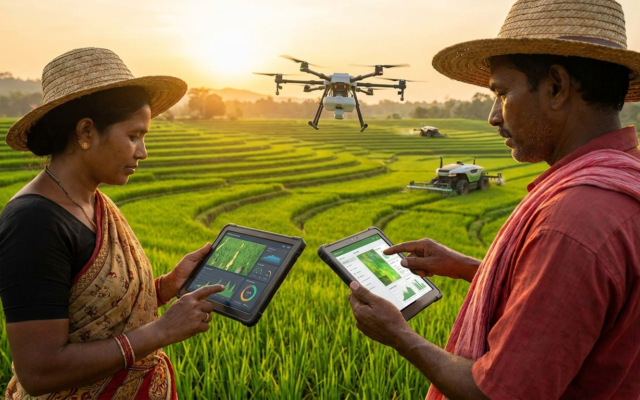
AI is no longer confined to research labs or tech hubs. It’s actively on the ground, analysing soil conditions, predicting weather patterns with unprecedented accuracy, and even identifying nutrient deficiencies in plants through drone imagery. This intelligent intervention is crucial for a country like India, where agriculture is not just a livelihood for millions but the bedrock of our economy and a vital component of our national security. The challenges are immense, from diverse agro-climatic zones to varying farm sizes, but AI offers a scalable, adaptable solution.
Precision Farming: More Crop, Less Waste
At the heart of AI’s impact lies the concept of precision farming. Instead of broad-stroke applications of water and fertilizers, AI enables farmers to deliver exactly what their crops need, precisely when and where they need it. This is achieved through sophisticated sensors, IoT devices, and the analytical power of AI algorithms. These systems can monitor soil moisture levels, nutrient content, and even the health of individual plants in real-time.
Consider a farmer in the Cauvery Delta region of Tamil Nadu. Instead of irrigating an entire field based on general weather forecasts, an AI system can analyze micro-climate data and soil readings to determine the optimal watering schedule for specific zones within the field. This not only conserves precious water resources, a critical issue in many parts of India, but also prevents over-fertilization, which can damage soil health and lead to nutrient runoff. The result? Healthier plants, higher yields, and reduced input costs, directly impacting the farmer’s bottom line.
Satellite Intelligence and Drone Surveillance
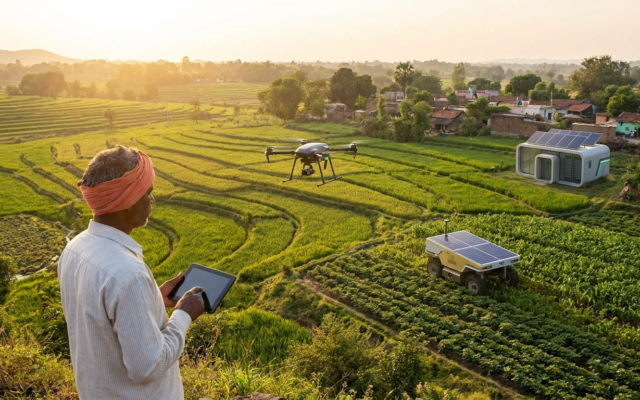
The eyes in the sky are becoming increasingly intelligent. Satellite imagery, combined with drone technology and AI analysis, provides an aerial perspective that was previously unimaginable. These systems can detect subtle changes in crop health, identify areas affected by drought stress, or pinpoint the early signs of pest infestations long before they become visible to the naked eye. This proactive approach is a game-changer for crop protection.
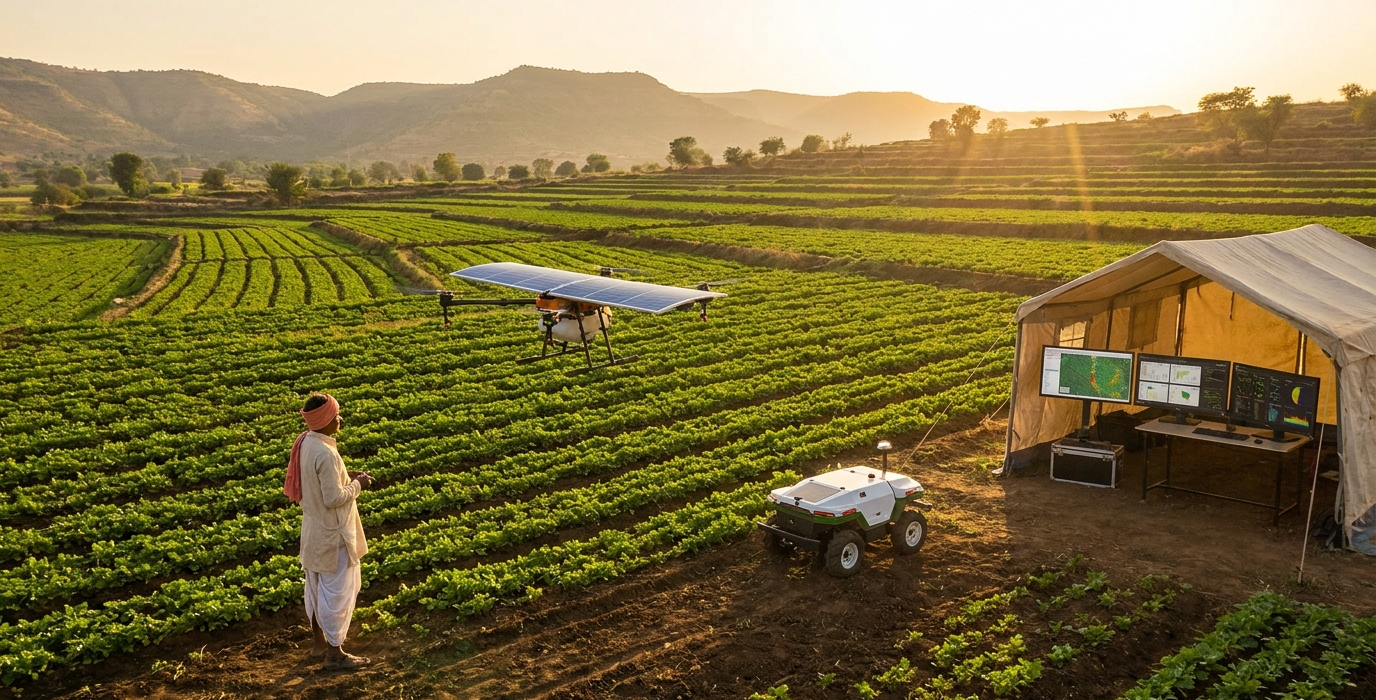
For instance, a startup operating in Maharashtra might deploy drones equipped with multispectral cameras. The AI software then processes the captured images, highlighting stressed vegetation or potential disease hotspots. This allows farmers to intervene precisely, targeting affected areas with specific treatments rather than blanket spraying pesticides or herbicides across the entire farm. This targeted approach significantly reduces chemical usage, benefiting both the environment and consumer health. A surprising fact: advanced AI models can now differentiate between various types of weeds with over 95% accuracy, allowing for highly specific weed management.
Predictive Analytics: Outsmarting Pests and Diseases
One of the most devastating challenges for farmers globally, and particularly in India’s diverse climate, is the threat of pests and diseases. A single outbreak can wipe out entire harvests, leading to significant financial losses and impacting food availability. AI is stepping in as a powerful ally, offering predictive capabilities that can mitigate these risks.
By analyzing historical weather data, soil conditions, pest migration patterns, and even local biodiversity reports, AI algorithms can forecast the likelihood and timing of pest and disease outbreaks. This allows farmers to take preventive measures well in advance. Imagine receiving an alert on your mobile phone, generated by an AI system, predicting a high risk of blight in your potato crop in Himachal Pradesh next week, based on forecasted humidity and temperature. This early warning empowers farmers to implement protective measures, such as applying targeted fungicides or adjusting irrigation schedules, thereby safeguarding their yield.
This predictive power extends to understanding the complex interplay of factors that contribute to crop health. AI can identify correlations between specific soil micronutrient deficiencies and increased susceptibility to certain fungal infections. Armed with this knowledge, farmers can fortify their crops through tailored nutrient management, making them more resilient to disease pressure. The proactive nature of AI-driven pest and disease management is a significant leap forward in ensuring crop stability.
Optimizing Water and Resource Management
Water scarcity is a pressing concern across many agricultural regions of India. Traditional irrigation methods are often inefficient, leading to wastage. AI-powered irrigation systems represent a significant step towards sustainable water usage. These systems integrate data from soil moisture sensors, weather forecasts, and crop-specific water requirements to automate and optimize irrigation schedules.
In the arid regions of Rajasthan, where every drop of water counts, AI-driven drip irrigation systems can deliver precise amounts of water directly to the plant roots, minimizing evaporation and runoff. These systems learn over time, adapting to changing environmental conditions and crop growth stages. Furthermore, AI can analyze satellite imagery to identify areas within a farm that are experiencing water stress, allowing for targeted irrigation interventions. This not only conserves water but also ensures that crops receive adequate hydration for optimal growth.
Beyond water, AI plays a crucial role in optimizing the use of fertilizers and other agrochemicals. By analyzing soil nutrient levels and crop requirements, AI can recommend the precise dosage and type of fertilizer needed, preventing overuse and reducing chemical pollution. This integrated approach to resource management, driven by AI, is fundamental to building a more sustainable and resilient agricultural sector for India. A surprising fact we uncovered is that some AI systems are now being trained to predict optimal harvest times based on real-time crop maturity analysis, further reducing post-harvest losses.
Empowering Farmers: The Human Element of AI
While AI brings advanced technology to the farm, its ultimate success hinges on empowering the human element – the farmers themselves. The integration of AI requires a shift in skillsets, moving towards digital literacy and data interpretation. This is where organizations and government initiatives are playing a critical role in ensuring that AI is accessible and beneficial to all farmers, regardless of their technological background.
Training programs are being developed to educate farmers on how to use AI-powered apps, understand the insights provided by data analytics, and make informed decisions based on AI recommendations. For example, farmer cooperatives in Punjab are partnering with agritech companies to offer workshops on using AI-driven advisory services for crop planning and pest management. The goal is to demystify the technology and make it an intuitive tool for everyday farming practices.
Moreover, AI is being designed to be user-friendly, often through voice commands or simple graphical interfaces, making it accessible even to those with limited literacy. The aim is not to replace the farmer’s invaluable experience and local knowledge but to augment it with data-driven insights. This symbiotic relationship between the farmer and AI is key to unlocking the full potential of smart agriculture. It’s about creating a future where technology serves as a partner, enhancing the farmer’s ability to thrive.
Bridging the Digital Divide: Challenges and Opportunities
Despite the immense promise, the widespread adoption of AI in Indian agriculture is not without its challenges. Bridging the digital divide remains a significant hurdle. Access to reliable internet connectivity, affordable smartphones, and consistent electricity supply are prerequisites for leveraging many AI-powered solutions, and these are not uniformly available across all rural areas of India.
Furthermore, the initial investment in AI-enabled hardware, such as drones and sensors, can be a barrier for small and marginal farmers who constitute a large segment of India’s agricultural community. Initiatives like government subsidies, collaborative farming models, and pay-per-use service providers are crucial for making these technologies accessible. Building robust data infrastructure and ensuring data privacy and security are also paramount to fostering trust and widespread adoption.
The true power of AI in agriculture lies not just in its technological prowess, but in its ability to democratize access to information and empower every farmer with the knowledge to make smarter, more sustainable decisions.
However, these challenges also present significant opportunities. The push for AI in agriculture is driving innovation in rural connectivity solutions, the development of low-cost agritech devices, and the creation of new business models that cater specifically to the needs of Indian farmers. As we move forward, a concerted effort from government, private sector, and research institutions will be vital to ensure that the benefits of AI in agriculture are realized by all, paving the way for a more food-secure and prosperous future for India.
Frequently Asked Questions
What is precision farming?
Precision farming is an agricultural approach that uses technology, including AI, to manage variations within fields to optimize crop production and reduce waste. It involves collecting data on soil, weather, and crops to make precise decisions about irrigation, fertilization, and pest control.
How does AI help in detecting crop diseases?
AI algorithms analyze images captured by drones or satellites, identifying visual cues like discolored leaves or unusual patterns that indicate disease. This allows for early detection, enabling farmers to apply targeted treatments before the disease spreads widely.
What are the biggest challenges to AI adoption in Indian farming?
Key challenges include limited access to reliable internet connectivity, the cost of AI-enabled hardware, a lack of digital literacy among some farmers, and the need for localized AI solutions tailored to India’s diverse agricultural landscape.
Can AI replace the farmer’s intuition?
No, AI is designed to augment, not replace, the farmer’s experience and intuition. It provides data-driven insights and recommendations that help farmers make more informed decisions, combining technological intelligence with local knowledge.
What are the economic benefits for farmers using AI?
Farmers can benefit from increased crop yields, reduced costs for water, fertilizers, and pesticides due to optimized usage, and minimized losses from pests and diseases, ultimately leading to higher profitability.