Key Takeaways
- India is actively pursuing self-reliance in EV battery technology, moving beyond mere assembly to deep R&D and manufacturing.
- The nation’s strategy hinges on a multi-pronged approach: attracting foreign investment, fostering domestic innovation, and securing critical mineral supply chains.
- Emerging battery chemistries beyond lithium-ion, like solid-state and sodium-ion, are key to India’s long-term vision for performance, safety, and sustainability.
- Government incentives and a burgeoning domestic EV market are creating a fertile ground for battery manufacturing growth, aiming for global competitiveness.
Powering the Future: India’s Bold Leap in EV Battery Innovation
The hum of electric vehicles is no longer a distant whisper; it’s a growing chorus on Indian roads. As the nation races to electrify its transportation sector, a critical question looms large: can India truly become a global powerhouse in electric vehicle (EV) battery technology? For too long, the narrative has focused on importing and assembling, but a significant shift is underway. We are witnessing a deliberate, strategic push towards indigenous research, development, and, crucially, manufacturing of next-generation battery solutions.
This ambition isn’t just about meeting domestic demand; it’s about carving out a significant slice of the global market. India’s policymakers and industry leaders understand that controlling battery technology is paramount to achieving true automotive independence and economic leadership in the 21st century. The journey is complex, involving immense capital, cutting-edge science, and intricate geopolitical maneuvering. Yet, the signs are increasingly positive, pointing towards a future where India is not just a consumer, but a creator and exporter of vital energy storage solutions.
The sheer scale of the opportunity is staggering. With a rapidly expanding EV market and a government committed to a green transition, the demand for batteries is set to explode. India’s ability to meet this demand with domestically produced, advanced batteries will be a defining factor in its economic future and its contribution to global climate goals. We’re talking about a potential revolution, not just in how we travel, but in how we power our entire economy.
Forging the Supply Chain: Securing the Building Blocks of Tomorrow
A dominant position in battery technology starts with a secure and robust supply chain. India, like many nations, has historically been dependent on external sources for critical raw materials like lithium, cobalt, and nickel. However, the National Mission on Advanced Chemistry Cell (ACC) Battery Storage, launched in 2021, clearly signals a departure from this dependency. The goal is not just to assemble cells but to establish a complete ecosystem, from mining and processing to cell manufacturing and recycling.
This strategic imperative is driving significant investments. Partnerships are being forged with countries rich in mineral resources, and exploration for domestic reserves is gaining momentum. While India may not possess vast reserves of lithium, for instance, its focus is on diversifying its material base and exploring alternative chemistries. This includes a keen interest in sodium-ion batteries, which rely on abundant and widely available sodium, potentially reducing geopolitical risks and cost.
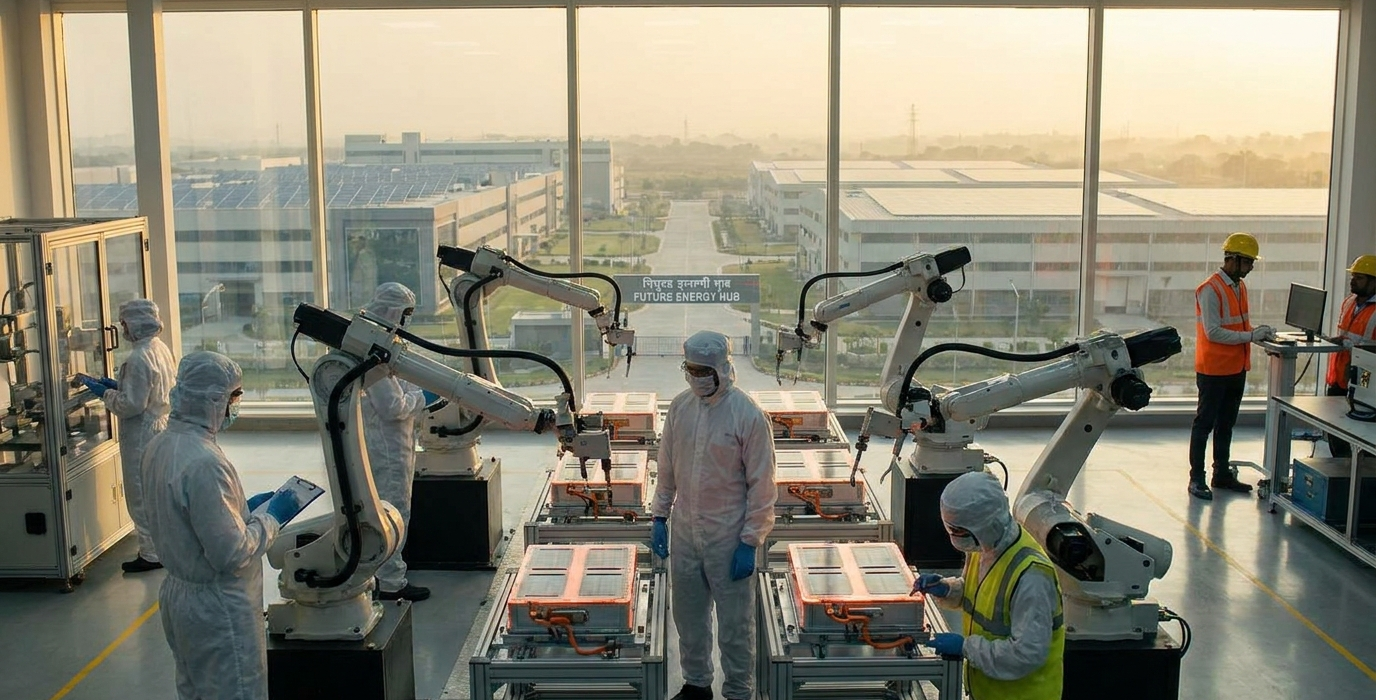
Furthermore, the government’s Production Linked Incentive (PLI) scheme is a powerful tool designed to attract global players and incentivize domestic companies to build gigafactories. Companies like Ola Electric, Reliance Industries, and the Adani Group are already making substantial commitments, aiming to establish manufacturing capacities that can rival international standards. This push for vertical integration is crucial; it ensures control over quality, cost, and innovation at every stage of the battery’s lifecycle. The ambition is clear: to create a self-sufficient and resilient battery industry that can withstand global supply chain shocks and fuel India’s green mobility revolution.
Beyond Lithium-Ion: The Quest for Next-Generation Chemistries
While lithium-ion batteries have been the workhorse of the current EV revolution, India is not content to rest on existing laurels. The future of energy storage demands greater safety, faster charging, longer lifespan, and reduced environmental impact. This is where the focus on next-generation battery chemistries becomes paramount for India’s R&D landscape.
Solid-state batteries represent a significant frontier. By replacing liquid electrolytes with solid ones, these batteries promise enhanced safety, higher energy density, and faster charging times. Imagine EVs that charge in minutes, not hours, and are less prone to thermal runaway. Indian research institutions and startups are actively exploring solid-state technologies, with early-stage prototypes showing promising results. The challenge lies in scaling up production and reducing manufacturing costs, but the potential rewards are immense.
Equally compelling are sodium-ion batteries. Unlike lithium, sodium is abundant in Earth’s crust and easily accessible, making these batteries potentially much cheaper and more sustainable. While their energy density is currently lower than lithium-ion, rapid advancements are closing the gap. For applications where cost and sustainability are key, such as electric two-wheelers, three-wheelers, and grid storage, sodium-ion batteries could be a game-changer for India. Several Indian companies are already investing heavily in this area, aiming to establish large-scale manufacturing facilities. This diversification away from solely relying on lithium positions India as a leader in exploring a broader spectrum of battery solutions tailored to diverse needs and resource availability.
Government’s Driving Force: Policy and Incentives Fueling Growth
The Indian government’s commitment to electrifying its transport sector is not just aspirational; it’s backed by robust policy frameworks and significant financial incentives. The overarching goal is to create an ecosystem that not only supports domestic EV manufacturing but also fosters a self-reliant battery industry. The Production Linked Incentive (PLI) scheme for Advanced Chemistry Cell (ACC) Battery Storage is a cornerstone of this strategy, offering substantial financial benefits to companies setting up manufacturing facilities.
This scheme aims to attract both domestic and international players, encouraging them to invest in gigafactories with a minimum manufacturing capacity. The incentives are designed to offset the high upfront costs associated with setting up such advanced manufacturing units and to ensure competitiveness with established global players. Beyond the PLI, initiatives like Faster Adoption and Manufacturing of Electric Vehicles (FAME) India Scheme are boosting demand for EVs, which in turn creates a guaranteed market for locally produced batteries.
Furthermore, the government is actively promoting research and development through grants and collaborations with academic institutions and national laboratories. This includes establishing Centres of Excellence and supporting startups working on innovative battery technologies. The aim is to create a virtuous cycle: policy support drives investment, investment drives manufacturing, and manufacturing drives innovation, all feeding into a robust and globally competitive Indian battery sector. The proactive stance of the government is arguably the single most significant factor accelerating India’s journey towards battery independence and global leadership.
Domestic Giants and Global Collaborations: A Symphony of Innovation
India’s ambition in the EV battery space is being powered by a dynamic interplay between established domestic conglomerates and strategic international collaborations. Companies like Reliance New Energy Solar, which has made significant investments in battery technology through acquisitions and partnerships, are at the forefront. They are not just looking to build capacity but to acquire and develop cutting-edge technologies, aiming for global scale and competitiveness.
Ola Electric, already a major player in the electric two-wheeler market, has announced ambitious plans for its own battery gigafactory, underscoring its commitment to vertical integration and technological control. Similarly, the Adani Group is exploring investments in battery manufacturing and renewable energy integration, recognizing the synergistic relationship between power generation and energy storage. These domestic giants are bringing not only capital but also a deep understanding of the Indian market and its unique challenges and opportunities.
These domestic efforts are complemented by crucial international partnerships. Collaborations with established battery manufacturers and technology providers from countries like South Korea, Japan, and China are vital for technology transfer, know-how, and access to advanced manufacturing processes. For instance, collaborations often involve joint ventures or licensing agreements that accelerate the learning curve and ensure that India’s burgeoning industry is built on the latest global standards. This blend of local muscle and global expertise is creating a powerful force that is rapidly propelling India towards its goal of becoming a significant player in the global EV battery landscape.
The Road Ahead: Challenges and the Promise of a Greener Tomorrow
While the trajectory for India’s EV battery sector is undeniably upward, the path is not without its hurdles. Securing a consistent and ethical supply of raw materials remains a significant challenge, even with diversification efforts. The geopolitical complexities surrounding critical minerals mean that continuous strategic sourcing and exploration are vital. Furthermore, building and maintaining gigafactories requires immense capital investment and a highly skilled workforce, necessitating ongoing training and development programs.
The rapid pace of technological evolution also presents a challenge. Battery technology is a constantly shifting landscape, and India must ensure its investments are future-proofed. This means a sustained commitment to R&D, fostering a culture of innovation, and remaining agile enough to adapt to new chemistries and designs as they emerge. The environmental impact of battery production and disposal, particularly concerning mining and waste management, also requires careful consideration and the development of robust recycling infrastructure.
India’s move from a net importer of battery technology to a potential global leader hinges on its ability to foster indigenous R&D, secure critical mineral supply chains, and embrace next-generation chemistries like solid-state and sodium-ion.
Despite these challenges, the promise of a greener tomorrow is a powerful motivator. A robust domestic battery industry will not only drive the transition to electric mobility but will also create millions of jobs, boost economic growth, and position India as a leader in clean energy technologies. The ongoing investments, policy support, and the sheer ingenuity being showcased by Indian companies and researchers suggest that the nation is well on its way to achieving its ambitious goals. The journey is complex, but the destination – a self-reliant, technologically advanced, and sustainable battery ecosystem – is within reach.
Frequently Asked Questions
What is the main government initiative supporting EV battery manufacturing in India?
The primary government initiative is the Production Linked Incentive (PLI) scheme for Advanced Chemistry Cell (ACC) Battery Storage. This scheme provides financial incentives to companies setting up ACC battery manufacturing facilities in India, aiming to boost domestic production and reduce import dependence.
Are there any Indian companies leading in EV battery technology?
Yes, several Indian conglomerates are making significant strides. Reliance New Energy Solar, Ola Electric, and the Adani Group are actively investing in battery manufacturing and research, aiming for large-scale production and technological advancement. Numerous startups are also emerging in niche battery tech areas.
What are the key challenges India faces in becoming a battery manufacturing hub?
Key challenges include securing a stable supply of critical raw materials like lithium and cobalt, the high capital intensity of setting up gigafactories, the need for a skilled workforce, and keeping pace with the rapid evolution of battery technology. Ethical sourcing and sustainable manufacturing practices are also crucial considerations.
Beyond lithium-ion, what other battery chemistries is India exploring?
India is heavily investing in and exploring solid-state batteries for their potential in enhanced safety and energy density, and sodium-ion batteries due to the abundance of sodium, which can lead to lower costs and improved sustainability. These alternatives are seen as crucial for diversifying the battery landscape.