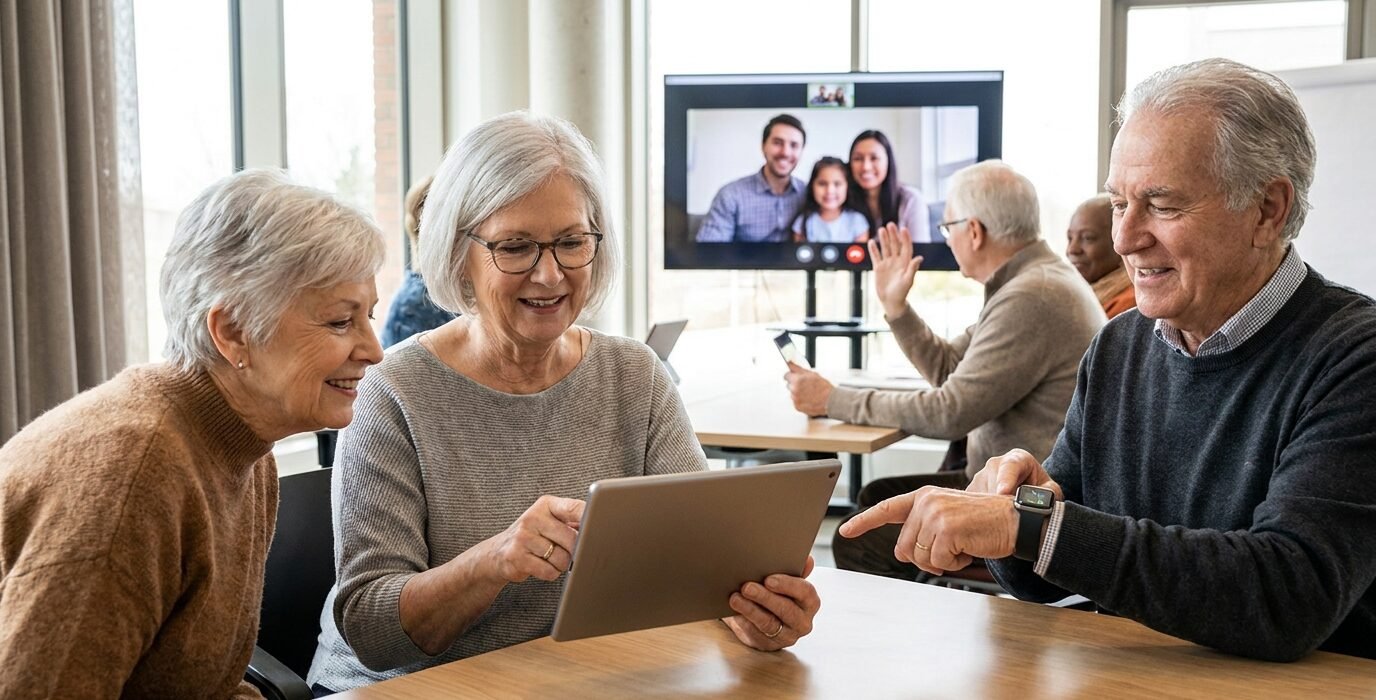
Imagine a world where your aging parents or grandparents can live independently, safely, and with a direct line to help if they ever need it. This isn’t science fiction anymore. It’s the rapidly evolving reality for countless Canadian seniors. New wearable tech and smart home devices are quietly revolutionizing elder care. They offer unprecedented peace of mind for families scattered across provinces. They provide seniors with the dignity of continued autonomy. From wristbands that track vital signs to smart sensors that detect falls, this technology is no longer a niche curiosity. It’s a tangible solution for an aging population.
Key Takeaways:
- New wearable technology and smart home devices are empowering Canadian seniors to live more independently.
- These gadgets offer remote health monitoring, immediate alerts for emergencies, and daily living assistance.
- Families gain crucial peace of mind knowing their loved ones are safer and more connected.
- The technology helps reduce the strain on healthcare systems by enabling proactive care and preventing hospitalizations.
- Adoption is growing across Canada, with specific benefits noted in communities like those in British Columbia’s Okanagan Valley.
The Silent Guardians: Wearables on the Wrist
For many Canadian families, the worry about aging parents living alone is a constant hum beneath the surface of daily life. You might live in Toronto while your parents are in a quiet neighbourhood in Halifax. The simple act of not hearing from them for a day can trigger a cascade of anxiety. This is precisely the void that modern wearable technology is filling. Companies are developing sophisticated yet user-friendly wristbands. They often resemble stylish watches. These devices do far more than tell time. They can continuously monitor heart rate and blood oxygen levels. They even detect subtle changes in gait that might indicate an increased risk of falling.
Take, for instance, the story of Eleanor Vance. She’s an 82-year-old retired teacher living in a bungalow in Winnipeg. Eleanor is fiercely independent. This is a trait she’s cultivated over a lifetime. Her daughter, Sarah, lives a three-hour drive away. Sarah often worried about Eleanor falling or experiencing a sudden health issue when she was by herself. Last year, Sarah gifted Eleanor a smart health bracelet. It’s not a clunky medical device. It looks modern and comfortable. It tracks Eleanor’s steps and monitors her sleep patterns. Most importantly, it has a discreet panic button.
One afternoon, while Eleanor was gardening, she felt a dizzy spell. She calmly pressed the button. Within minutes, the bracelet’s connected service alerted Sarah. It also provided Eleanor’s pre-programmed emergency contact, her neighbour, who was able to check on her immediately. This proactive intervention, facilitated by a simple wearable, prevented a potential emergency from escalating into a crisis. The data from the bracelet also showed a slight dip in Eleanor’s blood pressure around the time of the incident. This information was invaluable when she later spoke with her doctor. This isn’t just about emergencies. It’s about a continuous, gentle oversight. It respects a senior’s privacy while offering a vital safety net. The growing adoption of these devices is a testament to their effectiveness. It reflects the increasing comfort seniors have with integrating technology into their lives. In 2022, a study by Statistics Canada indicated that approximately 30% of individuals aged 65 and over reported using at least one health-related app or device. This number has been steadily climbing, especially in urban centres like Vancouver and Montreal.
Smart Homes: A Wider Net of Safety
While wrist-worn devices offer personal monitoring, the concept of a “smart home” for seniors extends this safety net to their entire living environment. This isn’t about turning a cozy home into a sterile laboratory. It’s about integrating subtle, intelligent sensors. These sensors can detect unusual patterns of activity or potential hazards. Think about motion sensors that can tell if someone hasn’t moved for an unusually long period. Consider smart plugs that can alert you if an appliance like a stove is left on. These systems are designed to be unobtrusive. They often blend seamlessly with existing decor. For example, a senior might have small, discreet sensors placed in key areas like the bedroom, bathroom, and living room. If the system detects no movement from the bedroom by the usual wake-up time, it can trigger a gentle alert to a family member or caregiver.
Consider the case of the Dubois family in Quebec City. Their father, Jean-Paul, a former carpenter, had always been very active. He recently experienced a minor stroke that left him with some mobility issues. While he was determined to live in his own home, his children were understandably concerned about him navigating his familiar surroundings safely. They decided to implement a smart home system. This included smart lighting that automatically brightens hallways at night, reducing the risk of trips. They also installed a pressure sensor on his favourite armchair. If he remains seated for longer than a pre-set time, perhaps indicating he’s fallen and can’t get up, it sends an alert.
One chilly evening in February, Jean-Paul was dozing in his chair. The sensor registered that he had slipped and fallen. Within moments, his daughter, Marie, received an alert on her phone. She called him. When he didn’t answer, she knew something was wrong. She was able to reach him quickly and confirm he was on the floor but conscious. Because of the immediate alert, she could provide precise information to the paramedics when they arrived. This significantly sped up the assessment and care process. This kind of integrated approach is crucial. It’s not just about one device. It’s about creating a connected ecosystem of safety. The data gathered by these systems can also be incredibly valuable. For instance, if a system notes a consistent pattern of someone struggling to get out of bed in the morning, it might suggest a need for physical therapy or assistive devices. This allows for preventative healthcare interventions before a more serious issue arises. This technology moves beyond reactive emergency response to proactive well-being management.
Beyond Emergencies: Enhancing Daily Living
The impact of this technology extends far beyond just preventing falls or responding to medical emergencies. It’s about empowering seniors to maintain their independence and quality of life for longer. Many of these smart devices and platforms are designed with a focus on ease of use. They often feature large buttons, voice command capabilities, and simplified interfaces. This is crucial for individuals who may not be tech-savvy. It’s also important for those who have experienced age-related changes in vision or dexterity. For instance, smart medication dispensers can ensure seniors take their prescriptions on time. This is a critical aspect of managing chronic health conditions and preventing hospital readmissions. These dispensers can be programmed to release specific pills at designated times. They can also send alerts to caregivers if a dose is missed.
Let’s look at Maria Rossi, a vibrant 78-year-old living in a retirement community in Kelowna, British Columbia. Maria manages several health conditions and takes multiple medications daily. Remembering to take them all, especially when she’s out and about or if her routine is disrupted, had become a challenge. Her son, Antonio, who lives in Calgary, worried about this constantly. He helped her set up a smart medication dispenser. It’s a sleek unit that stores her pills. At the scheduled time, a compartment opens with the correct dosage. If Maria doesn’t acknowledge taking the medication within a certain timeframe, the dispenser sends a notification to Antonio’s phone. This has given Antonio immense relief. He knows that Maria is adhering to her treatment plan. This directly impacts her overall health and reduces the likelihood of complications. The dispenser also provides a log of when medications were taken. This is incredibly useful during her doctor’s appointments.
This level of daily living assistance is often overlooked when we discuss elder tech. It’s not always about a dramatic rescue. It’s about the consistent, reliable support that enables a senior to manage their own health effectively. Beyond medication, smart home assistants can also play a role. Simple voice commands can control lights, adjust thermostats, or even make phone calls. This reduces the need for physical interaction or complex device operation. This can be particularly beneficial for seniors with limited mobility. It’s also helpful for those who find it difficult to use standard remote controls or touchscreens. The data suggests a significant portion of seniors struggle with managing their medication regimen. A report from Health Canada indicated that non-adherence to prescribed medication is a contributing factor in up to 23% of nursing home admissions among older adults. Technology like smart dispensers directly addresses this pervasive issue.
The Data Revolution: Proactive Health Insights
One of the most compelling aspects of this new era of senior tech is the power of the data it generates. These devices aren’t just passive observers. They are active collectors of information. This information can paint a detailed picture of a senior’s well-being. This data, when analyzed, can provide invaluable insights to both seniors and their healthcare providers. It allows for a more proactive and personalized approach to health management. Instead of waiting for a problem to arise, trends can be identified. Interventions can be made early. For example, a consistent drop in activity levels detected by a wearable might signal an emerging health issue. It could indicate a decline in mood, or even a subtle change in diet. A doctor can then investigate these trends. This potentially averts a more serious condition.
Consider Dr. Anya Sharma, a geriatrician at a clinic in Edmonton. She has started incorporating data from her patients’ wearable devices into her consultations. She recently had a patient, Mr. Henderson. He’s an 85-year-old widower experiencing unexplained fatigue. His wearable device showed a consistent pattern of disrupted sleep and a significant reduction in his daily step count over the preceding month. Initially, Mr. Henderson attributed it to simply getting older. However, with the data in hand, Dr. Sharma explored further. She discovered that Mr. Henderson’s appetite had also decreased, a detail he hadn’t mentioned. Further testing revealed he was severely anemic, likely due to a poor diet. This was causing both the fatigue and the decreased activity. Because Dr. Sharma had access to the objective data from his wearable, she was able to identify the problem much faster. This was compared to relying solely on his subjective reporting. This data-driven approach is transforming preventative care. It allows healthcare professionals to move from a reactive model, where they treat illness after it occurs, to a proactive model. In the proactive model, they identify and address potential health risks before they escalate. This not only improves patient outcomes but also has the potential to significantly reduce the burden on the healthcare system. The ability to track subtle changes over time is a game-changer. It’s like having a continuous health diary that never forgets. A surprising statistic that often emerges in discussions about elder care is the prevalence of undiagnosed or undertreated conditions that manifest subtly. Research suggests that up to 40% of seniors may experience some form of undiagnosed chronic condition. Technology that provides continuous monitoring can be instrumental in uncovering these issues early.
Bridging the Gap: Peace of Mind for Families
Perhaps the most profound impact of this evolving technology is the unquantifiable peace of mind it offers to families. For adult children who are often juggling their own careers and families while worrying about their aging parents, this technology acts as a vital bridge. It alleviates the guilt and constant anxiety that can accompany distance. Knowing that a loved one is safe, connected, and has immediate access to help if needed allows families to focus on their relationships rather than solely on worry. This is particularly true for families who live far apart. For them, a quick check-in might mean an expensive flight or a long drive.
Think about the story of the Wong family. Their parents, now in their late 70s, live in a rural community outside of Ottawa. Their children are spread across the country. One daughter, Mei, lives in Vancouver. Mei recalls the constant knot of anxiety in her stomach, especially during winter storms when roads could become impassable. After her father had a minor fall last year, the family collectively decided to invest in a comprehensive smart home system coupled with wearable devices for both parents. The system includes fall detection, an emergency alert button on their watches, and sensors that monitor activity levels and door usage. Now, when Mei is thousands of kilometers away, she can receive alerts if her parents haven’t left their bedroom by a certain time, or if a fall is detected. She can even check a secure app to see if the front door has been opened recently. This doesn’t mean she’s constantly monitoring them invasively. Rather, it means she has a reliable assurance of their safety. If an alert is triggered, she knows to investigate immediately. If no alerts are triggered, she can relax, knowing her parents are going about their day safely. This technology fosters a sense of connection and proactive care. It transcends geographical boundaries. It allows for a more nuanced and less intrusive form of support. The emotional impact cannot be overstated. Parents feel more secure knowing their children are less worried. Children can be more present in their own lives without the constant background hum of concern for their elders. A survey conducted by Home Instead revealed that 70% of adult children caring for aging parents experience significant stress and anxiety. A primary driver is the fear of their parent experiencing an emergency when they are not present. This technology directly addresses that core fear. It’s about maintaining strong family bonds while ensuring the well-being of our aging loved ones. It fosters independence with a safety net woven from silicon and smart algorithms.
The Future is Now: Accessibility and Affordability
As this technology matures, it’s becoming increasingly accessible and affordable. This breaks down barriers that once made it a luxury for a select few. Many of the devices are now available through insurance plans, government subsidies, or as part of bundled service packages from telecommunications companies. This makes them a viable option for a wider range of Canadian seniors and their families. The initial cost of setting up a smart home system or purchasing wearable devices can seem daunting. But when you consider the potential savings in healthcare costs, reduced need for in-home care services, and the invaluable benefit of preventing serious accidents, the long-term value becomes clear. Furthermore, the user interface and setup processes are becoming much more intuitive. Many companies now offer installation services and dedicated customer support lines specifically for seniors. This ensures that the technology is easy to adopt and maintain.
Consider the growing number of community-based programs across Canada that are piloting and promoting the use of these devices. In rural areas of New Brunswick, for example, local health authorities are working with tech companies to provide subsidized smartwatches to seniors who live far from medical facilities. These programs recognize that proactive health monitoring is not just a personal choice but a public health imperative. The data collected from these initiatives is also helping to refine the technology, making it even more user-friendly and effective. A surprising aspect of this trend is the growing interest from seniors themselves. While younger generations may have been the early adopters, many seniors are now actively seeking out these solutions. They recognize the benefits for their own independence and the desire to reduce the burden on their children. They are not just passive recipients of technology. They are becoming active participants in managing their own health and safety. The conversation is shifting from “Can seniors use this technology?” to “How can we best leverage this technology to support seniors?” The continuous innovation means that features once found only in high-end devices are trickling down to more budget-friendly options. This democratization of technology is ensuring that more Canadians can benefit from the safety and independence it offers. The trend towards interoperability, where different devices and systems can communicate with each other, is also making these solutions more comprehensive and less fragmented. This means a senior might have a wearable that communicates with their smart home hub, which in turn communicates with their caregiver’s smartphone, creating a seamless ecosystem of support.