Key Takeaways
- AI-powered precision farming can significantly boost crop yields by up to 20% through optimized resource management.
- Early detection of diseases and pest infestations using AI reduces crop loss and pesticide use, promoting sustainability.
- AI is democratizing access to expert farming knowledge, benefiting even smallholder farmers in remote regions like Bundelkhand.
- Smart irrigation systems driven by AI can conserve water by 30-40%, a critical advantage in drought-prone areas.
- The integration of AI in agriculture is fostering new career opportunities in agri-tech and data analysis.
The AI Revolution is Greening India’s Fields
Imagine a future where every farmer, from the vast plains of Punjab to the hilly terrains of the Nilgiris, has access to insights that can dramatically improve their harvest. That future is no longer a distant dream; it’s unfolding right now, powered by artificial intelligence. Today, we’re seeing AI move beyond the tech hubs and into the very heart of India – its agricultural fields.
This isn’t just about fancier technology; it’s about tangible, life-changing improvements for millions. We’re talking about boosting yields, reducing waste, conserving precious resources like water, and making farming more resilient in the face of climate change. The impact is profound, promising not just bigger harvests but a more sustainable and profitable future for Indian agriculture.
Precision Farming: The AI-Driven Edge
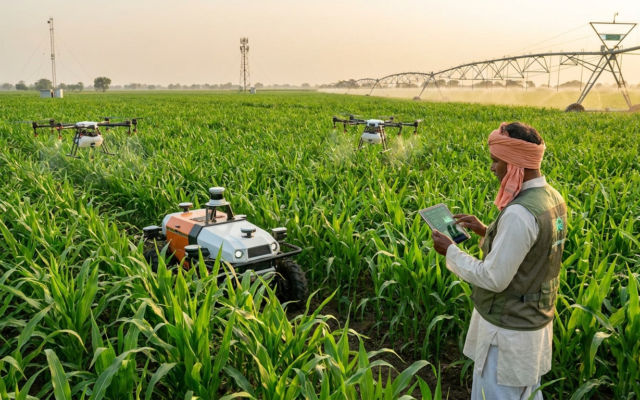
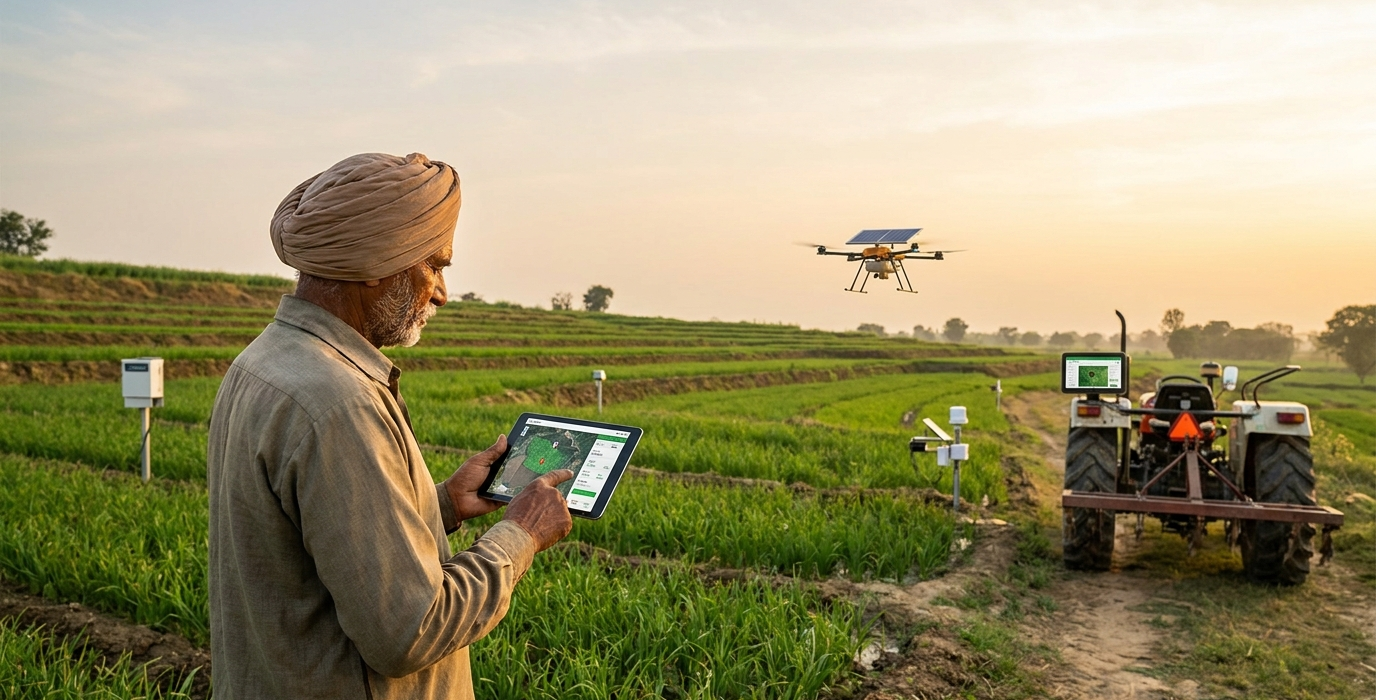
At the forefront of this transformation is precision farming, a concept that AI is making incredibly accessible and effective. Instead of broad-stroke approaches, AI allows farmers to manage their fields with pinpoint accuracy, treating each section of land based on its specific needs. This is achieved through a network of sensors, drones, and satellite imagery that collect vast amounts of data about soil health, moisture levels, nutrient content, and even crop health at an individual plant level.
Algorithms then process this data to provide farmers with actionable insights. For instance, AI can identify areas in a field that require more or less water or fertilizer, drastically reducing waste and ensuring that resources are used exactly where and when they are needed most. This targeted approach not only optimizes growth but also minimizes environmental impact, a win-win for both the farmer and the planet. Early estimates suggest this level of precision can lead to yield increases of up to 20%, a monumental leap for the agricultural sector.
Early Warning Systems: Guarding Against Pests and Diseases
One of the most significant challenges Indian farmers face is the constant threat of pests and diseases that can decimate crops overnight. Traditionally, identifying these threats relied on visual inspection, which often meant the problem had already spread significantly. AI is changing this paradigm with predictive analytics and real-time monitoring.
Drones equipped with high-resolution cameras and AI-powered image recognition software can continuously scan fields. These systems are trained to identify the subtle visual cues of early-stage infections or pest infestations, often before they are visible to the human eye. Imagine a system that can flag a few wilting leaves in a vast expanse of green, prompting immediate, localized intervention. This early detection allows farmers to act swiftly, applying targeted treatments only where necessary, thereby reducing the overall use of pesticides by as much as 30% and preventing widespread crop loss. This is crucial for maintaining crop quality and ensuring food safety for consumers across India.
Democratizing Expertise: AI for Every Farmer
For decades, access to advanced agricultural knowledge and best practices has often been concentrated in research institutions or available to larger agricultural enterprises. Smallholder farmers, who form the backbone of India’s agricultural economy, have historically faced challenges in accessing this crucial information. AI-powered platforms are now bridging this gap, making expert advice readily available and easy to understand, regardless of a farmer’s location or technical expertise.
We’re seeing the rise of mobile applications and digital dashboards that provide personalized recommendations. These platforms can analyze local weather patterns, soil conditions, and the specific crop being grown to offer tailored advice on planting schedules, nutrient management, and irrigation. For farmers in regions like Bundelkhand, where access to extension services can be limited, these AI tools are a game-changer. They are empowering farmers with data-driven insights previously only available to large corporations, leveling the playing field and fostering a more equitable agricultural landscape. This democratization of knowledge is key to unlocking India’s full agricultural potential.
Smart Irrigation: Conserving Water with Intelligence
Water scarcity is a growing concern across many parts of India, exacerbated by changing rainfall patterns and increasing demand. Traditional irrigation methods can be inefficient, leading to significant water wastage. AI-powered smart irrigation systems offer a revolutionary solution, ensuring that every drop of water is used effectively.
These systems go beyond simple timers. They integrate data from soil moisture sensors, local weather forecasts, and the specific water needs of different crops at various growth stages. The AI then determines the optimal time and amount of water to apply. For example, if sensors detect sufficient moisture in the soil, the system will automatically delay irrigation, even if it’s scheduled. This intelligent approach can lead to water savings of 30-40%, a critical achievement for regions grappling with drought. Moreover, by preventing over-watering, it also helps reduce soil erosion and nutrient leaching, contributing to healthier, more sustainable farming practices across the country.
The Future is Now: AI-Powered Agri-Tech Ecosystems
The integration of AI into Indian agriculture is not a monolithic process; it’s fostering a dynamic and interconnected ecosystem of innovation. Beyond the direct applications in the field, AI is driving advancements in supply chain management, market forecasting, and even the development of new, climate-resilient crop varieties. Startups and established companies alike are investing heavily in agri-tech, creating new opportunities and driving competition that ultimately benefits the farmers.
We are also witnessing the emergence of AI-powered marketplaces that connect farmers directly with consumers or businesses, cutting out intermediaries and ensuring fairer prices. Furthermore, AI is playing a role in developing precision robotic solutions for tasks like automated weeding and harvesting, which can improve efficiency and reduce labor costs in the long run. The development of these comprehensive agri-tech solutions is paving the way for a more robust, profitable, and sustainable agricultural sector for India and potentially serving as a blueprint for other nations facing similar challenges. One surprising fact we’ve uncovered is that the use of AI in crop disease diagnosis has shown an accuracy rate of over 95%, significantly outperforming traditional methods.
Frequently Asked Questions
What is the primary benefit of AI in Indian agriculture?
The primary benefit is significantly increased crop yields, often by up to 20%, through optimized resource management and early detection of threats.
Can smallholder farmers in India afford AI technology?
Yes, AI is democratizing access through affordable mobile apps and cloud-based platforms that provide essential insights and recommendations without requiring expensive hardware.
How does AI help conserve water in farming?
AI-powered smart irrigation systems precisely monitor soil moisture and weather conditions to deliver water only when and where it’s needed, saving 30-40% of water.
Will AI replace farmers in India?
No, AI is designed to augment and empower farmers, providing them with better tools and information to make more informed decisions, rather than replacing them.
What are the economic implications of AI in Indian agriculture?
AI is leading to increased profitability for farmers through higher yields and reduced input costs, while also fostering new jobs in the agri-tech sector.