Key Takeaways
- AI is dramatically improving diagnostic accuracy and speed across Indian healthcare, from detecting early-stage cancers to identifying complex neurological conditions.
- The integration of AI is making advanced diagnostics more accessible in remote and underserved areas of India, bridging the urban-rural healthcare divide.
- While significant progress has been made, challenges remain regarding data privacy, regulatory frameworks, and the need for skilled professionals to implement and oversee AI systems.
- The future of diagnostics in India will likely see a synergistic relationship between AI and human clinicians, enhancing rather than replacing human expertise.
The Dawn of AI-Powered Diagnostics in India
Imagine a future where diseases are detected with unprecedented accuracy, often before symptoms even manifest. This isn’t science fiction; it’s the rapidly evolving reality of Artificial Intelligence (AI) in healthcare, and India is at the forefront of this revolution. We’re witnessing a paradigm shift in how medical conditions are diagnosed, moving from traditional, often time-consuming methods to swift, precise, and increasingly accessible AI-driven solutions.
For decades, doctors have relied on their expertise, coupled with imaging technologies and laboratory tests, to identify illnesses. While remarkably effective, these methods can be subject to human interpretation variability and limitations in detecting subtle anomalies. AI, with its ability to process vast datasets and identify patterns invisible to the human eye, is now augmenting and, in some cases, surpassing these capabilities. This technology promises to democratize advanced diagnostics, bringing cutting-edge healthcare to every corner of India.
Revolutionizing Radiology: Seeing the Unseen
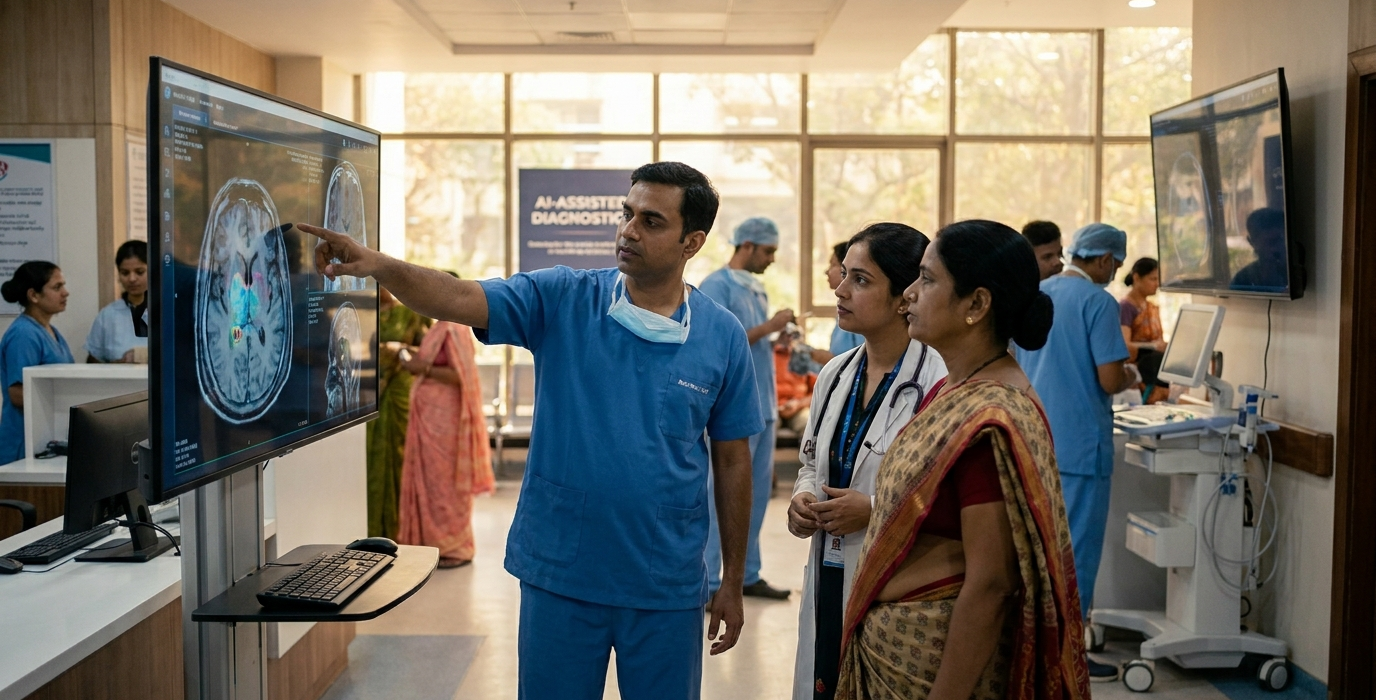
Radiology has emerged as one of the most impactful areas for AI in diagnostics. Algorithms are now being trained on millions of medical images—X-rays, CT scans, MRIs—to detect abnormalities with remarkable speed and precision. Consider the early detection of lung nodules, often the first sign of lung cancer. AI can flag these minuscule spots, which might be missed by a fatigued radiologist, allowing for earlier intervention and significantly improving patient outcomes. This is particularly crucial in a country like India, where the burden of non-communicable diseases, including cancer, is substantial.
Beyond cancer, AI is proving invaluable in diagnosing a range of conditions from diabetic retinopathy, a leading cause of blindness, to strokes. Specialized AI models can analyze retinal scans to identify early signs of damage caused by diabetes, enabling timely treatment to prevent vision loss. Similarly, in emergency situations, AI can rapidly analyze brain scans to pinpoint areas affected by a stroke, helping doctors make life-saving decisions within the critical golden hour. The integration of these tools is not about replacing radiologists but about providing them with super-powered assistants that enhance their efficiency and accuracy, especially in high-volume settings.
Pathology’s Precision Leap: From Slides to Insights
The field of pathology, the study of disease through laboratory examination of tissues and fluids, is also undergoing a profound transformation thanks to AI. Traditionally, pathologists examine tissue samples under a microscope, a meticulous and time-intensive process. AI-powered digital pathology platforms can now analyze these digital slides, identifying cancerous cells, grading tumors, and even predicting treatment responses with impressive accuracy. This holds immense promise for improving the consistency and speed of diagnoses, especially for complex cases.
One surprising fact is that AI algorithms are proving adept at identifying subtle cellular changes that might be missed by human pathologists, particularly in rare or aggressive cancers. For instance, AI can quantify the presence of specific biomarkers within tumor cells, information that is critical for tailoring personalized treatment plans. This means patients in cities like Chennai or Kolkata can potentially benefit from diagnostic precision previously only available in highly specialized research centers. The ability to process and interpret digital pathology slides also facilitates remote consultations, allowing experts to review cases from anywhere in the world, further democratizing access to high-quality pathological analysis.
Cardiology and Neurology: Predicting and Preventing
The application of AI extends significantly into cardiology and neurology, areas where early detection and prediction are paramount. In cardiology, AI algorithms are being used to analyze electrocardiograms (ECGs) and other cardiac data to detect subtle signs of heart disease, arrhythmias, and even predict the risk of future cardiac events. This allows for proactive interventions, moving healthcare from a reactive to a predictive model. For example, an AI system might flag an ECG as having a high probability of an impending heart attack, prompting immediate medical attention even before the patient experiences severe symptoms.
In neurology, AI is aiding in the diagnosis of conditions like Alzheimer’s disease, Parkinson’s disease, and multiple sclerosis (MS). By analyzing brain scans, speech patterns, and even subtle changes in gait, AI can identify early markers of neurodegenerative diseases, often years before clinical symptoms become obvious. This early identification is crucial for initiating therapies that can slow disease progression and improve the quality of life for patients. A fascinating aspect is how AI is being trained on anonymized patient data from diverse populations across India, helping to identify disease patterns that might be specific to or more prevalent in certain ethnic groups, leading to more targeted diagnostic approaches.
Bridging the Gap: AI in Rural and Underserved Areas
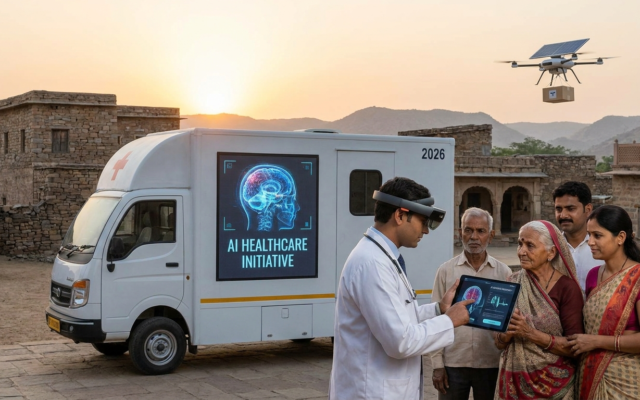
Perhaps one of the most significant impacts of AI in Indian diagnostics is its potential to bridge the vast healthcare gap between urban centers and rural or underserved regions. Many remote areas lack access to specialist doctors, advanced diagnostic equipment, and even basic healthcare facilities. AI-powered mobile diagnostic units and telemedicine platforms can bring sophisticated diagnostic capabilities directly to these communities.
Imagine a remote village in Rajasthan, where a mobile unit equipped with an AI-powered retinal scanner can screen for diabetic retinopathy. The images are instantly analyzed by AI, and if an anomaly is detected, the patient is flagged for further consultation with a specialist via telemedicine. This eliminates the need for patients to travel long distances, saving them time, money, and often preventing the progression of their illness. This democratizing effect of AI ensures that quality diagnostics are no longer a luxury confined to metropolitan hospitals but a reachable reality for all Indians. It’s a powerful tool for inclusive healthcare.
Challenges and the Path Forward
Despite the incredible progress, the widespread adoption of AI in Indian diagnostics is not without its hurdles. Data privacy and security are paramount concerns. Ensuring that sensitive patient information is protected while still allowing AI algorithms to learn and improve is a complex ethical and technical challenge. Furthermore, the regulatory framework for AI in healthcare is still evolving. Clear guidelines are needed to ensure the safety, efficacy, and reliability of AI-driven diagnostic tools.
Another critical aspect is the need for skilled professionals. While AI can automate many diagnostic tasks, it requires trained personnel to operate, interpret, and validate its outputs. There’s a growing demand for data scientists, AI engineers, and clinicians who are proficient in working with these new technologies. Overcoming these challenges will require collaborative efforts between technology developers, healthcare providers, policymakers, and educational institutions. The aim is not to replace human clinicians but to create a synergistic relationship where AI enhances human expertise, leading to better patient care for everyone.
“AI is not a replacement for human intuition and empathy in healthcare, but rather a powerful amplifier. It empowers our doctors with insights previously unimaginable, allowing them to focus more on patient care and less on exhaustive manual analysis.”
Frequently Asked Questions
What are the main benefits of AI in medical diagnosis?
AI can significantly improve diagnostic accuracy, speed up the diagnostic process, and make advanced diagnostics more accessible, especially in remote areas. It helps in detecting diseases earlier and can even predict future health risks.
Are AI diagnostic tools already being used in Indian hospitals?
Yes, AI tools are increasingly being integrated into various departments of Indian hospitals, particularly in radiology, pathology, and ophthalmology for tasks like image analysis and disease detection.
Will AI replace doctors in India?
No, the current trend suggests AI will augment, not replace, doctors. It acts as a powerful assistant, enhancing their capabilities and freeing them up for more complex decision-making and patient interaction.
What are the biggest challenges to AI adoption in Indian healthcare?
Key challenges include data privacy and security, the need for robust regulatory frameworks, infrastructure limitations in some regions, and the requirement for training healthcare professionals to effectively use AI tools.
How does AI help in diagnosing rare diseases?
AI can analyze vast datasets of medical literature and patient records to identify patterns associated with rare diseases that might be missed by individual clinicians due to their rarity.