Key Takeaways
- India is witnessing significant AI advancements in healthcare, particularly in early disease detection and personalized treatment plans.
- AI-powered telemedicine is bridging geographical gaps, making quality healthcare more accessible in remote Indian regions.
- The integration of AI in diagnostics is leading to faster, more accurate results, reducing patient waiting times and improving outcomes.
- Challenges remain, including data privacy concerns and the need for skilled personnel, but the momentum for AI in Indian healthcare is undeniable.
AI’s Accelerating Impact on Indian Diagnostics
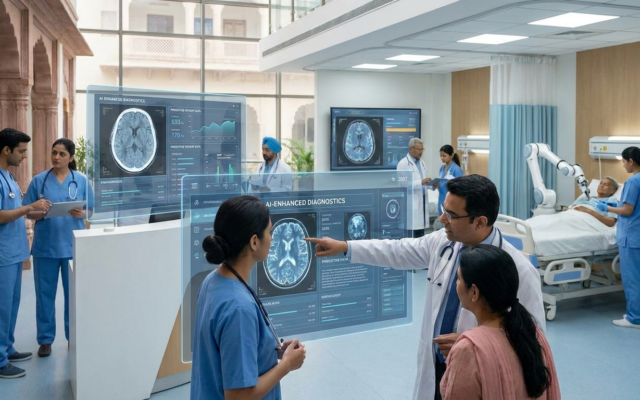
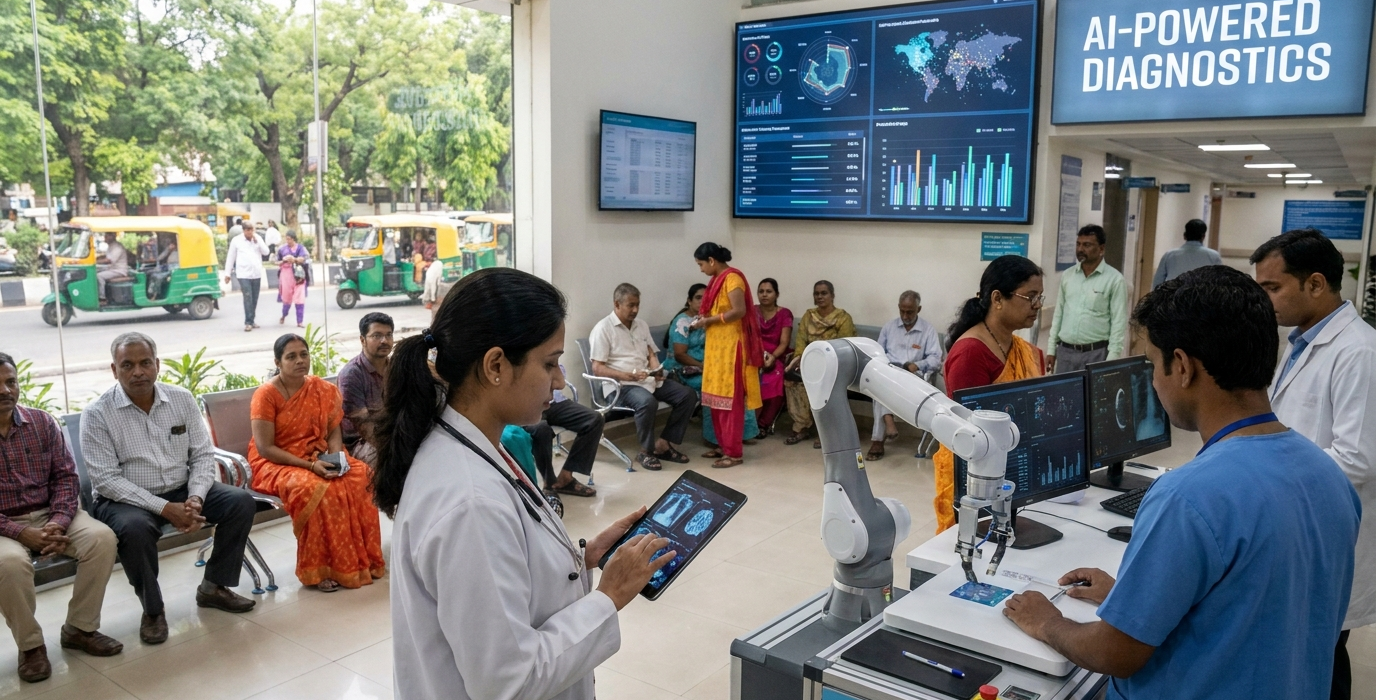
The landscape of medical diagnostics in India is undergoing a seismic shift, largely driven by the accelerating integration of Artificial Intelligence. By 2026, we’re seeing AI move beyond experimental phases into mainstream clinical practice, offering unprecedented speed and accuracy in identifying diseases. Imagine routine X-rays or MRI scans being analysed not just by a radiologist, but by an AI system that has been trained on millions of images, spotting subtle anomalies that even the most experienced human eye might miss. This is no longer science fiction; it’s becoming a reality across leading hospitals in cities like Bengaluru and Chennai.
Specifically, AI algorithms are proving exceptionally adept at detecting early signs of conditions like diabetic retinopathy, a leading cause of blindness, and certain types of cancer. For instance, a recent pilot program in a rural district outside Jaipur demonstrated a 20% increase in early detection rates for breast cancer through AI-assisted mammogram analysis. The AI flags suspicious areas, allowing radiologists to focus their attention, thereby speeding up the diagnostic process and crucially, catching diseases at their most treatable stages. This isn’t about replacing doctors, but about empowering them with tools that enhance their capabilities.
Revolutionizing Treatment: Personalized Medicine at Scale
One of the most profound impacts of AI in Indian healthcare by 2026 is its role in ushering in an era of truly personalized medicine. Gone are the days of one-size-fits-all treatment protocols. AI can now analyse a patient’s unique genetic makeup, lifestyle factors, medical history, and even real-time data from wearable devices to recommend the most effective and least harmful treatment plan. This is particularly transformative for chronic diseases and complex conditions.
Consider the management of cardiovascular diseases. AI can predict a patient’s risk of heart attack or stroke with remarkable precision, allowing for proactive interventions. It can also help oncologists tailor chemotherapy regimens to a patient’s specific tumour genetics, maximizing efficacy while minimizing debilitating side effects. We’re seeing AI platforms being developed in Mumbai that can sift through vast databases of clinical trials and research papers to identify novel treatment options or clinical trials that are a perfect match for an individual patient’s profile. This level of precision medicine was unimaginable even a decade ago and is now becoming a tangible benefit for patients across India.
Bridging the Healthcare Divide: AI-Powered Telemedicine
Perhaps one of the most socially impactful applications of AI in India by 2026 is its role in democratizing healthcare access through advanced telemedicine. For millions living in Tier-2, Tier-3 cities, and remote rural areas, accessing specialist medical advice can be a significant challenge. AI is now bridging this gap by enhancing the capabilities of telemedicine platforms.
These AI-powered systems can assist local healthcare workers in remote clinics by providing initial diagnostics and treatment recommendations. For example, an AI chatbot can guide a patient through initial symptom assessment, collect vital information, and even analyse images of skin conditions or wounds, all before a doctor’s consultation. This allows the remote doctor, whether they are based in a major city like Delhi or even abroad, to have a more comprehensive understanding of the patient’s condition before the virtual appointment. Furthermore, AI-driven language processing is breaking down communication barriers, enabling consultations in various regional Indian languages, making healthcare truly inclusive.
AI in Drug Discovery and Development: A Faster Path to Cures
The arduous and expensive process of drug discovery is being dramatically accelerated by AI, with India playing a crucial role in this global effort by 2026. Traditionally, developing a new drug can take over a decade and cost billions of dollars, with a high failure rate. AI algorithms can now sift through massive molecular datasets, predict the efficacy and potential side effects of drug compounds, and even design novel molecules with specific therapeutic properties.
Pharmaceutical companies and research institutions across India, particularly in Hyderabad’s Genome Valley, are leveraging AI to identify promising drug candidates for diseases ranging from Alzheimer’s to infectious diseases. AI can identify potential drug targets, screen existing compound libraries for activity against these targets, and even predict how a drug will interact with the human body. This drastically reduces the time and resources needed for the initial stages of drug development, paving the way for faster access to life-saving medications for patients globally and within India. The potential to rapidly develop vaccines or treatments for emerging pandemics is also significantly enhanced by these AI capabilities.
Enhancing Patient Care and Hospital Operations with AI
Beyond direct medical applications, AI is also revolutionizing the operational efficiency and patient experience within Indian hospitals by 2026. Think about the administrative burden in a large hospital – managing appointments, billing, inventory, and patient flow. AI is stepping in to streamline these processes, freeing up valuable human resources to focus on direct patient care.
AI-powered systems can optimize hospital bed allocation, predict patient discharge times, and manage staff scheduling to ensure optimal resource utilization. This leads to shorter waiting times for patients, improved staff satisfaction, and significant cost savings for healthcare institutions. Moreover, AI is being used to develop intelligent virtual assistants for patients, answering common queries, providing medication reminders, and even offering emotional support, thereby enhancing the overall patient journey and improving adherence to treatment plans.
Addressing the Hurdles: Data Privacy and Skill Development
While the advancements are remarkable, the widespread adoption of AI in Indian healthcare by 2026 is not without its challenges. One of the most significant concerns revolves around data privacy and security. Healthcare data is highly sensitive, and robust frameworks are needed to ensure patient information is protected from breaches and misuse. Regulations like India’s Digital Personal Data Protection Act of 2023 are a step in the right direction, but continuous vigilance and technological safeguards are paramount.
Another critical hurdle is the need for a skilled workforce. Integrating AI into clinical practice requires healthcare professionals who are not only adept at using these new tools but also understand their underlying principles and limitations. This necessitates a significant investment in training and education programs for doctors, nurses, and hospital administrators. Furthermore, ethical considerations, such as algorithmic bias and ensuring equitable access to AI-driven healthcare, must be continuously addressed. The development of comprehensive ethical guidelines and regulatory oversight is crucial for fostering trust and ensuring AI benefits all segments of society.
“AI in Indian healthcare by 2026 is not just about advanced technology; it’s about making healthcare more accessible, accurate, and personalized for every Indian, irrespective of their location or socioeconomic status.”
Frequently Asked Questions
What are the most promising AI applications in Indian healthcare right now?
By 2026, the most impactful AI applications include early disease detection (like cancer and diabetic retinopathy), personalized treatment planning, AI-powered telemedicine for remote access, and optimizing hospital operations for efficiency.
How is AI improving patient outcomes in India?
AI improves patient outcomes through faster and more accurate diagnoses, enabling earlier intervention. It also leads to more effective, personalized treatment plans that reduce side effects and optimize recovery, and enhances access to care through telemedicine.
Are there concerns about AI replacing doctors in India?
The prevailing view is that AI will augment, not replace, doctors. AI tools assist in diagnostics and data analysis, allowing doctors to focus on complex decision-making, patient interaction, and empathy, which are uniquely human skills.
What is being done to ensure data privacy with AI in Indian healthcare?
India’s evolving data protection laws, such as the Digital Personal Data Protection Act of 2023, are crucial. Institutions are also investing in secure data management systems, anonymization techniques, and strict access controls to safeguard patient information.
How can Indian healthcare professionals upskill for AI integration?
Upskilling involves formal training programs, workshops, and continuous learning initiatives focusing on AI fundamentals, data science, and the ethical use of AI tools. Medical schools and professional bodies are increasingly incorporating these subjects into their curricula.